Paramount

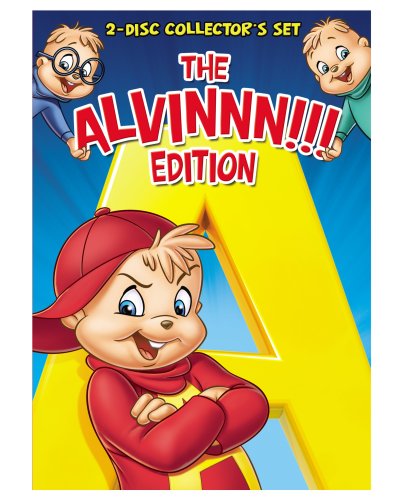
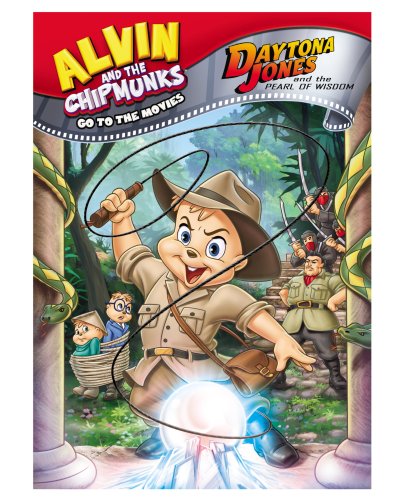
The Alvin Collection is another group of episodes of The Chipmunks from their popular Saturday Morning series, Alvin And The Chipmunks. The shorts are not theme related as some of the other recent sets have been. The stories range from the film inspired Romancing Miss Stone to the globe trotting episodes like Maids In Japan or The Curse Of The Lontiki. They aired originally between 1983 and 1987, but many of them have sprung up in syndication up to the present day. There are 14 episodes in all, lasting a little over 20 minutes each.


Duckman began life as an underground comic created by Everett Peck. It gathered to itself quite a cult following, and like all such things caught the attention of Hollywood. The USA Network took a chance on the quirky property and cast Seinfeld’s Jason Alexander to voice the crude character. And so Duckman’s wife was killed, and he was forced to rent his own house from his sister-in-law who was left the estate by Duckman’s wife. His life pretty much sucked. Not only was he renting in his own house, but he was also living with his overbearing sister-in-law and his grandma, who basically just sat around and farted all day long. Duckman considered himself an ace private detective and ran an agency with his partner, Cornfed. Cornfed was voiced by Gregg Berger and was a Jack Webb Sgt. Friday clone. He was the actual brains behind the partnership. Crimes either got solved because Cornfed solved them or Duckman literally stumbled into the answer.His conscience would be found in two talking teddy bears he kept at the office, Fluffy and Uranus. Like Kenny on South Park, the bears would often meet grisly demises, only to return again in the next episode as if nothing at all had happened. Women, particularly damsels in distress, were often depicted as large breasted and somewhat dimwitted. Most of the humor was decidedly adult. It was not a cartoon intended for children.


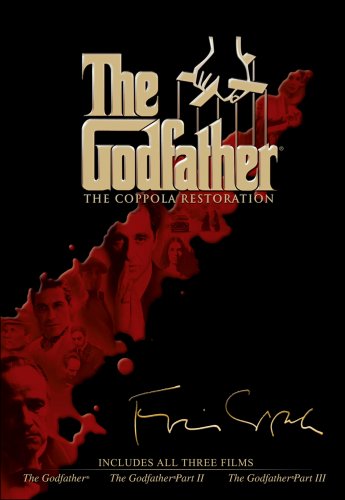
The Godfather films changed storytelling forever. Films before that time, mobster or otherwise, had some very simple but unshakable rules. There was always a fairly clear distinction between the good guys and the bad guys. The good guys always win in the end, and the bad guys always succumb to justice before the final credits. For perhaps the very first time, we were given characters that we knew in our souls were evil men. They killed. They broke laws. They manipulated everyone around them through fear and terrorism to bend to their wills. Somehow, now they are the film’s core heroes, if you will. When Vito is shot, we cheer for Michael, who discards his contempt for his family’s criminal image and comes to his father’s aid. Suddenly this wasn’t just about a gang of mobsters. This was a story about a family. Most of us can’t relate to the mafia ins and outs, but we all have fathers, and even when we dislike what our fathers represent, we will more often than not come to their aid if they’re being threatened. This unique morality paved the way for an entire genre of such characters today. There just couldn’t have been a Tony Soprano or Vic Mackey without The Godfather. While there were certainly protests from aspects of the Italian-American community decrying the violent way our ethnicity was portrayed, most of us from that community saw more than violence and Mafioso. If you’re from an Italian family, you simply can’t help recognizing aspects of your own family in the Corleones. I could see my own grandfather in Vito, sans the mob boss occupation. Many of us took away the strict codes of honor and respect that drive Italian-Americans to this day in very normal lives. We’re a very passionate people, even if most of us are not part of an organized criminal element.

 

The Chipmunks began life oddly enough as a singing group, of sorts. They were the brainchild of struggling songwriter Ross Bagdasarian and were named after the three chief executives at Liberty records. His own alter ego David Seville’s name came from his World War II Army station in Spain. The Chipmunks first appeared in a 1958 record called The Witch Doctor, but wouldn’t officially become The Chipmunks until later that year when The Chipmunks Christmas Song was released. It is for that Christmas music that I most remember the group. They first appeared as puppets on The Ed Sullivan Show. Alvin and the boys got their own television show in 1961. When Ross died in 1972, the Chipmunks would continue on under the guidance of his son. In 1983 The Chipmunks had yet another popular cartoon show and had appeared in countless specials and films. Today they are pretty much a hallmark at the holidays, and a Christmas song collection just wouldn’t be complete without them.


Medium was based on a real person with alleged psychic powers who apparently has helped out various law enforcement agencies in some actual cases. If you’ve seen the series, you might find that hard to believe, and the episodes are obviously fictional adventures and not based on the real Allison Dubois’s experiences. At first glance it might be easy to lump Medium in with Ghost Whisperer or The Dead Zone. Actually there are almost no similarities to any of those shows. Allison does not gain any understanding through touching, and while she does see ghosts at times, that aspect of the show has been made to play in only a small percentage of the episodes. Allison accesses her powers through dreams. These nightmares are usually vague and often provide additional clues with each recurring dream. The formula for the show is that she must interpret these images and signs in time to do whatever it is she needs to do. Now that her secret is out, she’s not able to continue her work at the DA’s office. Joe’s career is also in jeopardy, so the show is going through some changes here. The strike likely did some damage, so we may never know exactly what was in store.

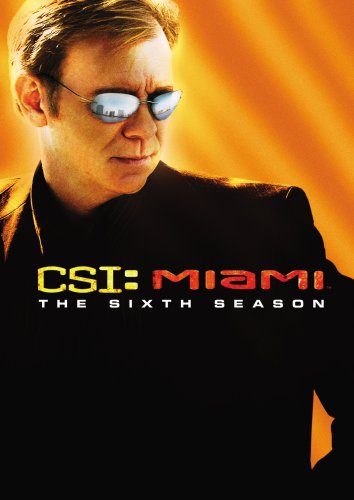
I love CSI and have been an avid fan from day one. I think it brought a fresh look to the procedural crime dramas that have long ago become just a little stale and predictable. The problem is that the series has gone the Dick Wolf route of branching out so that the final product might be a little diluted. Unlike the Law & Order franchise, each version of CSI has attempted to take on a unique look and style to reflect the location without giving up those elements which are the tradition of the series. CSI: Miami is by far the inferior of these three shows. In trying to create a slick glitzy Miami feel, the show has gone the way of style over substance. While the oversaturated colors and bright locations might make for a more visually stunning series, it tends here to overshadow the meat and potatoes of CSI, the stories. I get the impression that the show wants badly to recreate the Miami Vice accomplishment of trend setting fashion and style. Those days are long gone, and CSI has an entirely contrary mission that is weakened weekly by this overboard attempt to look good. The show is also beginning to adopt the 24 style of multi frames for no other reason than they think it looks cool. The show doesn’t respect the audience enough to believe they will buy into the series without all of these high tech distractions. It’s a shame, really, because I had higher hopes for this version of CSI, as I happen to live in Florida. Unfortunately most of CSI: Miami is shot in L.A. with the exception of a few overused establishing shots. Let me tell you, L.A. doesn’t look anything like Miami. Perhaps the show should consider dropping all of the fake glitz and move to location where they can take advantage of the city in a far more realistic way.


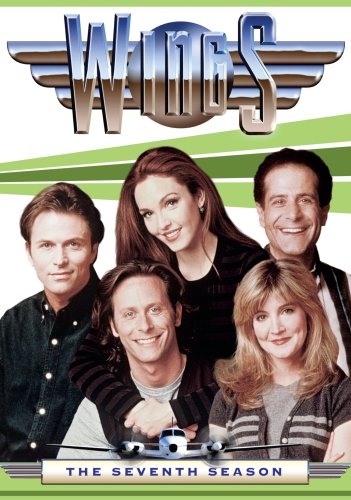
Wings was one of those unusual sitcoms that depended more on the characters than the situations they were in. While the setting was a small Nantucket airline owned by two brothers, most of the episodes had very little to do with flying. Rather, the writers populated this small airline with very distinctive personalities and let these interactions be fodder for the funny. The characters were played by more than competent actors, many of whom have proven themselves beyond this quaint sitcom. Timothy Daly played Joe Hackett, the older, more responsible brother who was often the show’s straight man. His rather adolescent sibling Brian was played by Steven Weber. I wouldn’t exactly say this was Oscar Madison and Felix Unger, but their conflicts over maturity fueled the characters. The airline’s love interest was Helen Chappel, played by Crystal Bernard. She was an aspiring symphony cellist who worked the airport’s lunch counter. For much of the show’s run she had an on again off again romance with Joe. By far the most animated character was mechanic Lowell Mather, played by Thomas Haden Church. It’s still amazing to me that this rather unintelligent character was played by the same guy who brought us Sandman in the latest Spider-Man film. Finally there was cabbie Antonio Scarpacci, played by the current Adrian Monk, Tony Shalhoub. Antonio is an Italian immigrant who has trouble understanding things most of the time, leading to some of the better moments in the series. Fay, played by Rebecca Shull, is the mothering member of the cast. And Roy Biggins (Schram) runs the rival airline and is often engaged in one underhanded scheme or another.

The show’s most basic premise remains intact. Melinda Gordon is a newlywed and owns the antique shop in a quaint New England town. From childhood she has had the “gift” of being able to see the ghosts of those restless departed souls unable to cross over into the great beyond. If this sounds familiar, it should. Remember little Haley Joel Osment from The Sixth Sense? Like his character, Cole, Melinda takes the responsibility of helping these spirits accomplish some unfinished earthly business so that they can move into the light. The series almost always ends with some tearjerker moments as a loved one is connected, through Melinda, with the departed friend or family member.


“You wanna be where everybody knows your name”

NCIS is a spin-off, of sorts, from the popular military lawyer show JAG. You could say that NCIS is the Order to JAG’s Law. The NCIS is a real government agency that deals with criminal activity inside or involving the US Navy or Marine Corps. The series has an incredibly global feel and honestly looks damn good for television. Production values are high, and the location stuff is out of this world, or at least all over it.