Posted in: Disc Reviews by Gino Sassani on August 8th, 2008
Family Ties is likely remembered most as the series that launched the career of Michael J. Fox. There’s no question that he owes a great debt to Alex Keaton. It’s almost a bit awkward now to watch him as this young, extremely conservative teenager after Fox has spent so much of his life as a liberal poster boy in the last couple of elections. Politics aside, it’s hard not to credit his performances in Family Ties and the Back To The Future films for launching him into a well deserved lucrative career. The Michael J. Fox issue, however, might hide some of the other assets the show had going for it in its time. For one of the first times parents were portrayed as humanly flawed, and families were not the perfectly functional institutions most of these shows described. Up until Family Ties, these households were either perfect little examples of American ideal or they were so dysfunctional that they could hardly be considered families at all. This show obviously went for a bit of realism.
Posted in: Disc Reviews by Gino Sassani on August 1st, 2008
“Can you take the dump of death”, or What’s the fastest way to get drunk”. These are the types of questions and answers that make up the Spike TV series Manswers. The idea is that the show answers those pressing questions that you guys out there might have been to afraid to ask. On first look you might get the mistaken idea that this is a copy of A&E’s far superior Mythbusters. On the surface the premise appears the same. Both shows appear to tackle the oddball question and attempt to find the truth behind the BS. Both shows also appear to be targeted to the male members of the audience. Mythbusters uses cool tools and gadetry to prove or debunk the common myths. The guy appeal is obvious, and there’s always a good chance something’s getting blown up. Guys are naturally curious, and we love to see things blow up. Manswers takes the far more pedestrian view of a guy’s interests. Instead of blowing things apart Manswers tries to draw you in with body parts; female body parts, that is. Just about every other segment has something to do with the female breast: “What does shape tell you about how easy she is”, “Can a breast crush a beer can”, “Which float better real or fake”. You get the idea. Now most guys don’t have a lot of trouble with all of this close examination of female anatomy, but the Manswer I want answered is: “Can you go too far?” Turns out the answer is, who could have known, yes.
Posted in: Disc Reviews by Gino Sassani on July 23rd, 2008
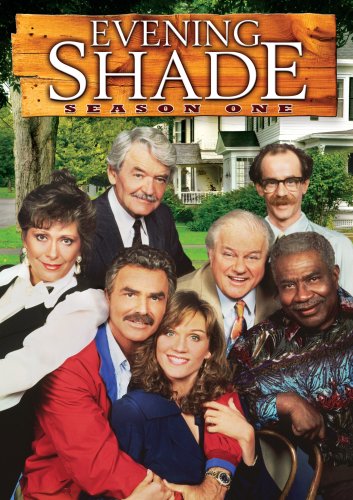
Think of it as Coach meets Newhart. That’s about the best way I know how to describe this somewhat quirky sitcom from CBS. It was mostly intended as a television project for its star, Burt Reynolds. The character would echo Reynolds’ own life somewhat. His character, Wood Newton, was a running back who had moderate success, just as Reynolds himself had. In the show he retired to his rural hometown of Evening Shade. He ends up coaching the local high school football squad which had a propensity for getting blown out in their games. The show was filled with the usual small town hick kind of characters, most notably the show’s narrator and owner of the local barbecue joint, Ponder Blue (Davis). Wood’s family consisted of his wife, Ava (Henner) who was much younger than Wood was. She was a young attorney who gets elected the town’s prosecuting attorney. There was a ton of comedic material to be found in his rather dimwitted intelligence and her more formal education. In this first season she was pregnant with their third child. Wood’s dad was played by Hal Holbrook, and he owned the local newspaper. Wood’s assistant coach was Harlan Elldridge, played by Charles Durning. Eldridge was really a math teacher and pretty much a geek, which offered plenty of comedy fodder for Reynolds. The relationship was very much like that of Craig Nelson and Jerry Van Dyke on Coach.
Posted in: Disc Reviews by Gino Sassani on July 23rd, 2008
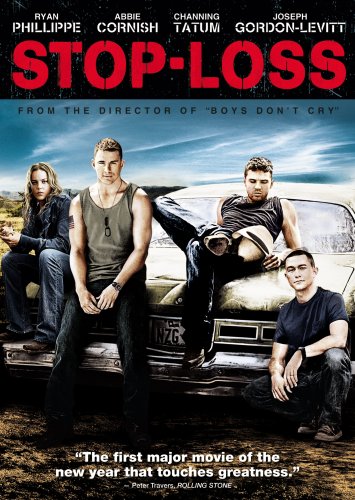
It should not have come as such a surprise to me what Stop-Loss really is. It presents itself as this generation’s Deer Hunter, but it’s actually just another mindless film that, once stripped down to its essentials, is intended only to further a blatant political agenda. I keep hearing that the film is intended to honor our troops, but it presents all of them as mentally messed up idiots who are a hair away from committing crime sprees akin to Natural Born Killers. The aforementioned Deer Hunter also offered up a bleak image of the mental health of vets returning from war, but centered on a particular case. I have no doubt that war affects everyone who participates, but I’ve known returning soldiers who did manage to cope.
Posted in: Disc Reviews by David Annandale on July 16th, 2008
If it's Wednesday, that must mean another batch of SpongeBob cartoons. The lead-off here is the is title episode, a 22-minute piece that recounts the adventures of SpongeBuck SquarePants, our hero's 19th-Century ancestor. The rest of the episodes are an eclectic bunch, and the thematic consistency is less than that of some other collections (there is a vague adventure link that runs through several of the stories). At any rate, the silliness is just as engaging and bizarre as ever, and there are plenty of quick absurdist sight gags to keep you chuckling.
Audio
Posted in: Disc Reviews by Gino Sassani on July 12th, 2008
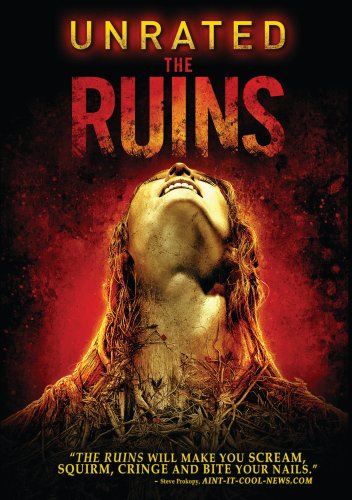
When The Ruins opens, it doesn’t look quite so promising. We’ve got two American couples sharing a vacation in
Posted in: Disc Reviews by Gino Sassani on July 12th, 2008
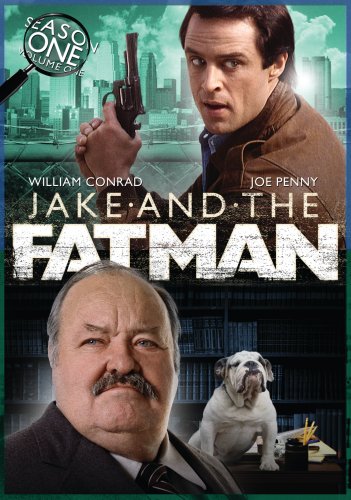
They say that it isn’t over until the Fat Lady sings. Did you ever wonder what “it” was or who the heck this Fat Lady is they keep talking about? I can’t help you there, but I do know who the Fat Man is. It’s William Conrad, who came back to television in 1987 as J.L. McCabe, better known as “the Fatman”. McCabe was one of those tough as nails district attorneys. He was actually an ex-cop, so had great criminal instincts. McCabe wasn’t above bending the law to put away the bad guy, and he wasn’t considered a very friendly type of fellow. He majored in stubbornness and plain speaking. He relied on Jake Styles, his private investigator, to do much of the leg work for the office. Jake was a bit of a flashy playboy, but he always delivered the goods for his boss. Again, Styles wasn’t against breaking a few rules to get what he needed. Styles was played by Joe Penny. McCabe also served as a mentor, of sorts, to young District Attorney Derek Mitchell, played by Alan Campbell. Mitchell was quite wet behind the ears and a little too eager sometimes. His ambition often got the better of him, and it was the gruff McCabe who kept him out of trouble. Finally, the team was completed by Gertrude, McCabe’s loyal and trusty secretary, played by Lu Leonard. While The Fatman put crooks away instead of defending innocent defendants, there could be no mistaking the parallels between Jake And The Fatman and Perry Mason. The two shows were from different times and the styles might not have been the same, but the dynamic was very much the same. You can see a lot of
Posted in: Disc Reviews by Gino Sassani on July 12th, 2008
William Conrad was no stranger to audiences when Cannon joined the Quinn Martin stable of television dramas. In fact, most folks knew his voice before they got to know his trademark girth. Conrad was the original Matt Dillon when Gunsmoke was a radio drama. When the drama entered the visual medium of television, even Conrad admitted later that the audience, who thought of him as tall and handsome, would have been disappointed. His voice lent authority to any role he played, and on radio his size was never an issue. He was famous as the voice of the stern narrator in the Rocky and Bullwinkle cartoons who often crossed the laws of the trade and interacted with the titular characters. He was also the voice that narrated the struggles of Dr. Richard Kimble on The Fugitive, another Quinn Martin Production. He continued to narrate series intros even after his own success. He gave us the informative opening dialog in Buck Rogers In The 25th Century. As a voice, Conrad, was one of the bes, but when CBS approached Quinn Martin asking for a television vehicle for Conrad, it was a huge gamble. The gamble, of course, paid off… well… huge, and Cannon became an iconic figure in television. Cannon was so popular he was showing up on other shows as well. He appeared on the pilot for Barnaby Jones. The show ran 5 seasons and returned with appropriately enough The Return Of Frank Cannon tele-film in 1980. It is also interesting to note that Conrad, while greatly overweight, lived to be 74.
Posted in: Disc Reviews by Gino Sassani on July 7th, 2008
I don’t know what it is about Owen Wilson, but whatever film he’s in he seems to be playing himself. The soft-spoken, rather glib personality has taken him places over the years, but you have to ask yourself if he’s ever going to actually take any risks. Drillbit Taylor is no more a stretch for the actor than any of these other roles. What that means for us, the viewers, is that we’re sure to get a solid and quite believable performance. We know that we’ll end up warming to
Posted in: Disc Reviews by Gino Sassani on July 1st, 2008
Inspectors 81 are back on the tough streets of