Paramount

At one point or another you�ve either seen Ghost, or have seen some of its memorable scenes parodied. Paramount is now releasing a new special collector�s edition of the 1990 Academy Award winning picture. Since then, star Patrick Swayze hasn�t really been up to much besides a Ja Rule video and a small role in Donnie Darko. Whether Demi Moore has seen success since this film is debatable, but for a while there in 1990 these two were the talk of the town. At the time I was too young to have any interest in the film, so prior to this review all I knew were the memorable clips I�d seen. I looked forward to finally viewing the entire film.

Sam Wheat (Patrick Swayze) and Molly Jensen (Demi Moore) are just your average happy couple living out their lives in New York City. Sam appears to have a problem expressing his feelings for Molly, only saying �ditto� when she tells him �I love you.� Apart from this obvious minor hindrance on the relationship, the two seem genuinely happy. That is until one night while walking back from the theatre the couple is mugged, Sam puts up a fight and is shot and killed. His soul doesn�t realize this and chases down the thief. When he returns to the scene, he realizes what has transpired but he doesn�t accept it and refuses to be taken by the light, leaving him on earth as a ghost. Sam follows the thief home and eventually finds out that none other than Sam�s best friend and co-worker Carl Bruner in fact planned his murder. Frustrated and feeling helpless, Sam enlists the help of the fraudulent medium Oda Mae Brown (Whoopi Goldberg), who appears to be the only one who can hear him. Through her, Sam contacts Molly and tries to remedy the situation, but things get out of control and quick.

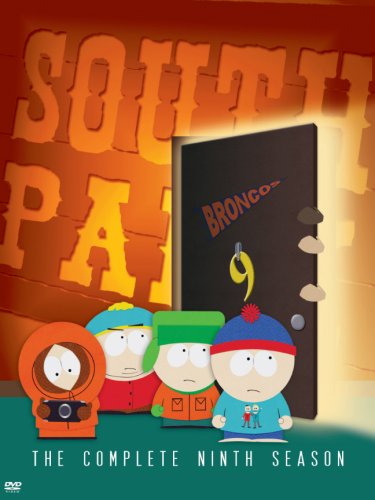
Season 9 was about the most exciting year South Park had. Living in Florida, I was likely more tired of the Terry Schiavo situation than most, but watching Best Friends Forever was one of the best parodies the team has come up with. What was most impressive is that it was on the air while the actual event was still ongoing. One of the benefits of doing a show like South Park. When the boys aimed their guns at Scientology they ruffled more than a few feathers. It was rumored that Tom Cruise had led a fight to attempt to stop the hilarious Trapped In The Closet episode from airing. More important to South Park fans was the outburst of Isaac Hayes who decided it was going too far to make fun of a person's sacred beliefs. Where was his indignation over eight years of piling on Christians, Jews, and pretty much every other religion ever known? Suddenly developing a conscience, Hayes vocally departed the show and South Park Elementary lost its Chef. I guess no more Salisbury steak and mashed potatoes. The Losing Edge has always been one of my favorites. Any kid forced into summer activities intended to make the parents feel better about leaving their kids alone will appreciate this one.Year 9 also found Parker and Stone finished with yet another box office bomb. This time it was Team America. The film's failure meant more full time spent on South Park. The bomb likely also sharpened their bitter wit a bit. There's no question they took no prisoners in season 9.

Video

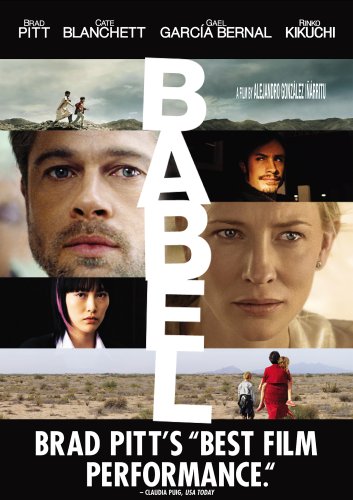
As I right this review, the date is February 24th, 2007 one day before the Annual Academy Award Ceremony, which is a show that this film is nominated in the Best Picture category for. Numerous other reviewers, whether they're critical or simply just internet journalists like myself, have labeled this one as this year's Crash. A statement like that made me worry going into this one because simply put Crash isn't Best Picture material nor is it even close to Best Picture material. While I haven't seen every other Best Picture nominee, I wouldn't completely mind if the Academy did award Babel with the Oscar.

Babel tells the story of Richard (Brad Pitt) and Susan (Cate Blanchett), two rather wealthy Americans from San Diego who're vacationing in Morocco. Their two kids are back in San Diego with their Mexican housekeeper named Amelia. During their vacation in the country, a local herdsmans' young children find a rifle and, unknowingly, take aim and fire at passing spectators on a bus. Unfortunately Susan is hurt during the incident. At the same time we learn that a trip involving Richard, Amelia and Richard's two children has put these characters in a complex situation that may result in them not being able to return to America. And at the same time as that's occurring, another event is occurring in Tokyo involving a widower who just happens to be tied to the earlier mentioned rifle via an ownership right. But this widower also has to worry about the straining relationship he's having with his deaf daughter Chieko.

Some films can be intensely personal. Written and directed by one individual, the stories are fairly long in runtime and epic in terms of hopes and dreams, with characters that intertwine either coincidentally or a little bit more directly. They always seem to have a big name marquee star or two in them and always end on a message of hope or optimism.

Take the case of Babel. Written by Guillermo Arriaga and directed by Alejandro Gonzalez Inarritu, who were the creative team behind the Amores Perros and 21 Grams films comes perhaps their grandest idea yet. The film follows four storylines. The most notable for a lot of people was the one involving Richard (Brad Pitt, 12 Monkeys) and Susan (Cate Blanchett, The Aviator), who are spending some time in Morocco when tragedy strikes. Back at home, their children are being tended to by a kind immigrant named Amelia (played by Adriana Barraza, La Primera Noche), who decides to bring the kids across the border to Tijuana to attend her son's wedding, but when her cousin Santiago (Gael Garcia Bernal, The Science of Sleep) reacts poorly to a border officer's interrogation on their return to America, Amelia is forced to do something she doesn't want to do. Going back to Morocco, two young brothers who help with farming and goat herding, decide to play with a gun that their father gave them (which turned out to be a gift from a friend). And when the playing has some ramifications, the boys head down a road where there's no going back. The last one goes to Tokyo, where Chieko (Rinko Kikuchi, Tori) is a teenage deaf-mute girl who witnessed her mother's suicide as a child, and she looks to try and discover the joy of pleasure despite having to deal with her handicaps.

Synopsis

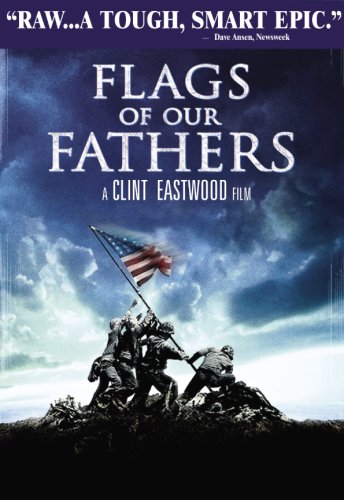
Of all the recent multi-film director stories that have been told in recent years, not too many have been as, well, historical, as Clint Eastwood’s two part telling of the battle at the Japanese island of Iwo Jima. The battle over a key stretch of property in World War II cost thousands of lives, but never seemed to get a proper cinematic treatment as many of the European theater battles have. Regardless, in Letters From Iwo Jima and Flags of our Fathers, Eastwood has given the world ...nother series of films that go beyond the normal “war is hell” mentality, and the first one has just come to DVD shelves.

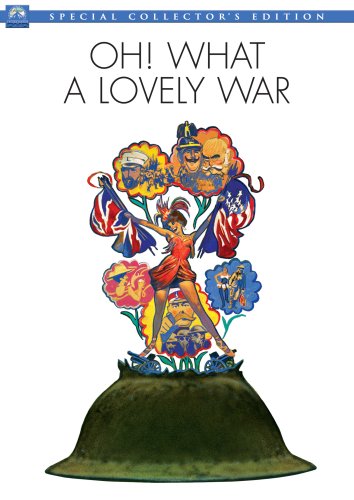
For all the talk about a film being "just as relevant now as when it was released", Oh! What a Lovely War seems to fit that bill more than a lot of movies I've seen recently. From a screenplay by Len Deighton and directed by a first-time director (but longtime actor) in Richard Attenborough (Jurassic Park), the film may be a daunting endeavor for some to see, probably because it's a film that's two and a half hours long and contains a lot of songs.

It also contains a lot of dialogue, and both the songs and dialogue were from the period. The world leaders that are involved during this time of crisis include President Poincaire (Ian Holm, Lord of the Rings), Count Leopold von Berchtold (Sir John Gielgud, Arthur), Emperor Franz Josef (Jack Hawkins, Bridge on the River Kwai), to name a few.

The zaniness continues in Bikini Bottom, and the series shows no sign of losing its appeal or its lunatic creativity. Wonderful little example: “Whale of a Birthday” is about Mr. Krabbs’ daughter’s sixteenth birthday. The highlight: a performance by “Boys Who Cry” singing “It’s All About You.” Perfect. There are twenty episodes here to keep your funny and whimsy bones tickled. (What, you don’t think you have a whimsy bone? Of course you do.)

Audio

Bernardo Bertolucci is no stranger to controversy. His Last Tango In Paris caused quite a bit of noise when it was released. Novecento, as 1900 is known in its original Italian, has been a subject of controversy for decades. Since its 1976 original Italian release, American studios have been cautious about releasing the film in the states, at least as it was originally intended. First there is the running time. The film clocks in at over 5 hours. Theaters in the US face fierce competition for movie goers’ dollars. The economics of the industry make such a long film simply impracticable even in 1976. There were other problems. A short version was eventually brought to the United States, but the unprecedented violence and sexual images required the then dreaded X rating. Even with today’s more forgiving mores, 1900 would certainly have received an NC-17 rating. The political subjects are also problematic. Americans need good guys and bad guys. This film blurs those lines. The competing forces here are Fascist and Socialist. Neither group is embraced here by anyone other than the far left wing of the Democratic Party. Finally, foreign language films serve a very small niche even with today’s public. Mel Gibson broke down some of those barriers recently, but the hardship remains. I must confess, I am not drawn to films requiring subtitles. I find relying on reading the dialogue a distraction. I watch films with a careful eye toward detail. Reading subtitles simply doesn’t allow me the luxury to observe the subtle nuances of a film. It is these minute details that more often than not create a great film. Enter 2006, and the DVD has removed each of these problems. Sitting in the comfort of my own theater, I can pause when I wish and take multiple breaks. The DVD offers me an English dubbed version which allows me to see those magical details that a film like this requires. The dubbed version also has the added bonus of allowing me to hear Robert DeNiro’s and Donald Sutherland’s voices. Like many film connoisseurs, I had only heard of this film. Now I had the chance to enjoy it in comfort and style.

1900 benefits from an extraordinary cast. American staples Robert DeNiro, Donald Sutherland, and Burt Lancaster lead a mostly Italian supporting cast. Sutherland is absolutely evil as the Fascist enforcer, Attila. His mutilation of a cat is quite an infamous scene. Although it wasn’t quite as graphic as legend had proclaimed, it is disturbing just the same, made more so by the gleeful way Sutherland revels in the act. Robert DeNiro shows flashes of the brilliance that would become his trademark. The character is often moody and perhaps not written with as much passion as DeNiro provides. Burt Lancaster has a small but potent role as Alfred’s grandfather. It helps to establish some historic place mark for the film. Finally, French actor Gerard Depardieu provides an uneven portrayal of Olmo. At times he provides incredible passion and depth in the role. Still, there are moments he seems almost uninterested. The chemistry with DeNiro is a little awkward and never really clicks. This is a huge shame, as this relationship is vital to the story.

Four years after Jackass: The Movie took the popular MTV franchise to the big screen, Johnny Knoxville and his gang returned to theatres with Jackass - Number Two. The sequel is bigger, bolder and much more disgusting. But is it better?

In my humble opinion, the sequel equates to more of the same. If you loved the original, you'll eat this up. If you hated it - and we both know those are the only two options - you can happily make indignant remarks to any friends or family in the "love it" camp.

Comments on the supplemental material on this edition have been ported over from Ryan Erb's excellent (and recent) review of the HD DVD, which also can be enjoyed on this site.  Now onto this review...

Remember when it was announced that far-left conspiracy theorist (and resident Castro admirer) Oliver Stone would be making a film about the September 11 attacks? Of course you do. In fact, the collective pucker of the nation tightened in horror and trepidation when the notion was first thrown around, and later grew in suspicion as the film's realization became closer and closer.