Posted in: Disc Reviews by Archive Authors on May 12th, 2006
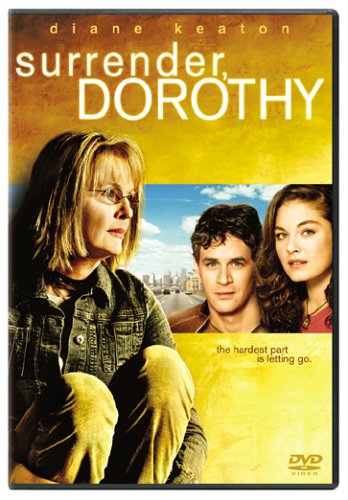
Diane Keaton and Tom Everett Scott star in Surrender, Dorothy, a predictable, over-the-top melodrama plagued with unsympathetic characters, clichés, and unbelievable plot developments. The plot centers on Keaton as she copes with a car accident, which claims the life of her daughter. There is a lot of venom and hostility inside her, as the rest of the world takes a back seat to her own grief. As someone, who has lost a loved one prematurely, I take offense to the behavior of this central character. She’s a sel...ish, loathsome wretch, who feels like she can walk all over her daughter’s friends, simply because she’s the grieving parent. It’s an aggravating picture of grief, and it dims the possibilities of ever feeling for your protagonist. They should have toned her down several notches, because, by the time she does start to behave like a human being, you’re already sick of her. Also, the daughter’s tragic death is made a lot less tragic, when viewers actually get to know the kind of person she was. Her greatest offense is to engage in adulterous sex with her best friend’s husband, who gets her pregnant. Then, in a glowing act of heroism, she aborts the child out of convenience as if she’s having a wart removed. This portrayal does a real disservice to the women out there, who have made this decision out of duress, and then carry it with them all the days of their life. It does a disservice to the women, who wanted to have children, but couldn’t, because doing so would endanger their lives. Within the context of the film, it’s a selfish, loathsome act, from a selfish, loathsome daughter, who was raised by her selfish, loathsome mother.
Needless to say, I hated this film, but not because it was poorly made – or even poorly acted. Keaton is competent enough. Tom Everett Scott, as the token gay best friend – and he really is a token character, in this case – does the best he can with the material and, in fact, elicits more sympathy from viewers than any other character in the film, combined. No, my disdain hinges entirely on the lack of respectability of the characters. Each one – with the exception of Scott and the wife of the adulterous husband – tramples all over the others’ feelings, and uses them to get what they want, until a nice, neat little ending, where we are supposed to believe all is right with the world. It just wasn’t a great idea making a film, which tries to sympathize with the unsympathetic – a film where the only likeable characters are the ones, who take the proverbial back seat. If this is Keaton’s idea of a “good role for female actors of a certain age,” I’d hate to see her idea of a bad one.
Posted in: Disc Reviews by Archive Authors on May 10th, 2006
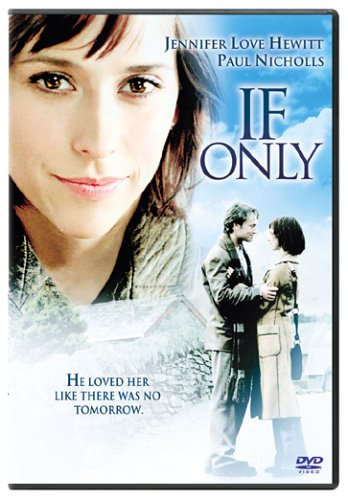
If Only is a romantic drama, which too often goes for the cheapest emotional reaction out of its viewers, without incorporating logic or common sense into such decisions. Jennifer Love-Hewitt and Paul Nicholls star as a couple of young lovers, who represent the prototypical female and male, with very little surprises in their characterizations. In the beginning, we see Nicholls is a bit invested in his work, and, while adoring his singer-songwriter girlfriend, he instinctively keeps her and the rest of the wor...d at arm’s length. This distancing is due to a somber childhood, which involved a relationship with his alcoholic father that was filled with both admiration and disappointment. His father was his hero, but is now the case study Nicholls’ character uses for how NOT to live his life… due to the alcohol, of course. But as a result, Nicholls’ character tends to run from love, when it’s staring him in the face (and I mean that both figuratively and literally). Then, something huge happens that forces him to approach life from another perspective… his girlfriend dies in a car accident. The accident makes him realize just how much she meant to him… but it all comes too late.
Or does it?
Posted in: Disc Reviews by Archive Authors on May 9th, 2006
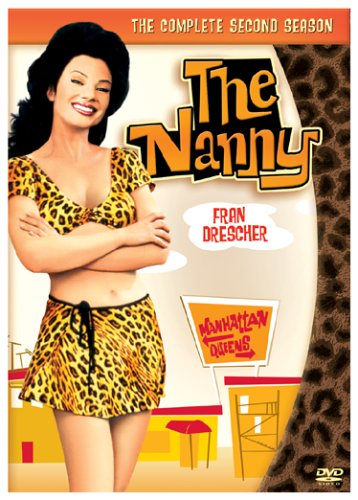
Fran Drescher, the nasally, whiny-voiced beauty we all either love or hate, returns in The Nanny – The Complete Second Season, and the show hits its stride, if you’re of the belief it ever had one. With mileage out of the mutually aloof Fran Fine-Maxwell Sheffield (played by Charles Shaughnessy) relationship, The Nanny does manage a few chuckles, even from someone such as myself. Let’s make things clear right out of the gate: I’m not a Nanny fan. If I had free reign to decide on everything that w...uld, and would not, be watched on my television, this hit show from the nineties would never make the cut. Never mind that its star is an absolute knockout. (You know she must be gorgeous if you still find her attractive in spite of that voice.) But alas, I don’t have that autonomy, for I am married. That, along with the frequent airings on Lifetime, spells out whom the show’s demographic really is – women… in particular, women, who wish to escape in the form of a fairy tale with real-world context. I can’t fault them for liking it; and the show really does succeed in reaching that demographic. I’m just not of the multitude.
Sony’s package includes all 26 of the second season episodes completely uncut. Most of the laughs are hokey and telegraphed, but a few will occasionally take you off-guard, especially during Niles the Butler (hard to believe this guy’s from my home state of Arkansas, as his British accent easily bests Shaugnessy’s – who’s actually from England!) and C.C. Babcock’s banter. Also of value is the aforementioned relationship between boss and employee, as the show, from its very first episode (“Fran Lite”), plays up the continual “they’re perfect for each other, but don’t know it” angle. I don’t hate this series, and some may really feel it’s blasphemous to make this comparison, but I honestly look at it as an I Love Lucy for the nineties. I get the same escapist feeling from both programs, and neither one invokes much laughter in accordance with my personal tastes. But neither show is fly-by-night either, and I’ve got a feeling each will hang around for some time to come.
Posted in: Disc Reviews by Archive Authors on May 8th, 2006
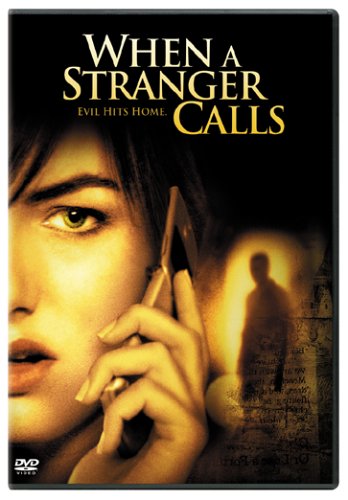
First off, let me say what a great idea it was to remake this film. The original has enjoyed elevated status far too long based only on an intense 23-minute opening sequence. And as good as that opening piece of suspense is, the same exact premise punctuates Bob Clark’s earlier 1974 masterpiece Black Christmas – so even what When a Stranger Calls does well owes a debt of gratitude to an overall better film. Still, I’ll give the Devil his due – knock-off or not, that sequence stands as an effective, inte...se short film, which carries the baggage of an additional three-quarters worth of movie, poorly executed with a wandering eye from character-to-character that spoils the memories of what was done right in the first place. With that said, let me now state what a missed opportunity this remake is. It fails to an equal extent, but does so in different ways. Director Simon West decides to set his redo in one night using a plot twist, whose shock value has had nearly thirty years to dissipate. Most know simply by watching the previews on TV what the big reveal is going to be, and that advanced knowledge causes the audience to sit through half the film twiddling thumbs. The suspense scenes at the end are well-shot, but largely uninspired… there is simply nothing visceral about this polished piece of lightweight teeny-bopper horror, and the premise itself is spread too thin across the 87-minute running time.
Now I’m going to do something unprecedented. I am going to beg Sony Pictures to remake this film again, and I am even going to give them a way they can do it, make big bucks, and a suspenseful classic (which both incarnations should have been to begin with) at the same time… and I’m going to go on record out of my love for the idea with no vain hopes they’ll see fit to compensate me for the time and trouble. This is a freebie, Sony… take note! The next time you remake this film, use the structure of the original. Act one – the “Oh no, the babysitter’s screwed” moment (also, kill the children). Act two – five-to-ten years later: only this time, instead of having the film float from character-to-character like it has ADD, stick with the girl. Set up her life elsewhere. Have her be someone the killer selected for a reason. Have her as the object of his obsession. This way, it makes sense when he comes after her upon escaping years later. Her living in another location would also provide a plausible explanation for her not knowing this guy is on the loose. Then, make the rest of the act about the killer slowly working his way back into her life, and perhaps even whittling away on the people close to her. Act three – he comes after her. This is where the heroine can really be seen for her strength. Give her something to lose (as the first one did) – perhaps even children, so the killer can break out his famous line one last time. Put her through hell and high water to reach the inevitable happy ending, continue to keep the killer a mystery (NOT like the original interpretation), go for the throat with an R-rating, and release to box office records. I say all this to prove a point: there’s a good film – no, a great film – hiding in the original idea for this story. But while both versions currently out there have strong points, neither puts in the hard work to cultivate the material into something truly special. If you’re in the mood for something similar (that has more punch to it), stick with Black Christmas and the far superior sequel to the original When a Stranger Calls Back.
Posted in: Disc Reviews by Archive Authors on April 27th, 2006
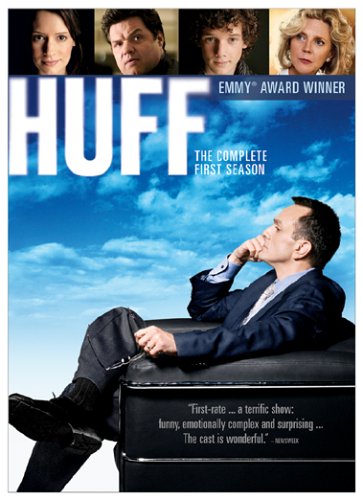
Huff – The Complete First Season, the Emmy Award-winning series from Showtime, comes to DVD from Sony Home Entertainment, and I have to say I couldn’t be more pleased with discovering it. The one thing I miss about premium channels in my cable package is getting to take part in the onslaught of superior original programming channels such as Showtime and HBO have to offer. Needless to say, Huff is a fitting inclusion to my reasons for jealousy towards all you subscribers out there. It follows the life of...Craig Huffstodt (Hank Azaria), a psychiatrist in need of a few answers himself after witnessing the shocking suicide of a young gay patient during a therapy session. The tragedy reminds him to focus more on his own life, and start actually living it – but as the first thirteen episodes of this season attest, Huff has too much “angel of mercy” in him for such a task to be easy. The show, unflinching in its honesty, examines both sides of the “helping others” coin. Often times, one person helped translates to the neglect of several others much closer to the do-gooder. I enjoyed that aspect of the show, as well as its well-drawn characters.
Hour-long dramas such as Huff are free to create more depth and realism to their characters. In this particular case, it’s like watching a great novel set to film. Instead of telling you what to think or believe about a person or situation – as films do - Huff manages to “let it be,” and allows the viewer to draw conclusions on their own. Azaria has a stellar cast to fall back on, too. Blythe Danner (Huff’s mother); Oliver Platt (his oft-unscrupulous attorney); and Paget Brewster (his wife), put everything they have into their characters; and Bob Lowery (writer and series creator) knows how to present them in a lifelike manner. You don’t just get their shining moments of humanity or inhumanity – you also get to observe these men and women, when life throws them a curve, and they’re forced to walk a different path – unnatural to their basic natures, but realistic to the human condition. It’s a warts-and-all series that, like life, manages lighthearted moments of humor one minute, and heartbreaking tragedy the next. Who knows how long it will last? But with this first season, Lowery and company have built a strong foundation deserving of many more to come.
Posted in: Disc Reviews by Gino Sassani on April 26th, 2006
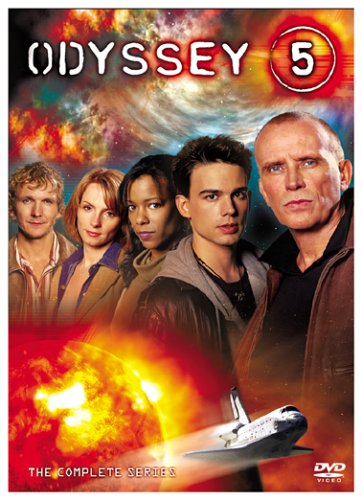
Manny Coto almost saved Star Trek. After 2 years of Rick Berman’s floundering on Enterprise, Coto came in and gave the show its legs. It was too little too late, of course. The show would be canned when most critics, myself included, thought the show was finally clicking. This near resurrection should come as no surprise to anyone who has seen Odyssey 5. Coto created this Showtime series. Superior f/x and a compelling story arc drove this cable cousin to Stargate SG-1.
The astronauts of the Space Shu...tle “Odyssey” encounter one situation the nerds at NASA hadn’t prepared them for: the total destruction of Earth. The five surviving crewmen don’t have time to consider their situation before an alien approaches them with a sad story. It seems that every time he reaches a sentient species, he arrives after they have destroyed themselves. Fortunately for everyone, he has the power to send the crew’s consciousness back to their bodies 5 years in the past. They will relive the last five years, but with the knowledge they already possess in an attempt to uncover the conspiratorial elements that will eventually destroy the world.
Posted in: Disc Reviews by Archive Authors on April 25th, 2006
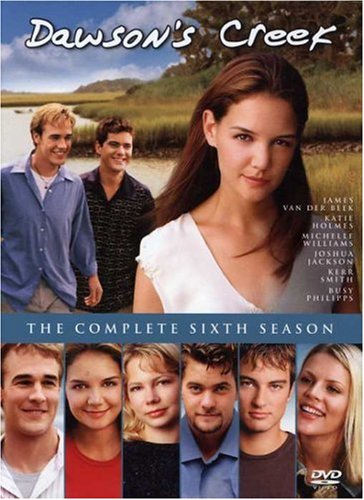
Dawson’s Creek follows the lives of Dawson Leery (James Van Der Beek) and his friends, as they struggle through their formative years and – in this final season – search for their places in the adult world. The first episode pulls a cruel tease in finally putting Joey (Katie Holmes) and Dawson together before the rug is pulled out from under their love affair the very next episode. Some might say it’s a decision from which the season never recovers – I say the show never had its footing to begin with. Plagued ...y writer and executive producer Kevin Williamson’s penchant for overwriting every single character, the two-hour finale has more laughable life affirmations that in no way resemble the ways that actual people talk than you can shake a stick at. His dialogue – and that attributed to other series scribes – revels in its own verbosity. No matter what the character’s intellectual playing field, he or she has something profound, deep, and flowery, to say; and such speech is usually followed by a self-congratulatory retort from another character – as if the writers are throwing out a line they think sounds terrific, and they’re so pleased with themselves, they must have the other conversational participant pat them on the back for thinking of it. I can’t tell you how many times you’ll hear things like, “So true”; “Well-put”; “I never thought of it that way”; “I couldn’t have said it better myself”; blah, blah, blah…
The final decisions for the two-hour finale are also terribly clichéd and can be seen coming from a mile away. Williamson drives one major character’s death into the ground so much that by the time he/she actually goes, you’ve lost all emotional attachment to the character, and are just thankful you don’t have to listen to one more weeping goodbye. On an unrelated note, the show heavily promotes the gay lifestyle. What your feelings are with regards to this are your own business, and as a free citizen, you have every right to them, but what Dawson’s Creek is guilty of is its refusal – along with the rest of popular entertainment – to feature positive characters opposed to the lifestyle. In this case, the show skirts the issue all together, with the exception of a moment where Jack (the primary gay character) refers to such thinking as living in “the Stone Age” – a relatively small potshot, but still a potshot. I’m not suggesting the gay characters be portrayed in a negative light – but it would be nice if the writers had a large enough understanding of the human race not to paint the opposition in such broad, generic strokes. Of course, if these writers had such ability, they wouldn’t be the pompous lit-class rejects they come across as in this show.
Posted in: Disc Reviews by Archive Authors on April 24th, 2006
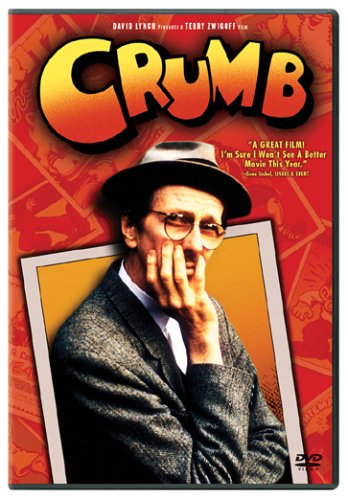
Say what you want about Robert Crumb, and his controversial cartoon funnies, but at least he’s found a healthy way of expressing not-so-healthy ideas – more than what can be said for his brothers, Maxon and Charles. Sony’s classic documentary Crumb (directed by Terry Zwigoff) demonstrates this in a beautifully ugly piece of filmmaking, now available in a new special edition to celebrate (albeit, a bit late) the film’s tenth anniversary. Maxon is the “molester” of the Crumb kids, and I say that hoping it’s an e...aggeration, but knowing somehow, deep-down, he’s probably been on his share of sex offender lists. Charles, if not for his appearance in this documentary (and role in Robert’s life), might as well not exist. He sits at home and bathes sporadically (but never often enough – you can almost smell the guy as he sits there with a pompous grin and green teeth), and he never leaves the house to get a job, seek out a slice of personal happiness, or add any value to society. The brothers of Robert Crumb are, indeed, losers, and the only things preventing Robert from sharing their fate is his talent for drawing, and for using said talent to carve out a better niche in life. Still, he, too, is guilty of hypocrisy, not necessarily in his work, but in his personal thoughts and opinions. He bemoans the commercial aspects of our society. He makes rushes to judgment about large groups of people, based solely on the kind of clothes they wear, yet his own views do little else besides espousing hostility towards women and presenting other races in unflattering lights (even if that isn’t his intended purpose). He can lay claim to all the liberal social ideas he wants, but if an African-American read his strip “Angelfood,” and had immediate access to Crumb’s throat, he or she would be ringing it emphatically (and would be just in so doing).
I am unsure of Zwigoff’s intentions in his presentation of Crumb – is this guy supposed to be a visionary artistic hero, or a mealy-mouthed little pervert with better ways of expressing it than Max? What I managed to draw from Crumb is that the case can be made for both. Make no mistake – I did not like this man. I’m more inclined to believe the pervert aspect of him than the hero. Still, I find his artistic style pleasing to the eye, and I enjoyed this examination of his work very much. He may not be a model citizen, and his move to France, which takes center stage in the final act, can only mean good things for our country, but he’s an interesting chap, and he makes for interesting viewing during the solid two-hour running time. I also found the extensive discussions among the three brothers very fitting to the film’s overall purpose – to dissect a legendary artist and his work. See, the brothers play such a huge part in shaping what this central figure becomes that, without them, there is no film – and subsequently, no Robert Crumb. Overall, this is a great piece of documentary filmmaking, which represents the difference between those that dream, and those that make their dreams come true. But the more obvious message – at least, to me – through the dichotomy of the Crumb siblings’ personalities, is how a degenerate doesn’t have to be a human slug, too. And that’s how Robert differs from his brothers.
Posted in: Disc Reviews by Archive Authors on April 23rd, 2006
When I received Bachelor Party Vegas in for review, I took a quick glance at the cover and the basic plot and thought to myself ‘Oh, I haven’t seen something like this before.’ I suppose a film like this is a guaranteed profit maker since these films are usually pretty cheap to make and don’t need to involve much big talent or production.
The film beings with the apparent 10 Commandments of the Bachelor World. Some of them are amusing barely cracking a smile, while others are down right bordering st...pidity. We meet five best friends who want to take their best buddy played by Jonathan Bennett (Mean Girls) out to Las Vegas for “the wildest, craziest weekend of their lives”. Along the way, we get many a scene that seemingly gets dumber as the film progresses. First up, when the boys arrive in Las Vegas, it appears they’re going to get a lap dance from a stripper. Turns out that this stripper is a old woman. The rest of the scenes, including another lap dance from a bald, fat guy, should have be thrown on the editing floor.
Posted in: Disc Reviews by Archive Authors on April 22nd, 2006
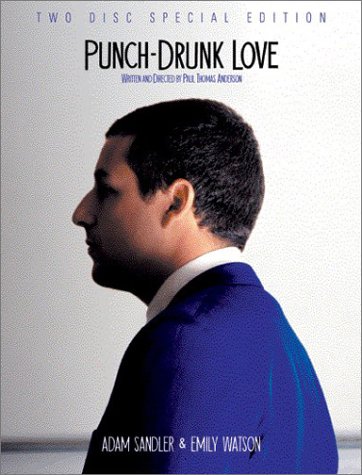
A critically acclaimed Adam Sandler film? I’d never would I have thought I’d see the day. I guess if The Truman Show is one of Jim Carrey’s dramatic stabs, then the star of Big Daddy can give a romantic comedy a try. Written and directed by Paul Thomas Anderson (Magnolia), using a story from the “Strange But True” category, combined with adding a touching tenderness to his characters, wrapped up with Sandler, playing a quiet, soft spoken man prone to fits of blind rage.
Sander is Barry ...gan, a novelty toilet plunger salesman with 7 sisters, who don’t hesitate in bullying him at every opportunity. Barry has times where he has periods of anger that cause him to destroy things, such as a sliding glass door at one of his sister’s houses. One morning, while at work, Barry discovers a harmonium that is left abandoned outside of the warehouse where he works. The harmonium becomes a metaphor for Barry’s pursuit to reclaim his life, as he periodically tries to play it through the film. Barry soon meets Lena (Emily Watson, Breaking the Waves) who drops her car off at the mechanic next to Barry’s office, but her intent is to meet him. Barry is attracted to Lena, and his awkwardness around her is cute to see, as if he’s a 13 year old trying to figure out what to do and say. Barry’s conflict in the movie is when he calls a phone sex company. He’s very awkward, and even confused, when talking with the girl on the other line. She decides to extort money from him, and enlists the help of Dean (Philip Seymour Hoffman, Capote), the owner of the company, and 3 crazed brothers.Through this, Barry is inspired by Lena, and when he finds out about a business trip she has to take to Hawaii, he takes advantage of a loophole in a Healthy Choice Promotional Campaign, which allows him to collect over 1 million frequent flyer miles from pudding purchases. He’s unable to redeem the miles in time, but he goes to meet her anyway.