Warner Bros.

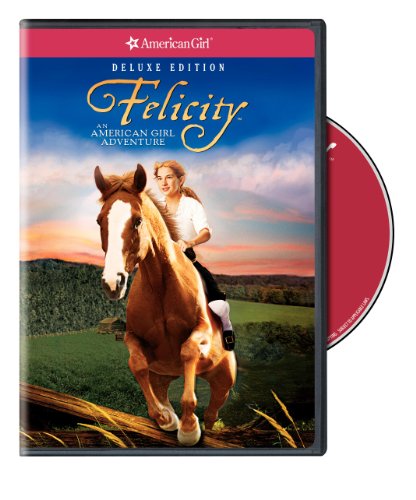
The American Girl series appears to have started as a collection of dolls. The collection featured various girls from a wide range of historical periods. The dolls came with rather unique histories that provided both a chance to bring the doll to life in the imagination of the child and also teach a little of what life might have been like for girls that lived in these different eras. Of course, the collection had to have accessories, and before long an entire industry was born. The dolls led to a series of books that fleshed out the adventures these characters might have had in their time periods. The books managed to sneak in some wholesome values along with the romantic adventures. The books became quite popular with young girls, and so it was inevitable that this would all lead to films.

The films would come in a series of made-for-television movies on the CW. Each movie centered around a different girl. All were ten years old and lived in a particular time of American history. The second of these movies was Felicity.

There are two ways to address a familiar film plot. The easy route, of course, is to dismiss it as recycled fluff, reciting the similarities to its predecessors. The more discerning course is to give the newcomer a chance to prove itself as a creative variation on the theme. That’s how you can give Due Date its due. In the first few minutes, you’ll notice the script verges on carbon-copying Trains, Planes and Automobiles, the 1987 John Hughes hit about two utterly mismatched men on a comically catastrophic cross-country road trip.

Check the parallels: One of the guys is an uptight, super-straight, slightly pompous type who has a powerful reason to get home by a certain time. In the original, it’s Steve Martin struggling to make it for Thanksgiving. In the update, we get Robert Downey Jr. , desperate to witness the imminent birth of his first child. Each man’s plans are shattered by a walking disaster – a free-spirited jinx whose apparent sincerity is overshadowed by an uncanny ability to turn any given situation into pain, inconvenience and humiliation.

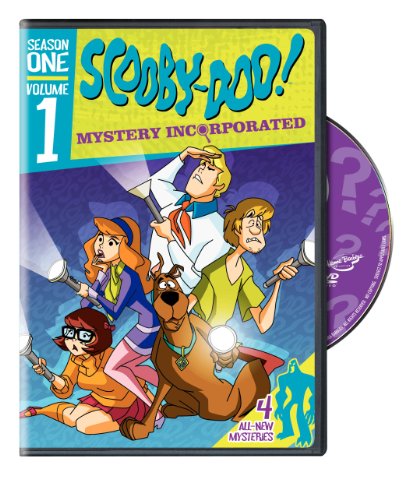
Scooby Doo has spanned generations and over 40 years. Since the 1960’s the name and conventions have become a part of the pop culture. The original cartoon series had a series of conventions. The Scooby Gang would drive around in their green Mystery Machine van and solve ghostly mysteries. Fans of the show quickly grew to learn that these spirits and goblins were usually just normal people using scare tactics to get revenge or make a profit. The cartoon classic spawned music albums, live action movies, and several new shows and animated features.

The jokes haven’t changed much, even if the voices have. Frank Welker, who voiced Freddie briefly in 1970, returns as Freddie and Scooby Doo. Unfortunately Don Messick died in 1997, and Welker has been voicing the pup since that time and before. Mindy Cohn has been voicing Velma since 2004, replacing a line of actors starting with Nicole Jaffe. What’s important is that Casey Kasem does not return as Shaggy, a part he’s played since 1969. That part now goes to Matthew Lilard. Don't get me wrong, he does a fine job, but this was the most unmistakable voice in the mix up until now. Older fans will notice the change with sadness. Part of me is very glad to see that Scooby and the gang are still out there working for Scooby Snax. The charm remains, even if the jokes don’t appear quite as funny anymore. Daphne is now voiced by Grey Delise. She's done the voice on and off since 2001. Heather North was the original voice and has come back to the role as recently as 2004.

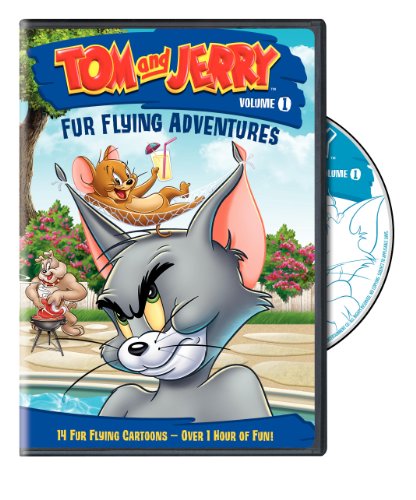
In the 1930’s and 40’s MGM was trying to get in on the lucrative animation game. The field was dominated at the time by Warner Brothers with their Loony Tunes shorts, and of course, the iconic cast of animated characters coming out of the Walt Disney Studio. For years they had failed to find the right property to take advantage of the market. It wasn’t until the team of William Hanna and Joseph Barbera approached the studio with their first project that the times did change, at least a little, for the fledgling animation department at MGM. The project was far from an original one even for the time. It was a very basic cat-and-mouse adventure featuring a cat named Tom and a mouse named Jerry. There would be almost no dialog on the shorts. It certainly didn’t look like much of a hit to the studio brass, but with no better ideas on the way, they went ahead with the new shorts of Tom And Jerry. There’s a reason why the cat-and-mouse pair is such a classic. It’s because it works. If you can make your characters entertaining and endearing enough, you can have a hit. MGM finally entered the major leagues, and the team of Hanna and Barbera would become one of the most successful animation teams in history. They would go on to create such cherished characters as The Flintstones, Yogi Bear, The Jetsons, and, of course, Scooby Doo.

These were the days of the Golden Age in Hollywood. These shorts were not being produced for television, which hadn’t been invented when they began; rather, they were intended for theatergoers. In those days going to the movies was much more of an inclusive experience. You always got a cartoon short along with an adventure serial, the likes of Buck Rogers, Flash Gordon, and The Lone Ranger. These multi-chaptered serials were the forerunners to the modern television series. It kept you coming back to the movies to see what would happen next. Each chapter ended in a cliffhanger. These early serials were the inspiration for such film franchises as Star Wars and Indiana Jones. Finally you got one, sometimes two movies, all for the price of a single admission.

"No young man, no matter how great, can know his destiny. He cannot glimpse his part in the great story that is about to unfold. Like everyone, he must live and learn. And so it will be for the young warlock arriving at the gates of Camelot. A boy that will, in time, father a legend. His name ... Merlin."

Merlin. You know the name. It conjures up images of a white-haired old man with a long gray beard and a long pointed hat. His story is indeed legend. In the myths of Arthur and his Knights of the Round Table, he is destined to be the mentor to the King of Camelot. We've all heard the stories of the Sword in the Stone and the Age of Chivalry. Perhaps it is totally appropriate that this telling of Merlin come from British television. England is, after all, the origin of the fanciful legends.

Most of you watched in horror as we went through our first round of the trilogy of terror. Round 2 in this Romantic terror-thon is coming right up. In this chapter, we explore two godparents who get thrown together after a baby devours her parents whole. Scared yet? No. How about the parents were thrown into Hell to act as Oprah’s personal foot massagers and the couple of Katherine Heigl and Josh Duhamel have to pick up the pieces? There we go. Let’s explore this mess shall we?

It is the year 2007. I was starting a new relationship. AHHHHHHHHHH. Oh wait, that’s not supposed to be scary but apparently it was for Holly Berenson (played by Katherine Heigl) and Eric Messer (played by Josh Duhamel). They go on a first date and everything goes horribly wrong. This leads to a disastrous ending where the actual date doesn’t even get started. Why did they even try to go out on the date? Well it had something to do with their best friends.

Written by Diane Tillis

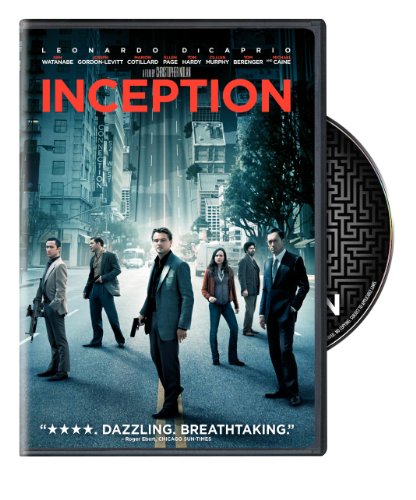
It is hard to talk about Inception without spoiling something. It is also hard to read any review and get a full feel for the film. Inception truly needs to be seen to understand why it is so amazing. On one level, it is an incredible action film that revolves around the heist scenario set in exotic locations such as France and Japan. On another level, the core purpose of the film is a complex discovery into dreams and the subconscious, and the consequences that come with manipulating the mind of another person. Inception is packed with inventive action, high drama, ideas and emotion. It is a masterpiece; whether it makes a billion dollars or not, it is a triumph for mainstream cinema. As the complexities of the film unravel themselves on the screen, Inception stands as a reminder that there is more to mainstream cinema than mindless entertainment. It forces the audience to think and question everything they are experiencing. If you give Inception the opportunity, I promise you will not be disappointed. In fact, you will want to talk more and more about the film once the credits roll to figure out what it all means. This is a sign of great cinema! Just for precaution, possible spoilers ahead!!

Bryce and Juli first meet in the second grade. Juli is convinced that Bryce is walking around with her first kiss, while Bryce is not returning any sense of being similarly infatuated with Juli. As the years pass by, Bryce manages to keep her at bay, until things “flip” (as it were) and it is Juli who may be veering away from Bryce.

This will-they won't-they (probably will) romance is told by trading the point-of-view and narrator between Bryce and Juli. This tactic makes the story more interesting to take in, despite the potential tedium of having the entire story essentially being told twice. The audience is privy to the continuous compare and contrast happening between Bryce and Juli's thoughts and feelings and so we get a more immediate understand of who they are, and what they are motivated by.

In December of 1980, John Lennon was gunned down by a crazy man who was trying to get the attention of yet another celebrity. In 2010, the BBC assassinated the man's character in this dreadful television film called Lennon Naked. I had such high hopes for the film. I rather like star Christopher Eccleston. I enjoyed his take on The Doctor from Doctor Who. He was also quite good in the zombie thriller 28 Days Later with a run as a man who can become invisible on Heroes. What made such a fine actor stoop so low as to take a gig like this is beyond my understanding. If it was the temptation to maybe play an idol from his childhood, I would have hoped he would have stopped short once he'd read the script. As the aforementioned warning tells us, this film is actually a hodgepodge of speculation that doesn't fail to kick the singer at every point.

I'm not a huge John Lennon fan. In fact, I only have mild feelings about The Beatles in general. I respect what they have done but have leaned more toward Paul and George in their years after the super-band. I have no illusions that Lennon was anything but a spoiled brat, particularly at the height of his career. His famous, "We're bigger than Jesus Christ" statement said a lot about his immaturity at the time. It should be expected. The "lads" were mere teens when their music caught fire. Before they had a chance to start shaving, women were throwing themselves practically faint at the band, and money was coming in as if it were the most common thing in the world. It's really no wonder that the band members had a feeling of entitlement and were a bit rough around the edges. There is certainly a bit of fairness to some of this portrayal.

I grew up on the Peanuts creations of Charles M. Schulz. Most of us have, in some way or another. His newspaper comic strip is one of the longest running and most successful strips of all time. The work has been translated into every language currently spoken on the planet. The images of Charlie Brown, Snoopy, Linus, and the rest of the Peanuts gang have appeared on just about any kind of product imaginable. Our pop culture contains too many references to the strip to mention briefly. For me, it was the television specials starting in the mid 1960’s that brought the gang into my life. The classics are running annually, still after nearly 50 years. A Charlie Brown Christmas, A Charlie Brown Thanksgiving and It’s The Great Pumpkin, Charlie Brown are the most mentioned and certainly beloved by generations of children and adults. I thought I never missed an airing.

A Charlie Brown Christmas