Posted in: Disc Reviews by Gino Sassani on November 22nd, 2010
Imagine a world where Winston Churchill battles deadly machines from space intent on dominating the universe, a place where Santa is a deadly menace, and a rather eccentric fellow travels about in a police call box with a rather deceptively spacious interior. To Dr. Who fans of all ages, this is all very familiar territory. I fell in love with Dr. Who as played by Tom Baker from 1974 – 1981. He was the fourth actor to portray the Doctor and arguably the most popular. With a pocket full of jelly babies and a trusty sonic screwdriver, the Doctor rather muddled his way about with a massive wool scarf around his neck, all the while solving the mysteries of the universe. It was through PBS stations in the late 70’s that Americans were first introduced to these adventures on a regular basis. Before long the Doctor would develop a cult following of sorts, particularly at college campuses. The Doctor was an alien from the planet Gallefrey. A time lord, he traveled through space and time in his TARDIS, disguised as a police call box by a chameleon device. He was accompanied by a line of companions that would serve as the representative of the audience. These women provided a place for the Doctor to bounce his ideas off of, and from time to time they would require a bit of rescuing. The show was noted for its low budget f/x and over-the-top villains. The cardboard sets often appeared as if they would collapse at any moment. All of this created more than a little bit of campy cheese. But for some reason there was a charm to the entire play that was oddly compelling. To ensure longevity, the character was able to regenerate when faced with death. The new Doctor would not only look different, but he would sport an entire new range of mannerisms. This way the series would continue through several changes in the actor playing him. It all worked, and Dr. Who became the longest running scripted science fiction show ever in the world. Of course all good things do come to an end, and so did Dr. Who, in spite of an American television film attempt to bring the character back. But what started with Peter Cushing in a couple of films finally ended for good…
…but not so fast.
Posted in: Disc Reviews by Gino Sassani on November 22nd, 2010
In 1887, readers of the popular periodical Beeton's Christmas Annual were to receive quite a special treat. There wasn't much fanfare or hype to the event. Inside the pages of the magazine was a story called A Study In Scarlet. It was a detective story, perhaps like many published before, except for the detective himself, a certain Mr. Sherlock Holmes. Together with his faithful companion and chronicler Dr. Watson, Holmes would win the hearts of those holiday readers. It might have been an ordinary day, but the world was about to change. Sherlock Holmes would become the most famous detective in the world. His stories would remain in print nearly 130 years later. Over 100 films would be made featuring the character. There would be television shows and cartoon spoofs. No other character has appeared in more productions. When his creator dared to kill the beloved detective in order to move on to newer stories, his very life was threatened. It would seem that Doyle was on the verge of becoming a victim much like those in his stories. There was only one man who could save him from such a grim fate, and he did just that. It was Sherlock Holmes himself.
Today, Holmes has enjoyed a bit of a resurgence. There's been a stage production of Hounds Of The Baskervilles. Robert Downey, Jr. played a more modern action-figure version of Holmes in a very successful blockbuster film. A sequel is on the way. It seems that Holmes has more lives than a cat.
Posted in: Disc Reviews by Gino Sassani on November 22nd, 2010
“Things never happen the same way twice.”
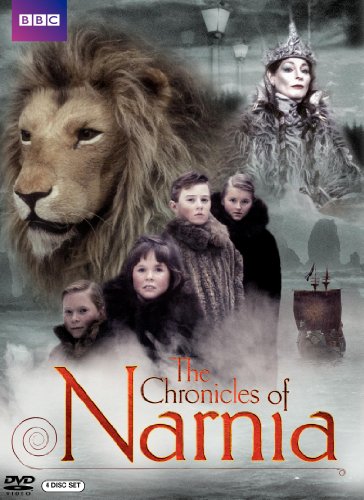
C.S. Lewis created an incredibly imaginative world when he wrote his Chronicles Of Narnia. The stories were an escape, of sorts, from a war-torn Europe. They integrated elements of Christianity in an effort to provide a semblance of hope in the form of a children’s fairy tale. And like all such tales, the world of Narnia was first and foremost a place of magic and bewilderment. It was a place where fantastic creatures of both good and evil thrived, living out epic lives of adventure. It was also a world where only children could enter. The stories became hugely popular, first in England, and eventually around the globe. Since that time we live in a different planet than the one Lewis was attempting to offer a respite from. Still, the images and ideals are remarkably relevant today. With such sweeping grand adventures and marvelous creatures, it’s no surprise that the franchise has found its way into films. The only real mystery is why it took so long. Perhaps it was necessary for the technology to finally catch up, providing a far more realistic and captivating experience. Some credit must also go to the enormous success of the Harry Potter and even the Lord Of The Rings films. With the investment of time and money required to bring such a world into existence on celluloid, there must be some reasonable assurance that, if done correctly, there was a large enough profit to be found. These earlier, and continuing, franchises have overwhelmingly proven that point. It was only a matter of time before the studio that practically invented movie magic would find such a place as Narnia and claim it for their own. When you combine these extraordinary histories together, can there be any question as to the results?

Posted in: Disc Reviews by Gino Sassani on November 8th, 2010
I'm not exactly sure what it is that audiences expected when Splice hit the box offices in June. I will have to admit that the trailers were not all that impressive. But I guess that most people didn't see what I saw when I looked at the early promotion for the film. I was fascinated by the appearance of the "creature", and the overall Frankenstein overtones were too much for me to resist. The movie compelled me from the first images and descriptions. Apparently, that wasn't the case in general. Splice tanked at the box office. It barely made $17 million. That's bad news, because the film cost $30 million to make. That figure is actually quite impressive. This was a small movie for one so ambitious. It looks like something that cost twice that to make. It didn't matter, in the end. You stayed away in droves. Back in June, you just might not have known any better. Lucky for you, my gentle reader, you have me to help to guide your home video purchases to get the most bang for your hard-earned buck. In this case, to also correct a serious miscarriage of justice. Splice is the best film you never saw.
Clive (Brody) and Elsa (Polley) are a husband-and-wife super-science team in the field of genetics. They work for a small pharmaceutical company where they develop designer life-forms in the hope of generating new drugs and compounds for the company to market. They are driven by William Barlow (Hewlett) to produce. When they do finally create a creature with drug potential, the company scraps any future gene-splicing. They want the couple to now focus on synthesizing the important compounds they can generate with the life they've already created. But the couple, particularly Elsa, wants to take their process to the next level. They want to incorporate human DNA in their experiments. Even though the company has closed them down, they continue in secret. The result of their undercover work is Dren. The specimen grows at an incredible rate, allowing the couple to study an entire life cycle in compressed time. But, the experiment gets complicated as Dren matures and evolves, making it harder to keep the creature a secret. They move her to a farm that was once part of Elsa's family home. There the couple begins to deal with the consequences of their actions.
Posted in: Disc Reviews by Gino Sassani on November 8th, 2010
When Wes Craven delivered his first Nightmare On Elm Street film back in 1984, there wasn't much expectation for the film to do anything but deliver a little profit for the new independent studio New Line Cinema. The film did quite a bit better than that. It made the small studio into a player in the industry with the budget to make mainstream films that would have never been possible if not for Craven's little Nightmare. You could say that The Lord Of The Rings owes its very existence, at least in the form of the Peter Jackson films, to Freddy Krueger. Of course, the studio just couldn't help itself, and they continued to cash in on the franchise time after time. After the 7th film, it appeared that even the fans were about done with Freddy Krueger. A misguided attempt to pit Freddy against Friday The 13th's Jason might have pulled in good money at first. But the film ultimately disappointed, and a follow-up became very unlikely, indeed. But, like all good cinema monsters, you can't keep a good fiend down. A Nightmare On Elm Street joined the increasingly long line of horror films that received the remake/reboot/reimagining/regurgitation treatment.
A lot of the 70's and 80's slasher films have been remade by now. All of the big franchise names have been reborn. Michael Myers, Jason, Leatherface, and now Freddy Krueger have all been given the reanimation treatment. With most of these bad guys, there was little problem with replacing the man behind the mask. No one actor had played any of these characters exclusively throughout the franchise run. While Kane Hodder came closest with both Freddy and Leatherface, he was not the only performer under the hood for either monster. Freddy Krueger was different, however. In all of the Nightmare films of the original run, Robert Englund had been the only actor to play Freddy. There was an attempt to replace him in the early goings of the second film, but the filmmakers discovered rather quickly that you can't just put a stuntman in the makeup and turn him loose. Freddy had a personality that had become quite intermingled with that of Englund. So the very first question that had to be answered when the subject of a do-over came up was who was it going to be in the red and green sweater wielding that knife glove. Could anyone but Robert Englund make the part work?
Posted in: No Huddle Reviews by Gino Sassani on November 8th, 2010
An asteroid is heading straight for Earth, and we have about 10 hours before it wipes us out. The only man for the job has just handed in his resignation. Fear not, Earthlings, because Commander Jack Rankin (Horton) has been talked into saving the day. He's going directly to the Gamma III space station where he will launch his team to drill into the asteroid and plant explosives. (Sound familiar?). The station is currently commanded by Commander Vince Elliott (Jaeckel). Elliott was once Rankin's best friend, until he stole away his fiancée Dr. Lisa Benson (Paluzzi). Now the two are rivals who will have to work together to save the Earth. In short order they destroy the asteroid, and Earth is safe... or is it?
The team is inadvertently contaminated with a green slime while on the asteroid. Once back at Gamma III the slime mutates into monsters with long tentacle arms complete with claws. The creatures are heavily charged and electrocute anyone who touches those tentacles. Now Elliott and Rankin have to work together again to keep the creatures from getting to Earth.
Posted in: Disc Reviews by Archive Authors on November 4th, 2010
Written by Diane Tillis
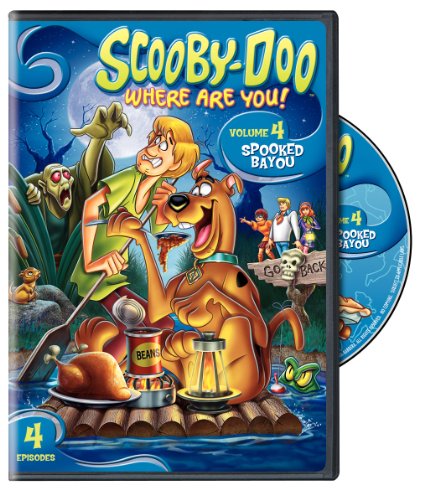
Jumping Jellybeans! Scooby Doo deserves mention in any article that discusses the best and most-loved animated television series in history.
Posted in: Disc Reviews by Gino Sassani on October 27th, 2010
"War and me took to each other real well. It felt like it had meaning. The feeling of doing what you thought was right. But it wasn't. Folks can believe what they like, but eventually a man's gotta decide if he's gonna do what's right. That choice cost me more than I bargained for..."
Posted in: Disc Reviews by Gino Sassani on October 27th, 2010
It was the summer of 1987. Horror movies had just gone through a recent splatter craze, and it seemed as though the genre might be dead, at least for a while. Then Joel Schumacher delivered his little low-budget vampire film The Lost Boys. While the movie didn't exactly tear things up at the box office, the film developed quite a strong cult following and had earned pretty high praise from the folks within the horror community. The movie was fresh and was just the kick in the pants that the sequel-weary crowd was looking for. The movie was dark but managed to provide a camp atmosphere at times that worked as a wonderful counterbalance to the blood and guts that was a necessary ingredient, particularly at that time. It was a breakout role for the young Kiefer Sutherland, who was moving out of the shadows of his iconic father and into his own. With this film and the critically acclaimed Stand By Me just a year before, Sutherland was able to arrive on the scene without riding his father's coattails. The two very different roles also allowed him to stretch those thespian muscles quite a bit. The Lost Boys captured teenage angst in a far more thrilling and realistic manner and combined it with vampires and humor. And while it dealt with very similar themes, this was no Twilight.
Among the most memorable performances to come out of that original film were those of Corey Haim and Corey Feldman. Haim would play the innocent kid just moving to a small town that happened to be infested with vampires. Feldman played Edgar Frog, a local comic-and-horror-lore geek who was aware of the vampire problem and saw himself as a modern-day Van Helsing, fighting the bloodsuckers whenever he encountered them. The two Coreys, as they would go on to be known, had wonderful chemistry and stole the film right out from under the adult cast and the evil doings of the teenaged vampire clan led by Sutherland. The two ended up doing several films together before having a somewhat public falling out.
Posted in: Disc Reviews by Gino Sassani on October 21st, 2010
“Mentalist: Someone who uses mental acuity, hypnosis, and/or suggestion. A master manipulator of thoughts and behavior.”
I remember fondly Simon Baker’s last television series, The Guardian. It wasn’t exactly a great or groundbreaking show, but it chugged on somewhat quietly for five seasons. It didn’t seem like anyone was really noticing this quality show. So as much as I like this new series, I think what pleases me most is that The Guardian has made it to DVD. I’m not sure it would have happened if The Mentalist hadn’t broken out as the number one new series last year. And as much as I’d love to tell you more about that earlier series, I’m going to get that chance next month, so stay tuned.