Posted in: Disc Reviews by Gino Sassani on April 1st, 2009
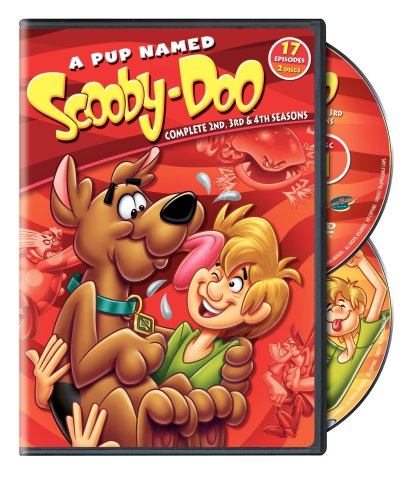
“Scooby-Dooby, Scooby-Dooby-Doo! There's a mystery in town, So call the coolest pup around, Call Scooby, A pup named Scooby-Doo! Join Shaggy, and the crew, Daphne, Freddie, Velma too! And Scooby! A pup named Scooby-Doo! When the ghostly ghoul attacks, Scooby eats a Scooby Snack! Scooby-Dooby-Doo! So come on, it's mystery time, You can help us solve the crime, With Scooby, a pup named Scooby, Scooby, a pup named Scooby-Doo!”
First there was Muppet Babies. Then there were Tiny Toons. It seems that every famous children’s cartoon series eventually turns back the clock to offer up pintsized versions of the same formula. That’s what you get in A Pup Named Scooby Doo. The show aired 1988 through 1991. It was on somewhat erratically so that, while the box claims this 2 disc set contains the complete 2,3, & 4 seasons, that really only adds up to 17 half hour episodes in all.

Posted in: Disc Reviews by David Annandale on March 27th, 2009
Frankly, if you need any information beyond the title of this release, then it probably isn't for you. It's The Sinful Dwarf, man! But if you really must know more, be it on your head. Mind-bogglingly stupid and broke newlyweds Mary and Peter (Anne Sparrow and Tony Eades, actors of an ineptitude that passeth all understanding) check in to the boarding house of retired (and scarred) burlesque performer Lila Lash (Clara Keller) her son Olaf (children's show host Torben Bille), the titular sinful dwarf. Mary hears noises in the attic, but Peter won't listen to her. He should, as Lila and Olaf keep a harem of women up there as prostitutes, ensuring their submission through forced injections of heroin. Now they have their sights set on Mary...
Whatever you fear or hope about a film with this title, the reality will likely exceed your imagination. “Exploitation†is almost too tame a word to describe the spectacles here, whether we're talking about incessant close-ups of Bille's sweaty, greasy, drooling, leering face, or Keller's disturbing Marlene Dietrich impersonation. If you don't need a shower after watching this, you aren't human. In other words, it's sublime.
Posted in: Disc Reviews by Gino Sassani on March 26th, 2009
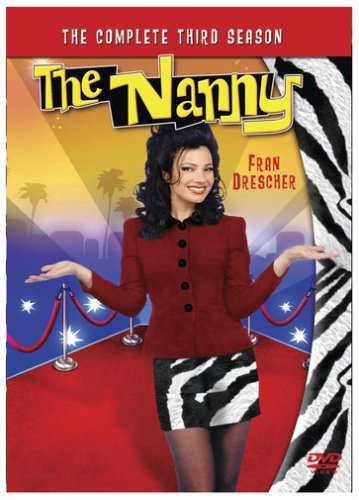
"She was working in a bridal shop in Flushing, Queens 'Til her boyfriend kicked her out in one of those crushing scenes. What was she to do? Where was she to go? She was out on her fanny... So over the bridge from Flushing to the Sheffield's door. She was there to sell makeup, but father saw more. She had style! She had flair! She was there. That's how she became the Nanny! Who would have guessed that the girl we've described Was just exactly what the doctor prescribed? Now the father finds her beguiling. And the kids are actually smiling. She's the lady in red when everybody else is wearing tan... The flashy girl from Flushing, the Nanny named Fran!"
Not exactly Mary Poppins.
Posted in: Disc Reviews by Gino Sassani on March 25th, 2009
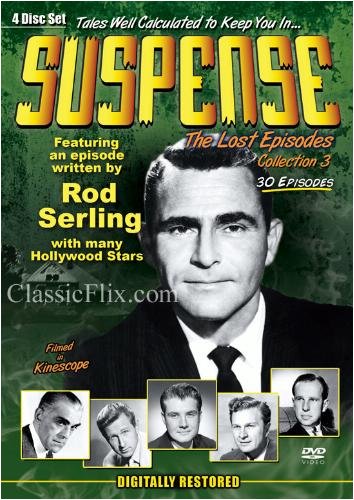
Suspense began life as a very successful radio show on the CBS Radio Network. It premiered in 1942 and lasted just over 20 years on the nation’s airwaves. When television began to make its own waves on the air in the late 1940’s, naturally many of those first shows would be programs that had already shown strong appeal to the radio audiences. Shows like Gunsmoke had been staples on the radio for years and would be a nice way to entice the first television crowds to the new medium. Suspense was one of those shows. It first broadcast in 1949 and was broadcast live from a studio playhouse in New York City. The anthology series presented stories that featured some kind of a horror or thriller theme. Public domain stories were great fodder for the series, and it certainly brought together some of the big names of that genre to the broadcasts. Names like Boris Karloff, Bela Lugosi, Peter Lorre, Nina Foch, and John Carradine would give the show instant credibility. But, the episodes were not limited to the horror field. Crime dramas that involved murders under mysterious circumstances were another favorite staple of the series. Because it was aired live there were no taped copies to be used as reruns, so that each episode was intended as a single broadcast event. For reference purposes a kinescope recording was made, but not very well preserved. These were the days when the networks were just starting, and they didn’t reach a majority of the nation yet. These simple recordings were intended so that the episodes could air in the towns and cities where the networks had not yet penetrated, a whopping 67% of the nation in 1949. It would go on to become one of television’s first hit shows and lasted 15 years. Surprisingly, the radio version would continue for almost another decade after the television series left the airwaves.
These kinescope recordings were uncovered in 2007. Since then they have been released in various sets and collections. 90 episodes in all have been found and somewhat restored. This collection 3 offers the last 30 of those 90 episodes. They feature the likes of Boris Karloff, Eddie Albert, Walter Matthau, Pat Hingle, Lloyd Bridges, Arlene Francis, Jack Warden, Jackie Cooper, James Whitmore, Vic Morrow, George Reeves, and Richard Coogan. The episodes span the entire run from 1949 – 1954, although one episode lists an airdate of 1958. I could find no record of that episode airing at all.
Posted in: Disc Reviews by Gino Sassani on March 17th, 2009
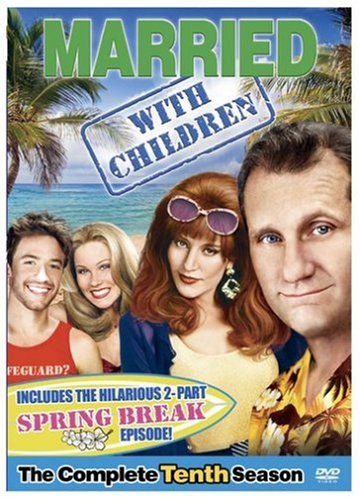
On October 9th 1986 the network television landscape did something that hadn’t been done successfully in its 40 year history. A fourth network broke on the airwaves. It was called FOX and wasn’t even going to broadcast 7 days a week. Most pundits in the television industry never gave it a chance. Most of the channels were in the double digit UHF range. This had long been considered the independent station area, and a lot of televisions didn’t pick up this band as well as the established VHF band. And for a while it looked like the network was going to disappear almost as quickly as it appeared. But by 1987 the network suddenly had two big hits on its hands. The first was a silly cartoon, originally aired as a throwaway segment on a variety show. The cartoon featured the most unlikely of television families, The Simpsons. That show is still with us nearly 25 years later. The second hit was a live action series, also based on a very unlikely and this time seemingly unlovable family, the Bundys. Right from the start there was criticism that the name itself was a death knell. At the time America was still dealing with the pending execution of a far more infamous Bundy. Married With Children, however, would become an almost instant break-out hit.
Al Bundy (O’Neill) was a working stiff. He had seen his high school glory years evaporate into the rearview mirror of his ancient Dodge when he married his childhood sweatheart (no, I did not misspell), Peggy (Segal). The red-headed woman would soon become his curse. She was lazy. Peggy wouldn’t know what a stove looked like if it fell on her. She was content to sit around all day while Al worked for minimum wage at a mall shoe store. Tying Al to his meager existence were two children. Bud (Faustino) was a frustrated teen who couldn’t seem to find his cool. Girls scorned him, and he appeared to be headed to the life of his father. Daughter Kelly (Applegate) was a teen slut. She slept around and used her looks to make her way in life, which was likely good, because she was dumber than rocks. Al was also plagued by neighbor Marcy (Bearse) who was a feminist and usually a thorn in Al’s behind. Her second husband, Jefferson (McGinley) was often Al’s accomplice in trouble. Most of the material involved Al’s suffering and the apathy of his family to his lowly station in life.
Posted in: Disc Reviews by Gino Sassani on March 17th, 2009
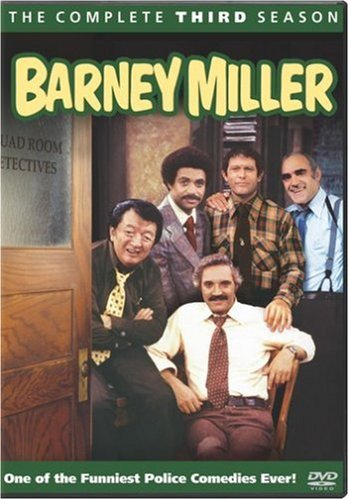
In 1976 a New York media group conducted a survey of the NYPD detectives. The question was: “Of all the TV cop shows, which most accurately portrays life as a detective?” The overwhelming response was the comedy Barney Miller. Seems real cops related to the daily grind and weekly wackos of Barney Miller. Let’s not put aside that this was also one of the most consistently funny shows on television. I remember it took me a while to accept Abe Vigoda in such a light role as Fish. My first exposure to Vigoda was the ruthless mobster in The Godfather. Barney Miller always managed to be funny while still telling a good short story. The characters were always wonderful.
Captain Barney Miller (Linden) was in charge of the detective squad at New York’s 12th Precinct. Among his detectives were a colorful group of odd individuals. Detective Ron Harris (Glass) was writing a book that detailed his life as a New York detective. It was called Blood On The Badge and was far more fiction than fact. He prided himself on his stylish clothes and culture. Arthur Dietrich (Landesberg) was a know-it-all. He had an almost encyclopedic base knowledge on everything and anything. He would bore his colleagues with his endless drone of facts. Stan “Wojo” Wojciehowics (Gail) was the typical New Yorker everyman. He might not have been the brightest tool in the box, but he more than made up for it in heart. At times his desire to show initiative would end up getting the squad in trouble. Fish (Vigoda) was past his prime and spent more time in the men’s room than actually fighting crime. He was always suffering from one old age ailment after another. His bulky frame made him look intimidating, however. Nick Yamana (Soo) was a lovable Japanese guy who wasn’t always the first to understand. He had a literal way of interpreting speech which led to some very classic misinterpretations. He was also a gambling junkie, often on the phone with his bookie. From time to time the squad would be visited by the clueless Inspector Luger (Gregory). He often reminisced about his glory days and often expressed regret that he didn’t go down in a blaze of glory like his old friends had. He was usually intruding upon the squad’s time with long pointless stories. Finally, patrolman Levitt (Carey) was an ambitious uniformed officer who wanted to be a part of the squad, which he eventually did.
Posted in: Disc Reviews by Gino Sassani on March 16th, 2009
“When you wish upon a star. Makes no difference who you are. Anything your heart desires will come to you. If your heart is in your dream, no request is too extreme.
When you wish upon a star, as dreamers do… Like a bolt out of the blue, fate steps in and sees you through. When you wish upon a star, your dreams come true.”
The song has become a standard. Every kid knows it. Walt Disney Studios has made it their theme song. You hear it each time you load up a Disney disc. If you have been fortunate enough to have visited Walt Disney World, you’ve heard it the entire day long. We know the song, but did you know where it originated from? It was back in 1940 and the release of Walt Disney’s, in fact, the world’s, second ever feature length animated film: Pinocchio. Now Disney brings us this timeless classic on high definition and Blu-ray. What a marvel this release is.
Posted in: Disc Reviews by Gino Sassani on March 11th, 2009
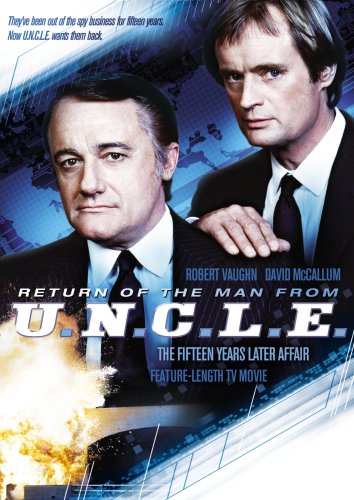
Say Uncle. That’s U.N.C.L.E., otherwise known as The United Network Command for Law and Enforcement. Starting in 1964 The Man From U.N.C.L.E. was one of a flurry of shows to take advantage of the new James Bond craze. It featured much of the same elements as the super spy films. You had sophisticated spies in tuxedos. There were plenty of gadgets. And there were constant threats of world domination, mostly from the evil counter organization, THRUSH. The two top spies for the good guys were Napoleon Solo (Vaughn) and Illya Kuryakin (McCallum). The Bond references were never subtle and always intentional. Ian Fleming himself consulted on the show and named Napoleon Solo after a Bond character. Together Solo and Kuryakin would travel around the globe saving the world from almost certain doom. The series ran for four years. In 1983 there was talk of bringing the show back. Apparently the two stars were still up to the task and both could have used the work. Thus was born the television film and potential pilot: The Return Of The Man From U.N.C.L.E.: The Fifteen Year Affair.
It’s been 15 years since Napoleon Solo and Illya Kuryakin have left U.N.C.L.E. and the spy game behind. Solo is now the owner of a computer company, and Kuryakin is designing women’s clothes. It has also been 15 years since anyone’s heard peep out of THRUSH. But now an American nuclear bomb has been intercepted, and Justin Sepheran (Zerbe), the last leader of THRUSH, has been broken out of jail. Someone’s putting the old band back together. Now the newly reformed THRUSH is blackmailing the United States. They will destroy a major part of that country if a $350 million ransom isn’t paid. And there’s a kicker. The money must be delivered by Napoleon Solo. The newest chief of U.N.C.L.E. is Sir John Raleigh (Macnee). He has to track down the former spies before time runs out. Once back in the fold, the duo are hot on the trail. They realize that only one man alive can activate the complicated device, so they set out to protect him. Before long the old cat and mouse spy game is in full throttle, and Kuryakin has a personal reason for joining back up. He wants revenge on the double agent who betrayed him on his final mission, causing the death of a young girl. There’s scores to settle and a world to save. Sounds like a fine ride. The film ends in an almost comical clichéd scene. Was it the red or the blue wire?
Posted in: Disc Reviews by Gino Sassani on March 11th, 2009
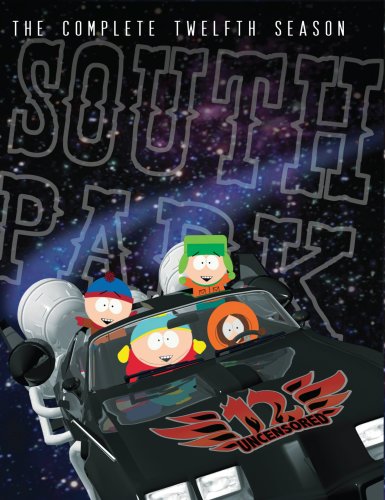
I often have trouble believing that South Park has been around for as long as it has. It’s not just the passing of 12 years, but the sheer brilliance in the face of an increasingly politically correct society. It’s like watching old episodes of All In The Family. Who believes that Archie Bunker would have any chance of survival in the 21st Century? It’s no wonder that Norman Lear has become involved in the series. It’s the last remaining vestige of a once great freedom to be ridiculous and offend. Eric Cartman’s a lot worse than Archie ever was. We always knew that, in his heart, Archie had a soul. Cartman’s a psychopath without a conscience, and in a civilized society we would be terrified of the existence of such a demon spawn…except he’s just so dang funny. Trey Parker and Matt Stone have been walking a tightrope for over 12 years now, and it just doesn’t get old. One of the reasons the show doesn’t grow stale is their ability to make such a quick turnaround on current events. Because the show takes literally days to write and produce, they are quite often always the first to address an issue. They had an election night episode on literally the next day in this season. That means the ideas stay as fresh as the headlines. Finally, you have to credit the expanding universe of good characters. The core group of Cartman, Stan, Kyle, and Kenny were great for a lot of years. But, watching this 12th season you have to admire how much Butters has infused himself into that core. We also have such great semi-regulars as Timmy, Jimmy, Token, and lately the Goth kids. These characters allow the stories to expand in ways the core group could not. I’ve honestly come to think of Butters as one of the core now.
So what about the episodes themselves? Let’s play a little game called: The Good The Bad, and The Ugly, shall we?
Posted in: Disc Reviews by Gino Sassani on March 11th, 2009
Does the name Quasimodo ring a bell? It should, and he did. The deformed cathedral tower bell ringer first appeared in the famous French language novel by Victor Hugo. The story is one of the more frequently filmed tales, going back as far as 1923 and the silent film starring Lon Chaney. Chaney created the definitive appearance from his own collection of grease paints and handmade appliances. The physical restrictions he placed upon himself then nearly crippled the actor. Charles Laughton put his own stamp on the character in 1939. This would become the defining sound film. Even the Walt Disney Studios put their own unique stamp on the tale. Their animated version brought us a romantic tale alive with music and talking statues. With such a rich history of films to its credit, one might question why a made for television film could add anything more to the story. It was with that attitude that I entered the world of this Hunchback Of Notre Dame.
It turns out that there were actually several elements to be added. The most significant is creating a faithful adaptation of the original story. To date no one has come very close to depicting the likely unfilmable Hugo narrative, at least the English translations that I’ve been exposed to. With that in mind, I must say that this film just might come closest to the original tale. Hugo’s description of Quasimodo fits this presentation rather snugly. The next element to be added was a more complicated portrayal of the man himself. While both Chaney and Laughton brought him effectively to life, I don’t feel that either instilled him with as much humanity as Anthony Hopkins does here. Even beneath plenty of prosthetics, Hopkins brings such an array of emotion that I don’t think you’ll have looked at this character in quite this manner before, nor are you likely to in the future. This is the most complete portrayal I’ve seen. Finally, the story has seldom involved this level of detail to many of the supporting characters. The cast is impressive for any film, doubly so for a made for television release with a limited budget.