1.33:1 Fullscreen

"Why are you talking? Do you ever think about what you're gonna say or why you're speaking? Or do you just open your mouth and just blah blah blah blah blah? In about thirty seconds I'll be gone. We don't need to speak."

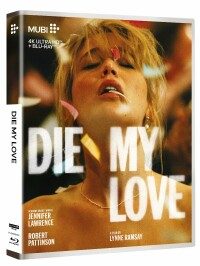
Die My Love is the latest film by director Lynne Ramsay whose best film is still We Need To Talk About Kevin. I say still is because Die My Love doesn't live up to the reputation. Ramsay was never quite a linear storyteller and this film is no exception. She loves to dabble in the subtle madness of a situation and here she does much more than dabble and while there are certainly attempts to be nuanced the film rages as out of control as her main character played by Jennifer Lawrence who takes a huge swing and a big chance here. It was the right idea but maybe not quite the right vehicle. Lawrence has been trying to distance herself from the Hunger Games franchise not because that wasn't good work but she appears to be trying not to get too pigeonholed in her career. as I said, it's the right call. the problem is that Die My Love is too messy of a film to show much of anything, and trust me anything worth watching about this film lands entirely on the performance of Jennifer Lawrence.

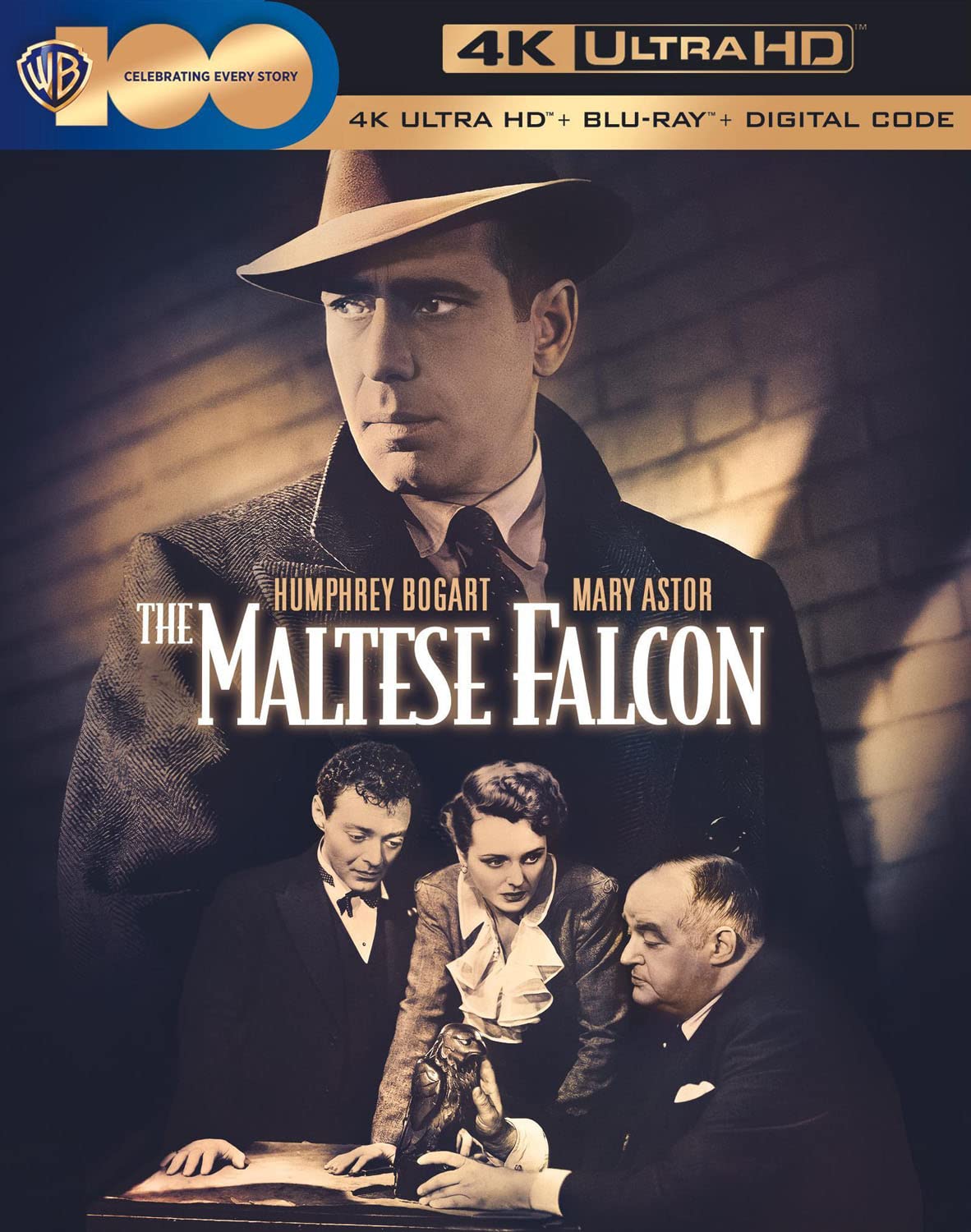
"In 1539 The Knight Templars of Malta paid tribute to Charles V of Spain by sending him a Golden Falcon encrusted from beak to claw with rarest jewels --- but pirates seized the galley carrying this priceless token, and the fate of the Maltese Falcon remains a mystery to this day."

What is not a mystery today is the significant role that The Maltese Falcon has played in cinema history. The film itself was a remake. In fact, it was actually Warner's third attempt to film the Dashiell Hammett novel in a single decade. The first version came in 1931 and starred Ricardo Cortez as Sam Spade. That film also featured Dwight Frye as Wilmer Cook. The film was a moderate success but never really delivered on the potential of the source material. Five years later Warner would attempt a comedy version of the story in Satan Met A Lady. It was a total flop. It would only take another five years before the studio took its third crack at the material. In this case, the third time certainly was a charm.

"Strange, isn't it? Each man's life touches so many other lives. When he isn't around he leaves an awful hole, doesn't he?"

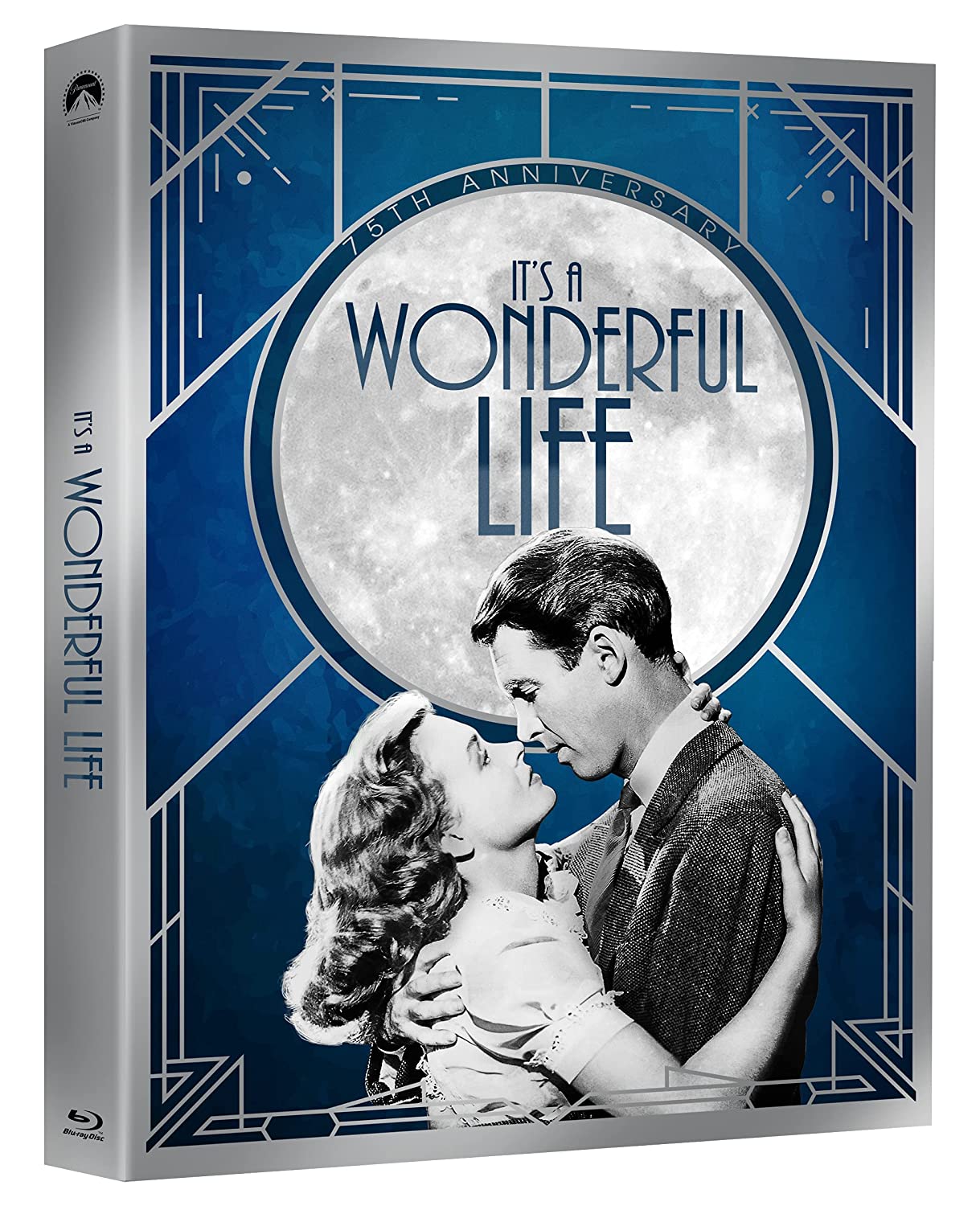
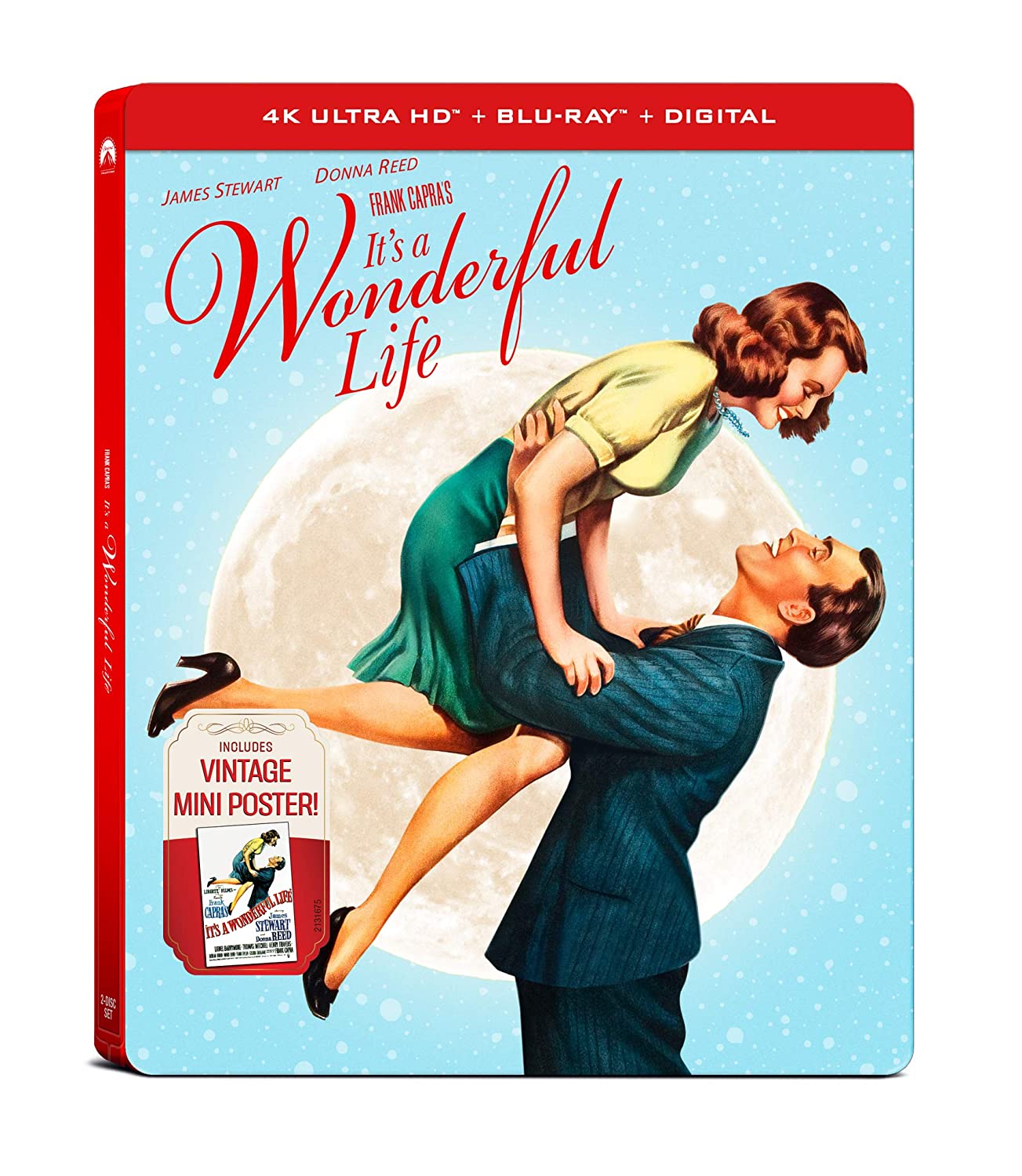
Another holiday season and another release of the classic It's A Wonderful Life. This edition looks like a storybook case and has both the restored black & white version as well as the recent colorized versions of the films. If you have one of the UHD 4K collections, you pretty much have the definitive version of the film, and the audio and visual aren't likely to get any better than that. But there are many of you out there who have not made the switch to UHD. This is likely going to be that best ever release for you. You get two versions of the film in an attractive and safe case.

If you were a child in the 1960's or 1970's, you were around at the golden age of the Christmas television special. We just celebrated the 50th anniversary of A Charlie Brown Christmas, and there were a ton of holiday charms that came and went each year. But there were a handful that became classics and found their way to the airwaves every year in December. Of course, A Charlie Brown Christmas became one of these, and it is indeed among the best. It was not the only special to become beloved by generations of viewers. Now Dreamworks has brought together seven of the most memorable of these classics. This was a wonderful trip down memory lane for me, as it will be for millions of children of all ages who looked forward to these event broadcasts each and every year. Now you can watch them whenever you want. And they might not be just for Christmas anymore.

Now these beloved classics are together again in a Steelbook release.

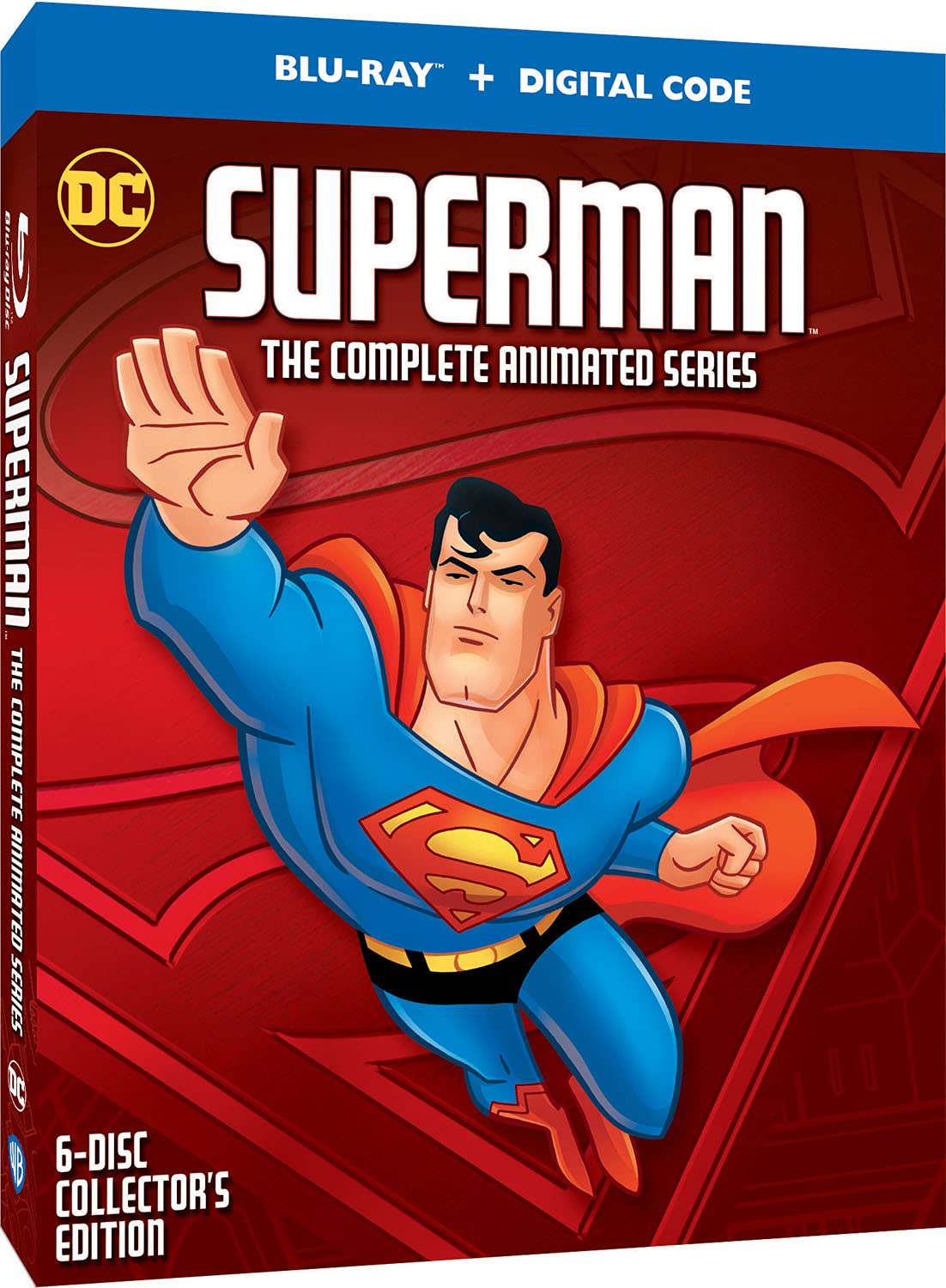
Superman: The Animated Series was partly made in the same fashion as the massively popular Batman: The Animated Series. The tone was a little more serious, and the stakes were raised in order to create a sense that Superman might just have met his match. It was first produced in 1996 and made 54 episodes through the year 2000. The show received high praise for raising the bar but at the same time keeping what was important to the mythos of Superman. In fact, it even received a nomination for an Emmy. Besides Smallville, this probably stands out as the best television adaption of the one known as Superman, the Last Son of Krypton and hero to the planet Earth (and beyond).

(Summaries taken from previous DVD review; the rest applies to the new Blu-ray version)

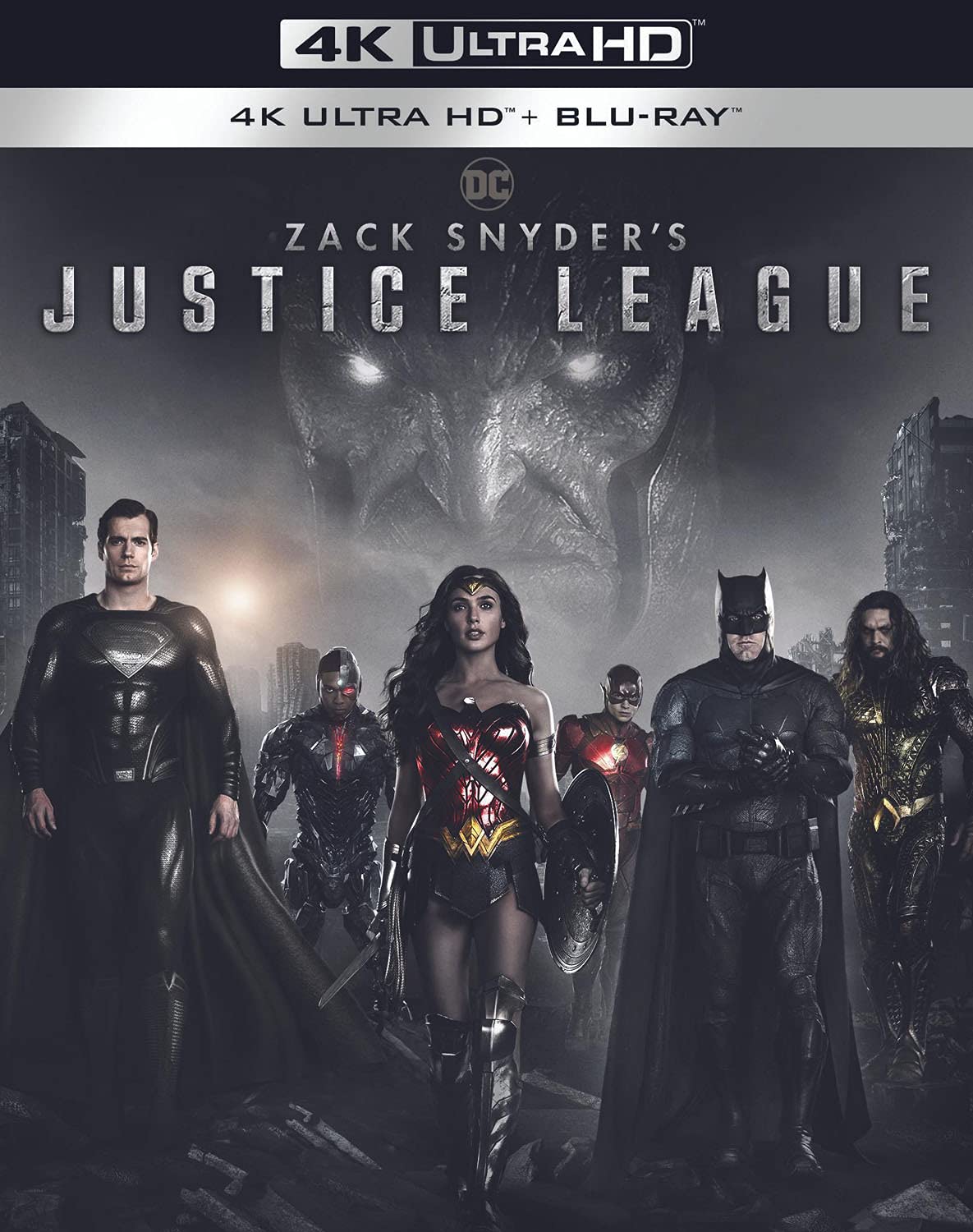
When Justice League hit the box office in 2017 it was met by relatively good box office numbers but not warmly received overall. It was a troubled shoot. During production Zack Snyder had to leave the director's chair when his daughter Autumn passed away. When you consider how hard the folks at DC have been chasing the Marvel Cinematic Universe, it was no surprise that they brought in Joss Whedon to pick up the pieces and finish the film. Whedon, of course, directed the first Avengers film for Marvel, which turned into the perfect example of how to bring a diverse group of heroes together for a film. Whedon was also the king of the ensemble cast from his early days on Buffy The Vampire Slayer and later Firefly. The first problem was that Whedon and Snyder have very polar opposite styles. Snyder rules with tons of angst, darkness and brooding characters. That's great for Batman. Not so much for Superman. Whedon loves to keep things light no matter how big the stakes of the film's events might be. It's night and day, and it's no wonder it really didn't work out so well. Later we would start to hear stories of abuse by Whedon on the set, mainly from Ray Fisher who played Cyborg. The studio fumed, and the fans expressed their disappointment by demanding that DC/Warner Brothers allow Snyder to go back and make the film he really wanted to make, and so the wheels began turning.

DC eventually relented, and after nearly four years, they put a pile of money on the table and granted the Snyder fanboys their wish. But things are different now, and a new cinematic release is pretty much out of the question. So it was originally decided there would be a mini-series made for HBO-Max, the company's streaming service. The idea of a series and film went back and forth, and eventually a kind of hybrid ended up taking the slot. What we got was a four-hour film separated into seven distinct chapters and a decidedly obvious halfway point. So you could watch it in seven roughly half-hour segments, two films, or one mega-marathon film. The HBO-Max numbers were pretty good, and so now the film is available on UHD Blu-ray in 4K in a much better-looking presentation than it had during its initial life as a streamer.

Every generation has had its Christmas classics, films that have become as much a part of the holiday family traditions as Christmas trees and candy canes. For me it has been the more modern A Christmas Story with ol’ Carl Kolchak himself, Darren McGavin. Kids today have taken more of a shine to even more recent films, but for more than one generation, Christmas wouldn’t be the same without Frank Capra’s It’s A Wonderful Life. Since 1947 the film became a seasonal fixture in neighborhood movie houses across the fruited plain. In the 1970’s the film temporarily fell into the public domain and was played relentlessly on local television stations as each holiday came and went. Unfortunately, these were usually prints in horrible condition, so that scratches and splice marks became a part of the experience, not to mention ads for department stores touting their early-bird specials. It is with that experience that I, as did most from my generation, become acquainted with Jimmy Stewart’s George Bailey. When the home video market began to bloom with VHS in the mid 1980’s, a better print resurfaced, so that the experience improved dramatically, along with the loss of those commercials. Of course, this new resource of home entertainment created a fight for the rights to the film to once again be restored to a single owner. It ended up being the film’s score that would allow the rights to be enforced once again. The crappy television prints disappeared, and by the early 1990’s, efforts to restore the film began.


These restoration efforts invariably turned to the controversial subject of colorization. If anyone remembers Ted Turner’s push to colorize RKO films, including King Kong, you will also remember how bad those films looked. The color was an added texture of hue covering the picture so that the subject’s textures and subtleties were obliterated. It was almost as if some child decided to finger paint all over the negative. There was nothing magical or at all realistic about the process. It’s A Wonderful Life has been colorized no less than three times. In both 1986 and 1989 the film got the colorized treatment, both failures. In 2007, It’s A Wonderful Life had been colorized by a new process developed by Legend Films. This new process allows films to be colorized naturally, retaining all of the detail and texture of the original print. These are the guys who are working with legendary Ray Harryhausen to colorize and restore many of his classics. The new process uses a 16-bit grayscale, which offers over 64,000 shades of just gray. The process, called “Photo-Real”, can reproduce HD quality pictures with stunning, lifelike color. I was a very cynical skeptic of the process and was prepared to rip this color print to shreds in my review. I was blown away by how natural the color looks. You will be hard-pressed to believe this wasn’t an original color print. Not only are the colors realistic, but the print retains the particular color palette of the 1940’s, so that the film still looks like one from the correct era. I know you’ve seen incredibly bad colorization before, and it likely has made you unwilling to even give this one a chance, but you owe it to yourself to check it out. And this is the version you get on the Blu-ray copy of the film.

"It's a beautiful day in this neighborhood. A beautiful day for a neighbor. Would you be mine? Could you be mine?"

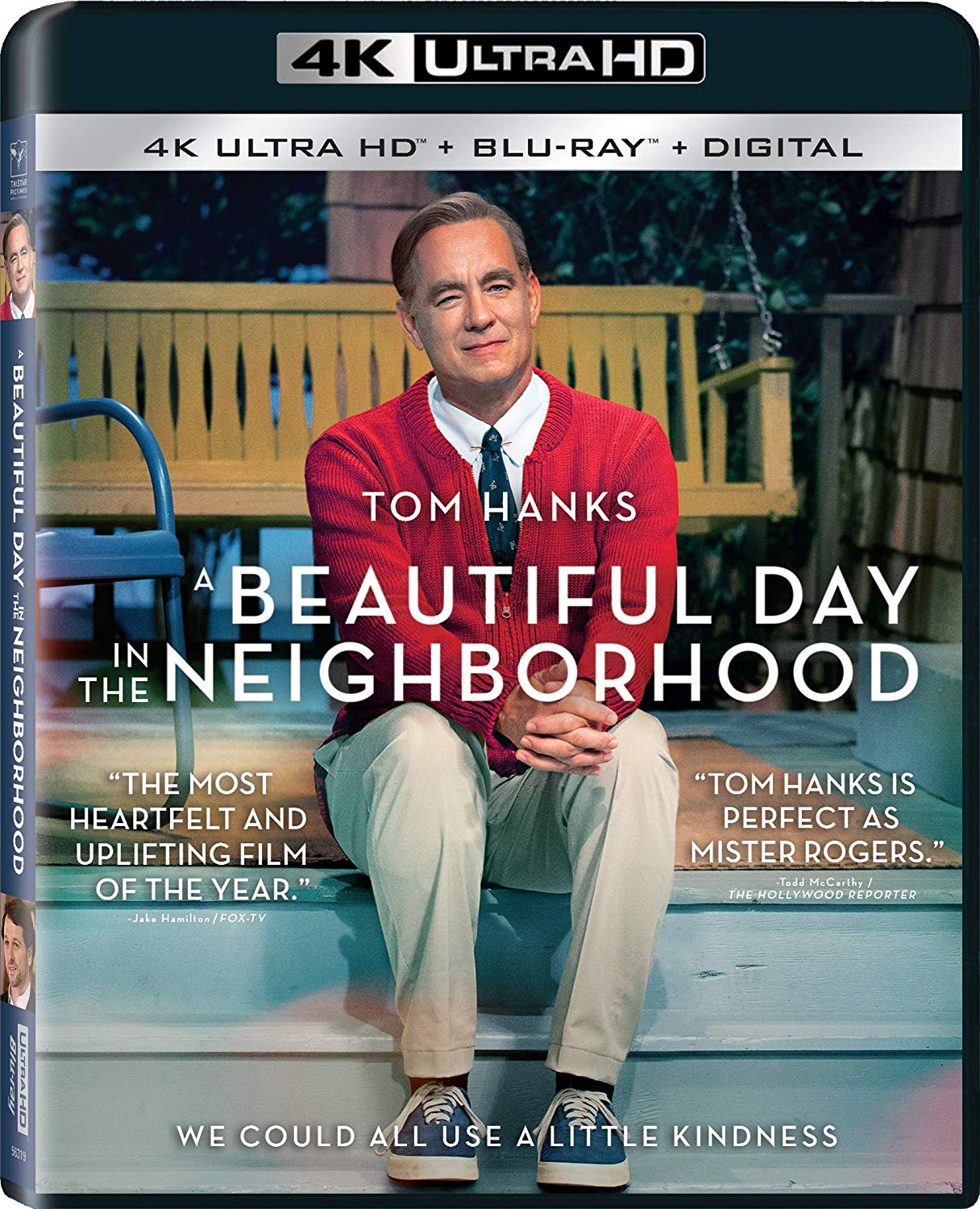
Anyone who was a kid from the 1960's to the 1990's and beyond recognizes Mr. Rogers and his neighbor song. The man defined children’s programming for television, and he did so from a small studio tucked away in Pittsburg, Pennsylvania for almost 40 years. There aren't many people living in this country who don't at least know who Fred Rogers was. It would be a complete waste of my space and your time to tell you very much about the man in these lines. Truthfully, you'll make the kinds of discoveries into the nature of who he was by spending a short 90 minutes watching the documentary Won't You Be My Neighbor that appeared last year. It will be time well spent no matter how little or much you think you know about him. But now hot on the heels of that incredible documentary comes a film staring Tom Hanks as the lovable neighbor we all used to wish we had. Recently Ancestry.com confirmed that Tom Hanks and Fred Rogers are related. Of course you have to go back the pre-revolutionary days of 1734 to find this elusive relative. But you won't have to time travel to spend a magical time with Mr. Rogers and Tom Hanks. In 2019, they happen to be the same man.

Every generation has had its Christmas classics, films that have become as much a part of the holiday family traditions as Christmas trees and candy canes. For me it has been the more modern A Christmas Story with ol’ Carl Kolchak himself, Darren McGavin. Kids today have taken more of a shine to even more recent films, but for more than one generation, Christmas wouldn’t be the same without Frank Capra’s It’s A Wonderful Life. Since 1947 the film became a seasonal fixture in neighborhood movie houses across the fruited plain. In the 1970’s the film temporarily fell into the public domain and was played relentlessly on local television stations as each holiday came and went. Unfortunately, these were usually prints in horrible condition, so that scratches and splice marks became a part of the experience, not to mention ads for department stores touting their early bird specials. It is with that experience that I, as did most from my generation, become acquainted with Jimmy Stewart’s George Bailey. When the home video market began to bloom with VHS in the mid 1980’s, a better print resurfaced, so that the experience improved dramatically, along with the loss of those commercials. Of course, this new resource of home entertainment created a fight for the rights to the film to once again be restored to a single owner. It ended up being the film’s score that would allow the rights to be enforced once again. The crappy television prints disappeared, and by the early 1990’s, efforts to restore the film began.

These restoration efforts invariably turned to the controversial subject of colorization. If anyone remembers Ted Turner’s push to colorize RKO films, including King Kong, you will also remember how bad those films looked. The color was an added texture of hue covering the picture so that the subject’s textures and subtleties were obliterated. It was almost as if some child decided to finger paint all over the negative. There was nothing magical or at all realistic about the process. It’s A Wonderful Life has been colorized no less than three times. In both 1986 and 1989 the film got the colorized treatment, both failures. In 2007, It’s A Wonderful Life had been colorized by a new process developed by Legend Films. This new process allows films to be colorized naturally, retaining all of the detail and texture of the original print. These are the guys who are working with legendary Ray Harryhausen to colorize and restore many of his classics. The new process uses a 16-bit grayscale, which offers over 64,000 shades of just gray. The process, called “Photo-Real”, can reproduce HD quality pictures with stunning, lifelike color. I was a very cynical skeptic of the process and was prepared to rip this color print to shreds in my review. I was blown away by how natural the color looks. You will be hard pressed to believe this wasn’t an original color print. Not only are the colors realistic, but the print retains the particular color palette of the 1940’s, so that the film still looks like one from the correct era. I know you’ve seen incredibly bad colorization before, and it likely has made you unwilling to even give this one a chance, but you owe it to yourself to check it out. And this is the version you get on the Blu-ray copy of the film.

"Once upon a time in a faraway land, there was a tiny kingdom: peaceful, prosperous, and rich in romance and tradition. Here, in a stately chateau, there lived a widowed gentleman, and his little daughter, Cinderella. Although he was a kind and devoted father, and gave his beloved child every luxury and comfort, still, he felt she needed a mother's care. And so he married again, choosing for his second wife, a woman of good family, with two daughters just Cinderella's age, by name, Anastasia and Drizella. It was upon the untimely death of this good man, however, that the stepmother's true nature was revealed: cold, cruel, and bitterly jealous of Cinderella's charm and beauty, she was grimly determined to forward the interests of her own two awkward daughters. Thus, as time went by, the chateau fell into disrepair, for the family fortunes were squandered upon the vain and selfish stepsisters while Cinderella was abused, humiliated, and finally forced to become a servant in her own house. And yet, through it all, Cinderella remained ever gentle and kind, for with each dawn she found new hope that someday her dreams of happiness would come true." 

Snow White And The Seven Dwarfs put the Walt Disney Studios on the map. It's a literal truth. Walk had mortgaged his entire worth to make the film and used the incredible box office return to create what we today call Walt Disney Studios. But it wasn't quite the happily-ever-after fairy tale ending that Walt and his new studio might have hoped for. The studio churned out a couple of films that are classics today but didn't pull in the kind of money they needed to stay afloat. Both Pinocchio and Fantasia were masterpieces greatly appreciated today, but the years of WWII found little extra money for extravagances like going to the movies. The studio was in danger of closing, and they had pretty much one more shot to turn it around. Could lightning hit the same place twice? Cinderella proved that it could, and put the studio firmly back on solid ground.