Posted in: Disc Reviews by David Annandale on February 3rd, 2009
This is another of Cult Epics’ entries in their new Rene Daalder Collection. His most recent film, it’s a documentary about conceptual artist Bas Jan Ader. The brief body of work he left behind is best known for using gravity as a medium (so, for instance, he did a number of filmed pieces of himself or objects falling). He was lost at sea in1975 while attempting to cross the Atlantic in a minuscule boat as part of a piece to called “In Search of the Miraculous.” Daalder’s 68-minute film retraces Ader’s life, but does so in part through the filter of Daalder’s own parallel experiences as an expatriate Dutch artist. The film is very interesting, though I would have like a bit more analysis of Ader’s work, in order to have a better understanding of exactly what it was doing, and Daalder’s speculations about what Ader’s final thoughts might have been are a little too definitive. Still, a strong documentary.
Audio
Posted in: Disc Reviews by David Annandale on January 31st, 2009
If ever there was a release whose title told you everything you need to know, this is it. Yup, the second part of season 5. There you go. Which is in no way a condemnation. Well over four hours of prime silliness is reason enough to pick this up. Unless, of course, you have picked up any of the other recent SpongeBob releases, in which case the curse of double-dipping will likely befall you. Many of these episodes have already been released on the shorter compilation discs. If you held off until now, though, this is a wonderful fix for nautical nonsense junkies.
Audio
Posted in: Disc Reviews by Gino Sassani on January 28th, 2009
“You wanna be where everybody knows your name”
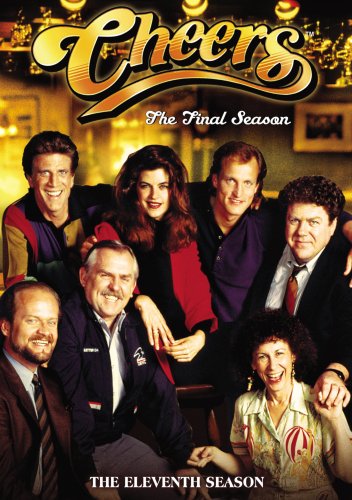
Cheers was that kind of place that songs have been written about. Billy Joel’s Piano Man describes such a place where the patrons are, for the most part, regulars, and pretty much family. In the days before huge screen televisions and satellite networks, Cheers would likely have been considered a sports bar. In those days the sports was more the talk of the place and not merely gathering to watch 127 games at a time. The bar’s owner was Sam Malone (Danson). Sam was a washed up baseball player for the local Boston Red Sox. He was a pitcher who liked to drink a bit too much. So, what does he do? He buys a bar. Actually the character has kicked the drinking and is always seen sporting a bottle of water. At first his bartender was his old baseball coach, until Nicholas Colasanto passed away after 3 years. Coach was replaced by Woody, played by Woody Harrelson. Woody was a farm boy with naiveté and small town charm reminiscent of Radar from MASH. His innocence was often the butt of the jokes. In a strange coincidence, the show’s popular theme song, performed by Gary Portnoy, sounded a lot like Harrelson’s voice, and for years it was believed by anyone too lazy to read the credits that Harrelson sang the tune. The barmaid was Carla, played by Danny DiVito’s wife Rhea Perlman. She reminded us a lot of her husband’s Louie character from Taxi. She was abrasive, sarcastic, and more than willing to kick a guy when he was down. She had a soft spot for Sam, however, and was often protective of him. Kirstie Alley played Rebecca Howe, an on again off again romantic interest for Sam and also on again off again owner of Cheers in later years. She replaced Shelley Long, who played Sam’s romantic interest and barmaid Diane for the first half of the show’s run. The steady customers offered most of the stories for Cheers. Cliff, played by John Ratzenberger, was a postman who spent more time nursing a beer than actually delivering the mail. He often joked about how hard it was to fire a civil service employee. He was a know-it-all and too often bored his comrades with longwinded explanations for even the simplest concepts. His best friend was Norm (George Wendt). Norm was one of the more popular patrons, greeted with shouts of “NORM” whenever he entered the bar. He sat in the same stool, usually griping about his life but unwilling to move off his seat and actually do anything about it. He was married to an unseen wife who worked while he loafed at Cheers. Finally, Kelsey Grammer played psychiatrist Dr. Frasier Crane. You might recognize that character the most, because he got his own show after 9 years on Cheers which lasted another decade. Frasier was the elitist who acted superior to the others but deep down just wanted to be one of the guys.
Posted in: Disc Reviews by David Annandale on January 27th, 2009
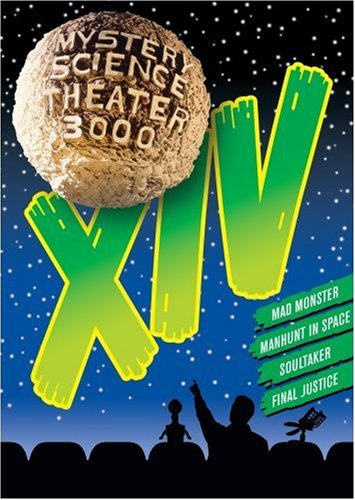
Here we go with four more cruel experiments inflicted on Joel, Mike, Tom Servo and Crow T. Robot on the Satellite of Love. The Mad Monster is a 1942 proverty row epic with George Zucco as a mad scientist giving future Frankenstein Monster Glenn Strange transfusions of wolf blood, with predictable results. Manhunt in Space is a Rocky Jones, Space Ranger adventure – multiple TV episodes pasted together into one dreadful piece of SF idiocy. Soultaker has the unfortunate Joe Estevez, under the orders from Angel of Death Robert Z’Dar, tracking down four teens who are supposed to have died in a car crash. Finally, Final Justice sees Joe Don Baker as a Texas Ranger confronting the mob in Malta. But of course.
Naturally, the real interest of these releases is not in the films themselves (which are, with the partial, nostalgic exception of The Mad Monster, utterly unwatchable), but in what Joel or Mike (depending on the episode) and the ‘bots do with the films. Two hits here, and two misses. The comments aimed at The Mad Monster and Final Justice are disappointingly unimaginative. The failure of the latter is a special sore point, since MST3K’s previous shot at Joe Don Baker, Mitchell, is one of the series’ masterpieces. This time around, the boys don’t have much to say other than to comment on the man’s eating and digestive habits. On the other hand, inspiration was at hand for both Soultaker and for a good chunk of Manhunt in Space (i.e. the first half, and with the accompanying episode of General Hospital).
Posted in: Disc Reviews by David Annandale on January 27th, 2009
So there's this group of flight attendants, and we follow their swinging adventures and affairs on and off planes. One, for instance, hopes to be an actress, and hooks up with an advertising executive. And if you care what the plot of “the first 3D sex film” is, you need your head examined. Much of the what goes on is mind-numbingly banal (SEE Wine being poured SEE Drinks being mixed HEAR Dull conversations ), though the acid trip that leads one woman to make out with a lamp in the form of a greco-roman head is something you don't see every day.
The film is an object lesson on how far mere novelty can take a film – it was a huge success at the time, and 3D was, in 1969, a rarity again after its initial craze in the 50s. So there are numerous shots of legs and pool cues (and feet) jabbing at the camera, enough, presumably, to have kept audiences entertained while everything else remained mundane beyond words. Or, so the situation is for most of the running time. But the last act takes a sudden turn into the starkly dramatic, and becomes very dark indeed. It is also rather more imaginatively shot than most of the rest of the film. The ending is a vicious sucker punch that must be seen to be believed, and suggests that the filmmakers were storing all of their creative juices for the cruel finale. In fact, as the accompanying featurettes reveal, the dramatic plot was added to the film after the rest of it was completed, and indeed, after it had already been released in some markets. In the final analysis, this is a vital piece of low culture.
Posted in: Disc Reviews by Michael Durr on January 27th, 2009
On July 20th, 1973; Bruce Lee left our world. The world he left was never the same, but somehow his fans and directors carried on in their own way. The fans he left behind were hoping for a great martial artist that could be just as good as the late Bruce Lee. The directors he left behind were hoping to capitalize on the look of Bruce Lee and find one who not only looked like Lee but performed like him. What happened as a result of all this? A whole lot of bad kung-fu films known as Bruceploitation films. These films ranged from the normal to the obscene including one where Bruce Lee fights James Bond & Dracula in Hell. Unfortunately for the Dragon Immortal set, that one did not make it. But this collection brings together ten that did.
This boxset of 10 movies on three discs brings together the best and worst of the films in the Bruceploitation era. Who am I kidding? These are all pretty bad. But let us analyze the wreckage and see if anything is salvageable. There is one movie called Fist of Death (Jackie & Bruce to the Rescue) where the old kung-fu master of the village gets killed by a gang simply known as the YMCA. The YMCA? Are they lead by an Indian and a cowboy who sing about a “Macho Man”? Incidentally the gang's logo says YMGA but every actor in the movie calls them the YMCA. This all leads to some rickshaw driver who plays the Bruce Lee role and beats the gang and saves the day.
Posted in: Disc Reviews by Gino Sassani on January 21st, 2009
Paramount has decided to standardize their DVD releases. This goes from everything to the DVD disc art, which is now just a two tone silver on all releases, to the cases. The new cases are a mixed deal. You get 6 discs inside of a single DVD space. That’s the good news. The bad news is that the disc holders are quite brittle and end up chipping and breaking. You save space but ultimately endanger the discs themselves. I hope someone at Paramount takes a look at the packaging and comes up with something a little better. There will also be some inconsistancy with your older sets, and because the final season was already released out of order your middle sets will look out of place. If you’re even a little OCD, you are not going to like the changes.
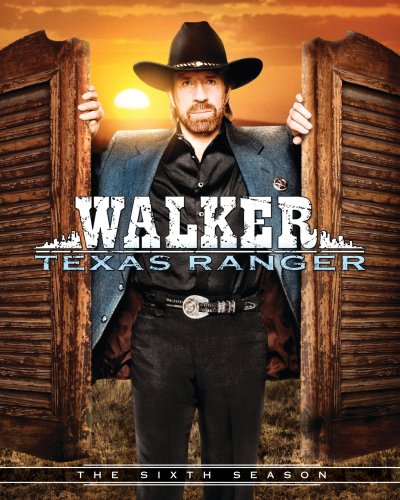
There was a new Cowboy in Dallas, and he wasn’t throwing touchdown passes. But Walker was almost gone before he could really get started. After just four episodes the show’s production company suffered financial collapse, and the show was rescued at the last minute by CBS Productions, who would continue to run the show for its nearly decade-long run. For nine years Norris brought us the ultimate Texas Ranger in a formula cops and robbers show. The show often became a parody of itself, but maintained a solid viewer ship throughout. Hell, Norris even sings the theme song. Truthfully, what started as a one man show (it was originally called Chuck Norris Is Walker, Texas Ranger) became a good working ensemble that probably kept the train going for so long. Walker (Norris) is a tough guy Texas Ranger. He is partnered with Sydney Cooke (Peebles) and Jimmy Trivetti (Gilyard) who’s an ex-jock with a brain. Walker had a love interest and eventual wife in the local assistant district attorney Alex Cahill (later Walker). Together they fight the evils that come to the high plains of Texas armed with their fists, six-shooters, and Stetsons. After starting with the final season, CBS is finally halfway through the series back from the beginning.
Posted in: Disc Reviews by Gino Sassani on January 21st, 2009
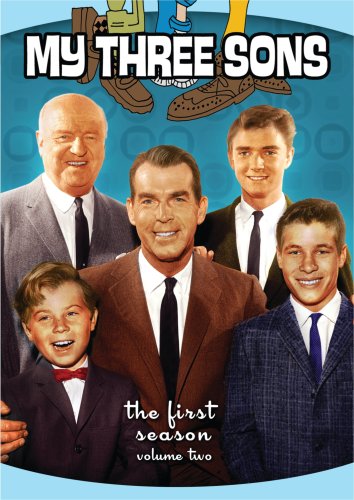
Just to look at it you would think that My 3 Sons was a Disney production. Its star Fred MacMurray had appeared in many Disney films of the 50’s and 60’s and is most likely recognizable from those appearances. Two of the three boys were also known for work with Disney. The eldest boy, Mike, was played by Tim Considine, who starred with MacMurray in Disney’s The Shaggy Dog. Middle son Robbie was played by a former Mickey Mouse Club Mouseketeer, Don Grady. The youngest son, Chip, was played by Stanley Livingston, the only non Disney alum in that group. Another reason for the confusion is the decidedly Disney-like material the series covered. Steve Douglas (MacMurray) was a widowed single parent who was trying to balance his job with that of raising his three sons. Most of the stories involved the warm and fuzzy heartwarming stuff that Disney had pretty much cornered the market on in the films. Whatever troubles arose, no problem was so bad that a heart to heart talk couldn’t fix it. The style would prosper and continue in the form of 70’s shows like The Brady Bunch. The four guys were also joined by Steve’s father-in-law, Bud, played by I Love Lucy favorite William Frawley. That was no surprise, since the show was actually produced, not by Disney, but the Desilu studios.
My 3 Sons was for some time the second longest running sit-com on television. It lasted from 1960 until 1972. The series would undergo major changes as the boys each grew older and eventually married and led their own lives. Frawley would also become very ill after 5 years and leave the show. His replacement, William Demarest as Uncle Charley, is likely better known in the show. The syndicated version of the show often ignored these early black and white versions of the series, opting for the later color ones that featured the Uncle Charley character. It’s very likely you’ve never seen these early episodes as they appeared infrequently in the syndicated markets. The theme from Frank DeVol became pretty popular in the mid 60’s and even entered the pop charts at one time. The show also originally ran on ABC, but moved to CBS in 1965, also accounting for the different syndication packages. It was during that move that many of these big changes occurred.
Posted in: Disc Reviews by Gino Sassani on January 16th, 2009
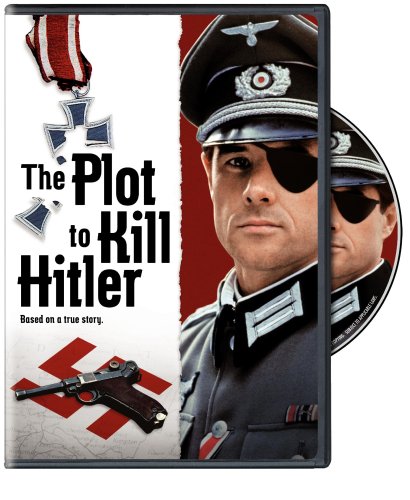
“As the end of World War II drew near, Hitler’s Germany was not only waging a war on separate fronts but from within the Third Reich. This story is based on actual events.”
If any of that sounds familiar, it should. It’s the plot and historical source for Tom Cruise’s latest big budget film, Valkyrie. One can’t help but wonder if this 1990 made for television film would ever see the light of a DVD release if not for the hype surrounding the Cruise film. Likely it would have remained in the vaults somewhere, an obscure film about a long obscure historical event.
Posted in: Disc Reviews by Gino Sassani on January 16th, 2009
The second season of Matlock brought some change to the series. Matlock’s daughter was written out of the series when Purl left the series after the first season. In the 2 hour opening episode of the second season Matlock meets Nancy Stafford (Thomas) in London when he goes there for a case. The episode was filmed on location and marked a spectacular return for the sophomore series. The Stafford character filled in for Matlock’s now departed daughter to become his new junior partner. CBS also tried a little gadgetry in this season. With the episode The Hucksters, callers were invited to call one of three special numbers to select who they wanted the killer to be. The ending was then used that corresponded to the callers’ request. In this release you get a choice of all three actually filmed endings. They are actually identical, with only the “big reveal” having changed.
Imagine Sheriff Andy Taylor older and now an attorney, and you pretty much have the set up for Matlock. Forget for a second that both characters were played by Andy Griffith. That’s not all they have in common. Matlock is every bit the “southern gentleman” that Taylor was. He might be a little smarter, but he walks and talks like Andy Taylor.