1.33:1 Fullscreen

Synopsis

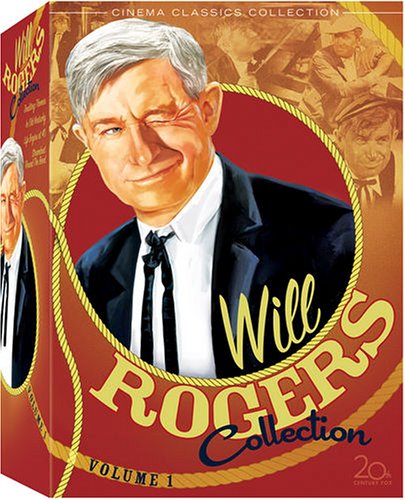
Will Rogers was once the biggest star in Hollywood. Think of any other big name from the late 20's and early 30's, and he outpaced them all. Today, he is little more than a name, and there are plenty of film guides out there that don’t even list his films. Quite the sobering lesson on the evanescent nature of fame. The films in this collection were all made in 1935, the last year of Rogers’ life, before he was killed in a plane crash. These comedies have definitely dated, but Rogers’ charm i... undeniable. He was an inveterate improvisor, but he apparently stuck pretty closely to the script of Doubting Thomas. Dismayed by his wife’s sudden theatrical ambitions, Rogers plots to derail those hopes and keep her in the kitchen, where she belongs (did I mention the films had become a bit dated?). Life Begins at 40 sees Rogers in full aphoristic mode as the crusty, mischievous and independently-minded newspaper editor determined to clear the name of an ex-con employee and triumph over the small town’s evil banker. In Old Kentucky has a feud between two families centred around horse racing. Rogers is the trainer who switches loyalties. Finally, <i <steamboat ‘Round the Bend has con-man Rogers captaining a steamboat as he searches for the half-crazed preacher who can prove that Rogers’ nephew killed a man in self-defense.

Synopsis

In 1985, Steven Spielberg backed this TV anthology series. It took its name from the very first SF magazine (which was briefly revived to coincide with the TV show), but have very little in common with that mag. It was almost purely fantasy-oriented, and its real model was the likes of The Twilight Zone (which itself was revived for TV the same year). Spielberg himself directed the pilot, and plenty of other big names singed on as well. So Harvey Keitel stars in an episode directed by...Clint Eastwood, for instance. Other directors of note include Joe Dante and Martin Scorsese.

Sybil is one of those movies that has turned into something of a running joke. It certainly didn't start out that way, though. Probably no other made-for-TV movie is as famous as this one, based on a true story about a woman that had an astonishing 13 distinctly different personalities. Looking back on the film now, there are some definite cheesy moments. However, the vast majority of the film is really quite compelling, especially when the viewer reminds themselves that this is a true story.

Sa...ly Field, who plays the nut-job in question, won an Emmy for best actress for her work in the film. She really is extraordinary here, essentially playing thirteen different roles at once, many of them intertwined and overlapping. It is a role that would have made the film nothing more than a glorified After School Special in the hands of a lesser actress. Instead, Field plays the character(s) deftly and flawlessly, making the movie's three-hour running time fly by. This is an amazing film even by today's standards, and I hope this new edition brings an all-new audience to the film.

The women on this show are easily the most selfish, self-centered, hateful, wretched wenches that I have ever seen. The fact that they would voluntarily put themselves on this show proves it. Who would ever watch this show (whose sole purpose is to show how horrible a person can be) and think to themselves, “I would really like to be on that show. I want the whole world to see me acting that way.”

Even so, here they are. The second season (!) of this show features eight episodes and eight brides-to-be at thei... absolute worst. It's all here, from flower problems to cake difficulties to the simple fact that somebody isn't paying the bride enough attention 24-hours a day. I can't imagine why anyone would voluntarily purchase this title on DVD. The women here are absolutely horrible people, and it's generally my practice to steer clear of people who act in this way. However, if you are the kind of person that enjoys seeing people make asses out of themselves, then maybe you will enjoy watching this show. I most certainly did not.

Louis L’Amour has been synonymous with the modern Western novel for decades. His stylized depictions of the Old West are always populated with colorful characters. Foremost of these characters would have to be The Sackett Brothers. Two of L’Amour’s Sackett adventures contributed to this 1979 mini-series. “The Daybreakers” and “Sackett” combine to form this 3 hour presentation.

Fresh off the enormous success of such Western shows as Bonanza and Gunsmoke, his mini-series has all the earmarks of that traditional television western. But by 1979 the genre had pretty much run out of steam. The Sacketts feels a lot like a wonderful swan song to a bygone era both in American history and entertainment. A pre-Magnum Tom Selleck leads this dynamic cast as Orin Sackett. Sam Elliott and Jeff Osterhage play the remaining two brothers. Elliott’s portrayal is particularly inspired. Add to the mix Western veterans Glenn Ford and Ben Johnson and you have a mighty fine cast. Louis L’Amour introduces the piece.

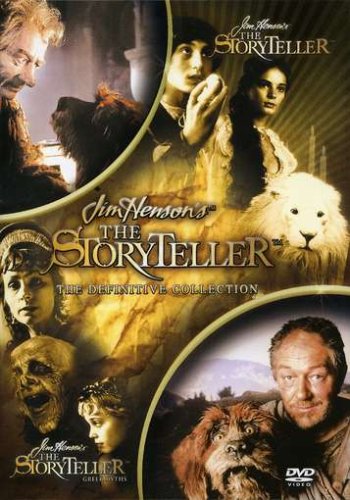
New from Sony Home Entertainment comes the complete series of Jim Henson's The Storyteller starring Mr. Elephant Man himself, John Hurt, and a slew of eye-popping creations from Jim Henson's Creature Shop. The series focuses on classic folk tales, fables, and legends, including "Fearnot," "The Heartless Giant," "The Three Ravens," and six other wonderful family-friendly tales on one disc. Also provided as part of the set is an additional disc entitled Greek Myths, which provides even more Henson-esque entertainment with the following four tales: "Daedalus and Icarus," "Orpheus and Eurydice," "Perseus and the Gorgon," and "Theseus and the Minotaur." There are thirteen episodes in all. Henson's typical production efficiency is present in each episode. His craftsmen always make the most of their miniscule budgets, and their work offers a refreshing break from these days of CGI-heavy effects.

What's so great about this series is its willingness to incorporate a myriad of cultural folk tales, many of which may be foreign to first-time viewers. Taking its selection from Greece, Russia, and Germany, the series never reached its full potential on account of the short run. However, it manages to educate and entertain children of all ages, and endures as a fine piece of family programming despite its brevity. Hurt is fabulous as usual, really sinking his teeth into the narrator role and telling each tale with an enthusiastic punch in his voice. Brian Henson also does a fine job voicing The Storyteller's cynically fearful dog. While effects may have advanced much since 1988, Creature Shop create a lovable character in the talking mutt, which is sure to enthrall younger viewers. Thankfully, these two characters are able to relate to that crowd without talking down to them. One last thing: watch for a minion of fine actors in early roles, including Gabrielle Anwar, Miranda Richardson, Joely Richardson, Alison Doody, and Jonathan Pryce.

Tommy Lee Jones makes his directorial debut with The Three Burials of Melquiades Estrada, a new take on the western genre. Set in modern times, this is a unique revenge picture with a more positive message than most. Jones also stars as Pete Perkins, an old cowboy, who embodies all the classic western ideals. Estrada (Julio Cesar Cedillo) is his Spanish-speaking friend and ranch hand, who falls victim to an unfortunate shooting at the barrel of trigger-happy border patrolman Mike Norton (Barry Pepper). After a...failed attempt at cover-up, spearheaded by crooked police officer Belmont - a masterful portrayal by country music star Dwight Yoakam - Estrada's body finds itself in Perkins' possession, and a journey for a proper burial begins. But Perkins isn't going back to Mexico alone. He kidnaps Norton and forces the man into the role of Estrada. Jones does a great job of walking that line between insanity and friendship, nowhere more apparent than the scene, where he proudly boasts of his triumph to slow his old friend's decomposition. (I'll never look at antifreeze the same way again.)

Shot from Guillermo Arriaga's literary script, Jones' interpretation of time and place is stunning. The film begins in a strange place and jumps around with great frequency. Pete and Estrada's relationship contains not a word of English. One minute, the title character is alive. The next, he's dead. Then, he's alive again. It would have been too easy for the film to crumble under its own structural weight, if not for Jones' seamless direction, which keeps the film's nomadic tendencies surprisingly clear. By excluding English (and subtitles) from the scenes with Pete and Estrada, the audience realizes just how special the young immigrant was to Perkins. Their relationship was something exclusive, and it seems as if it was the closest Pete ever came to loving another human being. Unfortunately, there will probably be a few snickers if I don't clarify; but for the record, it's a non-sexual love. It's friendship, plain and simple. And the fact the audience doesn't even get to invade that bond tells all the more what Estrada meant to Perkins.

Lately, I've been wondering out loud about what will happen to these over-produced teen pop stars who are thrown all this media exposure by their parents (to the point of exploitation). When are we going to start seeing some Playboy or Maxim photo shoots? When are we going to see someone on Cinemax After Dark, or even Night Calls? I mean, it's obvious at this point that Ashley Simpson can't sing, and she's starting to look more and more like her sister in an attempt to become her, without the appeal. And since there's a rumor floating around that she turned down a multimillion dollar Playboy photo shoot (after the proverbial "great deal of thought"), it seems to be the next logical step.

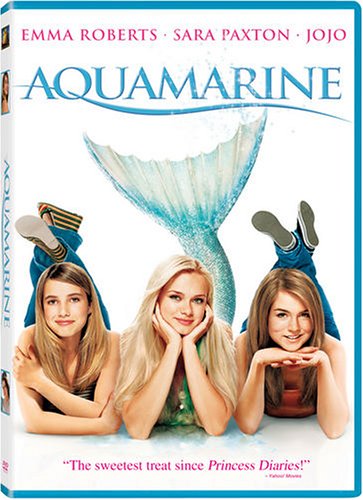
Enter Joanna Levesque (RV), a.k.a. "Jojo". I don't know what song she's famous for, I don't know what she's doing lately, but I know she's been thrown a lot at MTV and Nickelodeon for whatever reason. I know this because I watch copious amounts of both. She plays Hailey in Aquamarine, a bit of a tomboy and a close friend of Claire (Emma Roberts, Blow), who is the granddaughter (I think) of owners of a beach club of some sort, and they both seem to have a crush on Raymond (Jake McDorman, Echoes of Innocence), a local life guard and resident teen hunk.

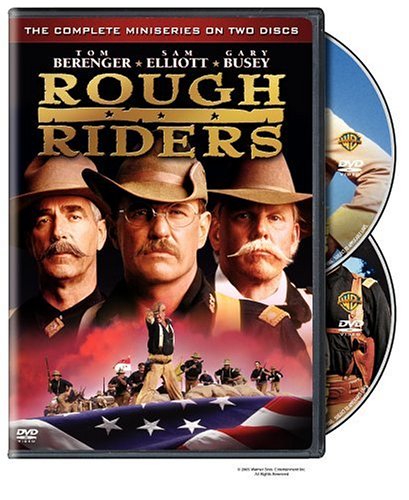
Teddy Roosevelt once delivered a speech with a bullet lodged in his chest from an assassination attempt. It was that kind of bravado that made him one of America’s most colorful Presidents. I’m into Presidential history, having taught it for many years. I also live in Tampa, so have an increasingly avid interest in this particular American figure. Tampa was the staging and training grounds for the Rough Riders before they embarked for Cuba. It was also from a cigar warehouse in Tampa that Roosevelt’s orders were sent hidden in a cigar. History has no shortage of battle cries and slogans. “Remember the Maine,” a bold challenge issued by newspaper baron William Randolph Hearst, was one of the most memorable. An American battleship, the Maine, was sent to Cuban waters to protect Americans in the increasingly hot war zone there. An explosion later revealed to be an armament malfunction on board ship, was nevertheless blamed on Spanish aggression. With no small effort on Hearst’s part, America was soon engaged in the Spanish-American War.

What can we say about Ted Turner? This Atlanta Southerner has explored about every aspect of the Civil War in his productions that there likely is left to exploit. Fast forward a few decades, and now Turner set his sights on the Spanish-American War. It’s somewhat ironic, as Turner himself has often been compared, whether favorably or not, to Hearst himself. Credit Turner for being fair in his depiction of Hearst as an overzealous antagonizer for war. “You supply the pictures, I’ll supply the war,” he was once heard saying to a photographer. Even if George Hamilton appears grossly miscast in the role, the characterization was mostly accurate. In fact it is the acting that hurts this film the most. Tom Berenger is way too manic as Roosevelt. It is unlikely he was always so jovial even as his brothers in arms were dying around him. The portrayal is more often than not a complete caricature instead of a faithful attempt to portray a multifaceted individual. Berenger appears to have but one tone. Even by film’s end when his character can’t help but be overwhelmed by it all, silence is the only way Berenger can reveal Roosevelt’s obvious inner turmoil. Truth be told, too many of the characters are far happier than realism should dictate. Sam Elliott provides the best acting in the film as one of the regiment commanders. Unfortunately for him, his craft appears out of place. Other notable cast members include William Katt, Gary Busey, and Brian Keith as President McKinley.


I guess because of some anniversary related to the initial version on Disney, someone decided to do a remake of 20,000 Leagues Under the Sea and not only lengthen it, but turn it into a miniseries. Built over a couple of parts, the piece, adapted by Brian Nelson (Hardy Candy) and directed by Rod Hardy (December Boys) stars some familiar names and faces, but is it really worth it?