Posted in: Disc Reviews by Archive Authors on April 1st, 2009
Posted in: Disc Reviews by David Annandale on December 24th, 2007
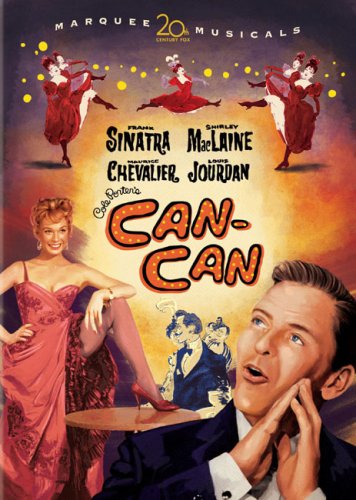
In Belle Époque Paris, the can-can is all the rage but also illegal, and Shirley MacLaine’s nightclub is cracked down on by uptight judge Louis Jourdan. MacLaine is defended by libertine lawyer Frank Sinatra. Jourdan falls for MacLaine, who is waiting perhaps in vain for Sinatra to marry her. Maurice Chevalier shows up to chuckle indulgently.
The vision of Paris may be no more convincing than MacLaine and Sinatra playing characters named “Simone” and “François,” but this is a musical, so who cares? The sets are bright, the songs are catchy, and the dance numbers energetic. But the storyline itself is stultifying. Maybe Krushchev was right about this thing after all.
Posted in: Disc Reviews by Archive Authors on August 20th, 2007
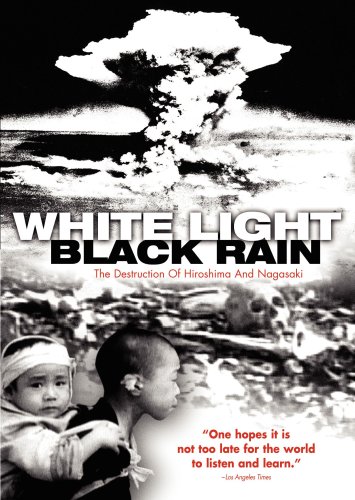
In August 1945, the world was transformed in the blink of an eye when the U.S. dropped atomic bombs on Hiroshima and Nagasaki. That act of destruction sparked the end of World War II, and the beginning of endless suffering for those who survived.
It was the first and only attack with nuclear weapons in our history, and the story of White Light/Black Rain is the reason it should never, ever happen again. Hundreds of thousands of people died as a result of the bombings, but when you meet the survivors, it seems that the worst victims were those who lived.
Posted in: Disc Reviews by Archive Authors on October 30th, 2006
Stanley Kubrick’s ultra famous epic Spartacus tells of the story of a man named Spartacus (Kirk Douglas) who decided to defy and lead an uprising against the Roman empire. Spartacus, naturally a slave, is beaten in early scenes for biting a guard’s leg after falling down. He is sentenced to death for this. Before his death, a man named Batiatus decided to train Spartacus as a fighting gladiator. As many now know, gladiators were trained for two reasons, the first being to fight to the death, and the second as ... sense of amusement for the upper classes. After Spartacus witnesses one of his friends die, he decides to unite all the slaves in the hopes of rebelling against the Roman Empire. As Spartacus and his men gain more notice, more slaves from around the country join him and his men for the fight against the Empire. As this happens, Spartacus, unexpectedly, falls in love with a girl named Varinia who is a slave girl.
Spartacus has numerous positives and few negatives. First up, the acting is top notch. Kirk Douglas is fabulous as the slave man rallying up men across the country for one goal. He delivers speeches with such ferociousness and intensity that, sometimes, I could have seen myself wanting to join the rebellion. Speaking of rebellion, this is one of the most important aspects of the film. The idea of rebellion, especially in the Roman times, most certainly ended in death for a majority of those who decided to rebel against their rulers. One can easily see how excellent of an actor Kirk Douglas was (we see this in the actor his son Michael Douglas has become). He has a sense of power and intelligence in every one of his scenes easily stealing the show. The supporting actors, particularly Laurence Olivier’s performance as Marcus Licinius Crassus is just as good. Olivier, probably famous for his various retellings of Shakespearean stories, is simply magnificent here.