2.21:1 Widescreen (16:9)

A successful writing team, who also happen to be a married couple, are the creators of an award-winning show in the UK that has just completed after four seasons. An American network wishes to create a US version of the show. The couple are flown to LA, put up in a lavish mansion and are introduced to the Hollywood method of creating television...and it nearly destroys them.

Even before they arrive in LA, this pair begins sinking in a quagmire of big-time Hollywood lies and bluffs that drive them to losing their lead actor, a respected, elderly British man, in exchange for Matt LeBlanc, converting their program from the story of a headmaster at a boarding school to that of a handsome hockey coach who is chasing after a sexy librarian, and generally sacrificing all they hold dear (both creative and personally) in order to survive the shoot of a single pilot episode (which, by the way, seems to be the most arduous and lengthy studio shoot I have ever witnessed...it lasts the entire season of Episodes!).

With smaller cable networks stepping up in the last few years and producing high-quality, original programming, we are living in a veritable Golden Age of television.

And yet.......

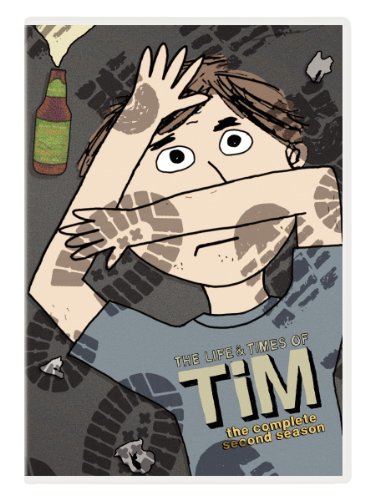
Tim is the lone passive, sane voice in an insane world that whirls around him. Take the kooky scenarios you might find in an episode of Seinfeld, animated them (barely) and pepper it with some HBO-acceptable crassness, and you're looking at this show. Done in a minimalist 2D animation, each episode consists of two separate stories. By splitting the episodes in half, the two chapters make the show resemble the current trend of 10 to 15 minute long cartoons, popularized by Cartoon Network's “Adult Swim” programs.

Stories often end without complete resolution, but always cap themselves off with a punchline. The conflicts he finds himself in range from the domestic, such as work or relationship issues, to the ridiculous, like Tim needing to break a bond he developed with a circus elephant.

“When you're a Jet, you're a Jet all the way! From your first cigarette to your last dyin' days.”

West Side Story is a masterpiece in film making. Its DNA comes from the greatest entertainers in the business. The great Robert Wise (The Sound of Music, The Day the Earth Stood Still) shares directing credit with one of the world’s greatest choreographers, Jerome Robbins. The music was composed by Leonard Bernstein with lyrics by Stephen Sondheim. Daniel Fapp’s cinematography is epic and evocative. The movie was nominated for 11 Academy Awards and won 10, a record at the time, including Best Picture and Best Director. This is film sets the bar so high for musicals there really hasn’t been a good filmed one since.

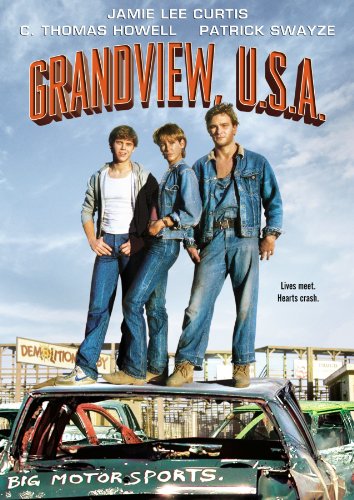
Here is a forgotten 80s, romantic dromedy that may have been forgotten for a reason. Various love triangles arise around the setting of a Demolition Derby. Jamie Lee Curtis and Patrick Swayze star in a tale packed with the usual 80s comedy tent poles such as weird dreams, screwball scenarios, and youths having to stand up for the little guy.

Cody (Curtis) might lose her Derby site until a recent high school graduate stumble into her life to help, and perhaps steal her heart. Meanwhile a derby rider (Swayze) is pulling his life together after his long time girlfriend starts having an affair. The story runs through the sort of formula we've all seen before, with those aforementioned signifiers of its place in the American 1980s along with familiar 80s actors appearing. Heck, they even have cameos by John and Joan Cusack and Michael Winslow (yes, the guy who does the sound effects from Police Academy) sneak in. The performances are acceptable, the gags are not the freshest, and the romance is jammed with heartache and conflict.

Ken Burns has achieved a rare feat in the world of filmmaking: he makes clean, concise, uncontroversial documentaries and yet has somehow become a household name, or as close as any documentarian can get in this society. It also depends, I suppose, on the ratio your household's television is tuned in to PBS compared to, say, Spike TV. Burns has made his name making huge, sweeping films that take in gigantic aspects of American history and culture, like The Civil War, Jazz, and my personal favourite, Baseball. His latest documentary, which he co-directed with Lynn Novick, ranks right up there with his best work. Prohibition is vast, covering a huge time period in American history, contains tons of detail, and still manages to be focussed, concise, and tremendously entertaining.

The first part, A Nation of Drunkards, starts its story before the Civil War. It sets the scene by painting a picture of a nation obsessed with alcohol. Saloons are such an integral part of the landscape that huge numbers of the working class and immigrant labourers were giving up most of their pay buying liquor. Spousal and child abuse was rampant, and Temperance Unions grew out of the need to protect and shelter women and children from abuse and neglect as much (or more) than they did out of religious zealotry.

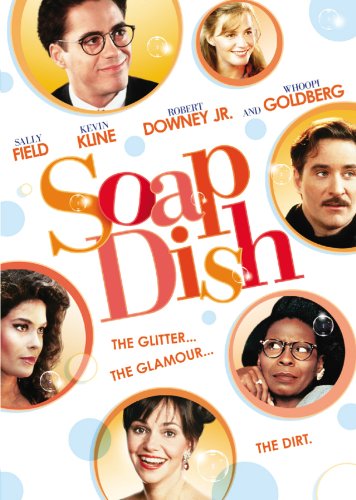
An aging soap opera starred, played by Sally Field, is the target of a jealous supporting cast and a conniving producer (Robert Downey Jr.). The head writer of her show (Whoopi Goldberg) seems to be the only ally she has as a former love's character (Kevin Kline) is recast to throw her off her game, along with a mysterious family member barging into her world and work life.

Soapdish relishes in Soap Opera story tactics just as much as it wishes to lampoon them. Twists, secrets, romance, backstabbing, tears, sex changes, melodramatic speeches...all of these elements are parodied in the show within the film, but also work their way into the real-life drama of these characters. The success of this film relies on being able to display how ridiculous soap operas can be while still selling the audience a complete (and often over-the-top) soap opera tale. This is truly a soap opera world as nothing is grounded in reality (Abandon all hope, Vittorio De Sica fans who enter here). The plot twists are painted in broad strokes and the physical comedy bits are motivated by pure nonsense. That considered, it is a truly funny journey peppered with some outstanding yet subtle visual gags (constantly panning past beefcake actors in the production hallways for example).

Based on actual Old Bailey court records from the 18th Century, Garrow's law tells the true story of William Garrow, a young barrister you revolutionized the legal system. This first series may only be 4 episodes long, but with each clocking it an an hour long a piece, this series offers plenty of drama to invest in.

The first episode kicks off with Garrow's earliest attempt to be a proper defense attorney, with the mindset to stop “blood money” from influencing convictions, and to cease the casual executions and/or barbaric treatments of innocent people. The proceeding episodes each contain a highly tense adventure, as Garrow has to not only prove his clients' innocence, but must also fend off bounty hunters, judges and other callous opponents of what he views as true justice.

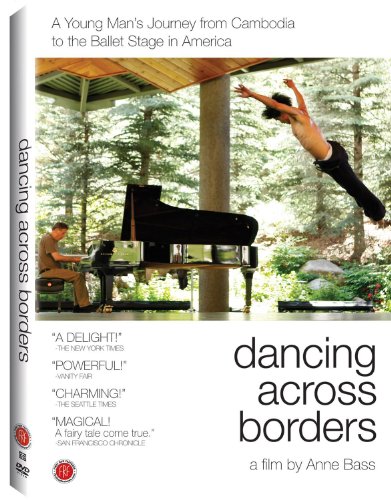
A young Cambodian boy, named Sokvannara “Sy” Sar, is spotted performing a traditional dance by the film's director and American Dance patron Anne Bass. She immediately takes note of his smooth talent and figures he has massive potential as a classical ballet dancer. Sy is given a rare chance to audition at the School of American Ballet in New York and then proceeds on a unique and fast-paced journey through a new world of dance, in a nation that is completely alien to his homeland.

This film would be interesting simply for the fact that it displays many parts of what it means to train as a professional ballet dancer and student, but is all the more engaging because of S's situation; that being the lone Cambodian to take on such a quest. Sy may come from poor roots, but his is by no means a sob story of an underdog, but that does not make it any less special or rare an opportunity. This film gives us the chance to see more than just his home, family and friends, as well as the many stages he earns a spot performing on, but we are privy to what can happen when chance falls upon the sort of  person who has the passion to take hold of it and elevate themselves in something that was a total unknown to himself and his fellow countrymen.

"The hills are alive with the sound of music..."