2.35:1 Widescreen

"People scare better when they're dyin.'"

Mention the name Sergio Leone and you immediately think of Clint Eastwood and their Man With No Name trilogy. The truth is that Leone was the master of the spaghetti western and largely responsible for making Clint what he is today. When the Italian director decided to try his hand at Hollywood, he was welcomed with open arms, except they weren't interested in anything but an American copy of a spaghetti western. Leone had something else in mind. He had a "been there, done that" attitude about the westerns and wanted to do an epic called Once Upon A Time In America. But Hollywood was hearing none of that. So they compromised. If Leone delivered a stylistic western, the studio would spring for the epic he wanted to make. The result of that parlay turned out to be Once Upon A Time In The West.

"You know your weapons. It's a lever-action breech-loader. Usual barrel length's thirty inches. This one has an extra four. It's converted to use a special forty-five caliber, hundred-and-ten-grain metal cartridge, with a five-hundred-forty-grain paper patch bullet. It's fitted with double-set triggers, and a Vernier sight, marked up to twelve-hundred yards. This one shoots a mite further."

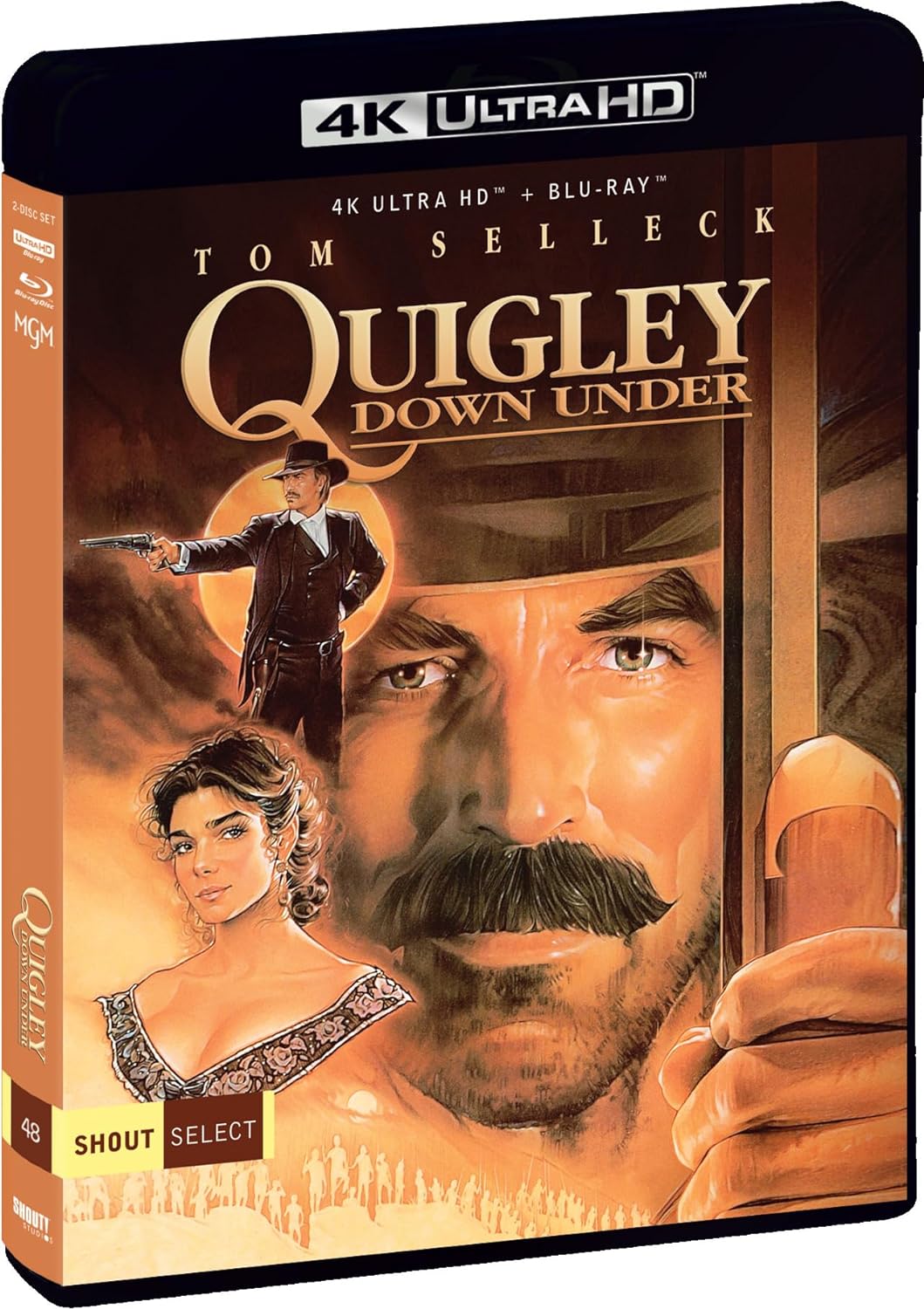
It almost happened again. Lightning almost hit Tom Selleck for a second time, and I don't mean in a good way. Tom Selleck was having fun and a tremendous amount of success playing Magnum P.I. on television. It was a character he got on the strength of a recurring character on The Rockford Files, and it was a huge hit. But in 1981 it didn't seem so much like a blessing. Casting calls went out, and he was approached to play an archaeologist trying to beat the Nazis to some kind of a McGuffin or another. The Magnum commitment kept him from taking the role, and it went to Harrison Ford, who turned it iconic. But Selleck still had Magnum. Then a few years later he was approached to play an American sharpshooter in the Aussie Outback but once again had to turn the role down. That was 1984, and Warner Brothers was working on a John Hill script called Quigley Down Under. There were some delays, and the film ended up leaving Warner Brothers for MGM and losing director Lewis Gilbert for Simon Wincer. With that kind of turnaround issues, the film took until nearly 1990 to go into production. By then Magnum was off the air, and he checked in on that film again to find it had a new staff and new life, and yes, it was still available. Selleck finally got his swashbuckling part, but it's really more Pale Rider (Eastwood) than Indiana Jones, and the new director would later know more than a little bit about Indiana Jones when he went on to direct several episodes of The Young Indiana Jones Chronicles. He would also return to the outback with the last Crocodile Dundee film, so this ended up being one heck of a circle. And in 1990 we got to check out Quigley Down Under.

"You are now the property of Erewhon Prison. A citizen of nowhere. The Geneva Convention is void here; Amnesty International doesn't know we exist. When I say your ass belongs to me, I mean exactly that."

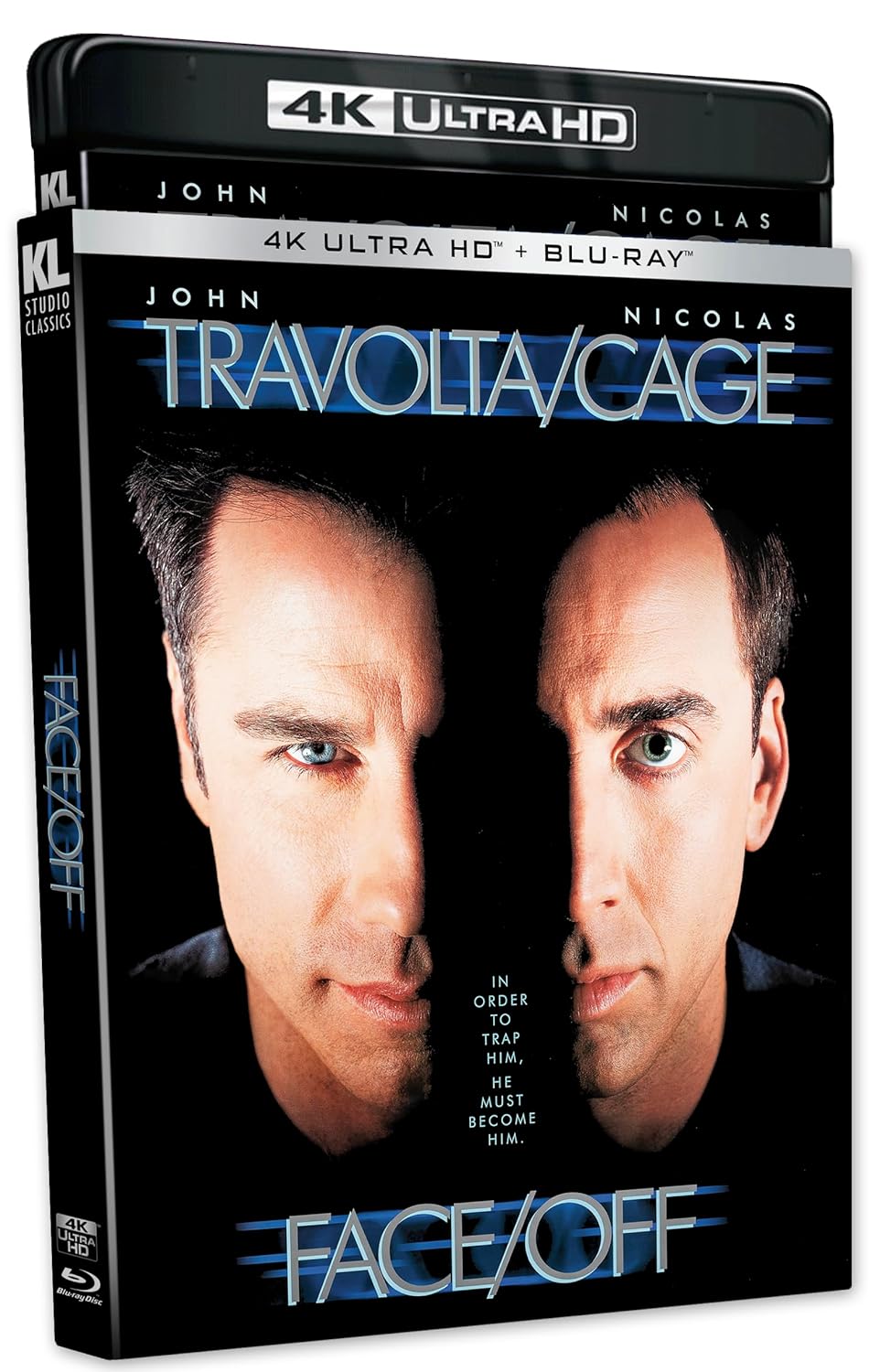
I am a huge John Woo fan, especially his earlier classics like Hard Boiled. I’ll admit it’s been several years since I last seen Face/Off, but I don’t have a reason why, as I remember really liking this movie then. At either rate now I have a copy of the movie to call my own, and a special two disc release at that. Let’s just hope that it is what I remember, but as a big fan of Nick Cage I don’t think I’ll be let down. In order to catch him, he must become him. I couldn’t put it any better myself, Face/Off tells quite the eccentric story of revenge, devotion, and of course crime. Sean Archer (John Travolta, Wild Hogs) is an extremely devoted FBI agent, obsessed with catching terrorist Castor Troy (Nicholas Cage, Ghost Rider). Several years earlier Troy killed Archer’s son, since then it’s been his goal in life to put Troy to justice. He gets the opportunity one day when Troy ends up in a coma after boasting about a massive terrorist attack he has planned on Los Angeles.

"I know what you're thinking. "Pain is coming. Will I take it like a man?" Well, let me put you at ease. You won't -- but none of them do. Men, women, children, they all weep, they all beg, they pass out, they piss themselves, they attempt negotiation. You wouldn't believe how many men I've seen lying right where you're lying right now, grown men with wives and children at home, offering all kinds of sexual gratification for a five-minute reprieve. It's pathetic."

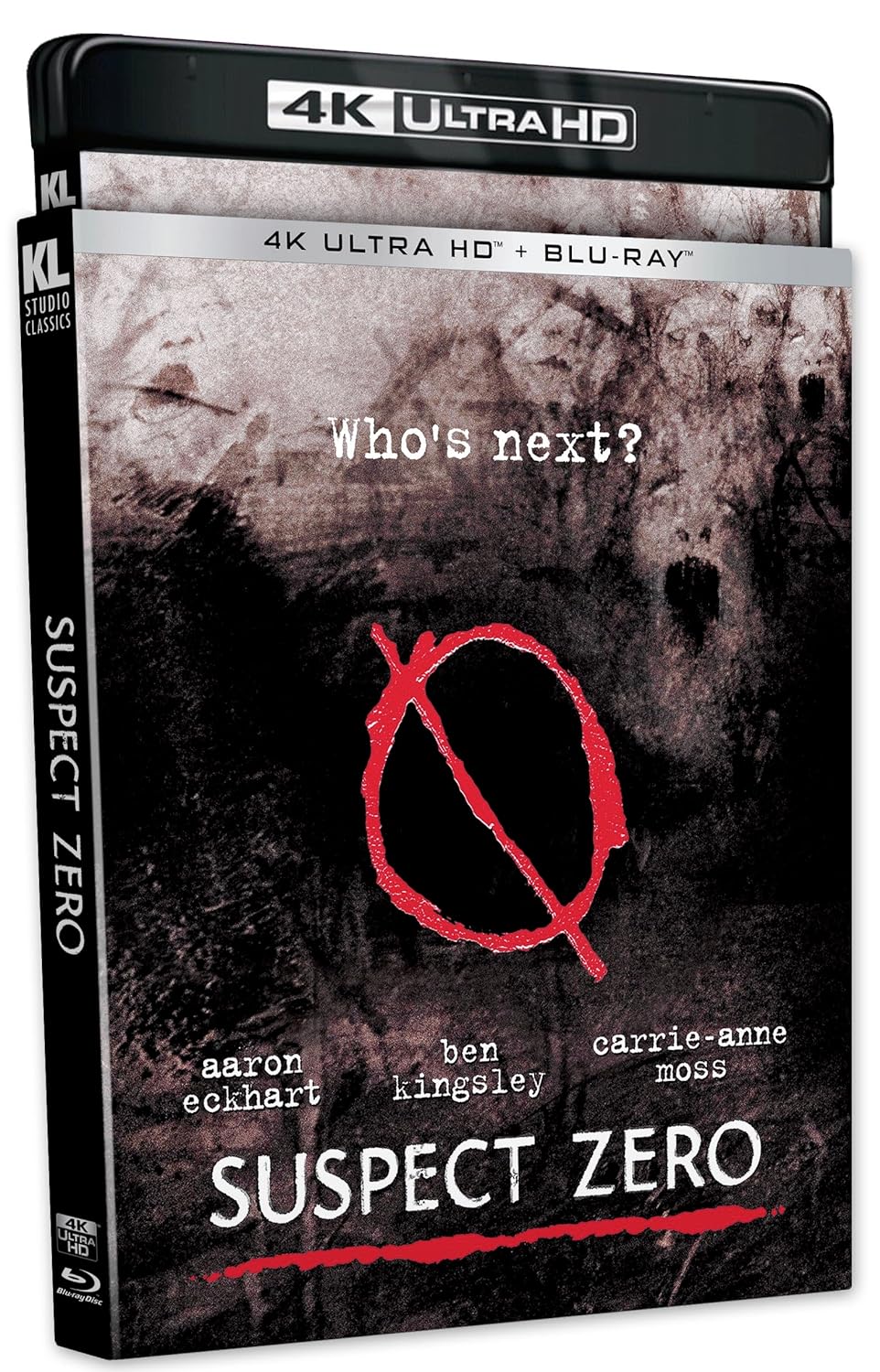
Suspect Zero follows the contradictory teacher/student relationship between serial killer Benjamin O’Ryan (Ben Kingsley) and FBI Agent-in-Pursuit Tom Mackelway (Aaron Eckhart, sporting as much chin as Bruce Campbell). O’Ryan is a tormented refugee of a government program to tap psychic powers for military intelligence, and Mackelway is a borderline-rogue agent, tormented by visions and headaches. Without letting slip any spoilers, the movie sees O’Ryan draw their paths together in pursuit of justice for himself, his victims, and Mackelway.

"I met him fifteen years ago. I was told there was nothing left. No reason, no conscience, no understanding, even the most rudimentary sense of life or death, good or evil, right or wrong. I met this six-year-old child, with this blank, pale, emotionless face and the blackest eyes ... the devil's eyes. I spent eight years trying to reach him, and then another seven trying to keep him locked up because I realized that what was living behind that boy's eyes was purely and simply ... evil."

Blumhouse and David Gordon Green recently finished a sequel/reboot of John Carpenter's Halloween with mixed results. He got Jamie Lee Curtis to return for all three films in the trilogy. Most of the various sequels and reboots did not include the original film's star, but Green was not the first one to get her to return to the role of Laurie Strode. To celebrate the 20th anniversary of the first film, Curtis returned to the role in the somewhat neglected. It was the seventh overall film in the franchise, and like the recent trilogy, it erased all of the various sequels and claimed to be a continuation of the original film. It produced a respectable $55 million on a $17 million budget and was the next final film in the series before Rob Zombie did his own reboot of the franchise that lasted for two films and finally led up to the David Gordon Green attempt to revisit and pretty much conclude the franchise with three more films. Curtis returned for Halloween Resurrections, which was a kind of meta/reality show take on the material, but Rob Zombie took it back to the beginning. Is that really the end of Michael Myers and company? I doubt it. There's still bank to be made from the franchise, and after a respectable few years, someone else will tackle the tale. Where they will start from is anyone's guess, but they could do worse than look at Halloween H2O: Twenty Years Later as a jumping-off point. I doubt anything like that is going to happen, but the franchise could certainly do worse,... and it has.

“Don’t expect too many mistakes from this man. After all, he does seem rather more interesting than just another reader researcher. For example; has he gone into business for himself? Was he turned around? Does someone operate him? Is he homosexual? Broke? Vulnerable? Could he be a soldier of fortune? Did he arrange the hit? Is that why he’s still in flight? Still, he may be innocent. But why didn’t he come in gently?”

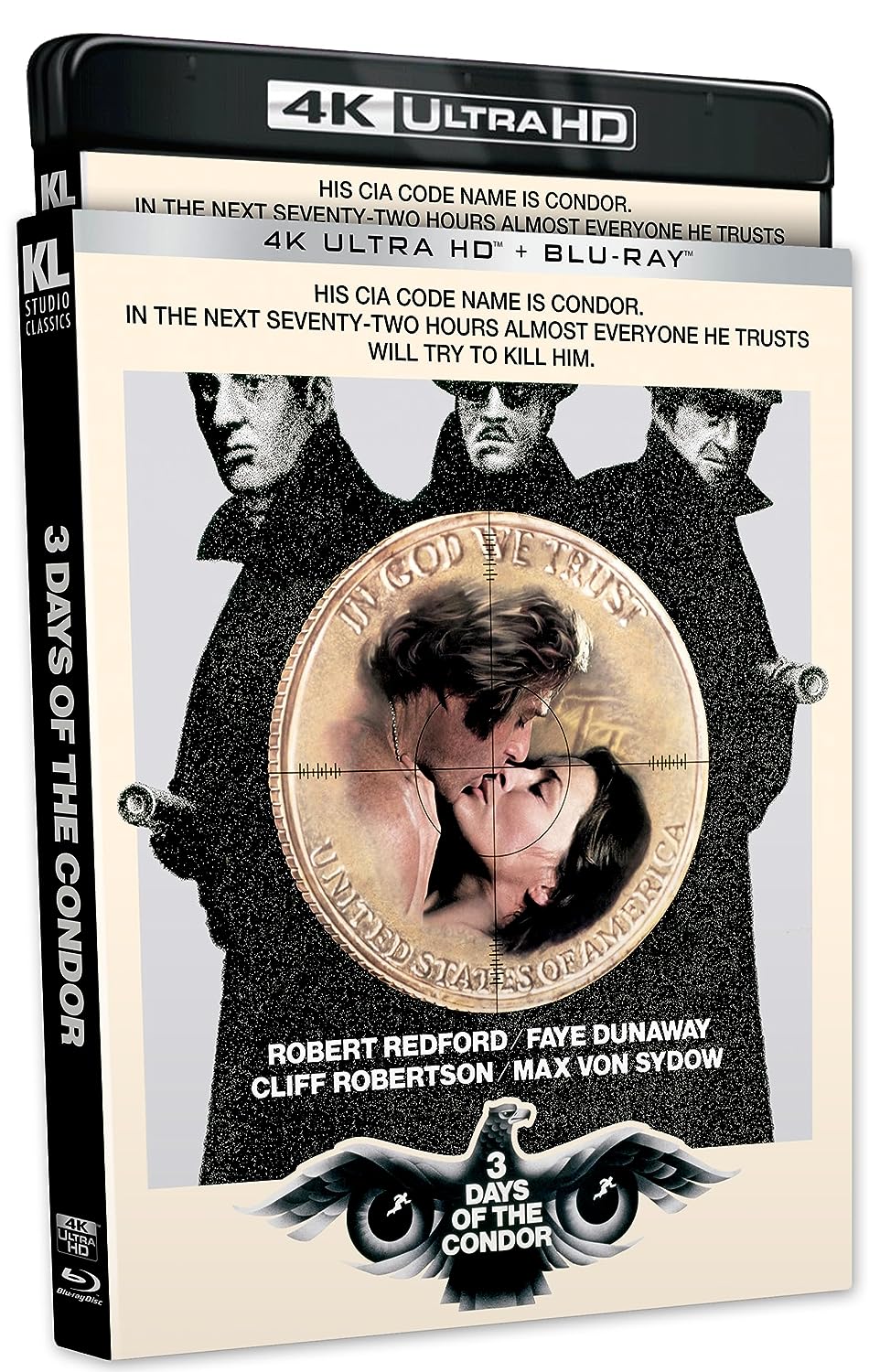
Sydney Pollack might have been channeling the essence of Alfred Hitchcock when he directed 3 Days Of The Condor. It’s hard not to see the similarities to some of Hitch’s work. But he might also have been having a bit of precognition at the same time. The later novels and films about Jason Bourne bear a striking resemblance to this 1975 thriller. Whatever connection Pollack might have been making, he managed to direct a film that was timeless while being very much a product of its time. We are reminded of that long-gone era of the 1970’s with generous shots of the just-built World Trade Center towers. Ads and shots of Eastern Airlines planes bring back some memories. These images securely place the action in a specific time. Still, it works maybe even more today than it did in 1975.

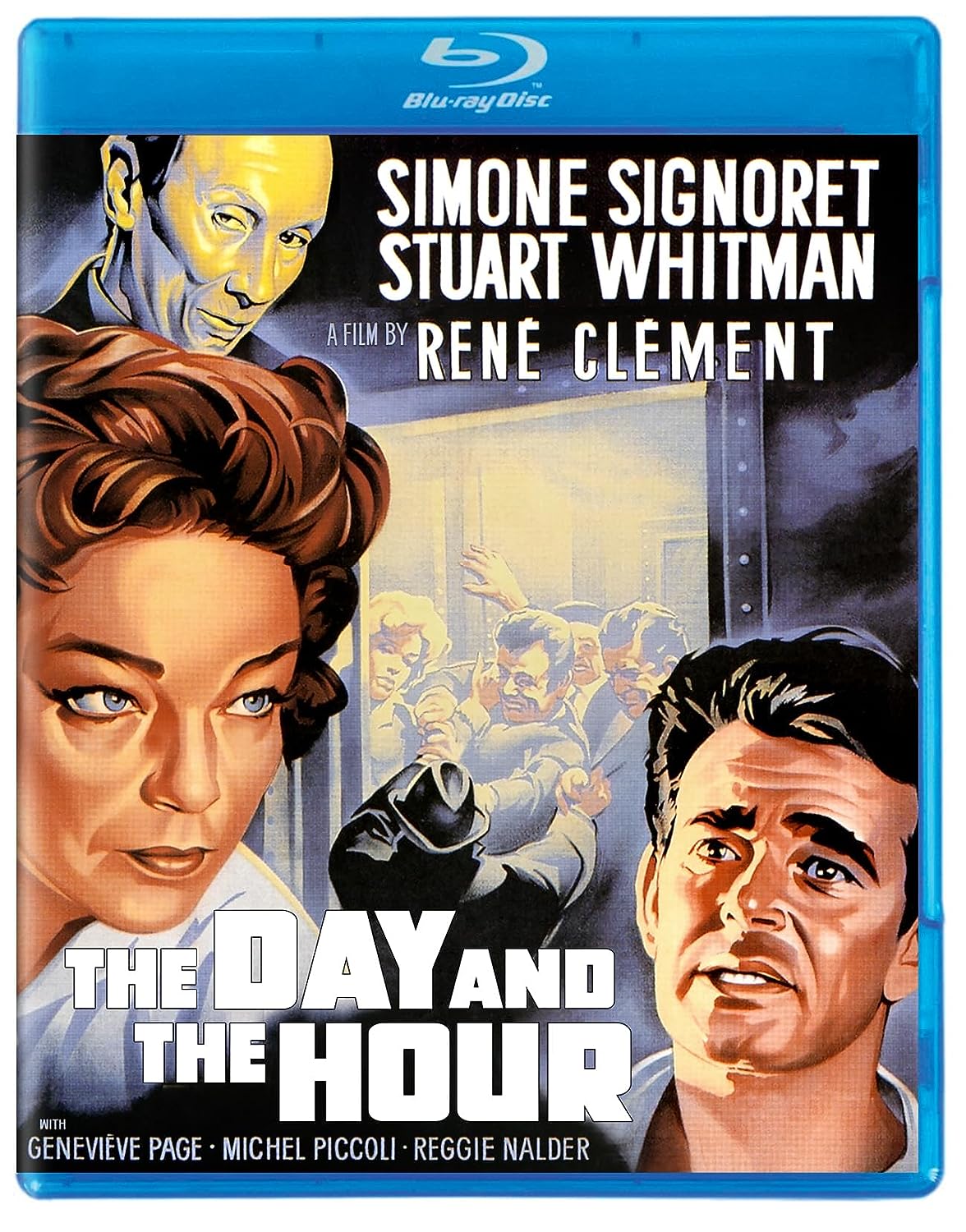
Typically, I avoid World War II period films like the plague.  I literally see the word Nazi or German occupation and usually find a reason not to see the movie.  I have nothing against the pictures; the problem is that so many of these films are surrounded in clichés that it feels like an old hat with nothing new to offer.  However, when I saw The Day and the Hour in my review pile, I was intrigued by the notion of it being in France with a female lead and something of a romance.  Far different from the usual pow pow, war is heck, or a film that's going to have buckets and buckets of tears and worrying about the human condition.  Though from the looks of things, this one might have some waterworks too.  Let's take a look.

1944, the Germans have occupied France. We open the film to a newspaper clipping. The German police have proof that three crew members on an enemy plane that was recently shot down are hiding in the Rethel commune region.  Their names are Allen Morley, Pat Riley, and Norman Thompson.  Anyone who is helping them is subject to punishment up to and including death.

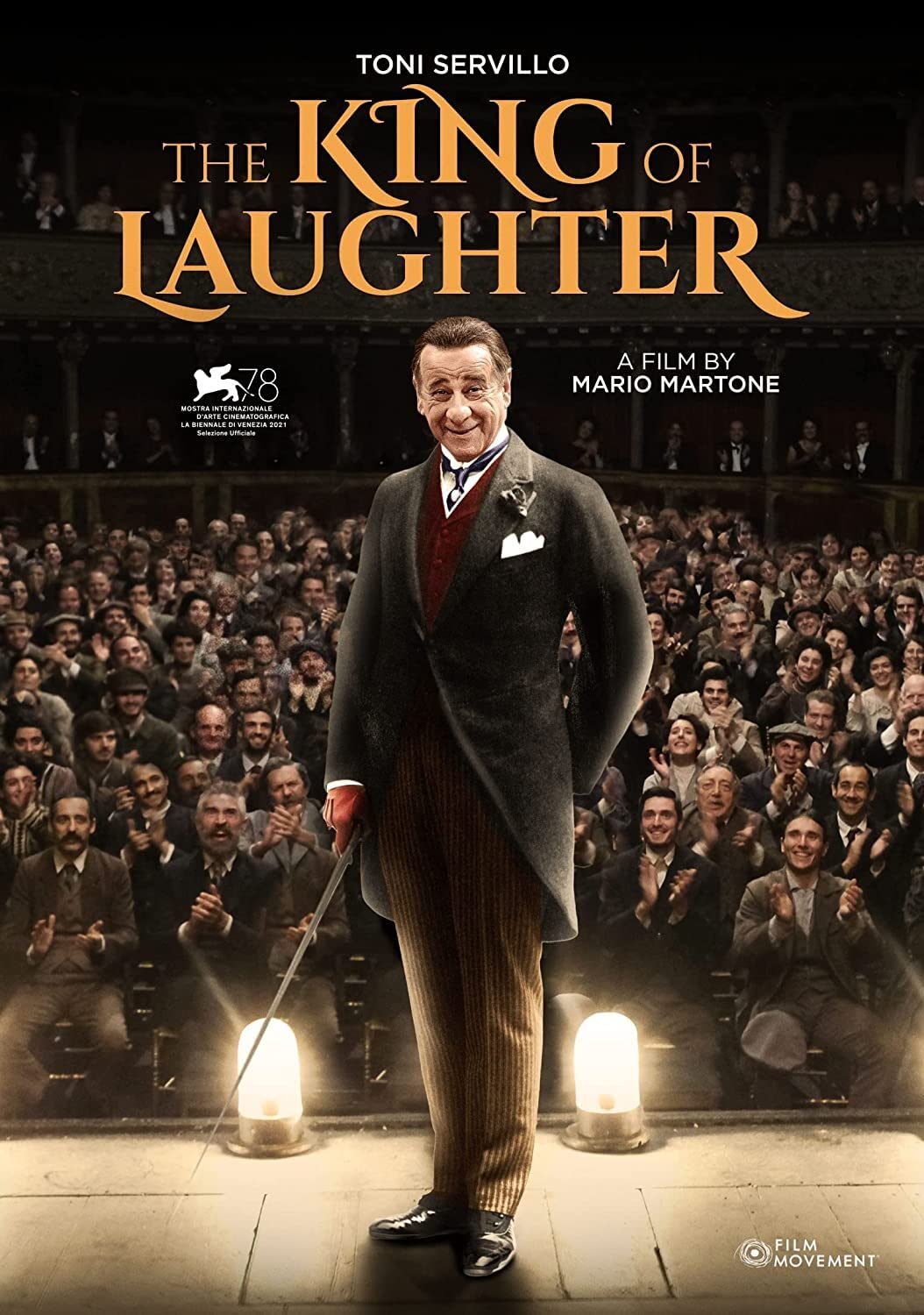
I think all of us want to be on stage, at least in theory.  For me, it started with some plays in high school.  But from there, those aspirations were cut short due to my father telling me that I needed a real job (which was his favorite thing to tell me in high school and college).  I don't think the decade I spent in karaoke bars (and actually singing) really counts for anything either.  So I've always been fascinated with theater, particularly when it comes to comedy.  When I saw King of Laughter as a possible review title, I took a peek at the trailer and decided to give it a shot.  After all, what's not to like about a story featuring the famous actor/playwright Eduardo Scarpetta in a battle with the courts over the concept of parody?  Let's take a look.

We are at a showing of the play Poverty and Nobility.  At the backstage area, we see actors eating pizza.  Then we move across to the box office area where everyone seems to be trying to get a ticket, only to be told that it is sold out.  Eduardo Scarpetta (played by Toni Servillo)  puts on his makeup while members of his family watch.  Nearby, a table has two men seated.  The proceeds from tonight's play are counted over and over again while they try to figure out the payout for each crew member.  Finally, we reach the point in the play where Eduardo Scarpetta makes his appearance to a sea of thunderous applause.

"We watched as the bombs shattered the second comet into a million pieces of ice and rock that burned harmlessly in our atmosphere and lit up the sky for an hour. Still, we were left with the devastation of the first. The waters reached as far inland as the Ohio and Tennessee Valleys. It washed away farms and towns, forests and skyscrapers. But the waters receded. The wave hit Europe and Africa too. Millions were lost, and countless more left homeless. But the waters receded. Cities fall, but they are rebuilt. And heroes die, but they are remembered. We honor them with every brick we lay, with every field we sow, with every child we comfort, and then teach to rejoice in what we have been re-given. Our planet. Our home. So now, let us begin."

It all started when Steven King wanted to remake the sci-fi cult classic When Worlds Collide. These films must have been favorites to him, as he would indeed go on to remake George Pal's better known film War Of The Worlds and the Robert Wise classic The Day The Earth Stood Still. But it just never really happened for When Worlds Collide, at least not directly. At the same time Spielberg had optioned The Hammer Of God by Arthur C Clarke of 2001 fame. That book dealt with the deflection of an asteroid on a collision course with Earth using thermonuclear rockets. Somewhere in that time he decided to put the plots together, and the result was Deep Impact, with an "original" screenplay by Michael Tolkin and Bruce Joel Rubin. By then Spielberg wasn't interesting in directing the feature, but acted as one of the film's producers with Mimi Leder in the director's chair. She was somewhat of a risk. Leder had never directed a big-budget film before. In fact, all but one of her previous credits were for television, directing shows like China Beach and L.A. Law. The risk paid off, and she did quite a good job with the film for the most part. There are certainly some pacing issues, but the film was well received as it raced to beat another film with pretty much the same plot to the box office. That other film was Bruce Willis's Armageddon, and Deep Impact beat it by two months.

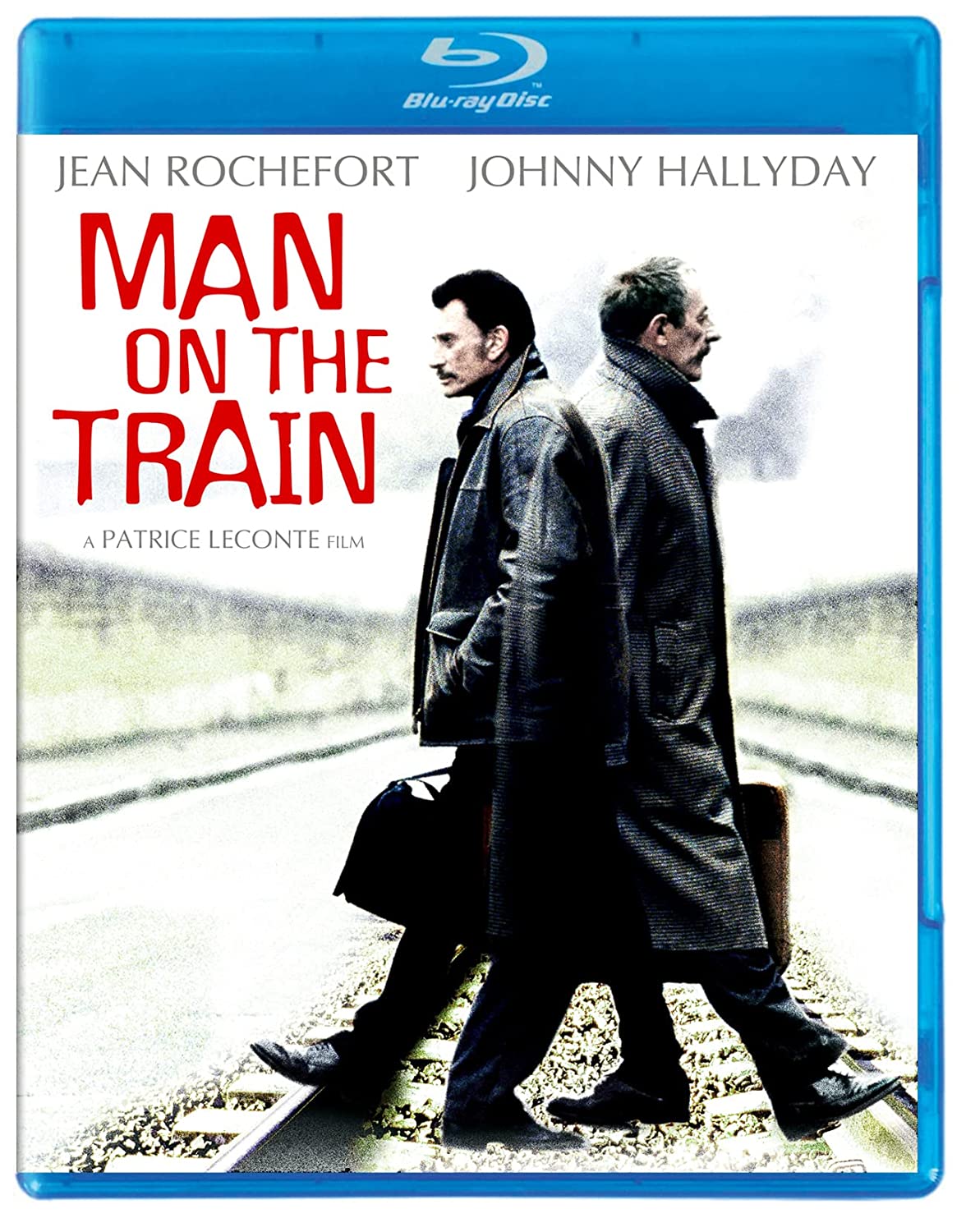
Even though I consider myself to be well-rounded when it comes to films, I admit my personal viewing history of French film to be a little lacking.  Go Google any top 20 list of French films, and I've probably seen maybe two or three of the films.  This is very contradictory to say Chinese, Japanese, English (UK), Australian, etc. where I've seen hundreds of films.  But I'm always willing to expand my repertoire, so I jumped when I saw there was a French crime thriller named L'Homme Du Train or The Man on the Train available for review.  Let's see how it plays out.

As we start, A train runs along the tracks and whips by various locales.  We see a man named Milan (played by Johnny Hallyday) who tries to relax, but obviously he can't.  The train finally comes to a stop, and he is only one to get off.  He walks through the town, which is somewhat desolate, and finally ends up at a pharmacy.  There he asks for some aspirin, which he finally receives.  (Unfortunately it's water-soluble, so he also requires a glass of water).