2.35:1 Widescreen

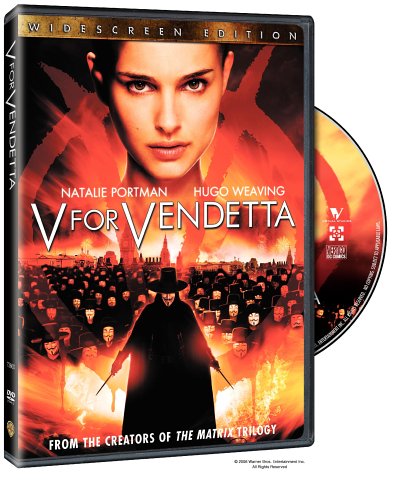
When the film V For Vendetta was announced, my interest immediate peaked as I found out the Wachowski Brothers would be writing the film. Unlike a majority of fans, I didn’t completely dislike The Matrix Trilogy; in fact, I thought they were a ton of fun. With this new film, the brothers attack the theme of a society where the government has the only voice, similar to the novel 1984. Add in actors Natalie Portman and Hugo Weaving, and you have me at the word go.

The year is 2020. A vir...s has run through the world leaving a majority of Americans dead in their shoes, and Britain is ruled by a fascist dictator who promises nothing but security for his people. This dictator never mentions anything about giving his people freedom though. This causes a man simply known as V to rebel. V secretly moves throughout London evading authority figure after authority figure. V wears a mask of the face of Guy Fawkes, a man who tried, in 1605, to blow up the houses of Parliament. On November 5th, the eve of Guy Fawkes Day, many citizens burn fires in a type of effigy toward Fawkes. On this eve in the year 2020, V saves a young reporter named Evey (Natalie Portman) from rape. He forces her to join him and concludes the night by sitting the Old Bailey courtrooms ablaze.

I like to call movies like this “exception films”. They are the exception to the rule. Those odd little films that show up every once in a great while that really have no right to be good. You hear the plot, you see the trailer, and you know that this film is mere days away from losing vast sums of money for someone on the left coast. Then the movie comes out and it is... inexplicably entertaining and fantastic.

Kiss Kiss Bang Bang has carved out a surprisingly strong cult following for itself since it... theatrical release. So here's the plot of this unlikely hit: Robert Downey Jr. plays Harry Lockhart, a clumsy small time criminal who stumbles into a Hollywood acting audition while fleeing the police. Naturally, he gets the part, and is quickly ushered off to La La Land to act in the film. When he gets there, he is assigned an acting coach (Val Kilmer) named Gay Perry (get it?) to help him learn the craft. Throw in an old High School girlfriend and a murder mystery, and there you have it. A movie that is much better than it has any right to be.

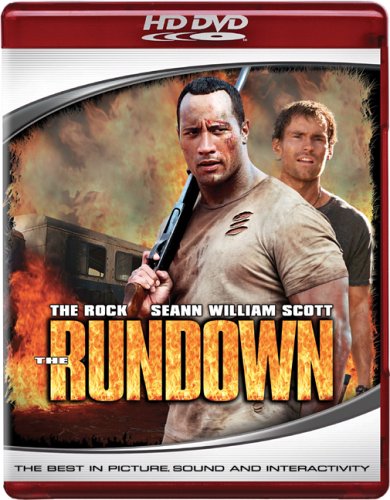
For Director Peter Berg, the film The Rundown was an interesting note for him. Before his ultimately better film Friday Night Lights, The Rundown marked the first time Berg directed a film that went on to become a big success. Before The Rundown, Berg had films like Very Bad Things which was just that and The Last Seduction which was excellent. The Rundown also marked the first main feature film (main staring role) for wrestler turned actor Dwayne “The Rock” Johnson. N...w Universal has decided to re-release the film in the new HD-DVD format. What lies ahead? Join me on the journey to find out.

Beck (Dwayne “The Rock” Johnson) is the type of man who one calls on to do something someone else wouldn’t do. Beck is more of a retrieval expert. An early scene, where he retrieves a ring off of an NFL quarterback’s finger, gives us a little bit of insight into the type of man Beck is. His boss, after this successful mission, decides to send Beck off to the Amazon forest to retrieve his son Travis (Seann William Scott). Instead of using the a-typical locales like LA, Maimi, etc, Berg decided to opt for the Amazon jungle which helps make the film into something slightly new. Once in the Amazon forest, Beck is taken to the town of El Dorado, which is run by Hatcher (Christopher Walken). Travis, we learn, is a fearless fortune hunter looking for the ultimate treasure that Hatcher happens to be looking for at the same time.

Director Jonathan Mostow is an interesting director to say the least. He directed Kurt Russell is the great Breakdown where a man must fight to save his wife. He director Arnold Schwarzenegger in the third Terminator film where a machine must fight another machine to help save the human race; but before he made Terminator 3, he directed Matthew McConaughey and Bill Paxton in a film where men must fight against their wits to save themselves. Two of the three films are great and are a joy to watch,...while one is enjoyable to watch, but that is about it.

In U-571, Lt. Tyler (Matthew McConaughey) stars as a young man who wants nothing better than to jump into the command line. His commander, Lt. Commander Dahlgren (Bill Paxton) doesn’t see this though. Tyler isn’t experienced enough and isn’t ready to sacrifice the lives of his men for the lives of others or, more importantly, the safety of the mission at hand. This creates some heat between the two, but all that is quickly put aside when they’re called back to the boat. We soon learn that a German U-boat has become disabled in the middle of the Atlantic. On board this U-boat is a secret Enigma machine, which can be used to cipher messages. This exact Enigma machine was used by the Nazi’s to control all of their shipping lanes.

Limitations of budget and social conventions of the time prevent Murder, Inc. from being all it can be - still, the performances, and the captivating dynamic between hero (Stuart Whitman) and villain (Peter Falk) result in entertaining fare, so long as this film is allowed to be a movie and not a documentary. Whitman leads a fine cast as the mob lackey, who is constantly manipulated by a tough-talking contract killer. Part of the real life syndicate of hit-men "Murder, Inc.," Falk's baddie steals every ...cene he's in throughout this early career-making performance. He smacks of a young Brando, and comes across as just the type of ice-blooded villain, which gave the 1930's Brownsville mob its infamy. He'll lie, cheat, and steal, to get what he wants - whether it be conning Whitman's assistance to off a stale nightclub comedian (Morey Amsterdam), or brutally raping Whitman's wife (May Britt). And by "brutally," I mean "brutally for the times." The word "rape" is never used, and the explicit nature never goes beyond an aftermath scene, where a disheveled Britt anguishes, "Those filthy hands. Those dirty fingers."

A film like this could be revisited to great effect by a capable director like Scorcese. In fact, stylistically, Murder, Inc. shares many attributes with Scorcese's superior mob epics. It's the kind of film that influences better filmmakers to make better pictures - but I would only use the word "classic" to describe its age, and not its quality. For one, the narration is totally out of place, and - quite obviously - the result of a receding budget. The first bit of narration doesn't come into play until we're past the first act. And when it does finally appear, all we hear is a droll voice with zero personality. We only learn later the narrator is a character in the film - the heroic cop (Henry Morgan), who takes on the entire mob organization. Rather than give the film a documentary effect, the narration serves only to clumsily fill in cracks, where story should be. "Show, don't tell," this isn't. Another weak point is how the best element is often neglected - the Whitman-versus-Falk conflict with Britt caught in between. It seems like every time this story element gets rolling, we cut away to a less interesting sidebar. And when the angle is finally resolved, it happens with such anti-climax that we wonder why we even cared at all.

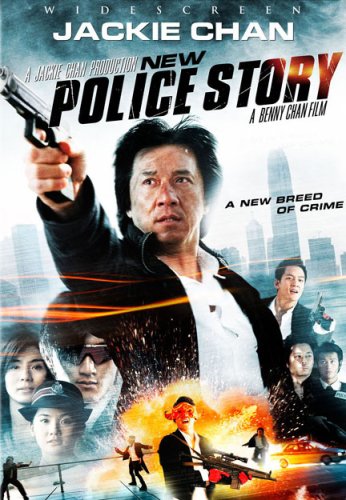
You might not know this, but there are two Jackie Chans. The original Chan was an intense martial artist. His films were quite serious and action packed. While humor was always an element to his style, these early films did not really capitalize on that element. The Asian productions were nearly a genre unto themselves. Still, international stardom was elusive to this talented actor.

The second Jackie Chan is the man most Americans are familiar with. Still a talented martial artist, these films show a lighter side to the actor. Chan has become a character of his own like any James Bond or Jack Ryan. Whatever the character he’s playing, what we’re paying to see is Jackie Chan. In these films, Chan allows his own disarming charm to be the creative force in the film. Humor is always served in generous proportions. At times he is almost the caricature of his former self.

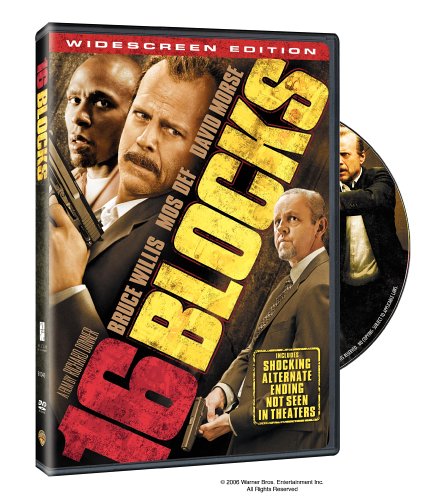
In 16 Blocks, Bruce Willis plays Jack Mosley, a NYPD detective who seems to be annoyed and tired of he job. He looks lethargic 90% of the time never wanting to really do his job. Jack is told that his boss wants him for another job; which is the last possible thing Jack wants right now. Jack has been told to transport a key witness 16 Blocks to a grand jury hearing. The witness must arrive in two hours before the grand jury's term expires. The witness is Eddie Bunker (Mos Def), who seems to have more lines tha... probably all of his film's combined as Eddie is constantly speaking his mind.

Luckily for Jack, the overall premise of the job seems rather easy. All he has to do is get in a car and drive a guy 16 Blocks. Not too difficult no. Well, this is a movie and nothing is ever easy. Poor old Jack can't drive even 16 Blocks without a quick stop. This quick stop is at a liquor store. When Jack leaves the liquor store, he sees the wrong kind of guy, and proceeds to shoot this guy. We soon learn that Jack's boss, Frank Nugent (David Morse) has two jobs, the first being Jack's boss and the second being the linchpin of a ring of corruption and drug dealing within his department. Sounds like an honest cop right? For some reason, Eddie and Jack seem to connect. As Jack quickly learns from Frank, a lot of people don't want Eddie to testify in Court a man named Jerry Shue will be going down on numerous charges. Just as Eddie is about to get shot in a plausible scenario Frank creates for Jack, Jack shoots a cop in the leg thus throwing himself on the same side of the law that Eddie is on. Now it's up to Jack as he must evade the police and get Eddie to the courthouse.

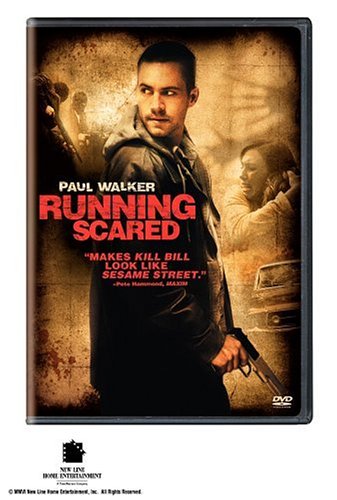
In Wayne Kramer's latest film, Paul Walker stars as Joey Gazelle, a man who seems to be a part of the mob and has a ten year old son named Nick. The film then zooms back to 18 hrs earlier where Joey and his Perello boys are ambushed and are nearly killed. Turns out these men who they just killed are big time cops. Joey is told to get rid of the murder weapons, which seems to be his main goal in this mob group. Instead, as we soon learn, Joey never does this instead he hides the weapons. Unfortunately for Joey, Nick a...d his friend Oleg see Joey put away one of the guns and, well, all hell breaks loose after this as Oleg steals the gun and uses it to shoot his abusive stepfather. Apparently. Oleg's stepfather was connected to the Russian mob. Convenient no?

Joey and his wife seem to be in a love-hate relationship where his wife seems to hate what he does for a living. All Joey wants to do is simply provide for his family which Director Wayne Kramer (The Cooler) shows us with a sly direction. Kramer presents Joey as a family type of man who, possibly, had a rough beginning to his life and only wants to provide the best he can for his son and wife. Joey must go on a non-stop chase searching for this gun otherwise Joey can kiss his life good bye as he so often tells us.

Synopsis

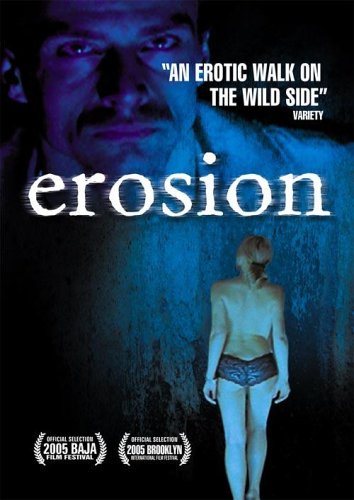
Emmanuel Xuereb plays Gabe, a man whose dying wife has left him for his best friend. (The psychiatric term for this situation is “bummer.”) His mourning takes the form of attempting to seduce women he doesn’t know, and he beings a relationship with Irene (Charis Michelsen), married but bored with her unimaginative husband. Irene is initially thrown when it turns out that Gabe is breaking into the homes where their encounters occur, but soon she is a willing participant in this game.

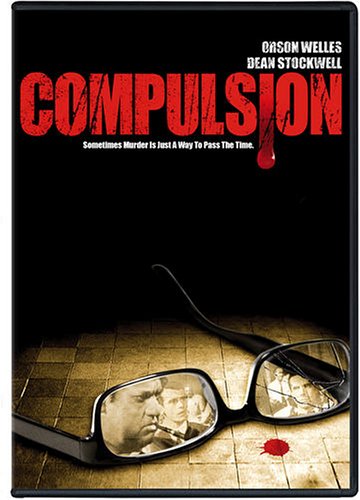
This film’s slogan was “Sometimes murder is just a way to pass the time.” A better way to fill up those empty minutes would be to watch this film. The film is based on a highly publicized real life case out of Chicago. A play was produced in the 1920’s. A book would also be written by Meyer Levin, which is the source material for this film. The story would not end there. It would be made at least twice more, including Hitchcock’s first color film, Rope. The case was perhaps made famous as much for the presence of Clarence Darrow as the defense attorney than for the senseless act of violence it represented.

A college classroom philosophical discussion opens the film and sets the stage for the crime. Judd Steiner (Stockwell) and Artie Strauss (Dillman) are intrigued by the Nietzchean concept of a superman. We’re not talking Clark Kent here. The idea is that a man of superior intellect could, and perhaps should, move through the world acting without the constraints of remorse or common law. These two guys see themselves in this role and commit a brutal murder as a sort of experiment. There really isn’t much of a whodunit. The prosecution soon stumbles upon a pair of eyeglasses that ultimately bring the two men down. Enter world renowned lawyer Wilk (Welles). He quickly finds he can’t argue innocence, so he diverts his attention to keep the young boys away from the gallows. It is in the trial version of the film that interest mounts. Welles delivers one of his best and yet most subtle performances here. The role is akin to Marlon Brando’s in A Dry White Season. His passionate closing statement is likely one of the cinema’s longest monologues.