2.40:1 Widescreen (16:9)

The Producers has taken an almost cinematic storyline of its own. In 1967 Mel Brooks filmed this tale with one of his mainstays, Gene Wilder. The film was a modest success. It was as a Broadway production that this material reached a wide audience. The play has been a hit for decades now. It only seems inevitable that a new film would surface. This 2005 version of the story is closer to the stage production than the original film. There are quite a few more musical numbers, and that’s essentially where this film goes wrong. What works as a stage production will not necessarily work as a feature film. Everything about this movie is over the top except its heart. Nathan Lane and Matthew Broderick reprise their stage roles of Bialystock and Bloom with different results. Broderick appears to have gotten so comfortable with the role that he seems to be sleepwalking through it for the film. Lane, on the other hand, carries the film on his very broad shoulders. His mannerisms recall Lou Costello. His voice is actually quite remarkable and is the highlight of any of the numbers he’s in. The addition of Uma Thurman as a Swedish bombshell feels forced on so many levels, from her horrible accent to her mismatched chemistry with Broderick’s Bloom.

The 40 year old story still has potential that falls short in this film. Bialystock and Bloom are attempting to produce a Broadway flop. Why? Because if you can pull in enough investor cash and close after one day, you can walk away with millions of dollars. They set out to find the worst play and hire the bottom of the heap. What can go wrong? How can a pro-Nazi production called “Springtime For Hitler” not crash and burn on opening day? If it’s a Mel Brooks written plot, you can count on everything going wrong, and of course, the play becomes a hit. The film picks up a bit when the “Springtime For Hitler” show is finally underway. Still, the film is overlong at 2 hours and 15 minutes. Some of the numbers drag on pointlessly. The film was intended to bring the Broadway experience to the film’s audience, but it fails at almost every turn.

Synopsis

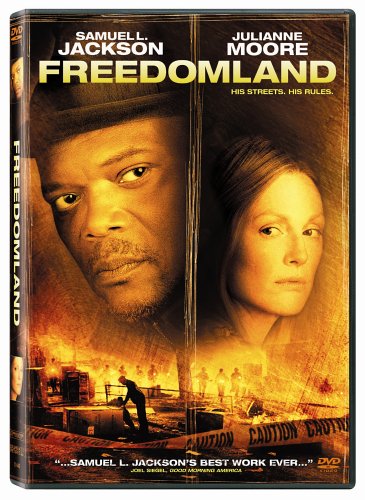
Her hands covered in blood, a distraught-beyond-coherence Julianne Moore wanders into a hospital with a story of being carjacked in a predominantly black housing project area. Detective Samuel L. Jackson, assigned to the case, learns from her that her young son is apparently still in the car. Given that her brother is a cop in the adjoining white area, all hell breaks loose and racial tensions threaten to send an explosive situation into terminal meltdown. But the question is whether there i... more to Moore’s story than there at first seems.

Harrison Ford stars as Jack Stanfield, an online security chief for a mid-sized baking chain. One day, he is introduced to a new possible candidate in Bill Cox (Paul Bettany). We learn this turns out to be a setup. Cox and his men are holding Stanfield's wife (Virginia Madsen) and their two children hostage. In return, Cox demands that Stanfield hack into his bank's computers to transfer a fortune into Cox's offshore accounts.

Firewall, in whole, contains a smart plot, one that makes you think. The ...asic plot, however, is nothing new. The plot has been updated with newer technology, such as an iPod containing everything Stanfield needs to get into his bank. It seems a bit odd that a small little device like an iPod could hold this much data. The bigger question is if a film like this needs events that are plausible in order to make a shred of sense. Fortunately though, mostly due to how entertaining Ford is to watch, the film holds its own and doesn't necessarily conclude in an odd manner.

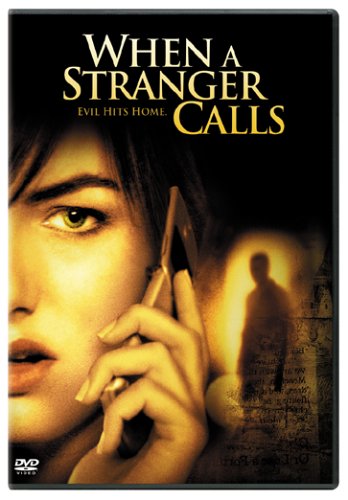
First off, let me say what a great idea it was to remake this film. The original has enjoyed elevated status far too long based only on an intense 23-minute opening sequence. And as good as that opening piece of suspense is, the same exact premise punctuates Bob Clark’s earlier 1974 masterpiece Black Christmas – so even what When a Stranger Calls does well owes a debt of gratitude to an overall better film. Still, I’ll give the Devil his due – knock-off or not, that sequence stands as an effective, inte...se short film, which carries the baggage of an additional three-quarters worth of movie, poorly executed with a wandering eye from character-to-character that spoils the memories of what was done right in the first place. With that said, let me now state what a missed opportunity this remake is. It fails to an equal extent, but does so in different ways. Director Simon West decides to set his redo in one night using a plot twist, whose shock value has had nearly thirty years to dissipate. Most know simply by watching the previews on TV what the big reveal is going to be, and that advanced knowledge causes the audience to sit through half the film twiddling thumbs. The suspense scenes at the end are well-shot, but largely uninspired… there is simply nothing visceral about this polished piece of lightweight teeny-bopper horror, and the premise itself is spread too thin across the 87-minute running time.

Now I’m going to do something unprecedented. I am going to beg Sony Pictures to remake this film again, and I am even going to give them a way they can do it, make big bucks, and a suspenseful classic (which both incarnations should have been to begin with) at the same time… and I’m going to go on record out of my love for the idea with no vain hopes they’ll see fit to compensate me for the time and trouble. This is a freebie, Sony… take note! The next time you remake this film, use the structure of the original. Act one – the “Oh no, the babysitter’s screwed” moment (also, kill the children). Act two – five-to-ten years later: only this time, instead of having the film float from character-to-character like it has ADD, stick with the girl. Set up her life elsewhere. Have her be someone the killer selected for a reason. Have her as the object of his obsession. This way, it makes sense when he comes after her upon escaping years later. Her living in another location would also provide a plausible explanation for her not knowing this guy is on the loose. Then, make the rest of the act about the killer slowly working his way back into her life, and perhaps even whittling away on the people close to her. Act three – he comes after her. This is where the heroine can really be seen for her strength. Give her something to lose (as the first one did) – perhaps even children, so the killer can break out his famous line one last time. Put her through hell and high water to reach the inevitable happy ending, continue to keep the killer a mystery (NOT like the original interpretation), go for the throat with an R-rating, and release to box office records. I say all this to prove a point: there’s a good film – no, a great film – hiding in the original idea for this story. But while both versions currently out there have strong points, neither puts in the hard work to cultivate the material into something truly special. If you’re in the mood for something similar (that has more punch to it), stick with Black Christmas and the far superior sequel to the original When a Stranger Calls Back.

Hollywood can sometimes be so enthused to cash in on a certain type of film many decent projects looking to explore a worthwhile subject topple under the weight of the cash-grabbing, money-hungry throng. Such is the case with Director John Woo’s Windtalkers, coming to DVD a third time on April 25 in this director’s cut. Though it’s sometimes overly melodramatic, this Nicolas Cage vehicle makes good use of its characters to forge an intriguing story about Navajo code talkers, and the presumed military practice ...f protecting the code and not the man. Cage plays Joe Enders, a soldier with a death wish and a lot of survivor’s guilt for having made it through battle-after-battle, only to receive another medal, while all of his friends die around him. He has grown to hate the medals because they remind him of this fact, and it seems like his whole mission is to die in battle with honor… not to go on living in a world so terrible that it welcomes the horrors of war. Then, he receives a peculiar mission: the U.S. has found luck with a form of code based on the Navajo language. It’s vital the Japanese do not get their hands on any of the Navajo code talkers, and Enders must do everything in his power to protect the code… even if that means taking the life of a fellow soldier to do it.

Such a situation lends itself to great drama; however, this is still a John Woo film, and his enslavement to self-imposed convention does cause the film to have a few problems. For one, I would like to see Woo – just once – shoot an entire film, edit, and release it, without the use of one slow-motion moment. The reason for this: if the technique is an option, he will abuse it with zero regard – or knowledge of – having done so. After seeing film-after-film of his resort to this overused tactic, I’d say it’s time he laid off. He has a good story, and characters viewers can get emotionally involved with – so why does each fallen soldier have to take an hour to hit the ground? Also, just about every war movie cliché there is turns up at some point, whether it be the bigoted soldier with a change of heart, or the loving husband telling his buddy to make sure his wife gets his wedding band “should anything happen.” (On a side note, any time a soldier says a variation of this in a war film, you know “should anything happen” actually means “when something happens.”) Lastly, there is the clunky dialogue, mostly given to Adam Beach as the featured code talker Enders must protect. With these things said, something intrinsic about the film still manages to hold everything together in a respectable narrative. And I think whatever it is, the stellar cast consisting of Nicolas Cage, Christian Slater, Noah Emmerich, Mark Ruffalo, and Jason Isaacs, has something to do with it.

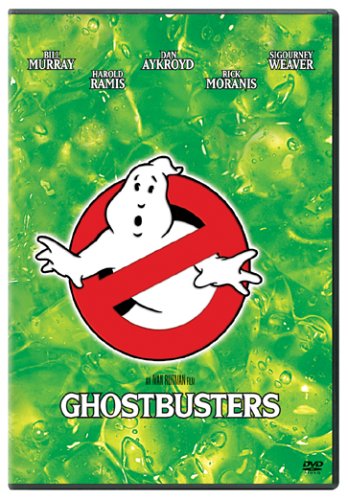
“Who you gonna call?” By now everyone knows the answer. Dan Aykroyd, Bill Murray, Harold Ramis, and Ernie Hudson are the Ghostbusters. As their ad proclaims, they’re ready to believe you. Ghostbusters was originally conceived by Aykroyd as a vehicle for John Belushi and himself. When Belushi died, reportedly from a drug overdose, the project sat on the shelf a few years. Harold Ramis would eventually team up with Aykroyd and finish the script. It’s been said that “Dying is easy. Comedy is hard.” Leave it to these ...wo knuckleheads to combine the two and create a phenomenon. Like pretty much anyone else, I’ve seen Ghostbusters many times in the last 20 years. And just like all of you, I’m still not tired of it. I am, however, done with the repetitive theme song. This release marks at least the third time Ghostbusters has appeared on DVD. This version appears to be identical to the double package release of both films about a year ago.

Ghostbusters pioneered the big budget comedy. Not since “Abbott and Costello Meet Frankenstein” have the genres of comedy and horror combined in such masterful form. Ghostbusters had the quality f/x of a blockbuster sci-fi epic. The casting was nothing short of genius. Each cast member brought a distinctive and integral element to the film. Murray provided the used car salesman aspect. Aykroyd perfected the common wide-eyed man with just enough knowledge to be dangerously funny. Ramis played the 50’s style scientist with the stoicism made famous in films like This Island Earth. Hudson was brilliant as the Joe six-pack, obviously intended to represent us, the audience, on this adventure. Sigourney Weaver weaves in just the right amount of sultry and unintended villainy to complete the palette of colors necessary to pull this all off. The supporting cast features actors destined to become stars themselves in the likes of Rick Moranis and William Atherton. While many of the f/x don’t quite meet today’s exploding expectations, they were state of the art in 1984. Forget Kong. Who can resist the giant Sta-Puft Man?

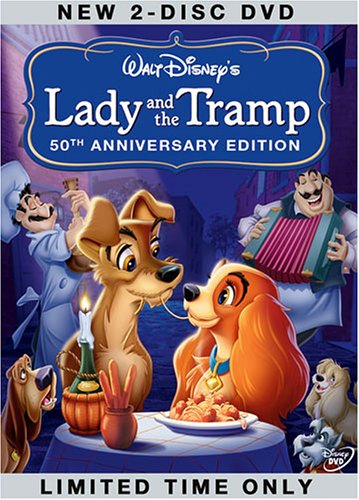
The yesteryears of Disney were full of classic movies from Aladdin to 101 Dalmations. Each of those films holds a special place in my heart due to its warmth and very colorful, cute story. Having never seen Lady and the Tramp before picking up this early copy, I didn’t know what to expect of the film. Many declare it to be one of Disney’s best, which is certainly a remark that is quite distinguished. Would Lady and the Tramp capture my emotions and heart like so many old, classic Disney fi...ms did years ago? Read on to find out.

The basic story to Lady and the Tramp is as follows. A man named Jim Dear gives his wife Darling a mysterious box for Christmas. Inside that box is the ever so cute little Cocker Spaniel puppy, which Darling decides to name Lady. Lady spends most of her period growing up with two neighborhood dogs, Trusty and Jock. One day a dog named Tramp walks over the railroad tracks. When Darling has a child, we are introduced to two super ugly and vicious cats, Si and Am, courtesy of Aunt Sarah. Due to these evil cats and the new baby, Lady winds up in the doghouse. What happens next is cinematic history. The Spaghetti scene and the start of a romance between Lady and Tramp.

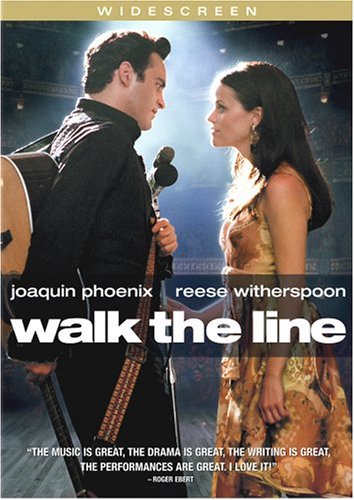
Riding on the coattails of the successful and acclaimed film Ray comes the life story of Johnny Cash. Walk the Line, adapted from the novel The Man in Black, places Joaquin Phoenix in the role of the legendary country singer. Similarly to Ray, Walk the Line has garnished critical acclaim for both the film (which was a surprise omission in the Best Picture category at the Oscars) and the lead roles of Phoenix and Witherspoon (both of whom won best actor/actress and the Golden Globe..., and are nominated at the Oscars).

More then the music, this film focuses on the downward spiraling emotional state of Cash, and his addiction to drugs to try to constrain his inner demons. The story starts with a glimpse into Cash’s childhood where we see a strong bond with his brother and meet his emotionally abusive father. After his brothers accidental death, and the emotional scaring his father puts him through, we fast forward to Johnny’s moving away from home.

Synopsis

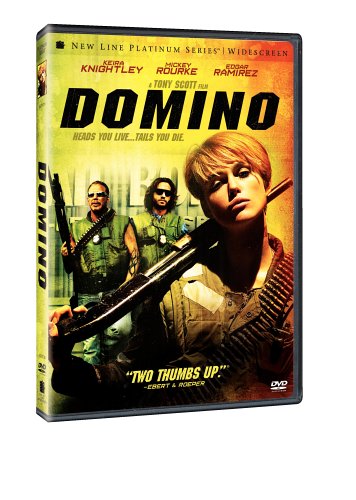
Inspired, rather than based, on the life of bounty hunter Domino Harvey, this exercise in monumentally brain-dead excess sees Keira Knightley in the title role. The daughter of Manchurian Candidate star Laurence Harvey, she rebels against the posh Beverly Hills life of her mother (Jacqueline Bisset) to become the bounty hunting partner of Mickey Rourke and Edgar Ramirez, working for Delroy Lindo. Christopher Walken is the TV producer who designs a reality show around the trio and two ...ormer Beverly Hills 90210 stars, and then everything gets insanely complicated when our heroes are sent to nab the wrong guys, who happen to be mob-connected.

Synopsis

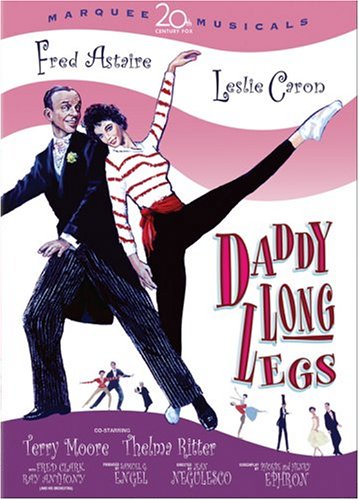
Fred Astaire plays wealthy businessman and inveterate bachelor. On trip to France, his car goes into a ditch. Seeking help in a nearby orphanage, he catches sight of the vivacious Leslie Caron. Captivated by her joie de vivre, he arranges for her to receive a full scholarship and education in the states, and watches from the safety of anonymity as she flourishes. But then, whoops, he begins to fall in love with her.