Video

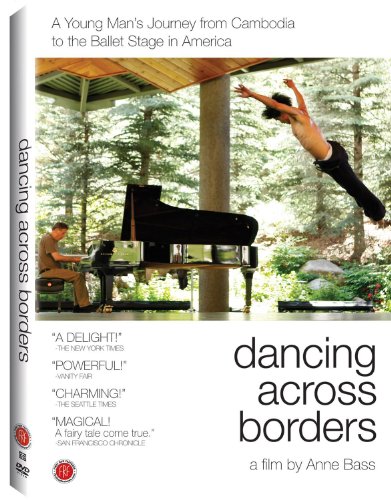
A young Cambodian boy, named Sokvannara “Sy” Sar, is spotted performing a traditional dance by the film's director and American Dance patron Anne Bass. She immediately takes note of his smooth talent and figures he has massive potential as a classical ballet dancer. Sy is given a rare chance to audition at the School of American Ballet in New York and then proceeds on a unique and fast-paced journey through a new world of dance, in a nation that is completely alien to his homeland.

This film would be interesting simply for the fact that it displays many parts of what it means to train as a professional ballet dancer and student, but is all the more engaging because of S's situation; that being the lone Cambodian to take on such a quest. Sy may come from poor roots, but his is by no means a sob story of an underdog, but that does not make it any less special or rare an opportunity. This film gives us the chance to see more than just his home, family and friends, as well as the many stages he earns a spot performing on, but we are privy to what can happen when chance falls upon the sort of  person who has the passion to take hold of it and elevate themselves in something that was a total unknown to himself and his fellow countrymen.

Allen Ginsberg is often regarded as one of the most important poets of the 20th century. He is seen as a symbol of the Beat Generation and contributed to the San Francisco Renaissance. His most important work, Howl has created both worldwide controversy and praise. It escalated into a 1957 obscenity trial of the poet and Lawrence Ferlinghetti who had published Howl along with other selections from Ginsberg. The film is a celebration of Ginsberg’s life as well as the results of this trial.

In 1955, an unpublished 29 year old poet presented his vision of the world as a poem in four parts. His name was Allen Ginsberg (played by James Franco) and the poem was Howl. In 1957, Allen and his work would be put on trial for obscenity. The trial would be prosecuted by Ralph McIntosh (played by David Strathaim) and defended by the prominent Jake Ehrlich (played by Jon Hamm). Judge Clayton W. Horn (played by Bob Balaban) would preside over the proceedings and render judgment.

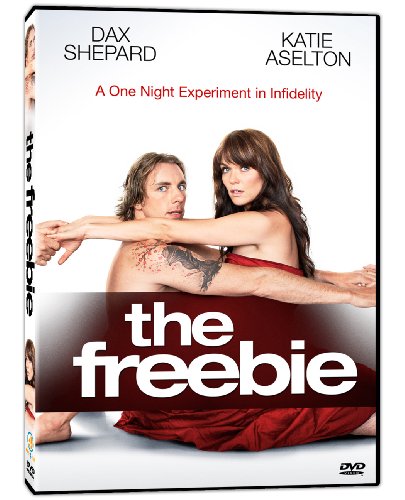
The Freebie is a festival friendly drama-comedy about Darren (Dax Shepard) and Annie (Katie Aselton) ailing sexual relationship.  The film is interested with relationships after they pass the lust stage.  How do couples maintain a healthy romantic relationship? Darren and Annie strive for ways to spice up their situation and the idea eventually becomes one night of freedom from each other to explore other options.  The film is shot very intimately and the audience will be shocked at the warmth conveyed by direction.  The tension explored in this film is not typically deployed in this genre.  This film showcases a perspective that could surprise viewers, I know I was. 

Both Dax Shepard and Katie Aselton are able to deliver solid performances.  I have always been skeptical of Shepard’s acting chops given his track record.  However, he delivers a subtle and strong performance.  His scenes with Aselton always have naturalistic approach and the direction only amplifies this.  The intimacy and warmth in scenes is overwhelming.  Aselton also directs and she uses a variety of tight portrait shots to convey emotion.  I commend the effort and was surprised at how invested I found myself in the characters.  

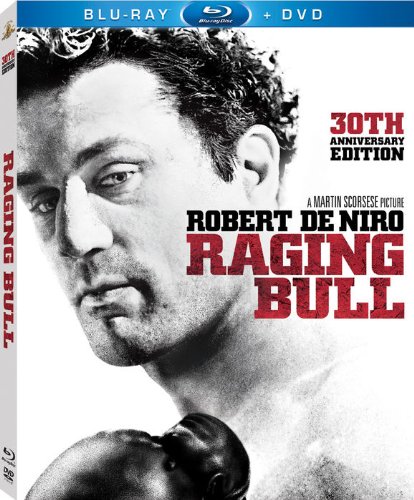
"Give me a stage where this here bull can rage."

Under normal circumstances and certainly under less skillful hands the story of Jake La Motta would not be one worth telling. His life is a story without heroes. It's a life of abusive behavior and an almost unredeemable personality. The only way he was ever capable of expressing himself was in the boxing ring. Even there he was doomed to feel inadequate most of his life. Even as he was rising toward the middleweight championship of the world, he was obsessed by his own small hands and the realization that he was fated to never test himself against the world's very best fighters. He alienated everyone around him. He was utterly and completely self-destructive, and you either left his sphere of influence or you let him drag you down in to his own dark abyss. Why in the world would anyone want to see, let alone make a film based on the life of Jake La Motta?

"Dear Screenwriter,

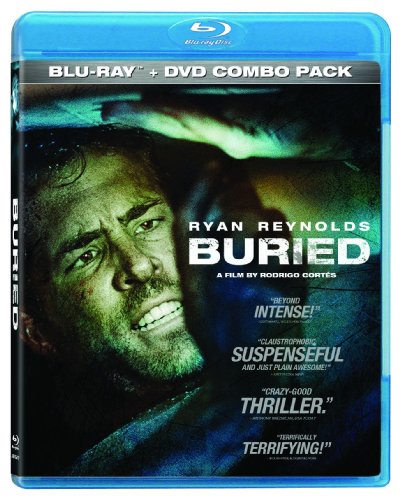
"Here’s your writing prompt: You are to write a feature-length screenplay with only one on-screen character. This character is to remain in only one location for the entire duration of the film, and that one location must be a 2' x 7' wooden box. You cannot use flashbacks, cut-aways, or any other narrative device that would take the action outside that box. Sound impossible? It’s not. In fact, all this exactly describes the film BURIED."

Denis Leary and Friends presents: Douchebags and Donuts includes stand up sets from Adam Ferrara, Lenny Clarke, Whitney Cummings and Denis Leary. Also, there are musical performances by The Enablers featuring the Rehab Horns.  All proceeds from this event (as well as portions of the DVD sales) went/go to Denis Leary’s charity, The Leary Firefighters Foundation. The support and charitable disposition that Denis Leary has maintained toward firefighting is well documented and it is nice to see his attitude has not changed.  I am certain that all of you can guess the material that will be explored in these performances and the majority of you will not be surprised whatsoever.  However, there are some laughs throughout.

Denis Leary’s meal ticket throughout his career has been to pull no punches and leave no stone unturned.  His material is usually always motivated by his unwavering hatred toward popular culture and his throwback mentality.  Leary’s set is his typical abrasive self. A popular theme in stand-up comedy is to have screens on stage to emphasize the comedian’s set and also provide some visual aids to help their performance.  Leary has added this to his comedic repertoire and it works well with his material.  My only critique with his set is that it can often be redundant.  If a particular joke does not go as expected, Leary tends to yell his punch lines louder and I found myself annoyed.  Other than that, his set is a standard profanity laced tirade against any and all things in popular culture.

An ex-con trying to pull one last heist is sucked into a booby trapped house and must face against a madman who is torturing the family within. The makers of 3 SAW films (and not the first three) have ventured into familiar territory of nonsense gore, whisper thin plot, and then even more nonsense gore.

The title of the film, and a couple lines of dialogue, suggest our madman is a collector of people...and perhaps animals (?). How does this fact play into the film's action? It doesn't really. If he is indeed a collector, then he certainly has no sense of “mint condition” as he spends his entire time damaging and removing pieces of the very things he plans to collect. In fact, if the title could change to “The Trapper,” then suddenly the film might make more sense for it is all about the elaborate traps he sets, and how they are designed to horribly maim, and even kill in a couple of cases. He doesn't seem to be collecting anything. Yes, one of his previous victims is kept in a crate, but even that character explains that he's just bait to lure in the types of people he wants. This “Collector” has gone to insane lengths setting up this family's house with booby traps, and seems to want nothing more than to torture and kill, not collect.

“’Have gun, will travel’ reads the card of a man. A knight without armor in a savage land…”

Those words ended every episode of Have Gun Will Travel, sung by Johnny Western in a time that such words could be sung without irony. Outside of Richard Boone’s black-clad, craggy Rhett Butler gone-to-seed gunfighter, that song was all I could really recall about this venerable Western from television’s golden age. Would it, like so many revisited shows from my youth, ultimately disappoint? Or would it hold up fifty years after it was originally broadcast, viewed as it would be by the far more jaded, cynical man I’ve grown into?

"In the beginning there was darkness. And then bang, giving birth to an endless expanding existence of time, space, and matter. Now, see further than we've ever imagined. Beyond the limits of our existence. In a place we call The Universe."

Up until now these History releases have been season sets of the documentary series. This release is the first which appears to be a planned series of specific subject titles. It does create a bit of confusion when you see a series called The Universe and all of the episodes on the set deal with our own back yard, a place we call the Sol System, or Solar System, for those of you unfamiliar with the name of the star that happens to brighten your afternoons, particularly for us here in Florida on an August day. But while it's true that the series itself has explored most of the known, and quite a few of the unknown, corners of creation itself, this set once again focuses on those objects that orbit the star Sol. The Sun is at the center of our system, and the same can be said for this season of The Universe. Our local star is featured on several of the episodes on this collection. If there's a theme here, Sol would be the theme.

There’s no doubt that Kevin Costner’s name has been attached to some pretty crappy projects during his career – Waterworld, The Postman, and 3000 Miles to Graceland to name a few – and it’s unfortunate, because the aforementioned dirt loafs have tarnished the fine film that we’re here to discuss, Dances With Wolves. Heck, even I had horrid recollections of the film from viewing it years ago in theaters. However, this review forced me to check the film out again and I actually found myself…enjoying it – and enjoying it immensely. What was going on here? Time has definitely been kind to Dances With Wolves – it has aged like a fine wine. However, it seems that Costner’s later career choices had clouded my memories of the film, and thankfully, I was able to watch it again to find out how wrong I have been. It’s a good thing too, as I might have deprived myself of this film forever had it not been for this review.

For such a “bad” film, it actually racked up during the 1990 Academy Awards ceremony, as Dances With Wolves took home seven Oscars (Director, Adapted Screenplay, Cinematography, Sound, Score, and Editing) and had a worldwide gross of over $300 million when it was all said and done. (Heck, $300 million is a load in today’s dollars.) For a debut director, who before was only thought of as a marginally decent actor, that’s not a bad way to start a career behind the camera.