Posted in: Disc Reviews by Archive Authors on November 27th, 2009
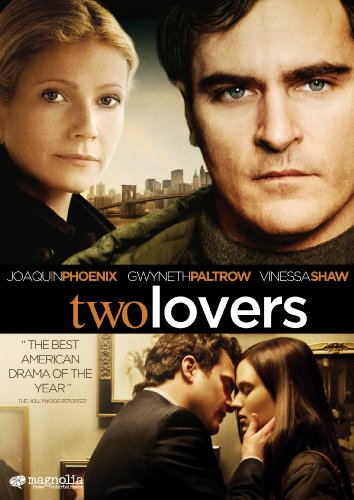
James Gray’s Two Lovers revolves around the troubled Leonard Kraditor (Joaquin Phoenix). Leonard has moved back into his childhood home to recover from his recent break up. In quick succession, two women enter Leonard’s life: Michelle (Gwyneth Paltrow), an entertaining and peculiar neighbor who transcends Leonard’s world and Sandra (Vinessa Shaw) a classy, traditional woman who is the daughter of a businessman attempting to purchase Leonard’s family business. Leonard becomes confused between desire and love and the story unfolds from there.
The performances in this film are what resonate with the audience the most. Joaquin Phoenix crafts his character from a dark place and displays great emotion in this role. His complicated past slowly unravels throughout the film and audiences become more and more aware of his emotional instability. Phoenix is truly a great performer; it is unfortunate that he has taken a recent ‘break’ from acting. Both of the female leads are strong as well. Vinessa Shaw’s performance is passionate and powerful. Her scenes with Phoenix are both romantic and realistic as well. Viewers can definitely identify with the dialogue between the two of them. Gwyneth Paltrow is not breaking new ground with her performance. However, her scenes are all remarkably interesting. Her character is deeply conflicted by her current relationship and the growing relationship with Leonard.
Posted in: Disc Reviews by David Annandale on November 25th, 2009
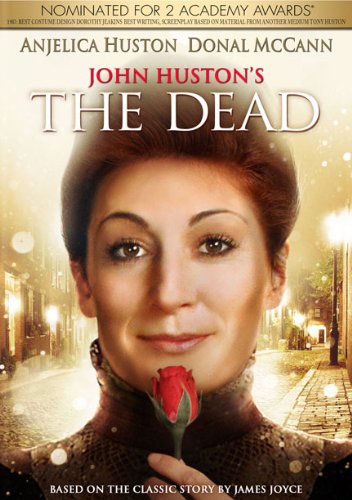
In early-20th-Century Dublin, a winter's musical gathering is being held. The first two-thirds of the film takes us through the course of the evening, from the arrival of the guests, to the musical entertainment, to the dinner and its discussions (and arguments), and finally the departures. During the party, one is aware of a certain tension or distance between one couple: Donal McCann (nephew to the hostesses) and his wife (Anjelica Huston). As they prepare to leave, Huston hears one of the guests sing, and is rooted to the spot. Later, McCann asks her why the song affected her so much, and a painful memory from her past comes out.
John Huston's last film is suitably elegiac. Based on the James Joyce's short story of the same name, the movie is itself in short story form, barely clocking in at 73 minutes, and that's including the credits. The running time is just right, though, as this is a compact, moving tale, whose title does not become clear until the closing minutes. Were the film any longer, audiences would likely become restive at the apparent lack of story during the first two acts, but everything is present for good reason, working in unity towards a powerful conclusion. In all of this, the film is deeply faithful to the Joyce story. But the story also presents an enormous challenge: its conclusion relies on the thoughts of its protagonist, not on dialogue or action, the bread and butter of cinema. What to do? Huston takes what is probably the only path open to him, and goes for a voice-over as the camera gazes at mournful scenes of snow falling in the Irish night. The voice-over, having been absent until this very moment, is a bit jarring, even as its necessity is understandable. So the film might not be flawless, but it is a heartbreakingly moving valedictory gesture from one of cinema's greatest directors.
Posted in: Disc Reviews by Gino Sassani on November 24th, 2009
“You got everything money can buy, except what it can’t. It’s pride. Pride is what got you here. Losing is what brung you back. But, people like you, they need to be tested. They need a challenge.”
There have been a ton of boxing films. They’ve been popular going back to the Silent Era. Most of them have many of the same themes. But there was always something about Rocky that stood out above all of the rest. That “something” can’t really be described or defined. As the Supreme Court once said about the definition of obscenity: “I can’t define it, but I know it when I see it.” That’s all you can say about Rocky. Some might call it heart. That’s about as good a word for it as anything else. Rocky himself would call it “stuff in the basement”. It almost demeans it to put a word on it at all. Whatever you call it, you don’t necessarily see it in Rocky … you feel it.
Posted in: Disc Reviews by Gino Sassani on November 24th, 2009
Do you know what’s worse than watching a bad movie? It has to be watching three bad movies. Worse than that is watching three bad movies where it’s obvious to everyone involved in the films that they know they’re bad movies. It doesn’t take long until you begin to think that you’re the one everyone is really laughing about. You can picture a couple members of the cast sitting with the director all laughing their rear ends off at the poor rube who actually spends good money, and more importantly, their time, watching the piece of crap you just dropped into their DVD or Blu-ray player. It’ll take forever to get that stink out of my home theater.
Lately there has been a push to avoid crowds. There’s the whole H1N1 scare out there. Even the Vice-President says he wouldn’t be caught out in a crowd for nothing right now. Way to give us confidence there, Joe. If you too are afraid of crowds, going to a Kevin Smith film is the surest way to avoid them. I have been told by a few, and I do mean very few, Kevin Smith fans I’ve talked to that it’s not at all that the films suck. The problem, so they say, is that I just don’t get it. The idea is that Smith is some kind of artistic genius and a pedestrian reviewer like myself just doesn’t have the sophistication to understand his superior humor. I know that people like Smith likely believe it’s true. But, if I’m the one who just doesn’t get it, I’m not alone. The only folks who are alone are the unfortunate saps that went to see these films at the box office. The numbers don’t lie. These films fared horribly, and that’s being generous. The second Smithite argument is that, while the box office results were indeed pitiful, the films themselves were very low budget, so they did make more than they cost. Another bogus argument. No budget films have taken the world by storm. Look at the recent success of Paranormal Activity. That film cost less than any of these movies, a modest $15,000, and has raked in nearly a $150 million in box. Clerks pulled in just over $3 million. Chasing Amy just about $12 million. Jay And Silent Bob Strike Back broke the bank at just about $30 million. None of the films broke the top 100 for the year in which they were released. Yeah, I don’t get it. Apparently, a lot of people don’t get it.
Posted in: Disc Reviews by David Annandale on November 23rd, 2009
We are in the late 1920s, and to the family manor comes Ben Barnes, in the company of new wife, Jessica Biel. That this woman is both American and a race car champion does not sit well with the very conservative mother Kristin Scott Thomas. That her nose is out of joint delights husband Colin Firth, a veteran of the Great War who, thoroughly world-weary and disillusioned with just about everything, wants nothing to do with the petty concerns and squabbles of his family. What follows is a clash of cultures and generations, veering between slapstick comedy and something rather darker.
I know you've all been waiting to see Jessica Biel finally star in a film whose script is based on a Noel Coward play, which was first adapted in 1928 by Alfred Hitchcock. All kidding aside, Biel acquits herself well, despite occasionally displaying some rather anachronistically defined pecs. The other cast members aren't having to strain themselves too much -- Scott Thomas has played repressed ice queens before, and Firth pretty much phones in his trademarked display of amused contempt -- but they are never less than efficient in their portrayals. That said, Scott Thomas and the performers playing her daughters have a tendency to project to the back of the hall, and otherwise remind us a bit too forcefully that this material was originally a play. The film is far from the jaunty comedy of mores that the case suggests -- it is rather too dark for that, by the end. It is an enjoyable, though finally slight, bit of entertainment.
Posted in: Disc Reviews by William O'Donnell on November 23rd, 2009
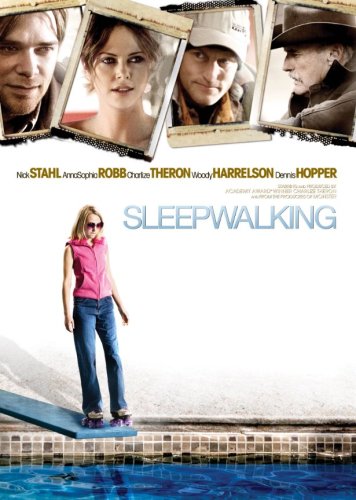
This is the story of an unfortunate underachiever who is left with his niece after his even less fortunate sister abandons them. Unhappy with social services and the places they are forced to live, they take what little money they have to fund an aimless trip across the country until arriving at the home of his abusive father.
This film relies on the performances since the story is so utterly bleak at times that all the audience has to cling to sometimes is the recognition of the stars within it. Filling up the smaller roles are the likes of Woody Harrelson, playing the goofy friend, Dennis Hopper, who is devouring the scenery as the aforementioned abusive father, and Charlize Theron, who is greatly missed during most of the film for she delivers probably the most solid and engrossing performance as the troubled mother. Theron controls the first fifteen minutes then becomes nothing more than a reference for the better part of the proceeding film.
Posted in: Disc Reviews by David Annandale on November 22nd, 2009
Some thirty years after seeing his father killed by a car bomb, Samir Horn (Don Cheadle) is a dealer in explosives. When he is imprisoned in Yemen along with members of a militant group he was about to make a sale to, he is drawn in and becomes an integral part of the group's terrorist activities. But wait – is he in fact an intelligence agent who has infiltrated the group in order to bring down their leader? Meanwhile, FBI agent Guy Pearce is hot on Samir's trail, but if he catches up, will that be a good thing or a bad one?
Given that we are, after all, talking about the lead in a mainstream Hollywood release, it should come as no surprise that the answer to the question of Samir's ultimate loyalty comes as no surprise. Fortunately, the question mark is dispensed with about an hour into the film, and the real suspense shifts to more urgent concerns, such as whether a ghastly bombing plot can be averted. Without venturing into spoiler territory, I must say that the climax leads to as clever a bit of cinematic prestidigitation as I have seen in quite some time, so kudos. Though the film is, first and last, a suspense thriller, and quite the effective one at that, it also makes a few telling points. Though the villains are suitably dastardly, a number of the characters on that side are also humanized – Sarmir's best friend (Saïd Taghmaoui) may be a terrorist, but he is also a man whose motivations are entirely understandable, and he is clearly acting out of genuine conviction. By contrast, intelligence operative Jeff Daniels is willing to go to such lengths to stop the terrorists that he becomes morally indistinguishable from them. And when was the last time that Hollywood had a devout Muslim as the protagonist of an action film? Rank this, then, with The International and The Kingdom as another satisfying exercise in suspense that leaves its audience with plenty to talk about after the closing credits roll.
Posted in: Disc Reviews by David Annandale on November 20th, 2009
The title pretty much speaks for itself. Here are four episodes of the sequel that surpassed its inspiration in television longevity. They are as follows: “Relics” (which sees Scotty revived in this brave new world, and finding himself redundant), “The Inner Light” (an amnesiac Picard lives out an entire lifetime on a strange planet), “Cause and Effect” (the Enterprise and crew wind up stuck in a time loop, and must struggle to escape their repeated collisions with another ship) and “Tapestry” (where Picard winds up in the afterlife, which is certainly more than Kirk could say). It's a bit trickier yanking episodes of ST:TNG out of their season contexts than with the original show, given the former's greater emphasis on continuity, but these stories here are all good standalone adventures.
An odd thing is happening here. Because the original show has been so thoroughly remastered, ST:TNG is now the one that looks dated. The CGI is prone to aliasing and a lack of definition, and the image is rather soft. The colours are decent, but though I know there aren't many opportunities to get a tan in space, the flesh tones are sometimes a bit too far on the pale side of things. All of this said, the transfer is still perfectly watchable. The aspect ratio is the original 1.33:1 -- the show is still old enough that widescreen wasn't the standard yet.
Posted in: Disc Reviews by David Annandale on November 20th, 2009
Here is a rather strange fish. Imagine a series of very economical Blair Witch-style mockumentaries, featuring a different creature each week (giant lizards, giant snakes, werewolves, you name it). The “found footage” is interrupted every few minutes by actual footage of real animals related to the supposed monster while factoids parade on the screen. Most peculiar. Individual episodes have a certain ripe-cheese entertainment value, but you'll want to watch them in widely separated screenings, as the mockumentary approach feels repetitious and tiresome quite quickly. Viewers expecting to get their monster fix in will also likely be disappointed by the brief and unconvincing FX.
Hard to give a rating on this, since the footage is supposed to look raw (this is supposedly taped by the unfortunates who conveniently leave the camera running even as they are about to be swallowed up by the fearsome whatsit). The simulation is fairly effective, with all sorts of convincing grain and camera shake. The less frantic scenes are prone to a certain degree of aliasing, though that too is hard to blame on the transfer.
Posted in: Disc Reviews by Gino Sassani on November 19th, 2009
When we left J.D., Turk, and the rest of the staff of Sacred Heart Hospital at the end of their seventh season, there were good reasons to believe we had seen the last of Scrubs:
1) The show had suffered the lowest ratings in its history.