Video

“When someone dies in the grip of a powerful rage, a curse is born. It never forgives. It never forgets. The curse gathers in that place of death. Those who encounter it will be consumed by its fury.”

Here we go again with the American remake of the Asian classic. To be fair, The Grudge was one of the first after the great success of The Ring. There are some significant differences between this effort and the countless remakes we’ve encountered over the last decade or so. This film retained its Japanese location, which does provide for a more exotic atmosphere. The location shoots are actually pretty well done. The film was also directed by the same man who directed the Asian original, Takashi Shimizu. He’s become quite prolific in the genre, having now directed both versions and the sequels to both versions. The Grudge also doesn’t figure into the technology aspect that many of these Asian ghost stories appear to populate. The most high tech haunt here is a stainless steel bathtub. I bet that gets cold in the winter. Sarah Michelle Gellar brings in the core American audience thirsting for more Buffy. But, if you’re turning on to this film to see Buffy kick some supernatural rear, you’re better off with the Scooby Doo films. And that’s bad.

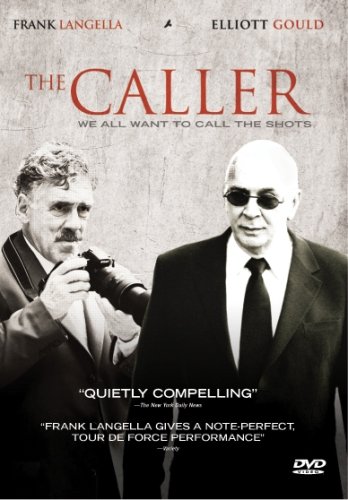
The Caller is a film starring Frank Langella and Elliott Gould. It is a tense thriller about corporate foul play and voyeurism, wait, what year is it?  With the recent critical acclaim of Langella, it seems only fitting to market his name on a low-budget film. Unfortunately for the film, Langella’s performance is one of the only shining moments. Langella plays an aging VP of an energy company that decides to blow the whistle on the corporate wrong doings that are going on. Understanding that he’s written his own death certificate, Langella hires a private investigator (Gould) to follow him to help catch his eventual killer.

“Your life is defined by its opportunities... even the ones you miss.”

F. Scott Fitzgerald is one of those great American writers from the classic age. In school most of us were required to read various works from the writer. For many students those works included The Curious Case Of Benjamin Button. The original work is a mere 20 page short story. For the last 15 years Hollywood has made one attempt or another to bring the classic story to the screen. The closest anyone got was Ron Howard who expected to bring in John Travolta as Benjamin Button. The one reason or another these attempts never made it past screenplay drafts. Along comes one of the best and most diverse directors, David Fincher. Fincher’s work needs little introduction and spans the genre spectrum from Se7en to Fight Club. The original short story would be adapted by Eric Roth. That left many, myself included, to expect a remake of Forrest Gump. When you consider that Roth wrote both screen adaptations and that he was once again working with a character spanning many years of history, the concerns were not unfounded. Would Roth take Benjamin Button on a journey through the 20th Century that would find him present at crucial moments in history as he did with Gump? Fortunately, Roth resisted such temptations and delivered a story relatively faithful to the original work, where the main character was a silent witness only to the major events of his life. Of course, I say relatively faithful because Roth also turned that 20 page story into an epic 3 hour film.

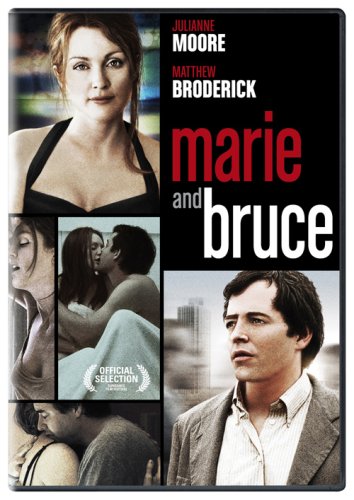
Based on a play by Wallace Shawn (who also co-wrote the screenplay), this film is a day in the life of an unhappily married couple, played by Juliane Moore and Matthew Broderick, who don't know what to do about said unhappiness. The story is simple but the paths each character take is not. After a bitter breakfast scene, they separately go about their day before meeting at a party in the evening where Marie may or may not leave Bruce once and for all.

The dialogue is very reminiscent of a meta-theatrical stage production as the characters are able to freely address the audience in narration or monologues. When speaking to each other, they are terribly open and leave no feeling hidden as they express every thought in a highly unnatural and stylized manner. This leads to some very biting humour as Marie explains her disdain without mercy towards either Bruce or anyone he associates with, while Bruce feels no qualms about detailing the state of is genitals after a one night stand he had 11 years prior. At the same time, this strange and often venomous dialogue is peppered with the persistent use of endearing terms such as “darling” when one of the two addresses the other, which turns into a nice device used by the writers to squeeze out more of a satirical view of decaying, modern couplehood.

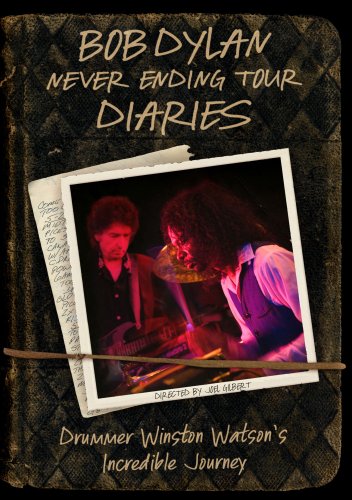
Bob Dylan: Never Ending Tour Diaries outlines the five year journey of tour drummer Winston Watson. The documentary is limited to Watson’s perspective with great super 8 tour footage spliced into his interviews.  Watson toured with Bob Dylan for over 400 shows and helped Dylan launch his “Never Ending Tour” which continues to this day.  Winston Watson’s charisma and originality make him very likeable, which is crucial when chronicling an unheard perspective. This is not a typical rock documentary; there is very little music and no music videos at all.  However, what this film lacks in typical form, it makes up with entertaining stories and great footage.


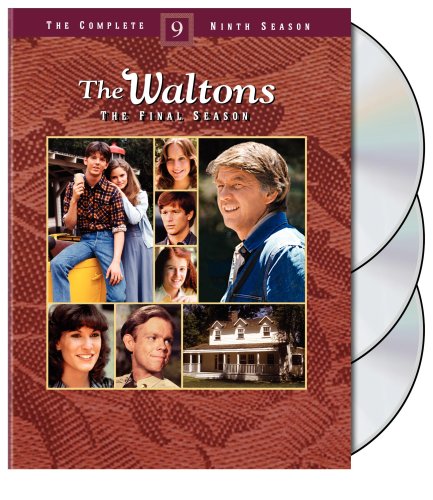
Talk about your hit show running out of steam. The Waltons is the perfect example of a show that outstayed its welcome. When it first took television audiences by storm in 1971, it became a cultural phenomenon. But by the show’s ninth and final year as a regular series it was 1980 and the country, the world, for that matter, had changed. It didn’t help matters that Richard Thomas had left the show, and his popular John Boy character, behind. The show’s core fans remained, but America’s love affair with The Waltons was clearly over. The show continued with 6 specials, often around holidays that brought the now scattered family back to Walton’s Mountain and our television screens. The last of these reunion films aired in 1997. They are not included in this final season set. I would expect they are awaiting their own release, much as the Columbo series has done.

John (Waite) and Olivia (Learned) Walton lived on the Walton land high atop Walton’s Mountain. The land had been in their family for generations. They shared their home with Grandpa (Geer) and Grandma (Corby) Walton and 8 children. At first we found the family in the heart of the Great Depression. They series had a Little House On The Prairie feel to it. The stories took place mostly in that small town where they all lived. The family would suffer one hardship or another and overcome weekly obstacles by sticking together as a family. As the years moved on, the series entered the World War II era and some of the boys would end up fighting in the conflict. By far the breakout character became John Boy, who was first played by and made famous by Richard Thomas. In the last season the character was covered as a recurring character by Robert Wrightman. It would never be the same.

“Symbols are a language that helps us to understand our past. As the saying goes, a picture says a thousand words, but which words? Understanding our past determines actively our ability to understand the present. So, how do we sift truth from belief? How do we write our own histories, personally and culturally, and thereby define ourselves? How do we penetrate years, centuries of historical distortion to find the original truth? Tonight, that will be our quest.”

Conspiracies can be fun. We all buy into them to one degree or another. I’m not talking about the paranoid nutjob who sees a conspiracy behind every closed door, and even a few open ones. Of course, there is something to the old axiom that just because you’re paranoid doesn’t mean they’re not really out to get you. Of course, we’re not talking about the persecution complex style conspiracy here. We’re talking about the old fashioned cover-up. It’s what made The X-Files so famous for so many years. It’s why JFK’s death is so much more interesting than anything he did in his remarkable life. There are still some crazy people out there that believe George W. Bush orchestrated the 9/11 attacks, or at the very least was complacent in them. Everywhere from Super Bowl outcomes to manned missions to the moon, someone somewhere thinks it was all a big lie. So, you might as well cop to it now. We all love a good conspiracy theory. In his second Robert Langdon novel, The Da Vinci Code, Dan Brown writes about what would be the mother of all cover-ups. As one character put it so well in both the novel and film, “What if the greatest story ever told was a lie?”

Two And A Half Men reached their 100th episode in the 5th year. That’s the milestone when a series becomes viable in syndication to local market stations. That’s the kind of show you see once, twice, a hundred times a day on those local stations either just before primetime or late at night. This is also the year that the writers of CSI and Two And A Half Men switched shows for an episode. It’s one of those cross-over ideas that I don’t think had been done before. I’d love to see the South Park and Family Guy staffs do something like this. That would be pay per view worthy. So, here on 3 discs is that milestone season for you to enjoy at home.

Charlie Sheen is an unlikely actor to star in a television sit-com. Even after watching the show, I’m not sure how anyone came up with the idea in the first place. He has little to no comedic timing, and he’s about as funny as a funeral. The thing that works here, however, is that he really doesn’t need to be all that funny to make this show work. Sheen pretty much deadpans his entire performance, which generously enough works rather well teamed with the more manic comedy of Jon Cryer. Throw into the mix a rather extraordinary young child actor in Angus T. Jones, and suddenly a show that looks terrible on paper turns out to be pretty dang funny. We’re not talking Fred Sanford funny, but I caught myself laughing far more often than I expected to. I had only caught the show before in bits and pieces and was never all that fond of what I saw. Watching these DVD episodes from the third season shed some new light on the show for me.

It’s the end of the October Road for Nick and the gang. If you want to blame anyone, there’s plenty to go around here. First of all, the writers’ strike didn’t do anyone any favors by delivering only a 6 season first year. While the cast was made up of good actors, there is never any kind of chemistry between them. They look like actors thrown together because they have to be. The writing is uneven. Did anyone ever really plan out what this show was really about? There are fans; every show has some. But there was never enough to make this one fly at all. Blame me, if you like, for not being kind to the first release and repeating those same criticisms here. The truth is, it was never a good show, and a DVD release isn’t going to change that. You do get to see all of the episodes here. At last count, ABC was not necessarily planning to air all of the completed episodes. That makes it a good buy for the fans. If all 6 of you pool your money, maybe you can share one set.

Enter Nick Garrett. He’s a writer who has published a hugely successful best selling novel. It’s been made into a major film, and busty women approach him in clubs to tell him how much it has affected their lives. The audio version is read by Johnny Depp. You would think Nick has it made. The trouble is that Nick doesn’t have a clue how to begin to write his next book. His solution is to take a trip back home to the places that inspired the first book. His hope is to make a quick hit and run visit, but he ends up staying for a while. Nick soon discovers that you really can’t go home again. Everything and everyone changes, as Nick is finding out. Not everyone is happy about how they feel they might have been portrayed in the novel, and Nick might even have a son. If this is starting to sound a bit like a soap opera, then you have October Road pegged.

They say that it isn’t over until the Fat Lady sings. Did you ever wonder what “it” was or who the heck this Fat Lady is they keep talking about? I can’t help you there, but I do know who the Fat Man is. It’s William Conrad, who came back to television in 1987 as J.L. McCabe, better known as “the Fatman”. McCabe was one of those tough as nails district attorneys. He was actually an ex-cop, so had great criminal instincts. McCabe wasn’t above bending the law to put away the bad guy, and he wasn’t considered a very friendly type of fellow. He majored in stubbornness and plain speaking. He relied on Jake Styles, his private investigator, to do much of the leg work for the office. Jake was a bit of a flashy playboy, but he always delivered the goods for his boss. Again, Styles wasn’t against breaking a few rules to get what he needed. Styles was played by Joe Penny. McCabe also served as a mentor, of sorts, to young District Attorney Derek Mitchell, played by Alan Campbell. Mitchell was quite wet behind the ears and a little too eager sometimes. His ambition often got the better of him, and it was the gruff McCabe who kept him out of trouble. Finally, the team was completed by Gertrude, McCabe’s loyal and trusty secretary, played by Lu Leonard. While The Fatman put crooks away instead of defending innocent defendants, there could be no mistaking the parallels between Jake And The Fatman and Perry Mason. The two shows were from different times, and the styles might not have been the same, but the dynamic was very much the same. You can see a lot of Della Street in Gertrude and more than a little of the Drake/Mason relationship in the two leads. There was far more action, but that was more a reflection of the change in decades than anything else. And like Mason, the Fatman rarely lost a case.

The Fat Lady was warming up after the first season of Jake. The show did not immediately return for its second year. It was delayed until March and so only ran for 11 episodes. That’s why Paramount has issued this as an “entire” season set. The show never really found its footing and struggled for the 5 seasons that it ran. It wasn’t a terribly original program and was steeped in cliché for its entire run. It was never a ratings monster, and there were constant radical changes in attempts to retool the show over the years. In this season McCabe and his staff, excluding trusty Gertrude, moved to Hawaii in an effort to spice the show up Hawaii Five-0 style. Even that exotic location didn’t help matters, and the series returned to California by 1990. These erratic changes in location and style meant that the show never found the solid fan base it needed to survive. It was likely William Conrad that was the only thing that allowed the show to last 5 years. What made the show work at all was the unlikely pairing of the two characters. It wasn’t only their weight that separated the two. McCabe looked angry all the time and had a slower pace to his method. Jake was almost too slick; at least that’s the way they tried to portray him most of the time. In the end the pair really was too unlikely for most viewers’ tastes. While it did get 3 Emmy nominations, it never won. These nominations were for cinematography and music only. Today Jake And The Fatman wouldn’t have gotten past the mid season.