Video

Synopsis

Of all the Bond films and the various images and gadgets that have come from it through 20 films, the one that probably crystallized most of these images is Goldfinger. You have the awesome Aston Martin car with the ejector seat, machine guns, and the like. You had the female who could kick ass and had a really cool name in Pussy Galore (Honor Blackman, Bridget Jones’s Diary). And you had Jill Masterson (Shirley Eaton, Ten Little Indians) experiencing the most creative death to...that point.

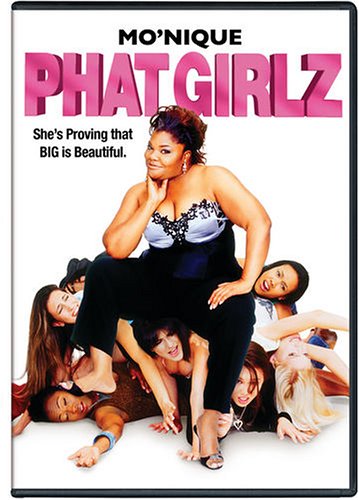
Phat Girlz is one rotten piece of crap. I hate to say it that way, but some movies don’t deserve the flowery lambasting some more deserving bad films get from their critics. They should simply be called what they are. That’s why I equate this film with the “c” word. Mo’Nique stars as a plus-sized hypocrite, who seems to have the same prejudgments about “skinny bitches” as they seem to have about her – in the confines of the film, that is. Overweight people are given a saintly presence, while most everyone...– male or female – capable of squeezing into one airplane seat is portrayed with utter contempt.

And the jokes are the epitome of weak. One embarrassing moment in the film comes when Mo’Nique has one of the lamest word battles ever heard with a fry cook. The jokes written for her hapless adversary were in circulation around the first Thanksgiving, and I’m sure made it over on the Mayflower. Mo’Nique’s comebacks are designed to be uproariously better, a technique which might have worked were it not for the head-scratching lack of sense made on execution. We’re left to think, “Was that supposed to be funny?” Topping off this exercise in ridicule – as in ridiculous – is a story that sends eyeballs rolling immediately into their sockets. Mo’Nique and her shy plus-sized friend win a trip to a Caribbean resort, where they JUST SO HAPPEN to meet two buff Nigerian men, who JUST SO HAPPEN to like large women, and JUST SO HAPPEN to be successful doctors in their native land. The film’s efforts at fairy tale unwind quickly to the realms of absurdity, and never recover.

With all that’s been going on with Tom Cruise as of late, I found myself doubting the integrity of this picture. I was fearful that the happenings of Cruise’s personal life would somehow bring down this movie; the previous two films did set the bar pretty high. So how did the third installment add up, did it fall short of expectations, or did it deliver beyond what I expected?

MI:III doesn’t hesitate a minute to bring us suspense, the picture begins with Owen Davian (Philip Seymour Hoffman) having Et...an Hunt and a woman (whom appears to mean a lot to him) captive. He means business; she is going to die unless Ethan can come up with something called the rabbit’s foot. The scene closes, and we roll back to the previous week when nothing is amiss.

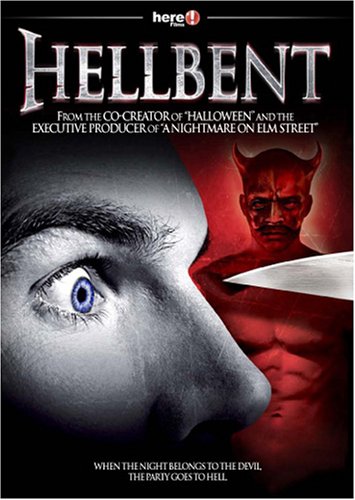
OK, let's just get this out of the way at the start. Hellbent is a film from a cable network called Here!, which is America's foremost gay and lesbian television network. Consequently, this made-for-TV film is based solely around homosexual couples, as is all of the programming on the network. They make all manner of programming, including feature films, that deal primarily with homosexuality.

Now, here is my complaint. If you want to make programming that has homosexuals in it, I'm fine with that. But when the main focus of your programming business is promoting a certain belief or lifestyle, the stories will inevitably suffer. Every part of the film should serve the story. For those who think I am homophobic, I would say the same thing about movies that are made primarily to promote religion, victims rights, heterosexuality or any other number of beliefs. It has nothing to do with the beliefs or lifestyles themselves, it is the fact that promoting an outside belief moves the film from “interesting story” to “propaganda film”.

Synopsis

Don Haskins may not be as well-known as Jackie Robinson, Jim Brown, or other historical figures that have helped integrate sports with black players, but the impact that Haskins had on college basketball is arguably more significant than any coaching strategy could have possibly introduced, and it’s those events for which Haskins was at the helm that unfold in Glory Road, which some have unfairly labeled as producer Jerry’s Bruckheimer’s basketball equivalent to Remember the Titans.

”My name is Melinda Gordon. I just got married, just moved to a small town, just opened up an antique shop. I might be just like you…except from the time that I was a little girl I knew that I could talk to the dead. ‘Earthbound spirits’, my Grandmother called them. The ones who’ve not crossed over because they have unfinished business with the living, and they come to me for help. To tell you my story, I have to tell you theirs.”

So goes the opening for each episode of this first season of Ghost Whisperer, a series that blends drama, horror and comedy to carry its audience to an emotional place. I can imagine a lot of viewers crying at some point or another during almost every episode, which is a credit to the show’s makers, but they’re aided by the fact that their show deals so much with death, life, love and grief.

Whichever generation you’re from I think we can all remember watching this movie as a child. I have great memories of this film, and when watching the newly released Charlie and the Chocolate Factory, I found myself comparing it to these memories. Finally I’ve gotten the chance to sit down and watch it again for the first time in years, and on HD DVD what a treat, so how does it hold up after all these years?

The movie centers on a young boy named Charlie Bucket, living with his mother and bedridden...grandparents. Charlie like any child loves chocolate, so when it’s announced that the famous Willy Wonka (Gene Wilder) is allowing five children to spend an entire day in his factory, he wants to win more than anyone else. There are five golden tickets placed randomly inside Wonka candy bars, they could be in any candy shop, in any town, anywhere in the world. As the days go on we find that an overweight chocolate obsessed boy in Germany named Augustus Gloop has found the first ticket. The second by a nagging spoiled brat in England named Veruca Salt. The third an overachieving competitive girl from The United States named Violet Beauregarde. The fourth is a lazy television obsessed boy named Mike Teavee, also from The United States. All hope is lost for Charlie when it is announced that the fifth ticket has been found… but that wouldn’t make for much of a movie, would it?

We’ve all been at that age where we begin to challenge the thought of how just one man could travel around the world in one night. This inevitable dilemma has been showcased nearly every year in a motion picture, so how does The Polar Express stack up against them?

Based on the 1985 short story written by Chris Van Allsburg, Robert Zemekis and Tom Hanks set out to make a memorable Christmas classic. Besides producing, Hanks voiced a numerous amount of the characters encountered throughout the film. Th... movie begins on Christmas Eve as the main character, referred to as “Hero Boy” is lying in his bed hoping to hear the sounds of Santa’s sleigh. Like every child at that age, doubt about the reality of Santa begins to set in. Soon falling asleep appearing to have lost hope, our hero boy is awoken to the sounds of and old time steam train. Upon investigation The Conductor (Hanks) reveals that the train is bound for the North Pole. Hesitant at first “Hero Boy” hops aboard and soon meets several other children, all hopeful of meeting Santa Clause himself. We find out that each of the children has been given a golden ticket by the Conductor with two letters punched into them. At this point we do not know the importance of these tickets, only that they are important.

Synopsis

Michael Caine is a jewel thief recruited by Eric Portman and wife Giovanna Ralli for a big job. Caine falls in love with Ralli, but that’s fine with Portman, who’s gay. There are yet more secrets that he has yet to reveal, however, and they could jeopardise the success of the partnership.

Steven Soderbergh’s film Out of Sight tells the story of a man named Jack Foley (E.R.’s George Clooney) and his ability to rob banks. As the film opens up, we see Jack as he cunningly convinces the bank clerk that his partner is speaking to the bank manager and will blow off his head if Jack gives the word. Turns out that this is the exact opposite and Jack almost gets away had his car not flooded. As Jack is doing his time in jail, we immediately learn that he is going to escape soon, actually that nig...t. The escape goes off cleanly until Jack and his driver named Buddy Bragg (Mission Impossible’s Ving Rhames) nab a federal marshal named Karen Sisco (The Cell’s Jennifer Lopez), putting her and Jack in the trunk of her car together. It’s here that Jack and Karen, while talking, become attracted to each other.

As a federal marshal and law officer, Karen is obviously suppose to arrest Jack. But this can’t happen yet otherwise the film would only be 20 minutes long. Here is where Soderbergh succeeds at a high level. He gives us a lot of flashbacks, one in particular to Jack’s days in prison. Jack meets a man named Glenn, who seems to be a kind of odd character who doesn’t necessarily seem to full in the upper portion of his head. We also meet a group of three men named Snoopy Miller, the violent part of the group, Kenneth, his partner and White Boy Rob, his big, bulky bodyguard who constantly stands up for Snoopy. While all this is occurring inside the prison, Soderbergh switches back and forth between the ongoing ‘relationship’ between Karen and Jack.