DVD

Jim Phelps (Graves) led his team in a fourth season of Mission Impossible starting in 1969. The show continued its trademark traditions. Jim would receive a mission from the “self destructing” tape and would gather his IMF (Impossible Mission Force) team. The team was necessarily eclectic in nature, and it changed significantly in the fourth season. Gone were Martin Landau in his signature role of Rollin Hand and Barbara Bain as Cinnamon Carter, model and the team’s chief seductress  Still in the team we had Barney Collier, the gadget man, played by Greg Morris. The muscle was still supplied by Willy Armitage, played by brute Peter Lupus. Leonard Nimoy joined the team in season four as Paris, who also had a skill for disguise. He was a magician, so his sleight of hand skills came in … well, handy. Together they took on missions that the government could not be officially a part of. They were always admonished that should they be caught “the secretary would disavow any knowledge” of them.  Usually they were sent somewhere to put some evil mastermind out of business. Their tactics ranged from scams to outright theft. Sometimes they were a rescue team, while other times they would infiltrate a group of bad guys. There were certainly cold war elements to the whole thing. Each week the team concocted some convoluted con to play on their mark, walking away at the end of each episode often without getting any credit or congratulations.


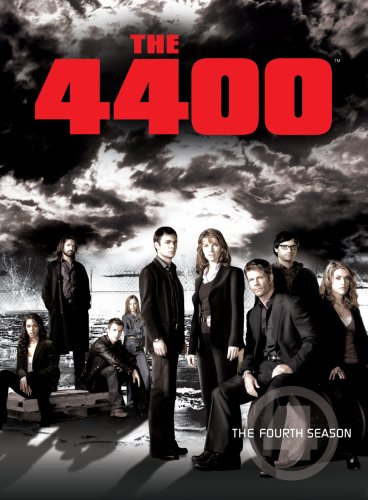
In the first season of The 4400 we are introduced to 4400 people who, we are led to believe, have recently returned from being abducted by aliens. Before you can look for Samantha Mulder among the group, we eventually discover that it was in reality the future that abducted these hundreds for nefarious reasons of their own. Some abductees have returned with mysterious powers and abilities. No, this is not Heroes or X-Men; in fact it’s a lot more like The X-Files than anything else, particularly in this the final season. Up to this point the government has developed a vaccine that inhibited these powers. Again we seem to be treading on X-Men territory here, don’t we. When the third season left us we were introduced to another drug that can reverse the effects of the inhibitor, but it carried an almost even chance of death. It is here that season four begins its likely final stories to tell.

The original Teenage Mutant Ninja Turtles series ran from 1987-1996 and had over one hundred and ninety episodes. Millions watched as Leonardo, Donatello, Michaelangelo, & Raphael grew up from little turtle babies into mean, green, fighting machines. They could take on Shredder, Krang and any other bad guy that wanted to turn them into turtle soup. The sixth season takes on episodes 128-143 and spins them into a tiny two disc package from Lionsgate. Over a hundred episodes in, do the turtles still pack the punch they did back in 1987? As Splinter would say, "Be patient young ones, the answer will come."

Let's see, where were we in the TMNT saga? The last episodes of the fifth season saw the Turtles land up on a planet where turtles ruled and introduced us to a couple of new mutants named Groundchug and Dirtbag. True to form however, the turtles were successful in their exploits and sent Krang & Shredder back to the Technodrome. Season six opens with Krang & Shredder in the Technodrome, trapped in the Arctic. The Turtles are busy eating pizza, fighting crime and striking back at whatever plan the bad guys hatch at them each episode.

A couple of years ago, I was out a trip to New Jersey on business with my boss. When we got there, he wasn’t feeling well, so I had him sit down while I went to the clinic down the hall to see if some medical attention could be given to him. As I turned the corner with an attendant, that’s when I saw him hit the floor. After a few moments of stabilization he was taken to the hospital, where it was determined that he had a stroke. A co-worker and I stayed with him for the duration of the next couple of days until his family could get there, and over that time, he suffered several smaller strokes in the process. One minute he could talk rather lucidly, and like flipping a switch his facial muscles would sag and be nonresponsive. Once his family came, we managed to get the chance to come home, and he spent several more days in the hospital, remarkably without any repercussions from this incident, and came back to work, where we still talk (I’ve moved to another company) and share the occasional gallow humor about what happened.


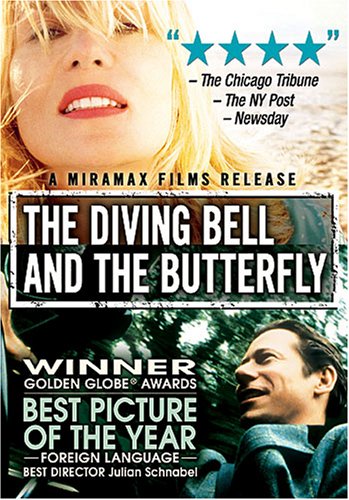
He was lucky, though there are others that have experienced far worse situations. The Diving Bell and the Butterfly is a look at the life of Jean-Dominique Dauby. The editor of the French version of Elle magazine led a somewhat glamorous life,and one day had a severe cerebrovascular incident, whereby he was left paralyzed, but responsive in his left eye, which allowed him to communicate solely by blinking. With the help of speech therapists, he was able to state his thoughts in his book by the same title, as a metaphor of his useless body, labeled as the “diving bell,” ironically clashing with his free spirit, your “butterfly,” if you will.

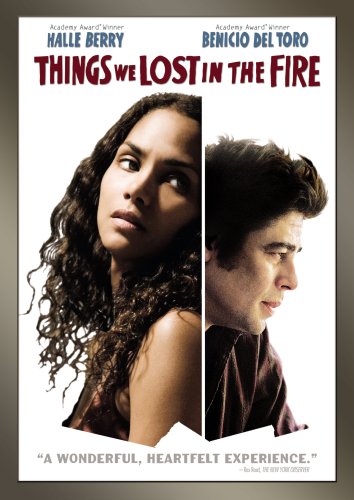
It’s hard to peg a movie like Things We Lost in the Fire. While people want to slam it and say that it’s not an uplifting movie, I think that upon further review, they might want to examine those behind it, and see that it’s another solid effort from them.

Written by Allan Loeb in his writing debut and directed by Susanne Bier, the talented Danish director behind the film Brothers, the film centers on a recent widow named Audrey, played by Halle Berry (X2), who lost her husband Brian (David Duchovny, The X-Files) to a murder in tragic circumstances. After notifying Brian’s friend Jerry (Benicio Del Toro, Traffic) about the murder, Jerry doesn’t seem to take it so well. Brian and Jerry have been friends since they were kids, and while Brian went onto a life as a successful architect, Jerry was a lawyer before becoming addicted to cocaine and heroin, and was spending his days at a sleazy dive apartment getting high. Yet Brian would come and visit Jerry, to catch up and talk about his family. When Audrey would be skeptical of how Jerry might be exploiting Brian, Brian stuck by him. So what Audrey winds up doing is inviting Jerry to live with them. In the process, Jerry helps Audrey and her kids cope with their loss, while trying to strike the delicate balance of sobriety.

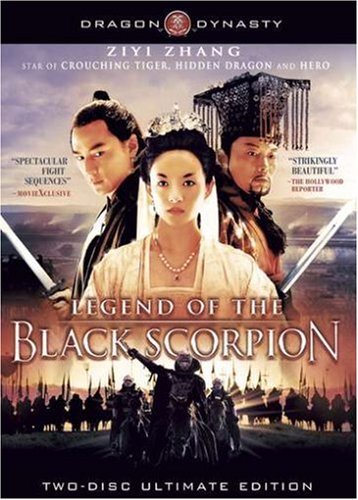
Retelling of classic tales has been a fodder for movie scripts for years. Take something that has worked for ages, spin it just so and you got a movie that might be gold. They have been doing this with Romeo & Juliet for years. The results can be great or sometimes they are one step of having the creator roll around in his grave with pain and anguish. Take Hamlet for example, the classic Shakespearian tale about a prince who takes revenge on his uncle Claudius who has murdered his father the King and taken the throne and the king's wife too. It has treachery, corruption and a little good ole fashioned incest to wet the palette. Now take that piece of journalistic tragedy and set it after the fall of the Tang Dynasty in China. Insert popular Asian actors like Ziyi Zhang & Daniel Wu and you might just have something.

Emperor Li (played by You Ge) has taken over the throne from his brother by murdering him. In the process, he has also taken the brother's wife Empress Wan (played by Ziyi Zhang) as his own for the good of the kingdom (and cause she's hot). An attack is also staged on the Prince, Wu Lan (played by Daniel Wu) who has devoted his life to the arts and is found at a nearby village of actors. After an elaborate fighting scene, he escapes with his life and makes his way to the castle to confront his step mother, the Empress (which we find out they shared romantic feelings toward each other) and expose his father's murderer, the Emperor.

Who says no one likes a guy who’s negative all he time? Becker has got to be one of the most cynical, grumpy, and negative characters to grace our sit-com screens. He’s a guy you probably love to hate, and he’s also hilarious. Ted Danson spent over a decade behind the bar at Cheers and could have easily called it a career. You know, stop while you’re ahead. Instead he climbed right back into the television saddle and reemerged as Dr. Becker. This time he’s a medical doctor who hates everything and everyone around him. Refusing to display that little bit of a heart we all know he has, Becker spends most of his life complaining about everything. Never before has it been so much fun to watch a guy moan and groan for twenty minutes at a time. Fortunately for him, Becker is truly a dedicated doctor, and while he’s likely to complain about it the whole time, he’ll go to any extreme to help a patient.


In the 1940’s Walt Disney was asked by President Roosevelt to take a good will tour across Latin America as an ambassador of sorts. He declined the invitation, protesting that he wasn’t the handshaking kind and that the cause would be better served using someone else. Not to be deterred, Roosevelt made a counter offer. What if Walt would go to Latin America with a film contingent and then create some kind of a production out of the tour. A government subsidy was even offered. Walt accepted the invite but turned down the subsidy. And so, with a large party of animators, writers, and production crew, they took a whirlwind tour and left with what Walt himself described as a wealth of material. The footage obtained and the experience gained would feed into Disney productions for decades.


A question to ponder before we head into this review. What do you get when you mix anime or japanese animation with a healthy dose of John Woo? Besides a ton of falling gun shell casing and cute characters performing acrobatics in the air while taking down a dozen bad guys? You get a movie that goes full speed for over a hundred minutes and makes you realize that this is truly the perfect avenue for John Woo and style of films. However, just don't expect there to be a completely solid story behind it.

In the future, the world is annihilated by itself. However, out of the dust & debris, Olympus rises as a utopian society. The new society has a group of soldiers called the ESWAT (wasn't this a game for Sega Genesis? sorry, *turns off video game knowledge*). These warriors protect the peace and serve in the utopian society's best interest. The warriors consist of cyborgs and humans. Bioroids or genetically engineered humans serve as diplomatic leaders over ESWAT due to their calm and collective nature.

So here we are again with a third collection of episodes from The Young Indiana Jones Chronicles television series. This final series is called Years Of Change. Most of the episodes and features deal with the span of years between the World Wars. The 20’s were indeed an inventive time when people like Thomas Edison were at their peak. Peace was at hand, and no one really knew for how little time it would last. Most people had extra money and life was one big party. From our 21st Century hindsight, we know it was all doomed to come crashing down before the decade ended, but for most people at that moment life was good. Indy gets himself in some rather unlikely positions in this set. I can’t imagine him getting involved in a film production, but there it is. This set completes the trilogy of releases, and you now have every Young Indy adventure filmed. This is also the set you’ve been waiting for, as it features Harrison Ford’s single appearance in the show as Indy at 50 years old. It’s a bookend type of appearance, but it sure is nice to see old Harrison Ford as Indiana Jones for what we expected back then was the final time.