DVD

I couldn’t find her name anywhere on the credits, but I simply cannot believe that Rosie O’Donnell didn’t have anything at all to do with the film Conspiracy. The film is a thinly veiled pot shot at the current administration, or at least Dick Cheney. Gary Cole plays a guy named Rhodes, who is really intended to represent Cheney. Rhodes controls a multibillion dollar corporation that has managed to set itself up in Iraq making millions from the war thanks to corrupt government officials. His company, Halicorp, is obviously intended to be Haliburton. Rhodes has also taken control of a small Arizona border town. Here his vigilante friends patrol the border, turning back, and even killing, Mexicans attempting to enter the United States. He justifies his deeds in the name of counterterrorism, but the truth his he holds the entire town in fear. Enter MacPherson (Val Kilmer) who recently lost his leg in the Marines in Iraq. When he returns home he comes to Rhodes’s town looking for a Mexican comrade in arms. He finds that there’s no trace of his friend, and his questions have drawn all the wrong kind of attention. After some rather silly plot developments, MacPherson becomes a one man army to challenge Rhodes’s control. Apparently someone has watched Clint Eastwood’s Pale Rider one too many times here. Now Kilmer has grown old and rather obese in recent years, so the film needs to take that into account with his fighting style. After all, no one’s going to believe he’s got any real fight in that couch potato body. He wins his fights mostly by being able to duck really well. And returning a bowl of chili he recently ate on someone’s shoes. Figuring that Eastwood scowl was already done, Kilmer appears to be half asleep during each fight. I know I was. He does pack a mean nail gun, and you should just see what he can do with some rolled up paper. When they finally do put some real fire power in his hands, the rest just gets too comical.


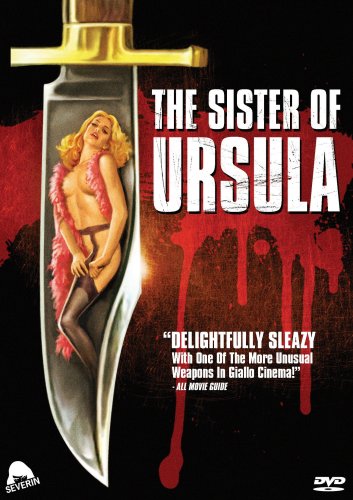
Still grieving over their father’s death, two sisters – the outgoing Dagmar (Stefania D’Amario) and the neurotic, antisocial Ursula (Barbara Magnolfi) – check into an out-of-season hotel. They are almost immediately immersed in a tangled web of relationships and betrayals involving the hotel manager, his estranged wife, a lounge singer and a drug-addicted patron. At the same time, a series of gruesome sex slayings gets underway.

Writer/director Enzo Milioni’s first film is a clumsy giallo. The elements are all there – psychosexual delerium, black-gloved killer, beautiful cast. So too is the aura of misogyny that haunts so much of the genre – the killings here all involve lethal penetration, and while the murders are generally dealt with relative restraint (a hilarious shadow of a looming erection followed by fade to black), there are, late in the film, a number of particularly tasteless shots of naked victims with bloody crotches. Charming. The ineptness of the filmmaking, however, robs these moments of much of their power: the sex scenes are dull and saddled with the same irritating score every time; the editing is rife with nonsensical cutaways (one of which unintentionally suggests that a dog has been masterminding a drug deal); and the story is so choppily told that characterization varies between the risible and the nonexistent. Add to this a resolution that even the most casual viewer of gialli will see coming a mile away, and you have a pretty weak entry. And yet, for all that, there is that delicious ineffable whiff of 70's Italian exploitation that makes even the weakest entries plenty of fun.

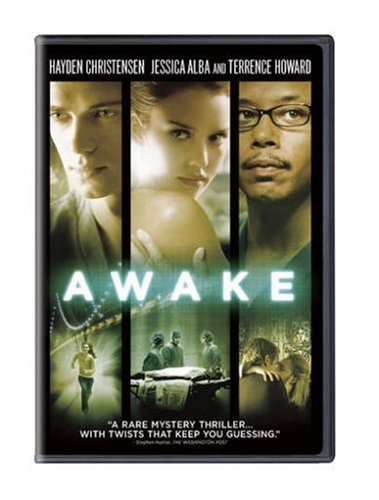
Anesthetic Awareness is a phenomenon where a surgical patient is completely aware and able to feel pain while under anesthesia. It occurs in about 5 out of every 1000 patients, with about half of those 5 aware enough to feel excruciating pain. Apparently the condition is not readily noticeable by the surgical team and is only discovered through recounts of the experience after the procedure. Patients are often able to tell doctors details of conversations they had while the patient was supposed to be completely out of it. Sounds like a creepy idea for a thriller, doesn’t it? It sure does.

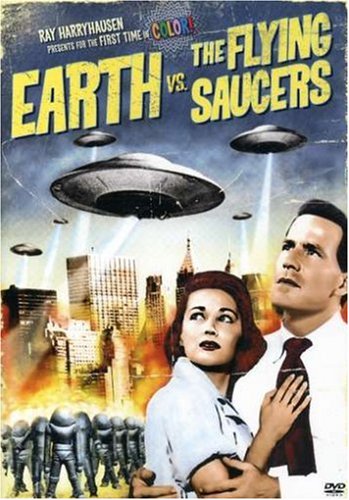
If you are a regular reader here, you know how much I love Ray Harryhausen. Over the years I’ve had the chance to spend many casual hours with him and his wife. They are both extraordinary people, and I’m always amazed at how modest Ray always acts. After over a half century, he still acts surprised that so many people continue to be affected by his work. I was lucky enough to have been invited by Ray personally when he finally received his star on the Hollywood Walk Of Fame. With that said, I’m going to avoid repeating myself and spend less time here talking about Ray. You can see more details of my talks with him and just some great Ray Harryhausen information by looking at my previous reviews.

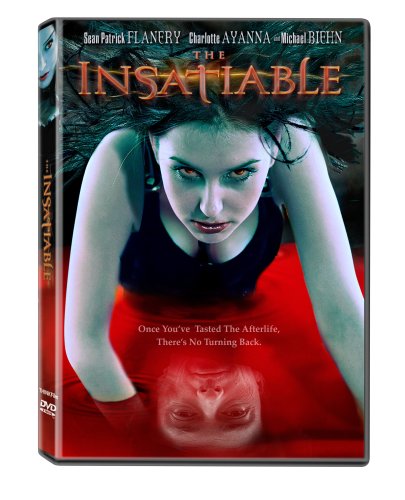
Sean Patrick Flanery is Harry Balbo, an introverted nobody at a nothing job where he constantly mocked by the unfunny office clown. One night, on his way home from the convenience store, he sees a female vampire rip off a homeless man's head. No one believes him, and his feelings move from frustration to terror when, a couple of nights later, he sees her at work again, and she scratches his face, marking him. He turns to crippled vampire investigator Michael Biehn for help, and eventually captures the vampire. Unable to bring himself to kill her, he is torn between sacrificing himself or others to her bloodlust.

This is a film that finds its strengths in its incidentals. Harry's depressing work environment, the tossed away dialogue from minor characters, the little humiliations of his life and his eccentric little obsessions all work well, and are very funny. The actual vampire storyline isn't quite as fresh and witty, though nestled in such an enjoyable context, it works well enough.

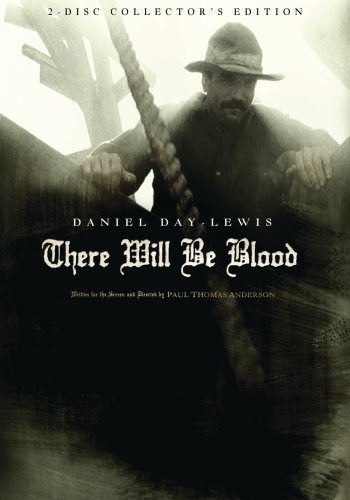
He might not have been “shootin’ at some food” but for Daniel Plainville it’s all about that “bubblin’ crude. Oil that is. Black Gold. Texas Tea”. Our story begins in 1898 before the world would really become so completely addicted to oil. Plainville is a miner looking for silver when an accident that nearly kills him leads to an even more valuable discovery. The film actually begins quite slowly, which doesn’t exactly bode well for a film over two and a half hours long. It will be 10 minutes and 4 years in film time before we witness the significance of Plainville’s chance discovery. It will be over 14 minutes before the first words of dialog are heard, a sales pitch by Plainville that serves as a near perfect prologue for the events to come.

Will Smith finds himself in a bit of a career quandary if you ask me. Sure, one of the good sides to being as as he is is that he’s quite the popular guy that nobody wants to see get killed. But the popularity has seemed to stymie him a little bit. When he does dramatic work, it’s clear that the push is for him to win an Oscar, like in Ali and The Pursuit of Happyness. So when people look past that intent, even when he might want to do dramatic work, he’s forced to take on slightly darker roles in action films, which I guess serves as his happy medium of branching out while still pleasing the people. I Am Legend is another one of those examples, very similar to another Smith sci-fi film named I, Robot.

I Am Legend is based on the Richard Matheson novel and is loosely inspired by Charlton Heston’s 1971 film The Omega Man. This version is adapted by Akiva Goldsman, who won a Screenplay Oscar for A Beautiful Mind, and directed by Francis Lawrence, whose first feature effort was the supernatural comic book film Constantine. But in case you don’t know much about the film or really had a concern to go see the Smith film, he plays Robert Neville, an Army virologist. Robert was responding to an effort of a virus that ironically was supposed to be a cure for cancer. But instead of ridding the body of cancer, it became a bug that infected humans, turning them into psychopathic, ultraviolent zombies, out to kill any members of the living. Neville continues to work on a cure for the virus, even after it has decimated the world’s population.

So what did we all learn with the Joel and Ethan Coen’s latest opus, an adaptation of the Cormac McCarthy novel No Country For Old Men? Well, suffice to say, along with the creative resurgence of the brothers, we get a film that’s part modern-day Western, part action, part comedy and even perhaps part-horror, but in the adoration and adulation, to want to pin the film down as something is to forget that above all else, the film is a tale about changing times, told by someone who’s seen better days and is nostalgic for them. It’s that story that seems to be ignored to a certain degree by people, which oddly enough is ironic considering the title of the film.


The story that’s pushed along by the film surrounds a drug deal where all the concerned parties were killed in cold blood. The bodies were found by Llewelyn Moss (Josh Brolin, Planet Terror), who also managed to find several million dollars in the vicinity. But as is the case in both movies and real life, that kind of money is not going to not be missed for long. So enter Anton Chigurh (Javier Bardem, Before Night Falls), a man with a mysterious past. But there are a few certainties we know about him: first, he’s hired by someone to recover the money. By whom is immaterial, though through other recollections, he’s made out to be an killer with ice-cold veins, and we find this out within the film’s first several minutes, when he kills a police deputy in a gruesome fashion at a police station. So Chigurh is after the money and, inevitably, after Moss. The crimes occur in a sleepy west Texas town whose sheriff is Ed Tom Bell (Tommy Lee Jones, The Fugitive), and all three men find themselves near the border in 1980, on the cusp of a serious influx of drugs to the U.S..

In 1973 Elton John had his best selling album to that time in the double release Goodbye Yellow Brick Road. From that album came one of the most radio-played non-singles of all time, Funeral For A Friend/Love Lies Bleeding. What does any of this have to do with the Christian Slater direct to video film? Nothing. It has about as much to do with the film as the title itself does. I think someone must have been a closet Elton fan and pulled the title out of thin air, which is about where most of this screenplay must have come from. If you’ve seen Slater’s far better True Romance, then you’ve seen this film. Substitute cocaine for cash, and the story is very much the same. Of course, Tony Scott did it much better. So why would you spend 20 bucks for a cheap knockoff? Good question.


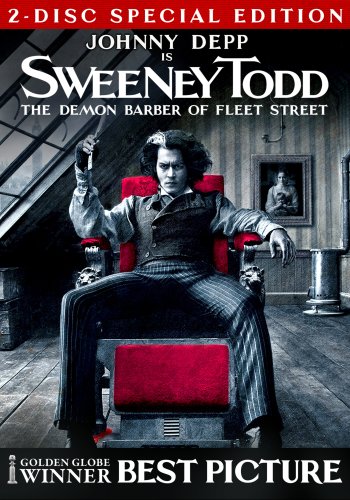
Tim Burton, Johnny Depp, Helena Bohnam Carter, and a 1970’s Broadway musical by Stephen Sondheim about a barber with a penchant for truly close, and rather bloody, shaves. With these kinds of ingredients you have a can’t miss recipe for Sweeney Todd, The Demon Barber Of Fleet Street. The finished product is a wickedly clever and most unusual movie experience. Tim Burton’s style blends so seamlessly with the dark humor of the original production. If I had any reservations going into the film it was the casting of Burton’s go to actors Depp and Carter. I had no doubt that either of them could pull off the roles. Depp particularly has become one of the finest actors of our time. His ability to own a part so completely never ceases to amaze me. I was more worried about the rather heavy singing load that the film required. Imagine my surprise to find that Depp was not only up to the task of providing the musical voice of Sweeney Todd, but he managed it with a remarkable amount of skill. His performance provided unexpected vocal nuance to the musical numbers, none of which are particularly easy melodies to sing. To a lesser extent Carter was also quite good in her singing performances. The Sondheim songs take on new life in the hands of Burton. His depiction of London in gothic splendor is vintage Burton. The foggy darkness of the night surrounds a cityscape utterly gritty and atmospheric. There is an almost Charles Dickens reality to the entire film that creates just enough believability to allow the artistic license that is so identified with Burton to become a wonderful playground for a talented group of performers.