Posted in: Disc Reviews by Archive Authors on April 9th, 2007
Synopsis
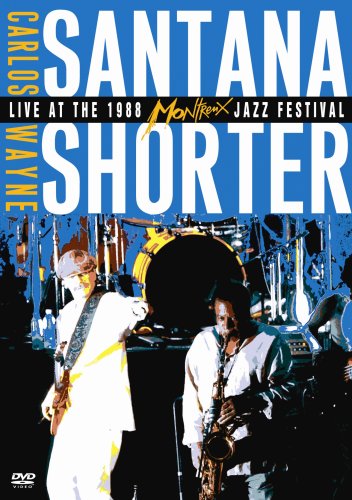
Carlos Santana has been a veritable part-owner in the Montreux Jazz Festival, with a half dozen or so appearances under his belt in over three decades of performing. Some have been solo appearances, but others have been fruitful collaborations with various blues and jazz performers, some singers. In 1988, Santana and friend Wayne Shorter performed at the show as part of a brief tour. The songs performed are listed as follows:
Posted in: Disc Reviews by Archive Authors on April 9th, 2007
In many ways, slasher films are like porno movies. Chief among them is that many times you just want to skip to the good parts. There may be a plot, but it’s so poorly constructed, the dialog is downright embarrassing and the direction leaves a lot to be desired. But the one thing they get right is all that matters. After all, there’s only one reasons we watch.
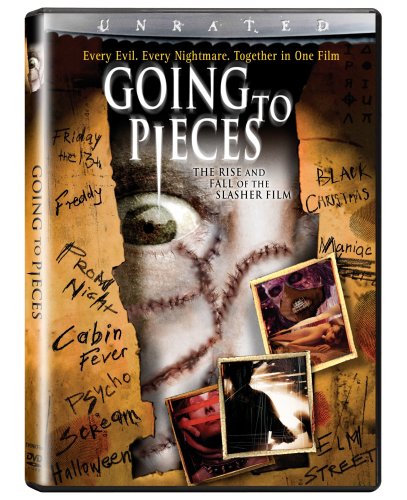
Going to Pieces: The Rise and Fall of the Slasher Film is a documentary which does just this. It features some of the most gruesome and fam...us scenes from slasher films, all while exploring the slasher film’s history, from inception in the late 70's, right up until what seems like a few months ago, with in-depth and fascinating interviews from the slasher film masters themselves, as well as others in the slasher film industry.
Posted in: Disc Reviews by Archive Authors on April 8th, 2007
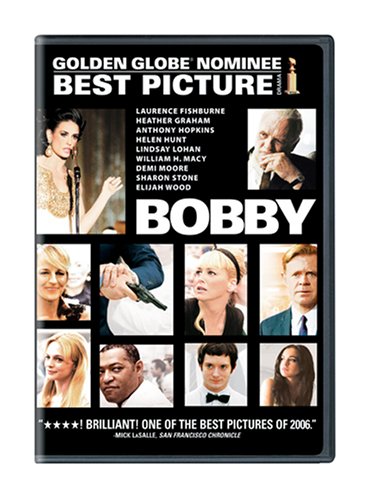
On June 4, 1968, U.S. presidential hopeful Robert F. Kennedy was shot in the kitchen of the Ambassador Hotel, and later died in hospital. Bobby is the story of that day, and the people who were there.
It’s not so important that I summarize the characters and their stories for you. What you should know is that Bobby is one of those films that cuts between many plot lines that seem unrelated until the end, when an event brings them all together. In this case, we’re talking about 22 people at the...Ambassador Hotel, and the assassination that changed their lives forever.
Posted in: Disc Reviews by Michael Durr on April 8th, 2007
Synopsis
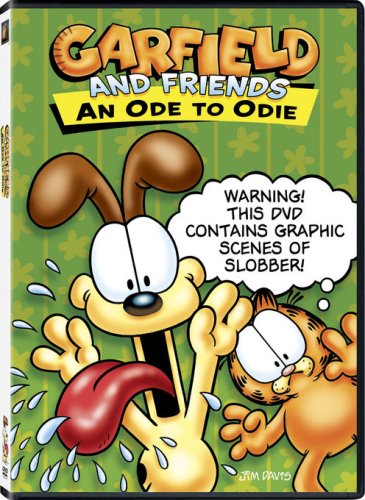
As a kid, I read Garfield on a daily basis. I collected the little books they would put out every so often (still have most of them). The cartoon show, Garfield & Friends; I always found funny & I even went to the first movie though I found it a little puzzling (like why would you animate Garfield but have a real live Odie, doesn't make much sense). In my head, I had even teased the idea of owning the Volume sets of Garfield & Friends. So when this title came across my desk, I wa... a little interested to say the least.
Posted in: Disc Reviews by Gino Sassani on April 6th, 2007
Rockford, James Rockford. OK. So that doesn’t sound as suave as you know who. Still, for me growing up, there was perhaps no one cooler. We all wanted to be Rockford. Created by Stephen J. Cannell and Roy Huggins, the same team that brought us Maverick, Rockford really was just a modern day Bret Maverick. I’m not sure if that was the intent or if James Garner simply slid into the persona as easily as a plaid jacket. Whatever the plan, The Rockford Files is truly classic television at its best.
James Rockford lived in a trailer on the beach. His lovable dad was a truck driver who never did understand how his “sonny” could be mixed up in the dirty world of private investigations. While Rockford always projected a tough guy exterior, it was his soft spot for a sad story that often got him deep in trouble. He could understand the world of injustice. He had spent five years in prison for a crime he didn’t commit. Even after a full pardon, the cops considered him a lowlife ex-con. His one buddy, Lt. Becker, usually laid low among his fellow officers, often afraid to admit to being Rockford’s friend. Rockford was also king of the con. When normal tactics didn’t work, he could bring together a group of scam artists and con men to handle the largest of productions. He traveled with his own business card printing press. Afraid of guns, Rockford usually kept his in the cookie jar.
Posted in: Disc Reviews by Gino Sassani on April 6th, 2007
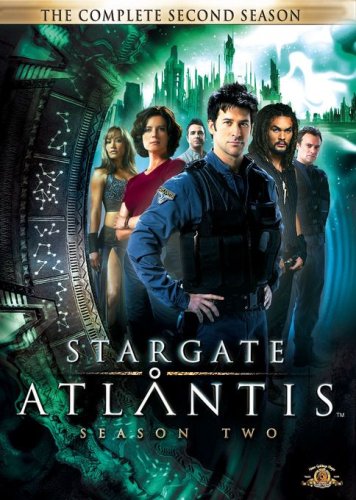
When last we saw our courageous Atlantis crew, they were in dire straights indeed. The series had just completed its first season, and not without at times relying on the mother series, SG-1, for help along the way. Would the show now find its own legs in its critical sophomore year? Would the Sci-Fi Channel continue to support it or take out its legs unrepentantly as they had done with Farscape not many years ago? Oh, and then there was that pesky Wraith problem we were left with in the season 1 ending cliffhanger... The Wraith are about to destroy the city when a wormhole from Earth delivers an SGC unit to assist.
Martin Wood asserts in one of his interviews that Atlantis and SG-1 were beginning to look too much the same on the surface of things. So, one of the mission statements for the second year was to give Atlantis its own look and identity. Without a doubt, Atlantis became darker, but without losing its humor or charm. A hard thing to pull off, indeed.Season 2 brings changes for Atlantis. Some I like. Some not so much. I’m not sure I’m happy with more permanent and reliable contact being restored with Earth. One of the show’s strengths was its isolation. Thus, the temptation to lean too heavily on its parent show would be minimal. I know there was the danger of the Deep Space Nine Syndrome, but I’d be willing to risk it. First off, these characters are far more interesting than those DS9 had, and while they might have been cut off from Earth, there was indeed an entire new galaxy to explore. One of the best moves was to take a rather mediocre character like Ford and turn him into a wonderfully complex villain, of sorts. With a greater range to draw from, we find out that Rainbow Sun Francks was a far better actor than season one would indicate. If you haven’t seen his new persona, you should get these DVD’s just for that experience. Another brilliant move was to use Paul McGillion more as Dr. Beckett. Once a throwaway character, he has blossomed this season into one of the better members of the team. The character chemistry between Beckett and McKay (Hewlett) is priceless. The most significant change for season 2 is the addition of Ronon Dex, played by newcomer Jason Mamoa. For me the jury is still out on Ronon. I understand that he brings a hyped up action persona to the mix, but I might have liked to have seen Teyla provide more of that in the future. The portrayal is quite good, but I’m not sold on the mix yet. The character reminds me somewhat of Vin Diesel’s Riddick.
Posted in: Disc Reviews by Gino Sassani on April 6th, 2007
Dances With Wolves has always been a bit of a conundrum for me. The story is simply a beautiful one. The cinematography is often nothing short of breathtaking. What causes my trouble is when we get down to its star. Kevin Costner is horrible in this film. I’m not a Costner hater. Untouchables and JFK are two of his best films, and in each he delivered exactly what was required. I’m beginning to think, however, that the G-Man persona is all he is capable of delivering with any consistency. What exactly is my problem... I’m glad someone asked. Dunbar needs to be a very complex character. We find him at first a very loyal American soldier dedicated to his duty. His transformation under the Indian influence should be a dramatic one and pivotal to the essence of this tale. Costner doesn’t show us this change. The writers do in his words and actions, but Costner hasn’t changed the very soul of his character. Example: In the Godfather Al Pacino plays Michael, who is the son of a crime lord. He despises what his father stands for and has vowed never to be involved. When Michael makes the decision to lash out at his father’s attackers, you can see the change before he speaks a word. Pacino played a different man then. It’s obvious he understood this man was different not because of how he was now behaving, but rather that he had changed somewhere in the core of his being. His voice and speech changed as did even the way he walked across a room. Where is the change Dunbar undergoes inside? It’s simply not there. Costner was also the director, and perhaps there lies the true flaw. Maybe if another perspective had been there to better guide the transformation, we might have been given that dramatic metamorphism so desperately required for this film to work. There’s a reason why given the film’s many Oscar wins one was not for Best Actor.
Video
Posted in: Disc Reviews by Archive Authors on April 5th, 2007
This winner of the Oscar for best animated feature of 2006 is one fantastic movie.
Happy Feet is the story of Mumble, a teenager who - thanks to his daddy dropping him early on in life - is mildly physically challenged. You see, Mumble can't sing like other Americans - he can only dance. As a result, he has never fit in with his people. When he accidentally crosses the border into Mexico, his disability and greater height over the small, energetic Mexicans earn him a sort of respect. With his newfoun... friends, the teen heads back to the U.S. to trick the girl he loves into believing he's no longer challenged, Cyrano De Bergerac-style. While she admits she'd be happy if it were true, she quickly exposes his lie. Fortunately, Mumble owns up to it and goes back to being himself, with gusto.
Posted in: Disc Reviews by Archive Authors on April 4th, 2007
Perhaps in an all too unsubtle move, the MGM/Fox contingent has released The Pebble and the Penguin on the same day as the recently released Happy Feet. The film chronicles the quest of Hubie (Martin Short, Innerspace), a penguin who is trying to win the love of Marina (Annie Golden, Twelve Monkeys) as a mate. But Marina is also eyed by Drake (Tim Curry, Clue), and knows that Hubie must not have her, so he throws Hubie into the ocean. Hubie meets Rocko (Jim Belushi, Return to Me), who helps him stand up to Drake while winning the love of Marina.
Posted in: Disc Reviews by Archive Authors on April 4th, 2007
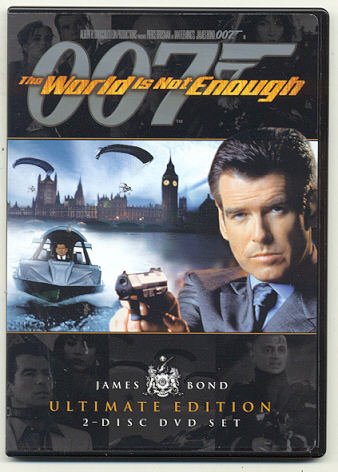
To the credit of James Bond film producers Michael G. Wilson and Barbara Broccoli, they realized that recycling a storyline with Russian antagonists or other satellites of communism, was stale even several years after the Berlin Wall fell. But in its place, the big Bond villain was a Serbian national of sorts named Renard, who was shot in the head, and the bullet, still lodged in his brain, made him magically impervious to pain.
When it comes to The World is Not Enough, the ideas and aspirations (the script was written by Neal Purvis and Robert Wade) were fairly lofty, and the directing choice (Michael Apted of Gorky Park fame) was interesting. In this installment, Pierce Brosnan reprises his role as 007, this time following the death of a wealthy English businessman whose daughter (played by Sophie Marceau, Braveheart) was kidnapped and held for ransom. How does Renard play into it? Well, he's holding the daughter for ransom, part of a larger plot to control the world's oil supply.