DVD

The sophomore effort of Wes Anderson, Rushmore brings together a 15 year old who flunked out of private school, and a steel tycoon in his 40s, and shows the lengths that people go to sometimes to try and win the heart of the one they love.

That would be too easy an effort, wouldn’t it? Well, Max Fischer (Jason Schwartzman, I Heart Huckabees) is attending Rushmore Academy on scholarship, and he loves Rushmore. So much so, that he creates a club for just about everything that hasn’t had an esta...lished club at Rushmore. Beekeepers’ Society? Check. Model U.N.? Check. He also writes and produces plays at the school. Not your average plays, more along the lines of adaptations. Adaptations which may not be appropriate for younger kids. I mean, why subject an 8 year old to a play that’s adapted from Serpico? The problem with all his extracurriculars is that he neglects his studies, and is threatened with expulsion by the school’s headmaster (Brian Cox, The Rookie). As Max’s father (Seymour Cassel, Stealing Harvard) is only a barber, expulsion would be expulsion, he couldn’t buy his way out of it. Max does find an inspiration, someone that he falls in love with, a 1st grade English teacher named Ms. Cross (Olivia Williams, The Sixth Sense). The problem is that Ms. Cross rejects his flirtations, so he enlists the aid of Herman Blume (Bill Murray, Caddyshack), a self-made tycoon who gains Max’s admiration and respect at a guest speaker engagement at the school, simply telling the poor kids to take the rich kids down. The problem with getting Blume involved is that he eventually falls in love with her also, though he is already unhappily married.

The Monterey Pop Festival has been mostly ignored by a lot of people, compared to the two other two large concerts that occurred after it, Woodstock, and Altamont. Those who do remember Monterey always mention the one incident it is most known for, Jimi Hendrix’ appearance on the U.S. stage. Jimi had been tearing it up in England, and he ended by setting his guitar on fire, which turned out to be a defining moment in music history. Criterion brings this event and others back to life in a comprehensive 3 disc set which is designed not only to showcase Jimi’s set during the show, but also breathes new life into the festival in general. Artists who appeared were The Who, Simon and Garfunkel, Otis Redding and Janis Joplin, to name a few.

The festival was shot over 3 days, and the DVD set is broken up into 3 parts: the film of the festival on disc 1, the performances of Jimi Hendrix and Otis Redding take up disc 2, and almost 2 hours of outtake performances comprise disc 3. Disc 1 is the film of the festival. The usual components of a music concert documentary are here, including footage of crowds and artists flocking to the show, and some behind the scenes logistics, but that footage is quick, and it runs for about 10 minutes before the performances start. The performances are edited together fairly abruptly with almost no fanfare in between songs. The film is only 79 minutes, so I can‘t understand the need to get everything crammed in here as much as possible, but that helps to make the second and third discs a relief to see.

This PBS documentary on the White House was made in 2001 to coincide with the Bicentennial of the mansion’s construction. I’m a student of the presidency, so I can’t say that I learned anything new here. I do believe most folks will walk away with some renewed interest in one of the icons of American government. Many celebrities, including Sam Waterson, Avery Brooks, and Robert Prosky, read actual letters from presidents and first ladies dealing with the White House. The film makes generous use of period photographs and paintings to depict the various stages of the building’s development into the modern version we are so familiar with today.

Audio

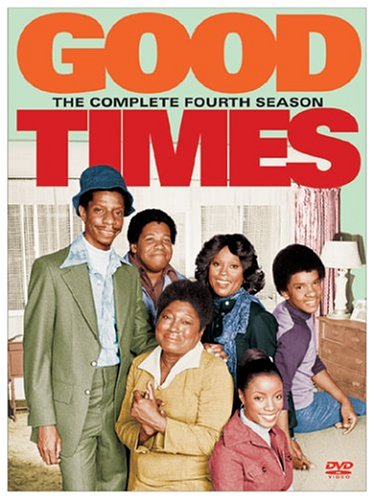
Good Times is one of several shows from the 1970’s to trace its origins back to All In The Family. Florida was the maid to Maude, Edith’s cousin, who also got her own show. It wasn’t very long before Good Times became the Jimmie Walker show. His ghetto witisms and trademark “Dyn-o-Mite” exclamation took any attention from the other cast members. In the Fourth season John Amos left the show and his character, James, was killed in an accident. Esther Rolle would also depart for a time after this season. It’s no surprise that JJ’s role was beginning to increase and perhaps peaked here in Season Four.

Audio

What better a place to bring a city’s resurgence than Miami? The area would arguably look different if there was a different TV show that sparked a commerical revival. With Michael Mann in the producer’s chair, along with producing partner Anthony Yerkovich (whose only other cop drama he produced was Hill Street Blues), the flashy cop drama was the reason why a lot of people decided to stay home on Friday nights.

In terms of episode content, there was a lot of formulaic cop drama things, and the usua... clichéd dialogue is prevalent. I found myself shuddering at some of the things I heard when I was watching this first season of episodes again. But there are very good episodes within this run. Aside from the introduction of Tubbs (Philip Michael Thomas) to Crockett (Don Johnson) in the first episode, along with Tubbs’ pursuit of the drug dealer who killed his cop brother, No Exit features a young Bruce Willis as an arms dealer with a dark side. Milk Run has Crockett helping a couple of naïve college kids nab a cocaine dealer and get home safely, and Dennis Farina (who later starred in Mann’s TV project Crime Story appears periodically throughout the season as a drug dealer who evades arrest, and later, witness relocation. And what may be the best episode, Evan features an old partner of Crockett’s and the friction that still exists between them and a deceased partner. Set against a couple of really cool Peter Gabriel songs, this episode is probably the best of the season in my opinion.

Hugo (Mathieu Carrière) sets out on an errand, but is sidetracked in the Paris metro whenhe chances upon the seductive Myriam (Marino Pierro). Their eyes meet, he follow her, theybeing to chat, and a dance of seduction ensues. They make their way through Paris to anapartment where they have sex, and then nothing turns out as Hugo expected.

That’s about it as far as plot is concerned. So what? you ask. You wouldn’t expect anythingmore from an avowedly erotic film. Don’t be fooled into thinking that the rest of the film is anorgy of naked flesh, however. What you have instead is a film so talkative it makes BeforeSunset look like Gerry. In fact, this 1988 effort (director Walerian Borowczyk’s lastto date) has a rather similar structure to the Richard Linklater romance, but plays out to a muchdarker conclusion. The dialogue is surreal and unbelievably ornate, and one’s enjoyment of thefilm lives or dies by how one feels about all this palaver. The subtitles can only translate the gistof the script, but not its style, and the result might well be crashingly dull for non-French-speaking viewers. There are some visual compensations, as Borowczyk, that most obsessivefetishist of inanimate objects, here worships the everyday of Paris, and invites us to look at theleast romantic, most mundane objects in a new light. The sex scene builds to a denouement thatis a remarkable visual moment, and is worth waiting for. Surreal masterpiece or interminable artwank? My own jury’s out, but I’m glad to have had the chance to think about it.