DVD

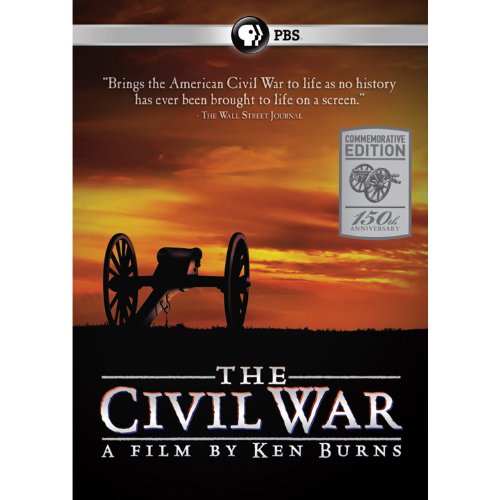
I have been reviewing various discs for plenty of years now. As a rule, I’ve stayed away from most documentaries as I know that unless they involve video games, I will probably use them for a sleep aid. That is not to say I can’t enjoy them, I just know my track record. Then, I received the grand mother of all documentaries, The Civil War by Ken Burns with an anniversary edition to boot. Yep, this is going to be a long and bumpy ride, let’s hold on shall we?

“To understand our history is to understand the Civil War”, Shelby Foote (Writer and Historian).

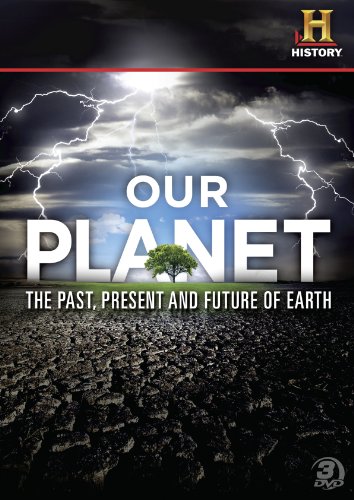
Our Planet is a merging of a large handful of documentaries that originally aired on the History Channel. Here they are packaged together to thematically display the “Past, Present, and Future of Earth.”

HOW THE EARTH WAS MADE

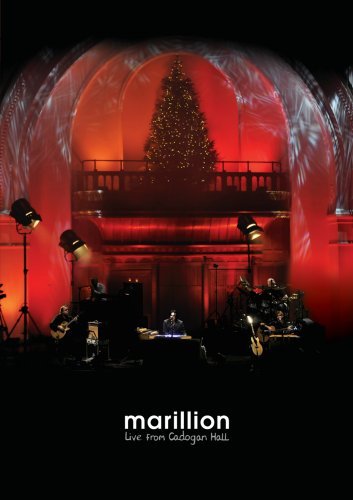
There is a place in London of the United Kingdom that is down in the Royal Borough of Kensington and Chelsea that used to be the first Church of Christ. However, throughout the years the populace decreased that flowed into the church and it became a shell of its former self. Still a goregous location, in 2001 it became home to the Royal Philharmonic Orchestra. That building is called Cadogan Hall. Fast forward to 2009, a band called Marillion decided to play there which led to this 2011 release.

Marillion is classified as neo-progressive rock music. If you are not in the know, you might ask yourself, what the heck is neo-progressive rock music? Well according to what I could find, it is deeply emotional music with dramatic lyrics and an almost theater like quality on stage. One really won't see guitar and drum solos on the spur of a moment. They will be carefully staged with help from other instruments such as keyboards and percussion. If you are thinking of influences such as Genesis or Yes, you would be in the right area.

The Nazis have been the subject of countless documentaries and films. On this occasion, The History Channel has decided to place the focus on the people of Germany, with a time line that  starts at approximetaly the First World War and leads to the end of the Second World War. With the aid of newly discovered home videos gathered from Germany & Russia, we see a combination of German life during this time, as well as public and private views of Nazi discourse and planning.

There is one film hobbyist in particular who's home movies become the basis for a story within the story. This one family are typical of the German people, and their lives are documented as they, like many others, go from joy, to desperation, to a sense of empowerment, to denial, to horror as their nation is seized by Hitler and his enforcers. There have been many written accounts of what the people felt and experienced, in fact many biographies are quoted and/or use as narration script in this film, but it is all the more rare to have visual records outside of propaganda films or some news reels, especially of Nazi Germany. It is such rare glimpses that makes this film so special to behold and the history of it feel all the more real.

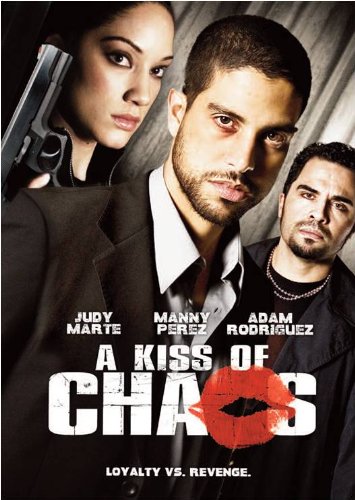
Phoenix is having a rough night. Her scumbag ex boyfriend has just shown up in her apartment with a gunshot wound and a sack of stolen cocaine and her psychotic HIV positive prostitute sister has also shown up, having just shot a john in the face. Plus there are gangsters after the cocaine who will stop at nothing to get it back. Plus there’s her lesbian friend downstairs whose brother is involved on multiple levels and wants to drag her into a plot to steal and sell the cocaine. Plus it’s her birthday.

Phoenix is the central character in A Kiss of Chaos, the unfortunately titled offering from Maya Entertainment. She is played with sullen competence by Judy Marte and surrounded by a cast of “where do I know that dude from?” Latino actors in a basic drug/gangster/crime movie that is clearly aspiring to be more. For one, the character of Phoenix is supposed to be an artist of some kind. We know this because there are a couple of flashes of her on a stage in some kind of coffee shop, apparently reading entries from her diary, which, as her lesbian friend tells her, “sound like poems”. We must, however, take this on faith, since the only tidbit we hear is the enticing entry, “November seventh; I’m in love with the wind”. I’m serious.

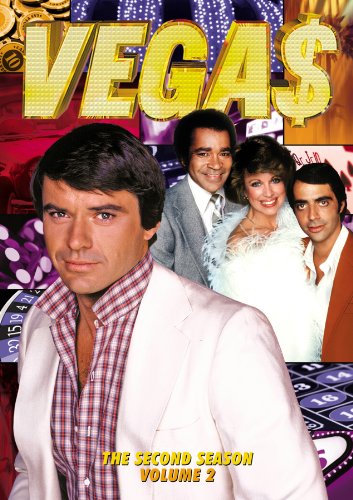
By 1978 the television detective model had been nearly complete and possibly already a cliché. Dan Tanna might have well been the complete model as far as the formula goes. It was almost as if you could go down a checklist and, like Dr. Frankenstein creating a monster, check off the necessary elements. The scripts could then almost write themselves, and you let the show fly on autopilot for three seasons or so until someone decides to look behind the curtain.

So let’s go down that checklist, shall we?

"Don't let the love of your life leave you for a damned Gringo. Come and see us, and I guarantee you that we'll save your life. United Parapsychologists Of America. Esoteric jobs, spiritual cleansing, taxes and immigration papers..."

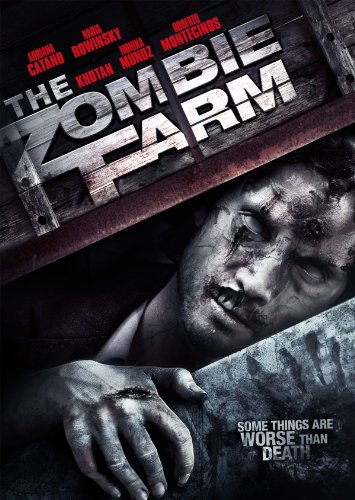
If ever there was a movie that should have fired its marketing department, it's Zombie Farm. If you read any of the descriptions or look at the cover art, you are expecting this to be one of thousands of movies that offer up gritty images, plenty of gore, and a tried and true, but getting tired formula. Nothing can be further from the truth. Zombie Farm isn't any of those things. And I couldn't be happier that that's the case. Don't judge this one by its cover, or you're likely to miss out on a good time.

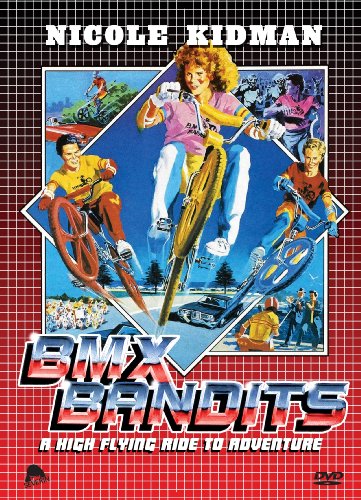
The more famous a star, the more curious their early, pre-icon efforts become. Thus, we watch agog as Humphrey Bogart plays a murderous, blood-thirsty zombie in The Return of Doctor X (1939). And here, a 16-year-old Nicole Kidman makes her debut as a BMX-obsessed teen who runs afoul of a group of not-very-competent gangsters. Once again, one watches agog.

Kidman, Angelo D'Angelo and James Lugton are the trio of teens who need to raise funds to buy new bikes. They happen across a cache of walkie-talkies that are supposed to allow a gang of bank robbers to hear the police while being unheard themselves (though, as matters develop, the opposite is true), and sell them. Understandably irked, the thieves pursue our heroes, and all sorts of car vs BMX chase scenes ensue.

The Virginian set itself apart from the others in two ways. The first was found in the source material. The series was based on a 1902 novel by Owen Winsler, a man who actually lived in the Wyoming badlands during the time the series was set. The source material helps to add a sense of authenticity that might well have been a slight step ahead of the rest. It wasn't as violent as the others, again reflecting a more realistic sense of direction.

Thus was the heart of the original novel. The stories were less about gunfights and more about the obstacles and challenges that these earlier settlers faced. Each, with different interests, tried to carve out a home in the vast wilderness of the open West. These challenges came from many places, and often from his fellow man, but not always. That's the type of tale captured in this long-running western series.

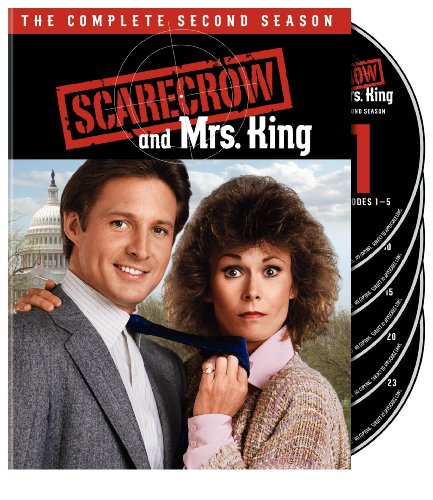
While Scarecrow And Mrs. King first aired in 1983, this show is really one of the last of the 1970's crime dramas. It was an early attempt to bring in more of the female audience that seemed reluctant to join the popular detective shows of the era. While not really a "detective" show (they were spies), it employed a lot of the 1970's conventions. Even the film footage has that distinct style from those days and type of shows. The idea worked, and the series did bring in a sizeable female audience, but it never really caught on with the guy crowd who found it a bit too relationship-heavy. The two leads were chosen less for their character appeal than for their apparent "easy on the eyes" look. Again more fodder for the chick crowd. The show was always rather lighthearted, even if the material was somewhat serious cold war espionage. The two shared a banter that revealed a kind of love/hate relationship and the expected sexual tension that would eventually lead to the two getting hitched. And while the series only lasted four seasons, the formula would end up being tweaked to bring us the more successful Moonlighting with Bruce Willis and Cybill Shepherd, which took the idea into the 80's with slicker production values but still a mainly female appeal.

Amanda King (Jackson) is a recent divorcée with two sons and a nosy mother (Garland) who lives with her. She has a boyfriend named Dean who works as a meteorologist at a local Washington DC television station, whom you never actually get to see. While at the train station, she suddenly finds herself embroiled in an espionage plot when a package is handed to her on the platform. Then she meets government agent Lee Stetson (Boxleitner) who works under the codename Scarecrow. She's intrigued by Scarecrow and agrees to help him in his current case. Of course, she ends up in a more permanent role with "The Agency", taking a job at their cover corporation The International Federal Film Company. Every week we find Amanda trying to balance her new role as a spy with trying to raise her kids, have a normal dating relationship, and keep her cover safe from her particularly prying mother. The results are often quite funny. There is also Scarecrow's partner, Francine (Smith), who is somewhat jealous of Amanda and Lee.