DVD

"When, in the course of human events, it becomes necessary for one people to dissolve the political bands which have connected them with another, and to assume among the powers of the earth, the separate and equal station to which the laws of nature and of nature's God entitle them, a decent respect to the opinions of mankind requires that they should declare the causes which impel them to the separation."

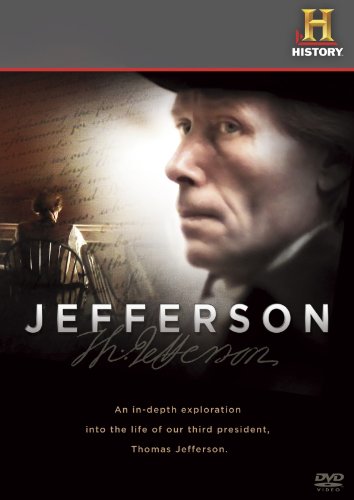
Of course, that declaration would be heard the world over as thirteen small British colonies began an experiment that would change the face of the world. The words came out of a Continental Congress, more specifically a committee that included Ben Franklin and John Adams. But it is neither of those men from whose pen came the liberating words of the Declaration of Independence. That honor belonged exclusively to the young wordsmith Thomas Jefferson. He would put words to the spirit of rebellion that consumed a small corner of a great continent. He would become our third president and the first to expand the country by more than double with the purchase of the Louisiana Territory from Bonaparte in France. His concept of the separation of church and state would become known as Jefferson's Wall and become one of the most abused and misunderstood rights of the Constitution. He was an inventor. He was a naturalist, cataloging hundreds of new species of plants and animals. He was a meteorologist, leaving us the first accurate records of America's climate. He would die on the Fourth of July at the 50th anniversary of his famous document.

"My money is on you being brutally killed within two days, but what choice do we have?"

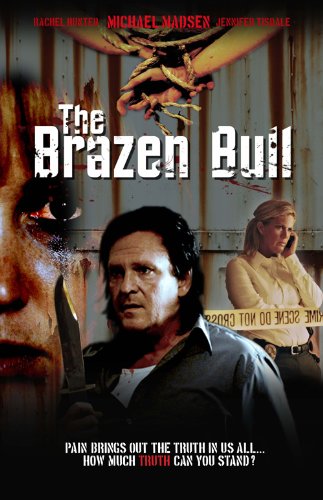
A young couple are drawn into a deadly game of cat and mouse when they investigate a piece of real estate and a psychopath starts to trail them. Brazen Bull is the title of the film and the killer's mantra, which means he acts as if he has nothing to lose, when in fact he's already lost everything.

The first act is a plodding mess of abysmal dialogue and weak acting from everyone. It was a genuine struggle for me to become invested in the story when there was nothing drawing me in. By the time it's poor Michael Madsen's turn to phone in another performance, I could care less about the torture his victims receive. There is something almost tragic about the fact that it was lack of talent that made me so callous to the lives of these fictional characters. A man's hand is slowly sawed off, and I'm yawning.

A Chicago man has a strange genetic disorder that makes him involuntarily travel through time. This film follows the unimaginably complicated romance he has with a woman who he has known since she was a little girl and they never get to age chronologically together, and sometimes share different memories of the past (which might be the future for the other...I know...I told you its complicated).

Based on the extremely popular book of the same name, this film sometimes seems to be more an exercise in adapting a very challenging screenplay than it is an engrossing romance. Rachel McAdams and Eric Bana do glow when interacting, as they make the love their characters share convincing and helps us stay with the story when the time line gets a bit convoluted. Meanwhile, the dialogue doesn't do them any favours and occasionally bogs things down.

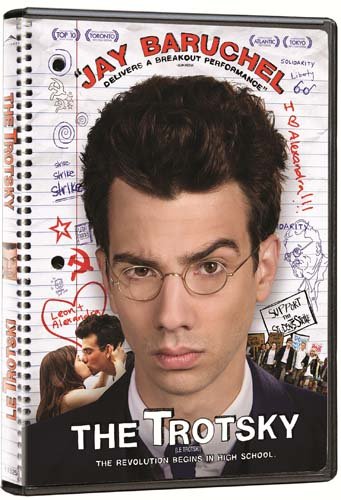
Leon Bronstein (Jay Baruchel, in a knockout performance) is convinced that he is the reincarnation of Leon Trotsky, and is determined to live out his life in the same way, right down to getting himself assassinated (“hopefully somewhere warm” his note appends). He also has only three years left to find Lenin, but in the meantime, his attempts to kick-start the revolution are meeting with little success. His struggle to unionize his father's factory manages only to embarrass and anger his father, who retaliates by removing him from private school and packing him off to a public one run by the tyrannical Colm Feore. Delighted to have worth enemy, Leon sets about mobilizing the student body, while trying to romance Alexandra (Emily Hampshire). Not only does she bear the name of Trotsky's first wife, the age gap between the two (she is almost ten years older) is the same. It must be destiny

This is enormous fun. Baruchel's Leon could easily be a figure of ridicule, and though he is funny, he is also possessed of such indomitable will and the desire to change the world for the better, not to mention a complete imperviousness to social humiliation, that it is impossible not to get behind him. Writer/director Jacob Tierney makes good use of his Montreal setting, adding the city's quirks to his characters', and the cast is engaging mix of new faces and veteran Canadian actors (Feore, Geneviève Bujold, Saul Rubinek). Sharp, witty, and unapologetically optimistic, this is about as feel-good as feel-good gets. And, as an added bonus, the film features the most hilarious riff on the Odessa Steps sequence from Battleship Potemkin I have ever seen.

Roger Greenberg (Ben Stiller) once was a musician, but now he is a carpenter and an inveterate writer of letters of complaint (to pet taxis, for instance, for not having a soft carpet for the paws of their passengers). After a stay at a mental institution, he arrives in LA to look after his brother's house and dog while the family is away in Vietnam. He reconnects with an old friend from his band days (Rhys Ifans, a long way from his manic energy in Notting Hill), and circles around a stop-start romance with personal aid and professional doormat Florence (Greta Gerwig).

Stiller's performance here reminds me of Adam Sandler's in Punch-Drunk Love. In both cases, we have actors known for embodying a particular comic type: Sandler is the raging man-child, while Stiller is the sensitive soul prone to social catastrophe. And in both films, we see the actors working with a distinctive auteur (P.T. Anderson, Noah Baumbach) on a low-key comedy that is very much a film of personal expression (to borrow a term from William Bayer). Finally, the borderline art-house trappings and new gravitas notwithstanding, they are still playing recognizable versions of what they've always done. It's just that what is a type of clown perfect for one form of comedy becomes a psychotic in the more realist version. At any rate, I find Stiller's same-yet-different performance very interesting, and very good, and that goes for the other performers too, especially Gerwig, who nails Florence's insecurities, naivete and strength. However, though I found the performances interesting, I didn't find the characters that interesting. Greenberg is thoroughly repellent, and that's fine, but he isn't compelling. I found myself unable to care about what he would do or say next (partly because I had a pretty good idea of what that would be), and wished that Florence were the protagonist instead. Though her self-destructive crush on Greenberg is as inexplicable as it is nonsensical, and so she too tries our patience, she has enough off-beat quirks and surprising resilience to make her worth following around. This is, then, a film that is finely wrought, written and acted, but that is also rather static and distancing.

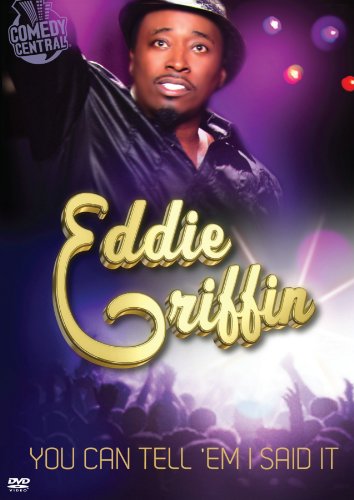
One of the most underappreciated films in my opinion in the last ten years is Undercover Brother. Stop looking at me strangely! Seriously, it was a very funny movie. It was because of one man and I don’t mean Neil Patrick Harris (though he was hilarious). That man would be Eddie Griffin. Eddie Griffin has starred in almost fifty different films but he also makes a respectable living doing stand up comedy. One such concert is new to dvd and we get the chance to talk about it my brother.

Live from Oakland, California, we have the star of Malcolm & Eddie, Deuce Bigelow, and Meteor Man (okay, some more than others), the one, the only Eddie Griffin. *waits for crowd applause*. Let’s find out what he has to talk about, shall we? The first thing out of Eddie Griffin’s mouth? Well, it would appear he wants to have his way with Michelle Obama, the president’s first lady.

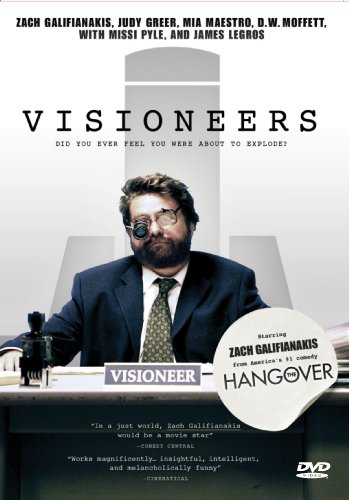
In this satire of modern life, Zach Galifianakis plays a man named George Washington Winsterhammerman who has a beautiful wife, a large house, a stable job in the world's most successful corporation, and even a boat. Despite all of this he fears he is showing symptoms (which include dreams) that he might be about to literally explode, a mysterious and unexplained epidemic that is sweeping the country.

This film is jammed very obvious messages and metaphors for how we are living artificiality through celebrity advice books, pills, corporately controlled media and other suppressants for independent thought. The most apparent in the film is when George cannot please his wife sexually she religiously follows the daily advice of her favourite talk show host, dresses and eats just like her in order to change their lives around, and eventually tries to emulate her suicide, that occurred live on her show, when all else fails.

Written by Diane Tillis

Written by Diane Tillis