DVD

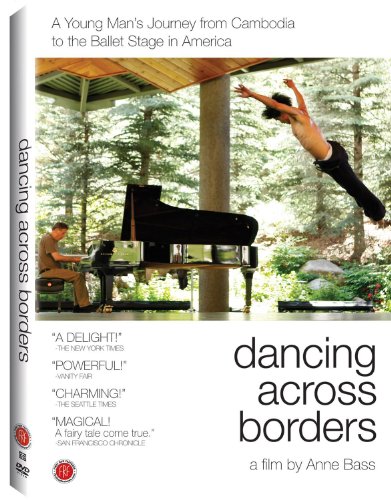
A young Cambodian boy, named Sokvannara “Sy” Sar, is spotted performing a traditional dance by the film's director and American Dance patron Anne Bass. She immediately takes note of his smooth talent and figures he has massive potential as a classical ballet dancer. Sy is given a rare chance to audition at the School of American Ballet in New York and then proceeds on a unique and fast-paced journey through a new world of dance, in a nation that is completely alien to his homeland.

This film would be interesting simply for the fact that it displays many parts of what it means to train as a professional ballet dancer and student, but is all the more engaging because of S's situation; that being the lone Cambodian to take on such a quest. Sy may come from poor roots, but his is by no means a sob story of an underdog, but that does not make it any less special or rare an opportunity. This film gives us the chance to see more than just his home, family and friends, as well as the many stages he earns a spot performing on, but we are privy to what can happen when chance falls upon the sort of  person who has the passion to take hold of it and elevate themselves in something that was a total unknown to himself and his fellow countrymen.

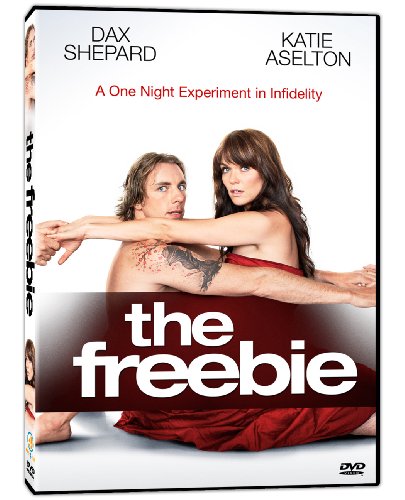
The Freebie is a festival friendly drama-comedy about Darren (Dax Shepard) and Annie (Katie Aselton) ailing sexual relationship.  The film is interested with relationships after they pass the lust stage.  How do couples maintain a healthy romantic relationship? Darren and Annie strive for ways to spice up their situation and the idea eventually becomes one night of freedom from each other to explore other options.  The film is shot very intimately and the audience will be shocked at the warmth conveyed by direction.  The tension explored in this film is not typically deployed in this genre.  This film showcases a perspective that could surprise viewers, I know I was. 

Both Dax Shepard and Katie Aselton are able to deliver solid performances.  I have always been skeptical of Shepard’s acting chops given his track record.  However, he delivers a subtle and strong performance.  His scenes with Aselton always have naturalistic approach and the direction only amplifies this.  The intimacy and warmth in scenes is overwhelming.  Aselton also directs and she uses a variety of tight portrait shots to convey emotion.  I commend the effort and was surprised at how invested I found myself in the characters.  

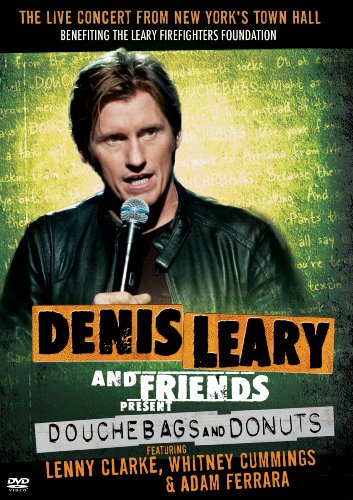
Denis Leary and Friends presents: Douchebags and Donuts includes stand up sets from Adam Ferrara, Lenny Clarke, Whitney Cummings and Denis Leary. Also, there are musical performances by The Enablers featuring the Rehab Horns.  All proceeds from this event (as well as portions of the DVD sales) went/go to Denis Leary’s charity, The Leary Firefighters Foundation. The support and charitable disposition that Denis Leary has maintained toward firefighting is well documented and it is nice to see his attitude has not changed.  I am certain that all of you can guess the material that will be explored in these performances and the majority of you will not be surprised whatsoever.  However, there are some laughs throughout.

Denis Leary’s meal ticket throughout his career has been to pull no punches and leave no stone unturned.  His material is usually always motivated by his unwavering hatred toward popular culture and his throwback mentality.  Leary’s set is his typical abrasive self. A popular theme in stand-up comedy is to have screens on stage to emphasize the comedian’s set and also provide some visual aids to help their performance.  Leary has added this to his comedic repertoire and it works well with his material.  My only critique with his set is that it can often be redundant.  If a particular joke does not go as expected, Leary tends to yell his punch lines louder and I found myself annoyed.  Other than that, his set is a standard profanity laced tirade against any and all things in popular culture.

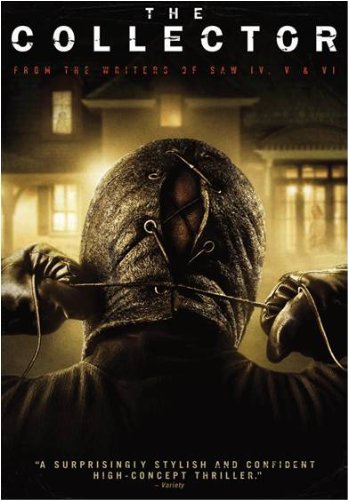
An ex-con trying to pull one last heist is sucked into a booby trapped house and must face against a madman who is torturing the family within. The makers of 3 SAW films (and not the first three) have ventured into familiar territory of nonsense gore, whisper thin plot, and then even more nonsense gore.

The title of the film, and a couple lines of dialogue, suggest our madman is a collector of people...and perhaps animals (?). How does this fact play into the film's action? It doesn't really. If he is indeed a collector, then he certainly has no sense of “mint condition” as he spends his entire time damaging and removing pieces of the very things he plans to collect. In fact, if the title could change to “The Trapper,” then suddenly the film might make more sense for it is all about the elaborate traps he sets, and how they are designed to horribly maim, and even kill in a couple of cases. He doesn't seem to be collecting anything. Yes, one of his previous victims is kept in a crate, but even that character explains that he's just bait to lure in the types of people he wants. This “Collector” has gone to insane lengths setting up this family's house with booby traps, and seems to want nothing more than to torture and kill, not collect.

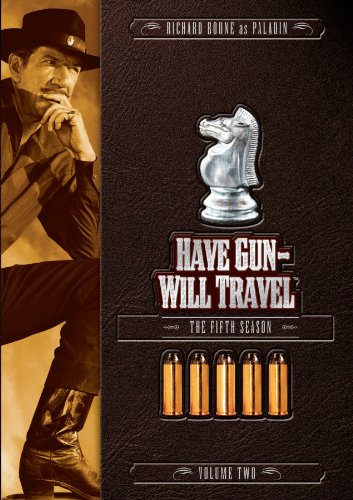
“’Have gun, will travel’ reads the card of a man. A knight without armor in a savage land…”

Those words ended every episode of Have Gun Will Travel, sung by Johnny Western in a time that such words could be sung without irony. Outside of Richard Boone’s black-clad, craggy Rhett Butler gone-to-seed gunfighter, that song was all I could really recall about this venerable Western from television’s golden age. Would it, like so many revisited shows from my youth, ultimately disappoint? Or would it hold up fifty years after it was originally broadcast, viewed as it would be by the far more jaded, cynical man I’ve grown into?

Written by Diane Tillis

Magic is a source of great debate. From the great magicians like Harry Houdini to the modern magicians like David Blaine, they continue to force their audiences to pick a side of the debate. Should you believe the truth of the trick? On the other hand, you could forget the truth and believe in the magic. Which side would you choose?

Written by Diane Tillis

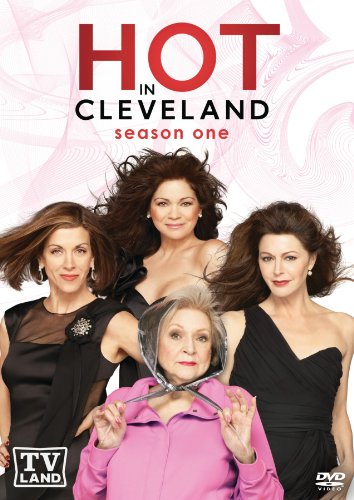
When I first heard about Hot in Cleveland, I thought the show would be a modern remake of The Golden Girls. Both shows have four older, single women, living under one roof, as they try to survive each day with a little bit of humor. Before watching the show, I was worried that Hot in Cleveland would appear to be a hasty decision by TV Land because they wanted to jump on the Betty White bandwagon. However, I truly enjoyed the first season more than I thought I would. Hot in Cleveland is not a rip-off of The Golden Girls. While they have many similarities, they also have more differences.

Written by Diane Tillis

You know him from Baywatch, Knight Rider, and America’s Got Talent. After nearly four decades in the entertainment business, David Hasselhoff created quite a name for his career as a pop icon. Now at a point in his dwindling career, Hasselhoff takes the plunge to be the center of attention at a Comedy Central Roast production. The man of a thousand voices, Seth MacFarlane (Family Guy), hosts the production.

A young dreamer named Power is fired from his mining job just before his union-leader father instigates a strike. Wishing he could be a drummer, but never getting the chance to play an actual kit, Power does not know what to do with his constant ambitions that make him air-drum 24/7. Fate steps in and he discovers an underground movement of air-drumming that all leads to a major event in New York city where he will have a chance to face off against a billionaire country-music star, who just so happens to be the son of the evil Copper Mine owner who is treating his Union friends, and family, so unfairly.

This film does spend a good chunk of time riding on the one-note quirkiness of its man child lead character and his oddball dreams of air-drumming, and does not get saved by the token love interest or ethnically broad supporting characters. But this film does find moments where it moves past the potential to be another rehashed, super-quirky Napolean Dynamite clone (though it strays close). It clings tightly to the RUSH worship of other contemporary comedies such as I Love You Man into rides it into a sentimental and surprisingly moving story about spirit. This almost exclusively occurs in the third act so the audience will have to hold tight until then.

George Papdapolis (Alex Karras) and Katherine Calder-Young (Susan Clark) meet on a Greek cruise, and, after a whirlwind romance, return to Chicago. They're a bit of an odd couple – she's a blue-blood, complete with male secretary, and he's an ex-football player. The cross-class romance is barely underway, however, when they suddenly find themselves the guardians of the unspeakably adorable seven-year-old Webster (played by twelve-year-old Emmanuel Lewis) after his parents die (George had agreed to be his godfather back in the day). All sorts of cute misunderstandings, cute heart-warming lessons and cute sentimentality then ensues.

There is no denying diabetic-shock-inducing cuteness of Lewis, though there is also something a little bit creepy about the way the camera presents him, shamelessly exploiting that cuteness for all its worth, offering up Lewis for the audience to cluck over as if he were some kind of ambulatory teddy bear. The humour, meanwhile, is typical of an 80s sitcom – banal jokes in tandem with a Serious Message. And some of the gags are, to put mildly, antediluvian. Oh, look! Katherine is a woman who can't cook! Hilarious! For those with fond memories of the show, however, none of this will matter. But those who have no such memories are probably better off not forming them.