Brain Blasters

Today's musing involves two recent films experiences. The movies could hardly be more different, but they have made me think again about the wonderful flexibility of my beloved horror genre, a flexibility that extends to swallowing up films that don't, in theory, even belong to it. Allow me now to elucidate that rather cryptic remark.

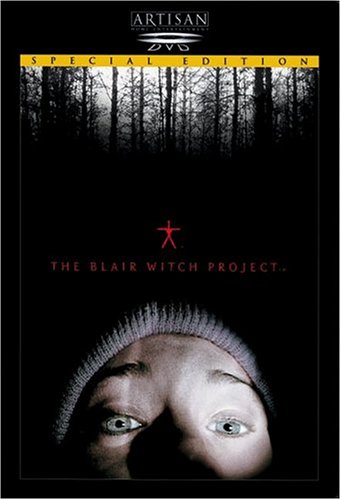
Ten years ago, a micro-budgeted, mockumentary horror film found a special alchemy of filmmaking and marketing, and became a box office sensation. That movie, of course, was The Blair Witch Project. In the long run, it divided audiences sharply, between those frightened speechless and those bored stiff. The case can certainly be made that the film was hyped outside of its natural cult environment, and hence some inevitable mainstream backlash. But one of my treasured memories is attending opening night with a packed crowd, and witnessing more than a few primal traumas. That's a rarity, these days.

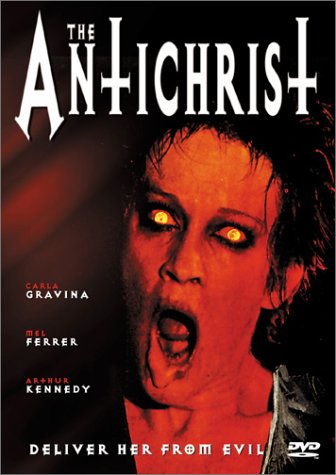
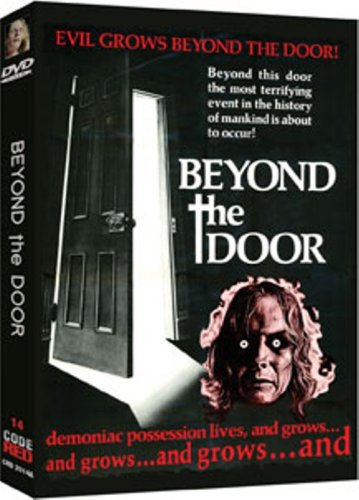
When The Exorcist was first released, Pauline Kael opined, in her New Yorker review, that the film was the best recruiting poster for the Jesuit order since Going My Way. There is more than a grain of truth to her statement, given how cool all the priests are in the film, but there is more. As many critics have pointed out, the film has a rather reactionary streak: after all, it isn't hard to see the film as a nightmare depiction of female sexuality, presenting it as something monstrous that must be contained at all costs. And after all, what parent hasn't, at some point, envisioned the teenage years as a form of demonic possession, with their sweet little angel transformed by evil forces. So here's a film that confirms to them that, yep, the offspring's misbehaviour isn't normal, but evil. It is this side of The Exorcist that is, perhaps, being parodied by Beyond the Door. It is certainly being exploited by today's entry in the demonic possession sweepstakes, The Antichrist (1974).


So I guess this column should join in with the Halloween fun. I'll be popping in and out with various short film musings and recommendations, some of which might run the risk of being rehashes. If so, I apologize, but my reasoning is that the film deserves to be fresh in your mind for the season. First up: Beyond the Door (1974).

All right, so I'm a bit late to the party on this one, but I wanted to toss in my two-bits anyway.

Another book review today, as there's a delightful new tome on the shelves: Scott Stine's Trashfiend: Disposable Horror Fare of the 1960s & 1970s. With a title like that, I don't think I need to explain why it falls within this column's purview. Sharing its focus with Stine's short-lived zine of the same name, this is a loving but open-eyed survey of a wide array of horror offerings that are bad for us in the best way possible.

So John Hughes died the other day. What does that have to do with this column's mandate, as flexibly defined as it might be, you might well ask. As it turns out, not much, at least not directly. But Hughes' passing did wind up overshadowing two other deaths in the film industry. Screenwriter Budd Schulberg also died, and he wrote such fare as A Face in the Crowd (1957) and a little thing called On the Waterfront (1954), which, I dunno, might wind up standing the test of time better than Pretty in Pink, but what do I know? More to the point, as far as this space is concerned, Harry Alan Towers also passed on.

Ishiro Honda is, of course, best known and (deservedly) beloved for his classic kaiju eiga: he not only directed the first appearances of Godzilla, Rodan, and Mothra, he also delivered many of their subsequent adventures, wrapping things up with 1975's Terror of Mechagodzilla, which would be the last such entry until the mid-80s revival. The high profile of the giant monster movies has a tendency to overshadow some of this other contributions to fantastic cinema. One such effort which shouldn't be overlooked is the inventive and grim Matango (1963).

A rich entrepreneur and his guests head off for a holiday on his yacht. When the weather turns nasty, he overrules his captain, who wants to turn back, and, in a misplaced display of machismo, orders that the course be maintained. The results are inevitable: the yacht is damaged beyond repair, and drifts aimlessly, until the unfortunate characters come across a deserted island. They soon discover that theirs is not the only shipwreck on these shores: they find a much larger ship, whose crew has vanished. Covering many of the ship's surfaces is an unpleasant fungus. Our heroes clean the ship up, make it their home, and set about scavenging food, staying away from the abundant mushrooms, which are apparently toxic. But alternatives are in scant supply. Frictions mount, betrayals multiply, and one by one, the survivors succumb to the temptation of the mushrooms. These are not only addictive, they slowly transform you into one of them.

As I believe I may have mentioned before, I'm of an age that meant I was too young to actually attend any grindhouses in their 70s heyday, though I'm old enough to remember them. When I did come of age in the 80s, the VHS and Beta war was in full swing, video rental stores were sprouting like mushrooms, and the hunger for product on the shelves, any product, was insatiable. Those were the days when people actually rented VCRs, and Mom-and-Pop stores proudly offered the likes of Microwave Massacre, Screamers and The Beast Within for rental. This was the era of distributors like Key Video, Magnum, and many, many more, all with processed cheese computer graphic logos.

And this is where the joys begin on Astron-6: Year One. This is a DVD compilation of short works by a group of young Winnipeg filmmakers. Each piece opens with the Astron-6 logo, which, from its deliberate grain and scratches to its single-chord synth theme, is a dead-on recreation of those delightfully scuzzy formative years of home video. Beyond that logo lies a wealth of demented entertainment.