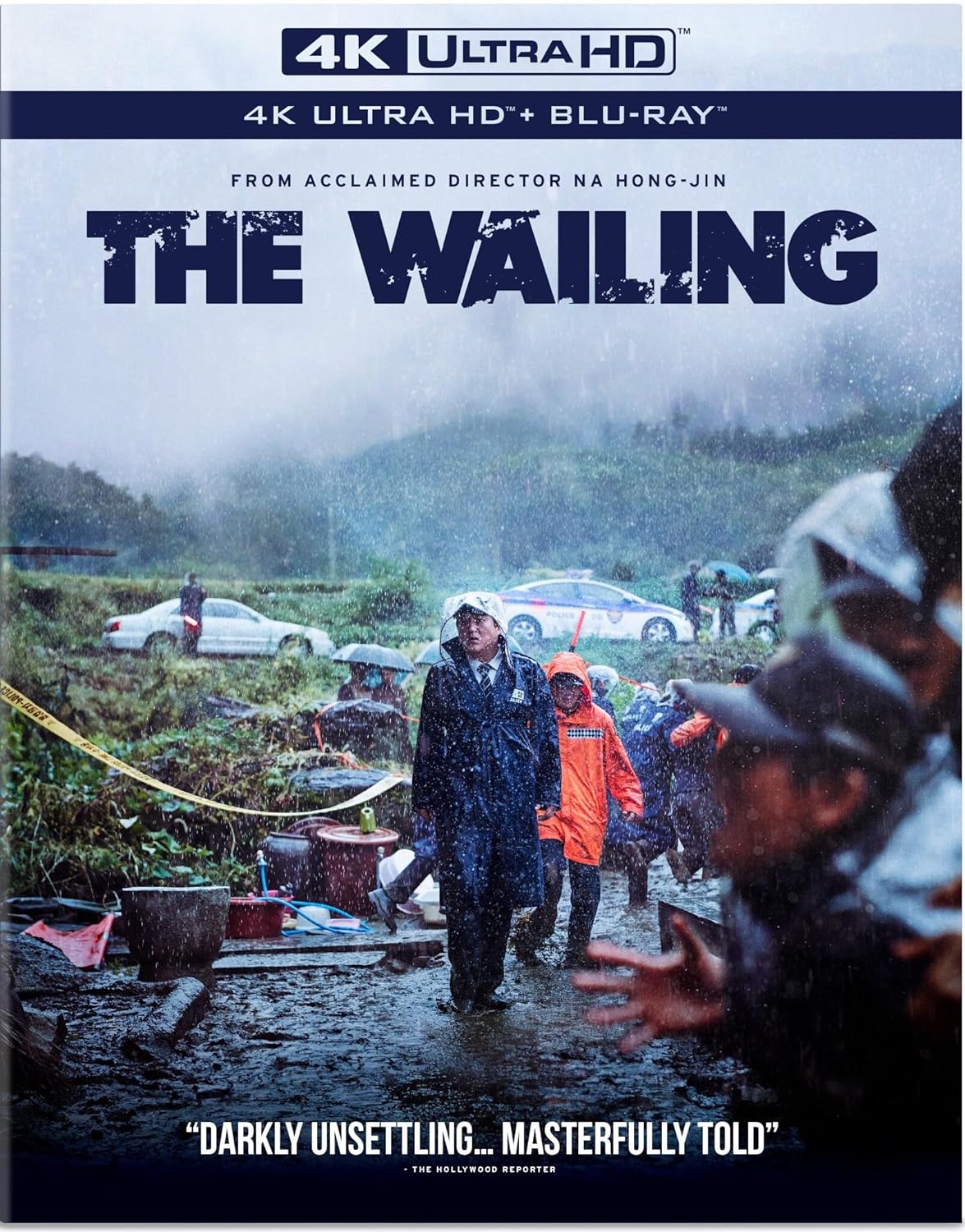
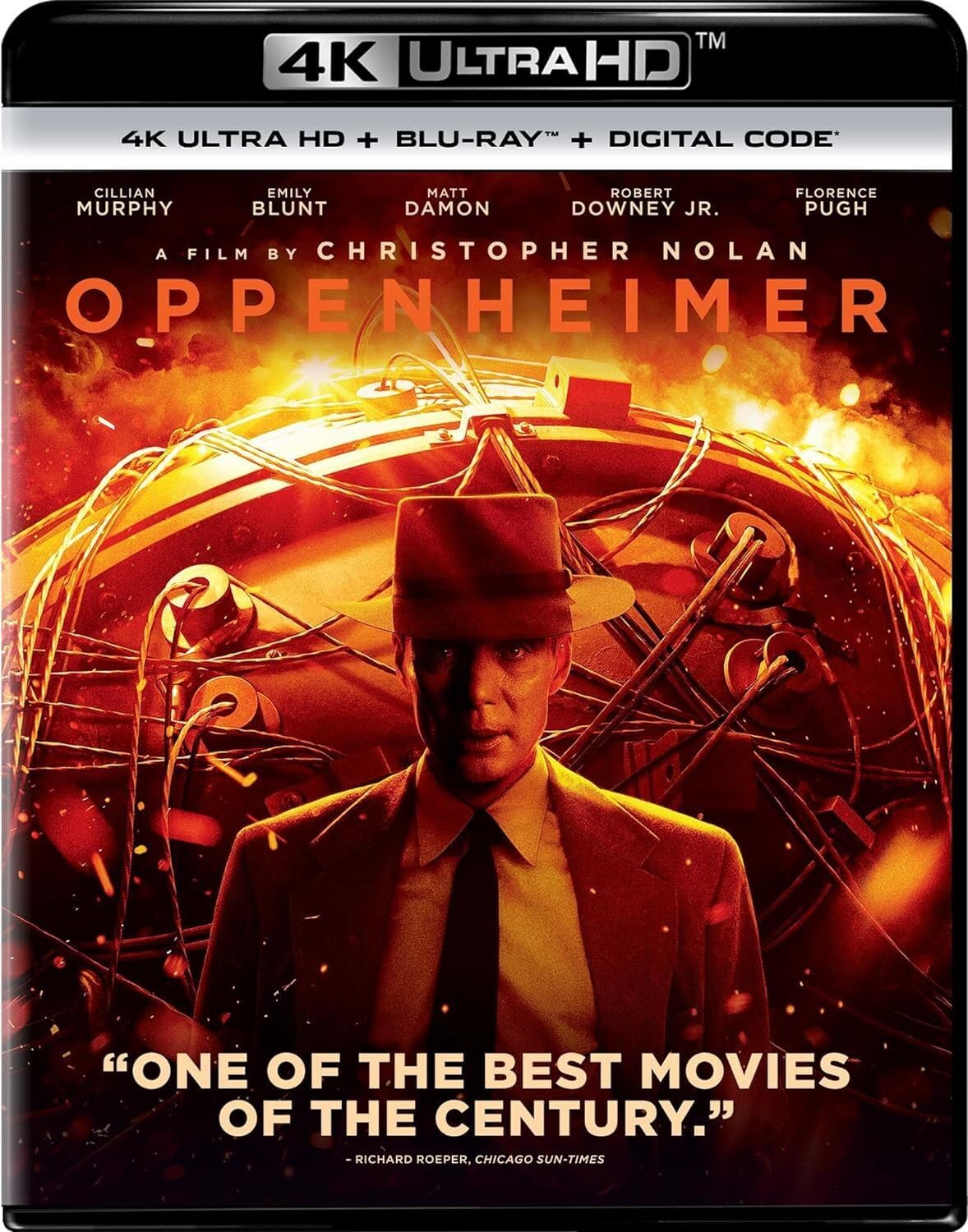
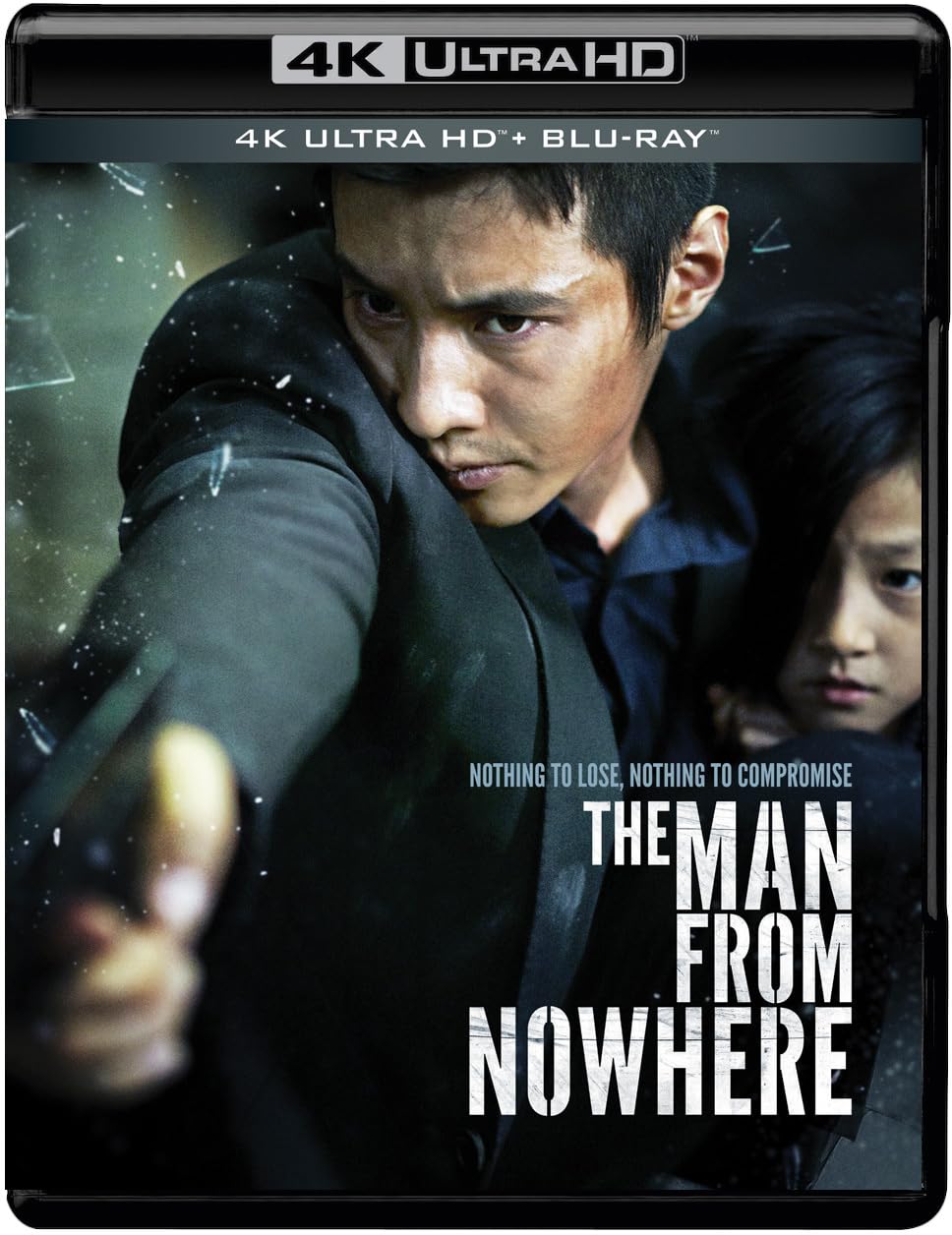
Fritz Lang is an iconic Hollywood director who was successful in the silent era and was able to transition and be successful into the “talkie” era. His work in Germany is what he is most known for, Metropolis (1927) and M (1931) but in 1934 he fled Nazi Germany, even after being offered to be the head of the German Cinema Institute and came to America where he signed a contract with MGM studios where his career flourished despite having a reputation for being difficult to work with. He’s a director that if you go to film school you will learn about, and you’ll either appreciate his films or find yourself falling asleep during them.  Despite my appreciation for M and Metropolis, I have to admit I really never explored the filmmaker’s work beyond those films, so when the chance came to check out Human Desire, I was curious to see how it was.

Jeff Warren (Glenn Ford) is a Korean War vet who returns home, and the first thing he wants to do is get back to work as a railroad engineer. As he’s getting used to life back home, he’s living with his fellow engineer Alec Simmons (Edgar Buchanan) and his family. Immediately he is reunited with Alec’s daughter, Vera (Diane DeLaire) who apparently has always been infatuated with Jeff, though he always viewed her as a younger sibling … now that he’s back from the war, Vera seems more grown up as well as being more forward with her intentions, but Jeff seems to have other plans. Then there is Carl Buckley (Broderick Crawford) who works for the railroad and has a hotheaded temper; this temper of his gets him fired. This brings us to Vicki Buckley (Gloria Grahme), the young and beautiful wife of Carl who may be her husband’s only chance of salvaging his job. Though to get her husband’s job back it means talking to an old family friend, and despite himself, Carl can’t help but get jealous of what his wife may or may not be up to, and his temper once again gets the best of him, and this time it leads to murder on a train.

Here is an interesting tidbit of information I uncovered while researching this film. When the film was initially released it was criticized for the lack of accomplished celebrities in its cast. This carries some serious irony given that the film features the likes of Willem Dafoe, William Petersen, John Pankow, Jane Leeves, and John Turturro, all of whom have gone on to become accomplished actors in their own right. All it took was time. Despite not being considered well known at the time, this was still a movie with great portrayals and snappy quips that made me laugh. In fact, the only thing to rival its story is the real-world implications it had afterwards, which we will get into in a bit. Petersen leads the film as Richard Chance, a Secret Service agent with a reputation for reckless, impulsive behavior, and, unbeknownst to his superiors in the Service, also corrupt. Petersen has his sights set on Dafoe’s Eric "Rick" Masters, a ruthless and skilled counterfeiter in Los Angeles. Though Petersen and Dafoe are the big draws for the film, the film is predominantly told from the perspective of Pankow’s Secret Service Agent John Vukovich, Chance’s partner who acts as the ying to Petersen’s yang. While Chance is corrupt, Vukovich is a by-the-book agent who chafes at the ideal of bending the rules. The dynamic reminds of me the relationship portrayed in Training Day between Denzel Washington and Ethan Hawkes’ characters. I’d go so far as to suggest that this film may have influenced or at least paved the way for that film.

“Make it real.” That was the instruction that director William Friedkin gave to the actors, and I have to say his will was done in everything from the car chase to the sex scenes. For example, Petersen did a lot of his own driving during the car chase sequence, and actor John Pankow's stressed-out reactions were real. Authenticity was clearly the core intent for this film, and it worked. I was leaning in and wrapped up in the action. Additionally, the car chase sequence, in which the final escape by going the wrong way on the freeway, went on to gain quite a bit of prestige. According to my research, that sequence is consistently ranked among the best car chase sequences on film, often appearing alongside The French Connection (another Friedkin directed film), The Seven-Ups, The Blues Brothers, Ronin, and Bullitt.

Safe-cracker John "Duke" Anderson finds himself a relic of different time as he unwittingly enters a world of pervasive surveillance (cameras, bugs, and tracking devices) and attempts his latest caper. Based on the book of the same name, Sean Connery plays Anderson, a recently released convict who is no sooner out of prison than he is already planning his next job: burgling an upper-class apartment building in Manhattan in a single sweep. Now, I am a sucker for a heist movie. Give Ocean’s, give me Inside Man, give me Heat. Catch me in the right mood and I’ll even take Now You See Me or The Italian Job. Bearing that in mind, this film held some intrigue for me, as it featured a character using old-school methods in what was starting to become a digital age. I was curious to see if his old-school methods could overcome the technological advances. However, I will say that in order to be capable of beating the surveillance, you first need to know about it. Fun fact: The Anderson Tapes was the first major motion picture for Christopher Walken, as well as the last on-screen film appearance by Margaret Hamilton.

Connery is obviously the film’s biggest draw, and his character, Duke Anderson, is likeable to a certain extent. He’s charming and clearly capable of masterminding a heist. At times, particularly during the planning stage, the film reminds me of the opening sequences of a Parker novel. This comparison is most notable when Anderson goes in search of financing to bankroll his heist endeavor and putting his crew together. The side deal he makes with his financier also carries a measure of intrigue, because up until this point, I merely thought of the character and the job as a nonviolent endeavor, and yet in this moment, violence became a factor. This ups the stakes, you could say.

Anna May Wong might be one of Hollywood's biggest stars that most film fans have never heard of. Thanks to KL Studio Classics, you now have the opportunity to get to know the actress a little better and sample three of her films. For those of you who take the time to add this to your collection, you won't be disappointed. She's not the kind of name who appears in many conversations these days, but she left behind a body of work that is more impressive than many of the golden era names you do know. Her real name was Wong Liu Tsong, and she appeared in about 50 films from 1920 in the Silent Era until about 1950 when she made her way to television screens for another 16 years, appearing in such hit shows as Mike Hammer with Darren McGavin and I Spy with Robert Culp and Bill Cosby. In the Silent Era she was frustrated that she had been typecast in the typical, often stereotypical roles of Asian women and left Hollywood for Europe where she continued to be disappointed. Throughout her career she went back and forth between Europe and America and even toured China for several years. While she fought to get prominent parts, she was often thwarted by her heritage and ended up in mostly budget films throughout her career. But these budget films have found their way back to the surface, and you get to catch three of them here.

"Nobody disobeys me. My word is law. I am king of this river. They are all savages, but they are like little children, and I know how to handle them. I will say, 'I am your king so back to the jungle. Let peace return to the river.'"

I'm a sucker for clever movie titles.  The best example I can think off the top of my head is I'm Gonna Git You Sucka.  Or perhaps you need something from yesteryear, like Bring Me the Head of Alfredo Garcia or They Shoot Horses, Don't They?  Along the lines of Sucka, we can't also forget about Don't Be A Menace to South Central While Drinking Your Juice in the Hood or The Assassination of Jesse James by the Coward Robert Ford.  So imagine my surprise when I saw the title of today's movie and jumped at the chance to provide a review.  Hopefully it is as good as the title suggests.

We get some light orchestral music (score by Stu Phillips) as the credits roll.  After the credits, we are taken to a prison where we listen to an inmate tell a story about his alcoholic father who would drink vanilla extract when he couldn't find something stronger to drink.  Therefore, he always associated his father with the smell of vanilla extract, and he couldn't stand the scent.  Perhaps we should move on to another story.

"Batman's a fascist!"

Let's address the elephant in the room, shall we? Hello there, big guy. How ya doing? There now let's continue. I have to tell you it was hard to get motivated to watch Blue Beetle. I didn't want to like it, and I wanted to try to watch it without letting myself get too involved in the whole thing. This had nothing to do with the character. I know little about him and have only read a few comics featuring the character, mostly the Ted Kord character along with his buddy Booster Gold. But none of this had anything to do with my reluctance on the part of the film. It's Warner Brothers/DC and James Gunn. All we've been hearing lately is how this new regime is going to change EVERYTHING. It all starts with the upcoming Superman film, and everything we see before then is merely filler, I guess. Yes, the Snyderverse had a ton of issues, and I'm frankly glad to see it go away. But the franchise had some solid moments and pretty strong characters and actors starting with Gal Gadot as a powerfully compelling Wonder Woman. Yeah, the second movie sucked, but that had nothing to do with the actress or the character. I should be looking forward to Jason Momoa in the next Aquaman film. I'm currently watching old Stargate: Atlantis episodes and just can't believe how far the actor has come. And I guess the final straw was the dismissal of Henry Cavill as Superman. He's the best Superman since Christopher Reeve, and Gunn is throwing the baby out with all of that bath water. So why should I care about anything Blue Beetle has to offer? Yes, he hinted that the character will likely return, and even with the same actor, but none of this story will likely make it to the other side. I ask again, why should I care about anything Blue Beetle has to offer? The short answer is because there's actually a lot of heart here, and I now kind of feel bad for all of these guys. So let's just pretend that Gunn isn't even here, and try and enjoy a pretty good film just for what it is.

Some of my fondest memories growing up were those of my Polish grandmother and visiting her in New York for a week or two during the summer.  It was so different than when I was with my parents in North Carolina.  From the living arrangements to actually having a real basement to the subway itself, it was almost surreal in a very urban type way.  Then everyone seemingly moved to Texas, including our family, and all of the innocence was lost.  Today's movie is Gloria, a movie set in New York where a six-year-old Puerto Rican kid loses his innocence as his family is gunned down by the mob.  The only thing he has to cling to is a friend of the family named Gloria who has a few special skills of her own.  Let's check it out.

We are introduced to that funky saxophone with some bad opera singing (let's not pretend).  During the credits we are shown the artistic talents of one Romare Bearden before eventually giving us our first view of the New York City landscape at night.  We get to see Yankee Stadium, the Statue of Liberty, and either the Washington Bridge or the Brooklyn Bridge (I apologize; it's been a while since I've been in New York).

"It's always open season on princesses."

Roman Holiday is one of those classic films that had an extremely hard time getting made. Frank Capra had the rights to the story for several years. Most of what he had was based on a screenplay by Dalton Trumbo, but that was extremely problematic, as Trumbo was one of the original Hollywood Ten and was blacklisted. They were a group of Hollywood people who refused to answer questions before the Joe McCarthy-led House Un-American Activities Committee that was pretty much rooting out communist with little regard to whether they were there or not. The committee ruined thousands of lives, and in 1947 the group had turned their attention toward Hollywood. Many played along by attending the hearings, and some even passed on names of others to avoid trouble for themselves. The Hollywood Ten stood up to the madness, and it got them blacklisted. They couldn't work for any studio in the country. That meant Trumbo could not be given credit for his screenplay, and it was Ian McLellan Hunter who acted as a beard for Trumbo and took the credit and sold the rights to Frank Capra, who planned on directing the film with Gary Cooper and Elizabeth Taylor in 1949. By then at least eight other writers took shots at revisions, and the piece truly suffered under the "too many cooks" situation. The budget appeared to skyrocket, and Capra ended up selling it to Paramount for $35,000. Paramount also spent too much money and time going through various rewrites. Finally the project ended up with William Wyler, who went back to pretty much the script that Trumbo wrote under Hunter's name, and in 1991, Trumbo's writing credit was deservedly restored.

“Most ghost stories have some basis in truth.”

Essentially an amalgamation of tropes from previous beloved horror films. Like if you took those films and put them into a blender. There are elements of Candyman; I don’t just mean because of Tony Todd’s involvement. Additionally, there were elements of Halloween, with an uncompromising killer wielding a shovel. Points for weapon originality. Of all the weapons that my mind could have conceived, a shovel wouldn’t have been at the top of my list. However, all things considered, it proved to be effective weapon. The film gets off to a bad start as it essentially drops us in the middle of situation with no understanding of what has supposedly occurred. Makes it quite difficult to become invested when things start off so disjointed. The Devilreaux is presented as a modern day boogeyman (another element of the film). However, prior to the mention of his name, we have no frame of reference of who or what he is. I suspect the goal was to build intrigue, but given that the killer strikes within the opening scenes, it would have been nice to have some context to the character. Bare minimum, we need a title card with some basic information, so we are stumbling around in the dark, which is how it felt for the initial fifteen minutes.

"In northern California, the Santa Lucia Mountains, dark and brooding, stand like a wall between the peaceful agricultural town of Salinas and the rough-and-tumble fishing port of Monterey, fifteen miles away It's 1917 just outside of Monterey."

James Dean was somewhat of a brief candle. Very much like Marylin Monroe, he came upon Hollywood so bright and hot only to burn for a short time. And while Norma Jean had a few good years in which to shine, Dean would have less than a handful. In those few years he made three incredible films. His last was Giant, and before that was perhaps his best known, Rebel Without A Cause. East Of Eden was the first of this trilogy of films that would pretty much make up the career of James Dean. All three films were made in the years 1955-1956, and just as suddenly as Dean had come upon the scene, billed as the next Marlon Brando, he was gone. One car ride into eternity and it was all over just as it had begun: Explosive and brief. Through Warner Brothers 100 years of movies restoration and release celebration, we have already seen and reviewed Giant and Rebel Without A Cause. Now the trilogy is complete in the place where it began: Elia Kazan's masterpiece, East Of Eden.