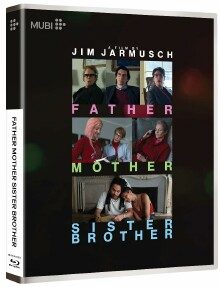
Well, this film features a pretty stacked cast of talents with the likes of Tom Waits, Adam Driver, Cate Blanchett, Mayam Bialik, Charlotte Rampling, and Indya Moore coming together in this triptych divided into chapters set in New Jersey, Dublin, and Paris. Not only is it a stacked cast, but it’s also a lot of repeat business, as this film marked the second collaboration between actress Cate Blanchett and director Jim Jarmusch after Coffee and Cigarettes, the third collaboration between actor Adam Driver and Jarmusch after Paterson and The Dead Don’t Die, and the sixth collaboration between actor Tom Waits and Jarmusch after Down by Law, Mystery Train, Night on Earth (Waits composed it), Coffee and Cigarettes, and The Dead Don’t Die. So obviously, Jarmusch has fostered some great relationships with impeccable group of actors and vice versa; the actors have found a creative storyteller with whom they wish to continue collaborations. This triptych is a example that creative storytelling, as the three chapters, or better known as movements, are narratively independent but thematically interconnected.
The first movement affixed itself in an isolated New Jersey home, where adult siblings Jeff (Driver) and Emily (Bialik) come to check on their eccentric father, played brilliantly by Tom Waits. Watching it, there was palpable generational tension: Jeff hovered with an anxious need, seeking validation. Meanwhile Emily was the opposite, remaining defensively rigid. At times, Jarmusch lets the camera linger on awkward silences, creating an environment where something as mundane as checking on parent’s welfare felt like a silent psychological clash. And while I am a fan of psychological warfare, the long, awkward silences did become cumbersome after a while.
The second movement is where I found the most entertainment, mostly because of Charlotte Rampling’s sharp tongue, as playing a novelist mother’s whose two daughters (Blanchett and Krieps) have a very tense and passive aggressive afternoon tea. The segment takes place primarily in the affluent Dublin home, where the lawns are perfectly manicured, but the family dynamic is far from perfect. Catherine Russell (Rampling), a highly successful yet cold mystery novelist, invited her two middle-aged daughters, Timothea (Blanchett) and Lilith (Krieps), over for their “mandatory” annual tea gathering. Despite all three women living within Dublin, they only see each other once a year. This knowledge immediately established the profound emotional abyss between them. As previously stated, Catherine is cold, treating her adult daughters with icy detachment and interacting with them as if they are children who have never grown up. The sisters are stark contrasts to one another: Elder sister Timothea is the boring one, she has a boring job and a sensible car, while younger sister Lilith is pink-haired who lies to make her lie sound more exciting in an effort to please. As in the first movement, Jarmusch made use of one of his favorite tools: long drawn out and awkward silences. While those silences did become grating, what makes this movement my favorite is the comedy and the tragedy stemming from the family’s rigid politeness. No one called Lilith out on her blatant lies, and the mother remains entirely emotionally unavailable—and at one point, it is implied she confided far more deeply in her therapist than she ever has to her own family.
Which brings us to the final movement, which follows fraternal twins, Skye (Moore) and Billy (Luka Sabbat), who have traveled to France to clear out their childhood home following the death of their parents in plane crash. Where the second movement was polite avoidance and the first movement was stilted and defensive, Skye and Billy share an easy, natural warmth. As the twins sort through boxes, photographs, and old furniture, the narrative shifts from traditional mourning and enters the realm of mystery. Through this physical exploration of the home, the narrative showcases how little we truly grasp about the people who raise us. The twins effectively learn that despite the pretense of affluence, their parents where just scraping by, and items found in the home hint at a less than reputable past for their deceased parents. While I maintain that second movement was my favorite due to its dry humor (I’ve always had an appreciation for that) and character interactions. I was intrigued and invested in the genuine mystery of this movement. And yes, this movement also featured Jarmusch’s patented awkward silences.
So, I usually don’t go in for Jarmusch’s style of filmmaking, typically finding it long-winded and short on activity, which has previously resulted in my mind wandering. But it would seem that Father Mother Sister Brother will be the exception to that rule. The activity is still a bit sparse, but the character interactions had enough intrigue to them that I remained interested in the goings on. Also interesting: Jarmusch reportedly began writing the film after getting the itch to make something where Tom Waits plays Adam Driver’s father. Also, Jarmusch supposedly cast Mayam Bialik because she was one of his favorite Jeopardy! hosts.