Posts by Archive Authors

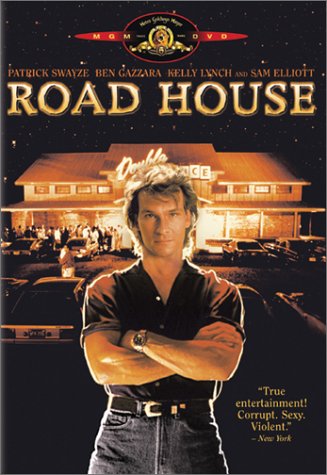
Road House is macaroni and cheese for a lot of movie goers that are over 27 years of age. Released in 1989, the movie chronicles the life of James Dalton (Patrick Swayze, Ghost), a “cooler” at a local bar, who is offered a huge sum of money to help a bar owner named Frank Tilghman (Kevin Tighe, Mumford) get his place called the “Double Deuce” back on its feet. A cooler for lack of a better explanation is a bouncer who helps diffuse situations before they blow up into brawls.

When Dalton gets to the bar, he sees the type of environment he’ll have to deal with. Even though his old friend (and house band singer) is there, he’s got drug dealing waitresses, statutory raping bouncers and money stealing bartenders. And apparently the few legitimate operating businesses in town appear to be owned by Brad Wesley (Ben Gazzara, The Big Lebowski). Brad doesn’t hesitate to break the rules whenever necessary, even if it means that Dalton has to call in his mentor Wade Garrett (Sam Elliott, We Were Soldiers), while he continues romancing Dr. Elizabeth Clay (Kelly Lynch, Charlie’s Angels), who just happened to be Wesley’s woman for a little while.

Synopsis

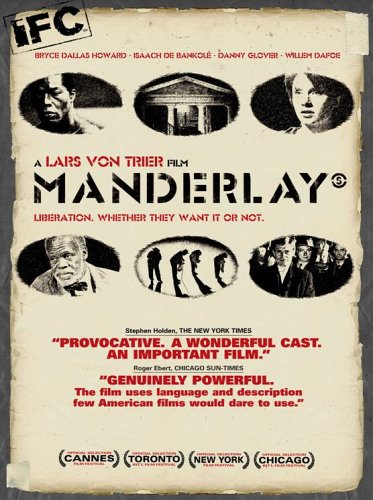
Marnderlay is part two of the trilogy that began with Dogville. Picking up where that film left off, we see Grace (Bryce Dallas Howard replacing Nicole Kidman) and her gangster father (Willem Dafoe taking over from James Caan) arriving at Manderlay, a plantation where slavery never ended. Grace, horrified by this state of affairs, orders slavery abolished, but her attempts to bring freedom to the slaves lead inexorably to disaster.

Discussing the old school DVD’s that still sound and look great in the era of Blu-Ray and HD-DVD technology.

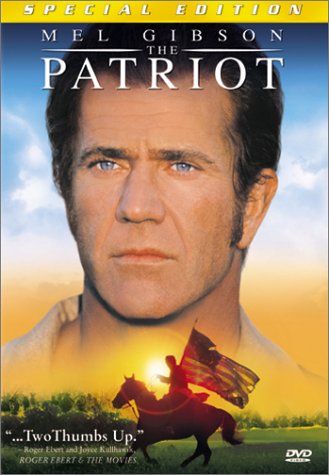
No matter what happens to Mel Gibson after his infamous arrest and anti-Semitic tirade, one can’t deny that he’s made and starred in some powerful films throughout his career. Braveheart, We Were Soldiers, Signs, Passion of the Christ... the list goes on. However, one of my favorite Gibson movies has always been The Patriot.

If you ask me, what sitcoms need are fewer contrivances and more realistic humor. That's what made Seinfeld so brilliant. As horrible as those people were, the sad truth is that all of us have a little bit of that twisted humor lurking within us. That's just the kind of thing that happens with The Worst Week of My Life. This amazingly funny BBC series lasts just seven episodes, but I guess that should be expected judging from the show's title. The names of the episodes themselves are “Sunday”, “Monday”, “Tuesday” and so on. By the end of the season, viewers have been treated to what is often-times the worst week of many people's lives. The week that should be the happiest of their lives. The week before their wedding.

The show reminds me a bit of Meet The Parents, and a little of Wedding Crashers, but in my opinion it is much funnier than either one of these. The show is shot with a single camera, so it actually has the feel of a mini-series more than that of a half-hour sitcom. The BBC has really come a long way in the last few years. They have hit a run of great shows with Coupling, The Office, MI-5 and now The Worst Week of My Life.

Synopsis

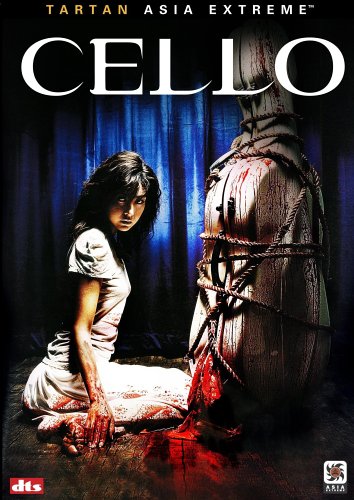
Mu-ju is trying to adjust to life again after surviving a terrible accident. Life is still hard, as her eldest daughter suffers from something like autism, and she is having trouble landing a permanent position as a teacher at a music school (plus, a former student has it in for her). The aforementioned eldest daughter becomes obsessed with a cello, and a mute housekeeper moves in, and terrible things begin to happen.

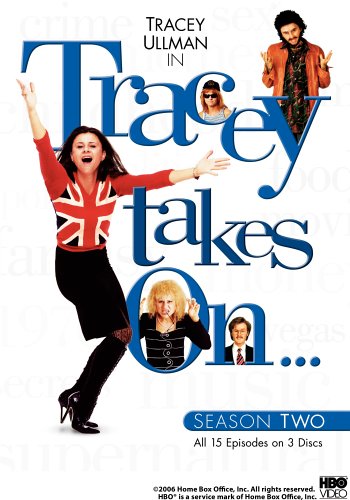
There is a little more Tracey to go around with Tracey Takes On: The Complete Second Season, so fans of the show shouldn't be disappointed. However, I find her humor quaint and dry in an inescapably British way. No one can deny her talent. But it's hard to like a show when none of the laughs are connecting. Of course, humor - like beauty - is certainly in the eye of the beholder. With that said, I am not one of the lucky ones that can look at this raw oyster of a show and see the pearl. This season, Ullman inc...udes many of the same faces from season one. The humor also continues in the same light with its often irreverent pokes at social norms and behavior. There are a variety of guest stars accompanying Ullman, as was also the case last season. This time, we get Timothy Busfield, Jon Favreau, Julie Kavner, Michael McKean, Ron Perlman, George Segal, John Stamos, and Bradley Whitford; and their only purpose seems to be filling out the camera lens. After all, Ullman can't be everywhere at once, in spite of her talents. And to many of these celebrities, doing Ullman's show is the hip thing to do.

But hip doesn't make for funny, and there's only so much Chic, Hope Finch, and Linda Granger, a sane mind can take. Add in the myriad of quick vignettes in each of the 15 episodes, and you have one stone-faced reviewer doing his best to stay awake through a show that seems much longer than its sitcom-length running time would indicate. I wish we could see more serious acting from Ullman. She is incredible, and I respect her abilities so much. But the humor is flat; the format, tired. The simple fact she can still garner fame and acclaim after all these years of performing material such as this only hints at the even bigger accomplishments she could achieve, if only her mind was set to it. Until then, die-hard fans can cherish yet another collection of her antics; as for me, I'd rather she try something else.

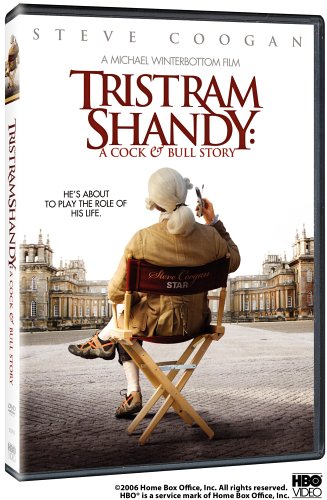
Tristram Shandy is the oddest and most entertaining sort of film. It is a film about the making of the film that you are watching, hosted by the fictional main character. It is sort-of like American Splendor, and sort-of like Spinal Tap. The film is the story of the life of Tristram Shandy, an 18th century Englishman of particularly stately means. The man's life is of note and worthy of such a film because... well, now that I think of it... I don't really know. You see, there are so many interruptions and different takes during the film that the actors are trying to make, that the viewer never really learns anything. Herein lies the genius of the piece. For all of the efforts the cast makes to tell the story, they never really tell us anything at all. Instead, the film is full of false starts, tales told out of order, and tons of disturbingly enjoyable comedy.

When reviewers talk about the desire to find new and interesting films, this is just the kind of thing they are talking about. This is a film that defies explanation, except to say that it is very, very funny. It is a fictional documentary about the filming of an unfilmable book. That in and of itself should sell you on picking up this disc.

Synopsis

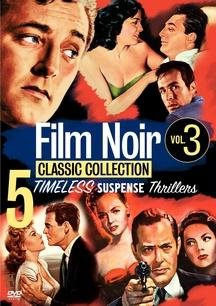
Robert Mitchum shows up twice here, as does Robert Ryan. The two clash in The Racket (1951), where Mitchum is the incorruptible cop, and Ryan is the old-school gangster whose brutally direct methods put him in conflict not only with Mitchum, but with the more sophisticated crime syndicate spreading over the land. The focus of the film is rather split between the two, but is pretty tense, and is further enlivened by a memorably sleazy turn by William Conrad as a VERY corrupt cop.

Today, anyone with a credit card and some free time can make a movie. But that doesn't mean it's always a good thing. Case in point is Kisses and Caroms, which sports a massive hard-on for Kevin Smith’s Clerks (it’s Clerks in a billiards store. Brilliant!), but its characters, dialogue and location fail to be funny or engaging. For one, how many oddball customers can a billiards store receive in one day? In Clerks, it was believable, since people from all walks of life need what is readily...available at the Quick Stop. In Kisses and Caroms, it feels forced. There are even multiple references to Smith’s films – none of which are funny. At one point in the film, a character refers to another as a “poser.” Maybe the comment was meant for the filmmakers.

Like Clerks, the plot is minimal. But what separates the two films is what they have to say. Whereas Clerks gave a voice to Generation X, K&C seems to exist simply to hold many boring conversations about various forms of sex -- threesomes, orgies and gang-bangs. The DVD cover promises many scantily clad women and lots of “Girls Gone Wild” type situations, but all the characters do is talk, talk, talk. Sure, there is some nudity and a light chuckle every 10-15 minutes, which may be enough for a desperate teenager, but those looking for Clerks-style enlightenment will only find themselves behind the 8-ball.

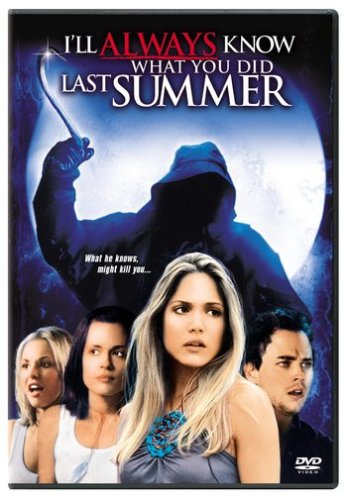
Horror films have transformed over the years. We’ve essentially gone from horror films using religion to frighten (The Exorcist, The Omen) to slashers (just about everything in the 80’s), to nothing (the early 90’s void), to post-modern slashers, (Scream, Urban Legends, I Know What You Did Last Summer) to torture (Hostel, The Hills Have Eyes).

With I”ll Always Know What You Did Last Summer, we take a short trip back into the slasher genre. And surprisingly, it still looks and fe...ls pretty good. I’ll Always Know is a direct-to-video sequel to I Know What You Did Last Summer and I Still Know What You Did Last Summer, the Kevin Williamson penned scare-fests that never felt as refreshing as his Scream trilogy, but did their jobs and did them well -- for the most part.