Posts by Archive Authors

The Haunting of Sorority Row has one of those titles that, when you first hear it, you immediately make assumptions about. My initial assumption was that the movie might very well feature a house full of hot young girls in various stages of undress, acting all catty between pillow fights and being menaced by a supernatural entity of some kind. And then I looked down to the bottom of the dvd case and noted that this was produced by Lifetime. Wait, I thought, isn’t a horror movie by the Lifetime Network akin to Spike TV producing a Jane Austen film festival? Or Comedy Central hosting a David Cronenberg retrospective? Or Arts & Entertainment producing a reality show about a guy who traps raccoons….? Oh. Wait.

Never mind.

Written by Diane Tillis

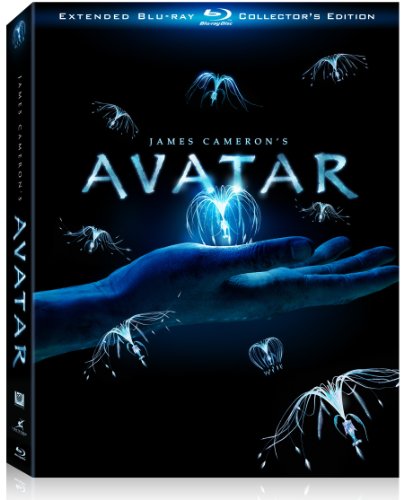
The world of Avatar has been a part of James Cameron’s dreams for over a decade. When he initially approached studios to pitch the concept, they denied him the opportunity, citing the huge budget that would be necessary to create the film. Thus Cameron had to wait for technology to catch up with his vision. Flash forward a decade with the advancements in capture-motion cameras and 3D technology; Cameron finally saw his opportunity. With an amazing crew of visionaries, Cameron broke several boundaries in the film industry and created a cultural phenomenon. In early April 2010, the theatrical version of Avatar was released on DVD with only the feature film and no special features. Now in November 2010, the extended collector’s edition of Avatar is released with tons of goodies. The collection includes three versions of the film: the original theatrical version, the re-release version with eight minutes of deleted scenes, and the extended collector’s version with sixteen minutes of deleted scenes. The collection is divided into three discs. The first and second discs have the three versions of Avatar, each split in half. Thus, when you watch one version, an hour and a half later you will have to switch to the second disc to continue the movie. The third discs has all the deleted scenes from the films collected for instant viewing, forty-five minutes of never-before-seen deleted scenes in various stages of production, and a ninety-eight minute behind-the-scenes featurette.

In the first season of Showtime’s Californication, we were introduced to David Duchovny’s character, bitter yet upbeat writer Hank Moody. Hank, after moving to Los Angeles on the heels of his first novel – a critical darling entitled “God Hates Us All” – has recently lost his long-time love and, by extension, his daughter, to a straight-arrow bore who makes his girlfriend Karen (Natascha McElhone) feel safe.

The first season told us the story of Hank’s attempts to win Karen back and his increasingly perilous relationship with a sixteen-year-old Lolita, whose inclination for combining sex with a wicked right hook leads to one of television’s all-time great novel titles. Oh yeah, and it also featured lots and lots of raunchy sex between Hank and many gorgeous women. This was a major reason for the show’s notoriety, but what really makes the show work is Duchovny’s portrayal of Hank. He imbues him with a charming kind of good-natured nihilism and, even when he is being a grade-A jackass, we still like him.

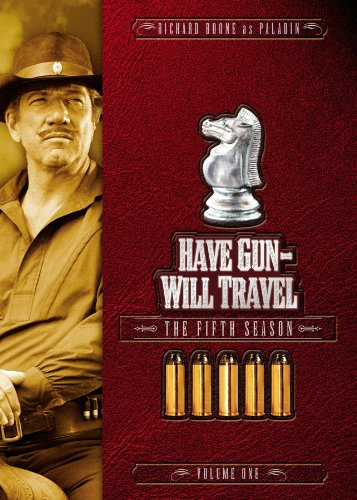
’Have gun, will travel’ reads the card of a man. A knight without armor in a savage land…”. Those words ended every episode of Have Gun Will Travel, sung by Johnny Western in a time that such words could be sung without irony. Outside of Richard Boone’s black-clad, craggy Rhett Butler gone-to-seed gunfighter, that song was all I could really recall about this venerable Western from television’s golden age. Would it, like so many revisited shows from my youth, ultimately disappoint? Or would it hold up fifty years after it was originally broadcast, viewed as it would be by the far more jaded, cynical man I’ve grown into?

The verdict? It’s pretty darn good.

Written by Diane Tillis

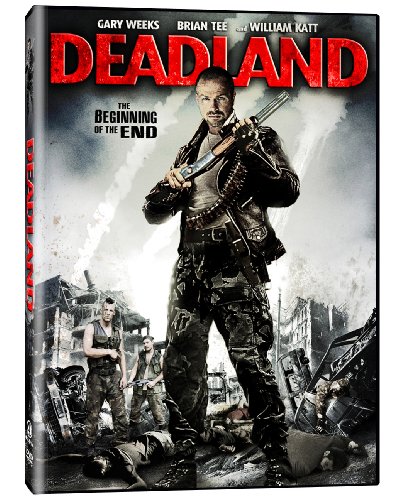
Deadland is about a man searching for his wife five years after an apocalyptic event has changed the world.

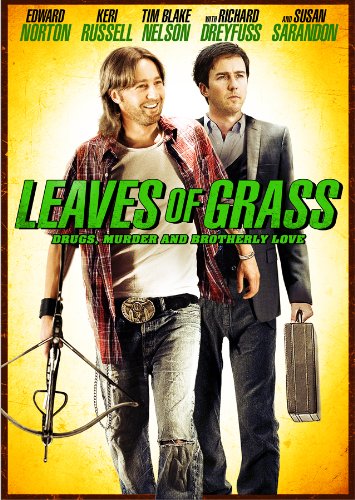
Leaves of Grass, the latest film from writer/director/actor Tim Blake Nelson, is one of those rare films that defies both description and expectation. While marketed as a violent stoner comedy along the lines of Pineapple Express, Leaves of Grass is far more difficult to categorize. Yes, there is comedy, though not as much or of the type one would expect. And yes, there is violence, but a far more realistic and less cartoony variety than you would think. But there is much more to this little film - there is thought and reflection and philosophy and poetry behind every piece of dialogue, and you get drawn into it so that, halfway through the film, it doesn’t even strike you as odd that you just watched Keri Russell recite Walt Whitman while gutting a catfish.


As the film opens, we are introduced to the lead character, Bill Kincaid (Edward Norton in the first of his two roles here), a Classical Philosophy professor at Brown. We meet him as he lectures an adoring group of students on Plato and soon afterward is fighting off the advances of a young female student. Bill is clearly a brilliant academic, and is being courted by the big schools. We also learn about his humble roots; he grew up poor in a little town near Tulsa, and earned his way into the academic elite.

Written by Diane Tillis

Vogue magazine editor Juliette (Patricia Clarkson) travels to Cairo to attend a UN function where she will meet up with her UN-official husband Mark (Tom McCamus). Mark is unavoidably delayed in Gaza, but sends a trusted friend and former UN official Tareq (Alexander Siddig) to keep Juliette company. Tareq and Juliette have known of each other for years, but this is the first time they have met face to face. They travel together exploring the wonders of the city, the daily life of native Egyptians, and the culture of Cairo. Their days are filled with more wonder than Juliette has experienced in years. Juliette is a woman with a sensitive, soft, and nurturing nature who blossoms like a desert rose while in Cairo. Tareq is a mysterious, gentle, but experienced man who learns how to love again. Their friendship deepens into an undeniable attraction of love and trust. However, their flourishing love will end when Mark finally arrives in Cairo. They had only days together, but Tareq and Juliette will remember those days forever.

Tyler Perry burst on the scene in 2005 with Diary of a Mad Black Woman. It was one of the worst-reviewed movies of the year, but when it raked in over $50 million dollars at the box office, Tyler Perry silenced critics and became a force to be reckoned with in Hollywood. Before his movie-making career, Perry was already a huge success in the African-American community, having written several Christian and family-oriented plays upon which many of his movies are based.

After Diary, Perry went on to star in and direct the sequel, Madea’s Family Reunion, which did even better at the box office. And since then, he’s created his own studio, released three more movies, is set to release a few more, and currently produces a sitcom, Tyler Perry’s House of Payne, on TBS.

Tyler Perry once again dons multiple costumes to incarnate several characters, most prominently Madea, the no-nonsense but mischievous matriarch of a very fractious family. She is ordered by the court to take in a runaway as a foster child, and that project of reclamation joins that of helping out her nieces. They have a mother from hell. One sister is struggling to learn how to love again, while the other is being forced into marriage with the hideously abusive Blair Underwood.

I hope that outline makes the plot sound as bizarrely split as it really is. This feels like two completely different movies yoked together with violence. On the one hand, you have Perry mugging it up as Madea and her husband, dispensing pithy aphorisms and grits in what passes for comedy. On the other, you have the saga of the nieces, which involves horrific abuse both mental and physical, and builds to emotional climaxes so over the top we’re in Southern Gothic territory. And then the slapstick re-enters the picture for a dangerously simplistic solution to at least one real problem. This is a picture as smug in its own morality as it is confused in its tone.

Written by Diane Tillis

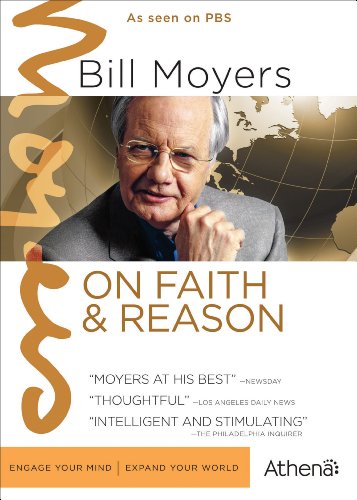
One hundred writers gathered together at the PEN World Voices Festival in New York to discuss faith and reason. PEN is a literary and humanitarian organization that is composed of poets, essayists, and novelists. Its chief concern at the festival was the threat to freedom of speech and conscience from religious extremism. Writers from diverse backgrounds and perspectives came together in an open forum to discuss their experiences with faith and reason. Bill Moyers: on Faith & Religion is a collection of interviews with twelve renowned authors who were among the speakers at the PEN World Voices Festival. Bill Moyers interviewed them on their background, literary works, how they related to faith and religion, and what they hoped to see for the future.