Posts by Archive Authors

Posted by Ken Spivey

What follows is a brief, yet accurate, recounting of the canine endowed cinematic masterpiece, “Marley & Me.” Jennifer and John Grogan (Jennifer Aniston & Owen Wilson) are a newly wedded couple who are enjoying their new life together. John is an up-and-coming journalist whose income allows the Grogans an increasingly comfortable lifestyle. John still hangs out with his old guy pals at the bar and holds on to some of the lighter points of bachelorhood while his married life remains rather carefree. This all changes when his wife's biological clock starts ticking. Grogan's best friend suggests that John get his wife a dog. Following this advice, John drives his wife to a farm (which I can only assume was some sort of “puppy farm”) to pick out their family's newest addition. Being the penny wise, upper middle class folks like they are, the Grogans pick out the least expensive “clearance puppy” and name him “Marley.” Things were fine at first, Jennifer's need to spawn was abated and all was at peace in John's world until they both realize that Marley is really the dog from hell. He chews up furniture, scares neighbors, barks all night, is kicked out of obedience school, and makes life miserable for the Grogan clan. Despite his flaws, Marley appears to have woven some sort of love spell upon the couple, for they now love the now massive pup.

In the vein of The Cincinnati Kid (1965) and a sprinkle of The Sting (1972) John Dahl brings us Rounders. Card prodigy Mike McDermott (Matt Damon) quits the game after losing everything. Once Mike’s best friend Les “Worm” Murphy (Edward Norton), gets out of jail, Worm attempts to get Mike back into the poker world. As Worm’s behavior begins to implicate Mike, Mike decides to come out of poker retirement.

The film itself is good. The on-screen chemistry between Damon and Norton is not forced. The other performances in the film do not distract from the narrative, with Martin Landau’s standing out. The film is shot very plainly without too many fancy editing techniques or wild Dutch angles. Dahl simply conveys a character piece that does what it is set out to do with little failure. David Levien and Brian Koppelman’s script has been appropriately dubbed “cool” by the poker community. Upon initial viewing most poker references will soar above the viewer’s head. However, upon multiple viewings, you tend to pick up on the language. This collector’s edition offers a plethora of bonus features which is miles away from the previous release.

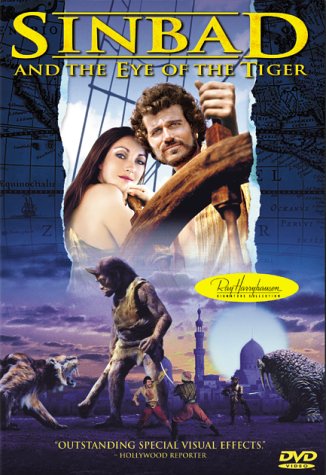
Long before the magicians of movie special effects had computers to conjure up monsters and otherworldly creatures, or even talking dogs, they relied on more physical tricks of the trade. One method, used perhaps most famously in 1933’s King Kong, is stop-motion animation. Kong inspired a young boy who would go on to master the art form and establish himself as a legend of fantasy filmmaking: Ray Harryhausen. Over a career spanning more than 40 years, Harryhausen produced some of the most delightful moments ever captured on film, wowing audiences and inspiring people to believe in movie magic.

Harryhausen’s mastery is showcased in 1977’s Sinbad and the Eye of the Tiger, the third film in a trilogy about the legendary swashbuckler. Eye of the Tiger has its flaws, but the animation is still captivating after all these years.

Posted by Ken Spivey

In the film “Dark Reel,” we are treated to an adventure. In the days of Prohibition, a fledgling filmmaker gave a promising ingenue a chance at celluloid immortality. This shot at fame sadly cost the young actress her life. Years later, the curse of this murder would haunt the movie set and crew of the production of the “B” movie, “The Pirate Wench.” Meanwhile, chubby and terminally apathetic Adam Waltz (played by “Terminator 2's” Edward Fulong) won a walk-on role in the campy pirate film. He quickly develops a passionate relationship with the female lead, Cassie Blue (Tiffany Shepis), much to the chagrin and dismay of the director and rival actors. After Waltz is connected to a possible murder on the set, the film's producer decides to increase the perpetually indifferent contest winner's role from extra to co-star. Afterwards, the on-set murders continue, a ghost makes a cameo, then we find out who the killer really is. All of these amazing events and more make up the breathtakingly horrible, yet wonderful, movie that is “Dark Reel.”

Posted by Ken Spivey

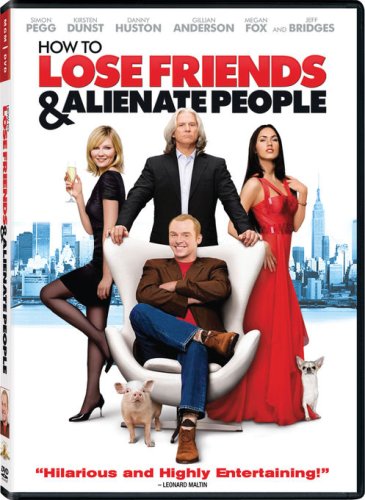
Based upon Toby Young's 2001 memoir and pseudo-confessional, “How to Lose Friends and Alienate People” is the uproarious tale of journalist Sidney Young’s ascension from a hack to a successful hack. Young tracks the rich and famous, writes scathing stories about them, sleeps with many of them, all while reaping a whirlwind of trouble along the way. His career receives a major coup when he is offered a job at the prestigious “Sharps” magazine. Toting witty comments and salacious attempts to bed every beautiful actress he meets, the story of Sidney Young's (Simon Pegg) rise to journalist nirvana is a laugh a minute and a sincere delight from inception to completion.

Posted by Ken Spivey

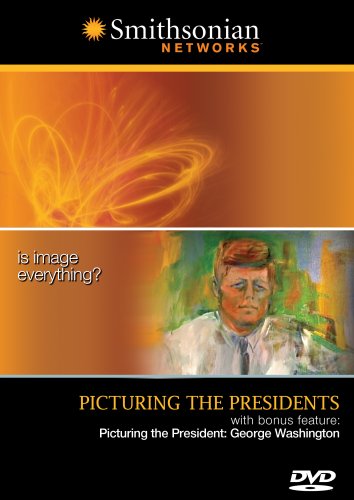
“Picturing The Presidents” is a glimpse into the Presidential Portrait Gallery found in the Smithsonian. A painting of each leader of our nation holds many meanings. The various ways of seeing these portraits are determined by the painter, the one being painted, and the ever changing audience viewing the art. The documentary begins by discussing the portrait of Washington and how he defined how a President was to appear: noble, strong, yet not regal. They contrast this with Clinton's portrait, which shows the less formal man with rumpled jacket and a tired, earthy stare. This highlights how few people are truly pleased with any presidential portrait; many view the Clinton portrait as too natural, while Washington's is often criticized as nearly appearing supernatural. The film then explores the relationship between president and artist, and the eventual evolution of the portraitist as propagandist.

"There are more fat people in American than there are people." That's the dry wit of Tom Baker, Little Britain USA's narrator, introducing a sketch about "Fat Fighter" Marjorie Dawes. If the series stuck with that brand of humor, I'd have enjoyed it thoroughly. Instead, it goes places so crude I was continually startled by its outrageous comedy. I'm of the opinion that blue humor is a love-it-or-hate-it genre. If you enjoy the nasty stuff, Little Britain USA : the complete first season is definitely up your alley. Mine? Not so much.

The series is yet another British invasion, having begun as a program in the U.K. before crossing over the Atlantic to reach American audiences, like The Office, Life on Mars and many others. Of course, this time it's still helmed and starred in by its original creators, which should alleviate the concerns of fans of the British version. And in this case, I wasn't familiar with the original series, so Little Britain USA was my introduction to the talents of show creators and stars Matt Lucas and David Walliams. They play most, but not all, of the regular sketch characters, which include the above-mentioned Fat Fighter, horny prime minister Sebastian Love, grossly obese seductress Bubbles Devere, over-muscled homoerotic gym buddies Mark and Tom, eighth man on the moon Bing Gordyn and many others. They're joined in the six episodes of this first season by guest stars like Rosie O'Donnell, Paul Rudd, Sting and Vivica A. Fox.

Christmas is a long way off, but many people look forward to jingling bells all year round. For them, it’s a wonderful time with family, friends, exchanging of gifts and general merriment. For many others, though, Christmas can be a depressing time of the year. There’s even a long-running myth that suicide rates increase significantly over the holidays. Yes, it’s a myth, but it endures because it’s easy to imagine why people might hit rock bottom when others around them are so darn happy.

Midnight Clear is a film inspired by the myth, but it feels no less poignant in light of the facts. It’s a universal story with an understated message, about the difference small acts of kindness can make in people’s lives.


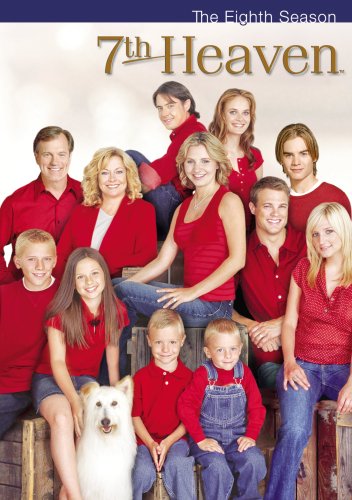
The last time I reviewed a set of the popular family TV series Seventh Heaven, I made the statement that “one of the hardest parts of reviewing DVD’s for this site is getting dropped in to the middle of a show I neither followed nor cared to follow….” Not much has changed since that time, certainly not regarding an improvement in the show’s quality, or in my enthusiasm regarding it. With Seventh Heaven – The Eighth Season, the Camden family and friends become increasingly obnoxious in their journey to the heart of sappy endings and Full House-esque melodrama. A dear friend of mine – a girl, no less, so it’s obvious this is not a matter of gender, but experience – recently pointed out that Seventh Heaven is little more than the one-hour drama version of the old TGIF lineup’s crap-tastic Bob Saget-starring sitcom. I agree.


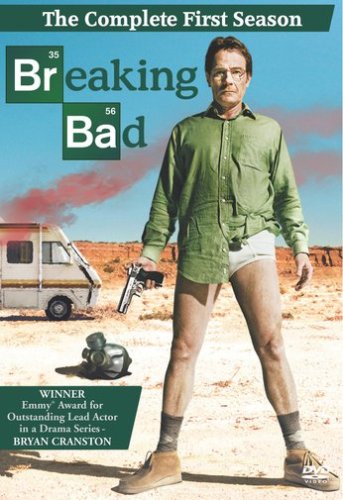
Breaking Bad could be the best show on television. I say “could be” because I haven’t seen enough of its competition to make a fair and adequate comparison. But one look at the beginning of Vince Gilligan and Mark Johnson’s breakthrough new series will have you undeniably hooked.