Posted in: No Huddle Reviews by Archive Authors on February 2nd, 2009
Posted by Ken Spivey
I am normally a fan of low budget films where the acting is sophomoric, the sets are made of cardboard, and the script could have been written by the C student in a high school creative writing class. These “so bad they're good” movies include “Recon 2020,” “Jesus Christ, Vampire Hunter,” and my former drummer's favorite, “Piñata: Survival Island.” “Redemption” is not even worthy to be listed with the aforementioned films. To quote Enid from Terry Zwigoff's “Ghost World,” this film “went past bad to good then back to bad again.”
Posted in: Disc Reviews by Archive Authors on January 31st, 2009
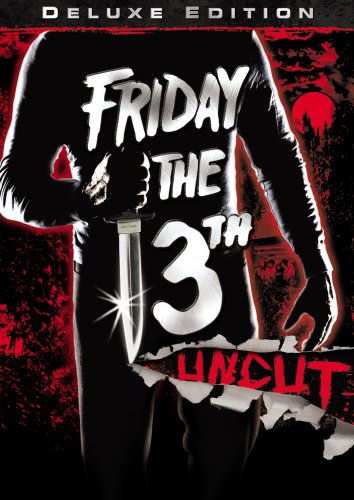
It’s 1980. The Reagan Years are upon you. The country is hopeful it will soon come out of the toilet bowl it was in for the last four years, and while things may seem bleak, you’re one of the lucky ones that still have a job, a girl, and a reason to live. As April becomes May and the days grow considerably hotter a little at a time, what better way to take a break from it all than driving you and your sweetie down to the local movie house for opening night of a new horror film you really haven’t heard all that much about entitled Friday the 13th?
Posted in: Disc Reviews by Archive Authors on January 28th, 2009
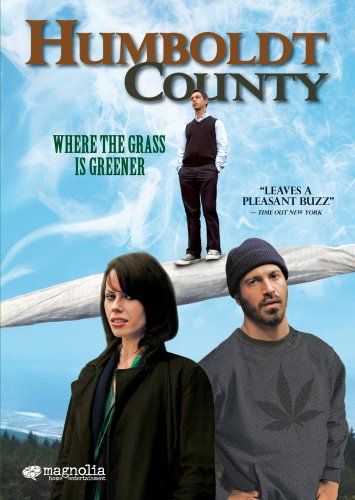
Humboldt County, the new independent comedy-drama from writers/directors Darren Grodsky and Danny Jacobs, sneaks on to shelves this month with a quietude as serene as its iZLER-composed musical score. Despite apt writing and direction, this slice-of-life piece simply fails to assert itself and leaves viewers with an indifference to the material.That’s not to say Humboldt County lacks competence. There isn’t a bad performance in the film. Two performances, in fact, are absolute dynamite. The always dependable Brad Dourif does what he does best, playing the crazy eccentric type, but this time he has a very human twist that endears him to the audience like never before. And Madison Davenport, a stunningly talented child actress, marks her debut with a strong performance that captures every scene she’s in.
Posted in: Disc Reviews by Archive Authors on January 28th, 2009
Imagine waking up in the morning and opening your eyes only to be greeted by more darkness. You feel your way out of bed. Scoot your feet slowly across the floor to make sure you’re not bumping in to anything. You make it to the kitchen and feel around for cabinets. Based on the shape of the objects you find inside them, the sounds those objects make (if any), the texture of their contents, you manage to make breakfast. The rest of the day consists of listening to the TV or radio and more feeling and sensing your way through life. Now imagine having such an affliction while living in abject poverty and being looked upon by the dominant culture as demon-possessed and deserving of your state.
Posted in: No Huddle Reviews by Archive Authors on January 21st, 2009
Posted by Ken Spivey
In a box, the men of importance placed a secret. They then created an underground city capable of complete autonomy, isolated from the outside world in hopes of shielding them from the trials of time. The box was given to the first mayor of “Ember City” and passed on to each successive mayor. After two hundred years the box was to open, revealing to the mayor's descendant the way out of Ember City. Yet, somewhere along the way the box was lost. Meanwhile, the city has fallen into a major state of disrepair. Houses are crumbling, pipes are corroding, and the household robots are malfunctioning. The current mayor seems unconcerned with the welfare of the city, while its residents are terrified of the impending failure of the city's power reactor and the end to their civilization. Ember City's only hope lies in the hands of a plucky young girl, Leena, who has found the box left by “the builders.” Leena is now in a race against time to figure out the mystery of the box before the reactor fails. The fate of “The City of Ember” lies in the box and the hands of young Leena.
Posted in: No Huddle Reviews by Archive Authors on January 14th, 2009
Posted by Ken Spivey
The Smithsonian Channel's three part documentary, “NatureTech” explores the “striking parallels between nature and technology.” The episodes of “NatureTech” work with the assumption that scientists have ignored nature for the past century, and their narrow focus has limited their growth. Contemporary researchers who bear this in mind are making unexpected leaps in their respective fields. These advances include tires that have the adhesive ability of frog feet, air conditioning technology based upon an in-depth study of termite colonies, and robots that mimic the sensory reactivity of cockroaches. This method of solving problems by observing nature is called “biomimetics.” Ironically, this key term is never defined in the documentary; rather, the viewer must use “context clues” to clarify this important and often repeated buzz word.
Posted in: Disc Reviews by Archive Authors on January 14th, 2009
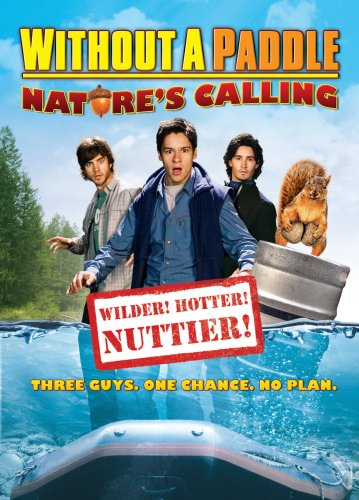
Male bonding deep in the heart of the Oregon wilderness is the order of the day in Without a Paddle: Nature’s Calling, a direct-to-video sequel to the Seth Green-Dax Shepard-Matthew Lillard comedy of 2004. Unfortunately, it’s more of a training ground for actors and crew than an actual film. Before I move in to the heart of this catastrophe, I should first forbid myself from attacking the practice of dressing up a cheap, low-budget remake and calling it a sequel. It’s too easy of a criticism, so nothing will be said of it, except to point out the fact that’s exactly what this is.
A flawed movie from the opening frame, WAP: NC has the production qualities of a bad Nickelodeon TV show with acting and script to match. It borrows heavily from the first film with two young friends growing up and growing apart, only to rejuvenate their friendship with a wild outdoor adventure that is partly gross, partly outlandish, and 100 percent ridiculous. What separates the two is the original had three solid performers and a talented supporting cast to convince viewers it was a better film than it actually was. Its “sequel” has none of this, and thus, fails miserably.
Posted in: Disc Reviews by Archive Authors on January 14th, 2009
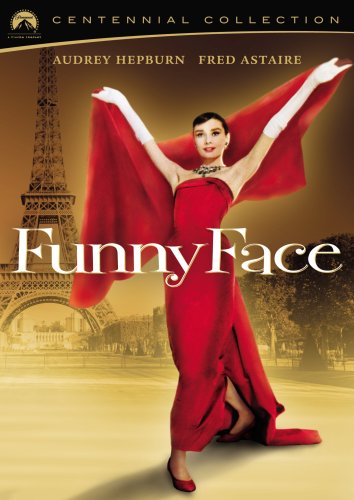
It’s hard being the bad guy, but sometimes you just don’t like a film that seemingly everyone else does. Such is the case for me with Funny Face, the classic Audrey Hepburn-Fred Astaire teaming that sees a bookish young lady go from the obscurity of her lonely library to the glitzy Paris lights as a high-profile fashion model. A little bit Cinderella and a whole lot of singing-and-dancing, Funny Face fails to engage with characters and story, relying solely on its lavish spectacle to do the trick. For legions of fans, it worked. For me, it didn’t. But like comedy, it’s all subjective, and if you’re in to fancy costumes, skilled choreography, arguably catchy music numbers, and healthy doses of nostalgia, then this one’s a no-brainer. But if story and deeply written characters are your things, sorry they don’t live here.
Astaire and Hepburn are a good pairing, and they work well together for each song-and-dance piece, but their love story gets very little chance to shine in between, and their normally solid acting abilities are buried in a heap of lifeless Broadway mini-productions that result, ultimately, in a showcase for all the wrong skills. When I watch a movie, I’ve got to be at the very least emotionally invested. If a film can engage my intelligence as well, that’s icing on the cake. Funny Face did neither. And as a fan of Ms. Hepburn’s work in Breakfast at Tiffany’s, believe me: no one’s more disappointed at that statement than me. The best thing about it is the overpowering, show-stealing performance of Kay Thompson as pushy magazine editor Maggie Preston. She dominates the camera whenever it’s on her. It’s just too bad our stars didn’t get that same chance to shine.
Posted in: Disc Reviews by Archive Authors on January 9th, 2009
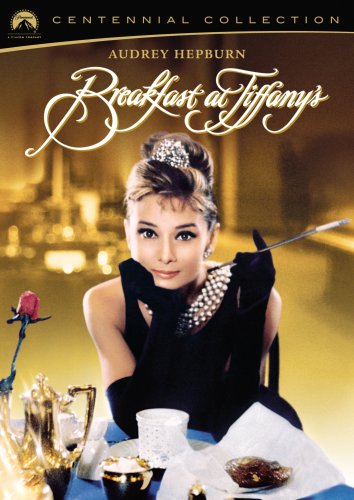
Holly Golightly is perhaps the most tragic, depressing character in all of literature and film, especially to those of us who know (or have known) people just like her. As an example to aspire to, Golightly fails miserably. She is internally and externally destructive, intentionally so. Truman Capote, author of Breakfast at Tiffany’s, the novella in which she was formed, has created in her a realistic portrait of people that fear happiness, and so imprison themselves to lives of restless and reckless abandon. She is just charming enough to make us pull for her, but equally cruel and uncaring once we’re suckered in. It’s hard to like Holly, and it’s almost impossible not to love her, if that makes any sense whatsoever. I’m sure it doesn’t. But neither does she, and so goes life.

On the other hand, the film version of Capote’s iconic work gets bogged down in insulting ethnic portrayals (Mickey Rooney as Mr. Yunioshi); studio sanitization (after all, Golightly is a call girl, but we get very little indication of that from the film); and a tacked-on happy ending that in no way fits with what’s come before it. Feel-good entertainment? Not when the audience knows better than to think things could turn out so neatly, so quickly. Still, Audrey Hepburn was a perfect choice for Golightly, and she heaps additional charm atop what was already on the page. George Peppard has very little to do as her does-she-love-him-does-she-not play-toy, but his final indictment of Holly is a stirring piece of writing, effectively delivered, that would have been a great place to end. It would have at least rung emotionally true. Unfortunately, the exchange is quickly swept under the rug by an ending that comes as close to Deus Ex Machina as one can get without actually achieving it.
Posted in: Disc Reviews by Archive Authors on December 31st, 2008
“I fear I’ve done some things in life too late… and others too early.”
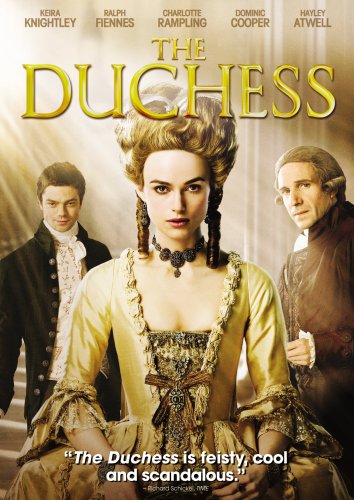
Not a creed for the growing minions of our divorced population (though it probably should be), but a remarkably summative line from the new film The Duchess starring Keira Knightley and Ralph Fiennes. Knightley is Georgiana, a spirited young girl, who starts with a fairy tale ideal of how her life as a married woman will be, but soon learns the world (and especially her husband, Fiennes) isn’t ready for her brand of feminism. Knightley does an admirable job of charming the peripheral characters, as well as viewers, but she cannot seem to win the affections of her husband. As time passes, she no longer cares, and instead seeks solace in the arms of Charles Grey (Dominic Cooper), a promising young politician.