Posts by Archive Authors

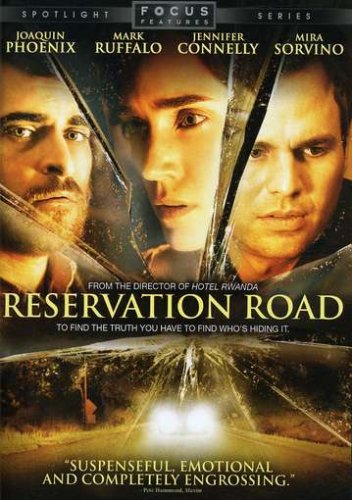
When the Learners are driving home from their son Josh’s recital, they stop off at a gas station where he is struck and killed by Dwight Arno (Mark Ruffalo) who is heading home from a Boston Red Sox game with his son Lucas. Dwight flees the scene while Ethan (Joaquin Phoenix) and Grace (Jennifer Connelly) mourn the death of their son. In the following weeks, Ethan becomes obsessed with finding the hit and run driver while Dwight deals with his guilt and tries to bond with his son against the backdrop of the 2004 Boston Red Sox historic World Series run.

Reservation Road had a lot going for it on paper. Phoenix, Connelly, and Ruffalo are all talented actors and Terry George (Hotel Rawanda) is an acclaimed up-and-coming director. However, Reservation Road fails to hit the emotional high notes that come with the territory. None of the actors are given much to do with the material, and the film’s pace is drearily slow. Connelly and Mira Sorvino are severely underused while Phoenix and Ruffalo don’t explore the depths of their characters. Everything is paint by numbers and the end result is a film that never lives up to its potential.

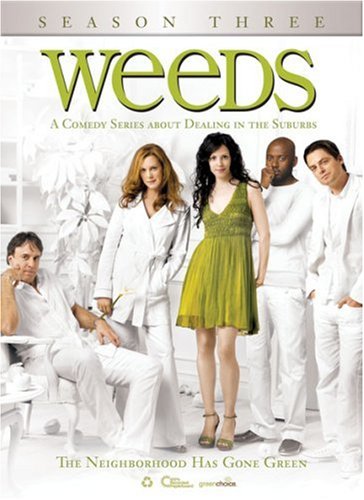
When last we left the fine folks of Weeds, Nancy Botwin (Mary-Louise Parker, Saved!) and her herb-growing buddy Conrad (Romany Malco, Blades of Glory) were being held at the mercy of two rival drug groups, both of which were very interested in Nancy’s stash and her cash, but it was taken by her son Silas (Hunter Parrish, Freedom Writers), who was arrested by Nancy’s friend Celia (Elizabeth Perkins, 28 Days). I’m not even close to discussing how things got to this point, and needless to say, the twists and turns sound a little soap operatic at times, but when you’re invested into the characters’ fates as you are, they provide for some memorable experiences.

One of the things that Weeds does is push things to the edge of the envelope, and I‘m fine with that. What I’m not fine with, and what my wife and I get into debates about from time to time, is that in Season Three, Nancy’s transformation from widowed mother in a upper/middle class suburban neighborhood to full-fledged marijuana dealer becomes full and complete. In the previous two seasons, Nancy mixed her Caucasian naivete rather well with her cold and precise drug dealing livelihood. In Season Three, she becomes much more cold and precise, particularly around people she knows and calls friends. She takes care of her feelings first, particularly in one episode where she sleeps with her boss (played by Matthew Modine of Vision Quest lore), despite Celia’s urge to be with him. Her rendezvous with Conrad, one the show had been waiting for for almost three seasons, was more for her convenience than anyone else’s. She becomes much more distasteful than in previous seasons, and all the sweetness of sucking on an iced coffee straw isn’t going to help things.

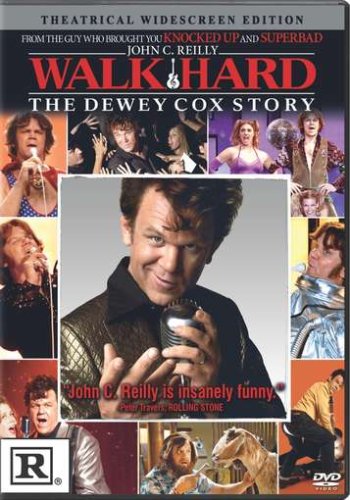
Honestly, I don’t know what the bigger tragedy is, the fact that John C. Reilly has been a funny performer for years, or the fact that it’s taken guys like Judd Apatow and Adam McKay a chance to show off his comedic talent. For those who don’t know, Reilly was in a hilarious ten-minute blooper reel in Boogie Nights which showed that he could improvise with the best of them. The guy also played Bigfoot in an episode of the Tenacious D show that aired on HBO in the mid ‘90s. But sure, put him in Chicago where he was nominated for an Oscar or in ensemble films directed by some of film’s greatest voices. His true love, that which gives him much joy and pleasure, appears to be when he’s goofing around, like he does in Walk Hard: The Dewey Cox Story.

Walk Hard was co-written by Judd Apatow, whom you might have heard of. Any R-rated comedy that has been released in the last 18 months to any sort of popular appeal has had some sort of involvement by the writer-producer-director. Jake Kasdan (Orange County) was the other writer and directed the film, where Reilly plays Dewey. He grew up in the shadow of his brother, who died after a tragic machete incident. Dewey grew up and had a hit early in his life, but then went through the usual period of drugs and substance abuse before his career went through a rebirth of sorts. If it sounds like the usual biopic treatment of a musical icon, that’s what it is, and what Apatow and Kasdan manage to do is stick a thumb in the collective eye of films like Ray and Walk the Line, as those films possess a slight precociousness that deserves lampooning of some sort. Reilly plays Dewey as a fifteen-year-old. The guy is over 40, OK? So yeah, that’s funny. When Dewey’s drummer Sam (Tim Meadows, Semi-Pro) shows him what drugs are like, it’s done with tongue firmly planted in cheek. Dewey’s various relationship issues are shown, starting from his first wife Edith (Kristen Wiig, Saturday Night Live) who seems to be pregnant in every scene as she puts down Dewey, to his second wife Edith (Jenna Fischer, The Office), who is a born-again Christian and hopes to get Dewey the same way. Every girl, boy, rock and stick in between is shown too.

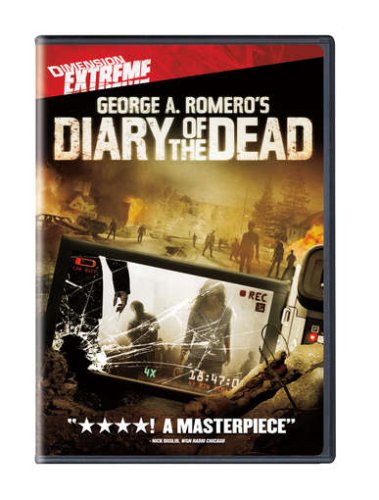
It’s ironic that 28 Days Later and the Dawn of the Dead remake (which was originally a George Romero film), have jump-started Romero’s long-running “Dead” series that started in 1968 with Night of the Living Dead.

Since 28 Days Later and the Dawn remake were released, Romero has released two new installments: Land of the Dead in 2005, and now Diary of the Dead in 2007.

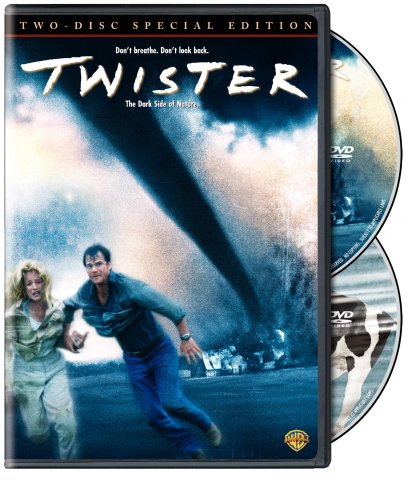
You probably remember where you were when you saw the trailer for Twister. Hot off the heels of Forrest Gump, which was a nice story with some pretty cool computer effects at the time, Twister simply took the effects to a whole other level. Barns were torn apart, cars were tossed into the air, and that one shot, where the car is driving as a tractor is thrown and slammed into the ground, and the tire from the tractor hurdles through the car window. You wanted to go see that film, whatever the cost might be.

But holy crap, once that movie came out, the film landscape was redefined. But it was less about actual storytelling per se, and more about the computer effects that carried the film along, with not a lot of significant or even interesting story or characters that were appealing enough to care about. No real original ideas, just 113 minutes where director Jan de Bont (Speed) tries to dazzle you and say, “Hey look! Really cool twisters!” And you know why that is disappointing? Because one of the writers was Michael Crichton, who’s written some pretty cool stuff: Jurassic Park and Westworld, and yet nothing much is to be had here. Bill (Bill Paxton, Aliens) has returned to Oklahoma and “Tornado Alley” with his fiancée (played by Jami Gertz of Still Standing lore), to find out if Bill’s estranged wife Jo (Helen Hunt, As Good As It Gets) has signed the couple’s divorce papers. Jo hasn’t yet, so Bill’s got to stay on her to get them done. In the meantime, the chase to find a twister has begun, and Bill, compelled by an urge to see a technology that he and Jo had envisioned come to fruition, helps Jo and her crew out for one day.

There’s probably a reason why there’s a surprising and varied cast of characters in the independent film The Good Night, and that’s because a familiar last name is involved with the project. Jake Paltrow, son of Bruce and Blythe Danner, and sister of Gwyneth wrote and directed the piece which at first glance might be a pretentious and audacious film, but is a little more interesting than it seems.

Dora (Gwyneth) and her boyfriend Gary (Martin Freeman, The Office) are living in New York, and Gary is working as a musician who does work on commercials, even after he was a one-hit wonder in a band with his friend Paul (Simon Pegg, Shaun of the Dead). Gary’s relationship with Dora appears to be flailing, and he starts to dream of a mysterious woman (played by Penelope Cruz of Volver lore) that he develops an intense kinship with. He then starts to sleep longer in order to spend as much time with her as possible and seeks out a specialist (Danny DeVito, Hoffa) in order to find out how to sleep longer.

A couple of years ago, I was out a trip to New Jersey on business with my boss. When we got there, he wasn’t feeling well, so I had him sit down while I went to the clinic down the hall to see if some medical attention could be given to him. As I turned the corner with an attendant, that’s when I saw him hit the floor. After a few moments of stabilization he was taken to the hospital, where it was determined that he had a stroke. A co-worker and I stayed with him for the duration of the next couple of days until his family could get there, and over that time, he suffered several smaller strokes in the process. One minute he could talk rather lucidly, and like flipping a switch his facial muscles would sag and be nonresponsive. Once his family came, we managed to get the chance to come home, and he spent several more days in the hospital, remarkably without any repercussions from this incident, and came back to work, where we still talk (I’ve moved to another company) and share the occasional gallow humor about what happened.

He was lucky, though there are others that have experienced far worse situations. The Diving Bell and the Butterfly is a look at the life of Jean-Dominique Dauby. The editor of the French version of Elle magazine led a somewhat glamorous life,and one day had a severe cerebrovascular incident, whereby he was left paralyzed, but responsive in his left eye, which allowed him to communicate solely by blinking. With the help of speech therapists, he was able to state his thoughts in his book by the same title, as a metaphor of his useless body, labeled as the “diving bell,” ironically clashing with his free spirit, your “butterfly,” if you will.

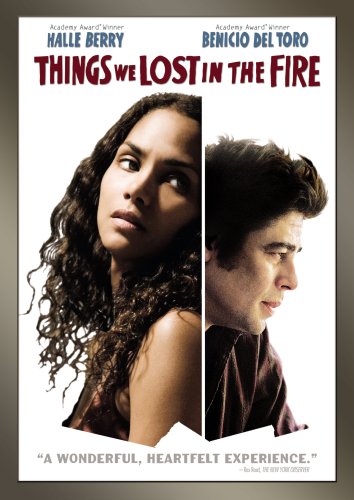
It’s hard to peg a movie like Things We Lost in the Fire. While people want to slam it and say that it’s not an uplifting movie, I think that upon further review, they might want to examine those behind it, and see that it’s another solid effort from them.

Written by Allan Loeb in his writing debut and directed by Susanne Bier, the talented Danish director behind the film Brothers, the film centers on a recent widow named Audrey, played by Halle Berry (X2), who lost her husband Brian (David Duchovny, The X-Files) to a murder in tragic circumstances. After notifying Brian’s friend Jerry (Benicio Del Toro, Traffic) about the murder, Jerry doesn’t seem to take it so well. Brian and Jerry have been friends since they were kids, and while Brian went onto a life as a successful architect, Jerry was a lawyer before becoming addicted to cocaine and heroin, and was spending his days at a sleazy dive apartment getting high. Yet Brian would come and visit Jerry, to catch up and talk about his family. When Audrey would be skeptical of how Jerry might be exploiting Brian, Brian stuck by him. So what Audrey winds up doing is inviting Jerry to live with them. In the process, Jerry helps Audrey and her kids cope with their loss, while trying to strike the delicate balance of sobriety.

Will Smith finds himself in a bit of a career quandary if you ask me. Sure, one of the good sides to being as as he is is that he’s quite the popular guy that nobody wants to see get killed. But the popularity has seemed to stymie him a little bit. When he does dramatic work, it’s clear that the push is for him to win an Oscar, like in Ali and The Pursuit of Happyness. So when people look past that intent, even when he might want to do dramatic work, he’s forced to take on slightly darker roles in action films, which I guess serves as his happy medium of branching out while still pleasing the people. I Am Legend is another one of those examples, very similar to another Smith sci-fi film named I, Robot.

I Am Legend is based on the Richard Matheson novel and is loosely inspired by Charlton Heston’s 1971 film The Omega Man. This version is adapted by Akiva Goldsman, who won a Screenplay Oscar for A Beautiful Mind, and directed by Francis Lawrence, whose first feature effort was the supernatural comic book film Constantine. But in case you don’t know much about the film or really had a concern to go see the Smith film, he plays Robert Neville, an Army virologist. Robert was responding to an effort of a virus that ironically was supposed to be a cure for cancer. But instead of ridding the body of cancer, it became a bug that infected humans, turning them into psychopathic, ultraviolent zombies, out to kill any members of the living. Neville continues to work on a cure for the virus, even after it has decimated the world’s population.

So what did we all learn with the Joel and Ethan Coen’s latest opus, an adaptation of the Cormac McCarthy novel No Country For Old Men? Well, suffice to say, along with the creative resurgence of the brothers, we get a film that’s part modern-day Western, part action, part comedy and even perhaps part-horror, but in the adoration and adulation, to want to pin the film down as something is to forget that above all else, the film is a tale about changing times, told by someone who’s seen better days and is nostalgic for them. It’s that story that seems to be ignored to a certain degree by people, which oddly enough is ironic considering the title of the film.

The story that’s pushed along by the film surrounds a drug deal where all the concerned parties were killed in cold blood. The bodies were found by Llewelyn Moss (Josh Brolin, Planet Terror), who also managed to find several million dollars in the vicinity. But as is the case in both movies and real life, that kind of money is not going to not be missed for long. So enter Anton Chigurh (Javier Bardem, Before Night Falls), a man with a mysterious past. But there are a few certainties we know about him: first, he’s hired by someone to recover the money. By whom is immaterial, though through other recollections, he’s made out to be an killer with ice-cold veins, and we find this out within the film’s first several minutes, when he kills a police deputy in a gruesome fashion at a police station. So Chigurh is after the money and, inevitably, after Moss. The crimes occur in a sleepy west Texas town whose sheriff is Ed Tom Bell (Tommy Lee Jones, The Fugitive), and all three men find themselves near the border in 1980, on the cusp of a serious influx of drugs to the U.S..