Posts by Archive Authors

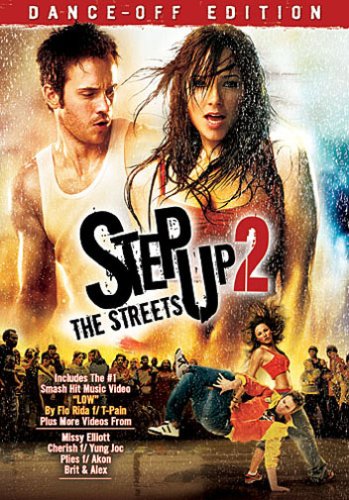
For as much as I might viscerally disagree with the creation of a film or its sequel, I lay much of the blame at you, the viewer and movie-going public. You created the furor around the Step Up series of films. You all went in droves to the first film when it was released in August 2006, when movies were winding down in the blockbuster season and thus helped it make $65 million domestically and more than $110 worldwide. It’s your fault that another film was inevitable, so in the down-turn of this past February, we got a second one. That one made about the same domestically, but made $30 million or so more and almost brought in $150 million worldwide. Count on the fact that another 90-minute film about teens dancing will be made and that the Step Up trilogy (I threw up in my mouth a little when writing that) will be complete.

Step Up 2 was written by Toni Ann Johnson (Mean Father) and Karen Barna, which begs the overall question of why TWO people needed to write a movie about dancing, but I digress. John Chu (When The Kids Are Away) directed. Andie is played by Briana Evigan, and if the name is familiar to you, she’s the daughter of Greg Evigan of BJ and the Bear fame. Briana does not look like a chimp, for the record. She decides to become friends with Chase (Robert Hoffman, She’s the Man) at a school the two go to in Maryland. They try to join an exclusive dance crew named the 410 and are rejected, so they start their own dance crew to go against the 410 in a dance competition. That’s the story, but the main focus is on the film and the dancing. The dancing carries the film from beginning to end and is peppered excessively throughout, and that’s what people cared for and what people saw.

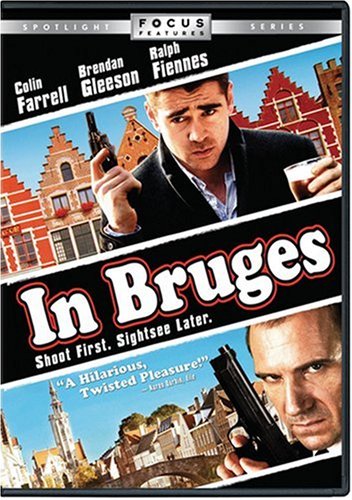
According to Wikipedia, Bruges is the capital of Belgium and home to the college of Europe. Much of the architecture from the 12th and 13th centuries is in good shape and preserved fairly well. The Church of Our Lady is one of the tallest brick buildings in the world. The Basilica of the Holy Blood purports to be a church that houses some blood from Christ. It also serves as the backdrop for a couple of hitmen who have to find comfort in the town for awhile in the film set in Bruges, called In Bruges.

The film was written and directed by Martin McDonagh, whose previous work was in the Oscar-winning short film Shooter. Ray (Colin Farrell, The Recruit) and Ken (Brendan Gleeson, Kingdom of Heaven) are forced to stay in the town for two weeks, after an assassination assignment given to Ray turns particularly brutal. The two look at this presumed exile in two different ways; Ray thinks of it as purgatory; he loves the lifestyle of London and access to anything he wishes. Ken rather enjoys it. He views it as an opportunity to enjoy a place he’s never been before. The nuances of Bruges are also memorable; aside from a little person in a movie and a drug dealing local named Chloe (Clemence Poesy, Harry Potter and the Goblet of Fire), the film is chock full of hilarity and hijinks. When Ken and Ray’s boss Harry (Ralph Fiennes, Schindler’s List) comes to meet with the boys, things take a bit of a dramatic turn.

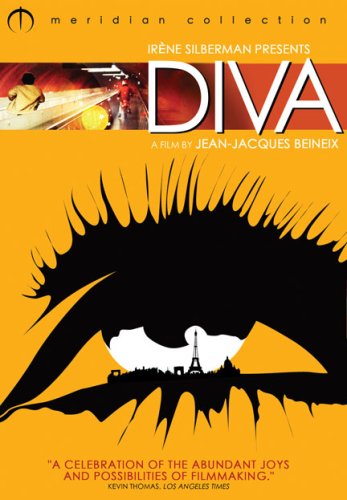
I don’t remember that much about Diva growing up; it was a film that I heard about as a kid, and a lot of people liked it, but that was the first time I can honestly say I was exposed to the arthouse film, and that it was something that I wanted to find out more about. Through the years, I’ve seen many a foreign or independent film, however the one that started all of it off for me I hadn’t seen, until now.

Diva was adapted from the Daniel Odier novel by Jean-Jacques Beineix, who previously directed a documentary version of The Diving Bell and the Butterfly long before Julian Schnabel put together a dramatic version of Jean-Dominique Bauby’s life. The story of Diva is a little complicated, but I’ll give it a go; a young messenger attends the concert of an opera singer, and creates a recording of the performance, which is a rarity for the singer, who normally frowns on recording her work. A line is said in the film along the lines of “art shapes itself around business, when business should actually shape itself around art.” A woman is murdered and drops a separate recording that is criminally linked to the police, and the tape winds up with the messenger. When the messenger, named Jules, is spotted recording the singer’s concert, they threaten him and demand to obtain the tape, so that it can be sold to the highest bidder. Unbeknownst to Jules, the participants of the other tape include a crooked police chief, who wants to try and get the other tape by any means necessary.

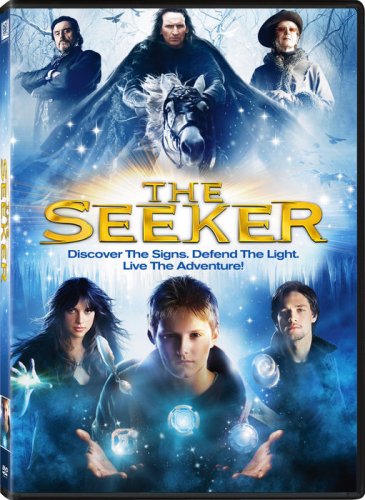
It’s not that these fantasy-epic films that feature a young child in the starring roles bore me, it goes to the larger notion that Hollywood will remake every child’s fantasy novel into some sort of cinematic product, so a buck or two can be made. For every Harry Potter, there’s a Golden Compass or even Spiderwick Chronicles. The well is rapidly running dry, and you needn’t look much further than The Seeker: The Dark is Rising, a film about a young lonely boy who finds himself in circumstances and an adventure beyond what he might initially suspect. Wait, doesn’t that sound like EVERY children’s movie lately?

The novel was written by Susan Cooper and edited by John Hodge, who did Trainspotting, of all films, and was directed by David Cunningham (To End All Wars). In this, Will (Alexander Ludwig, Race to Witch Mountain) plays the youngest in a family of six Americans who have moved to London for their father’s job. He soon finds out about his real roots, continuing a lineage of warriors, protected by the old ones in Miss Greythorne (Frances Conroy, Six Feet Under) and Merriman Lyon (Ian McShane, Deadwood). No other performers from HBO television series were involved in the making of the production.

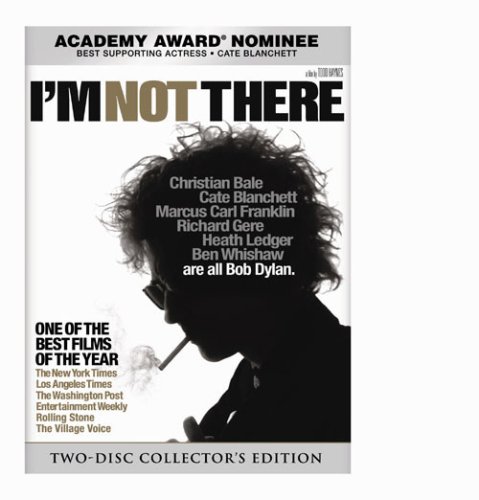
Todd Haynes continues to dazzle and amaze with his body of work. In Velvet Goldmine, he told the story of a fictitious glam-rock band in David Bowie/Ziggy Stardust style. Far From Heaven found him taking the Douglas Sirk films of the ‘50s into a nontraditional turn. In his follow-up film I’m Not There, his first directorial effect in five years, Haynes examines the persona and essence of Bob Dylan without actually really using the name or the words together at all in the film in a film released in 2007, where features like No Country For Old Men and There Will Be Blood earned a slew of awards, I’m Not There was an understated gem, and yet summing it up is a little difficult.

First off, while I’m Not There is a film inspired by the life of Bob Dylan, semantically it’s not a biopic. It examines the more notable images created by Dylan; one of the adolescent who portrayed himself to be the poor white kid who liked the work of Woody Guthrie and who, ironically enough, is named Woody (Marcus Carl Franklin, Be Kind Rewind). Arthur Rimbaud (Ben Whishaw, Layer Cake) is the mid-‘60s Dylan and de facto narrator whose words appear to be lifted from magazine articles of the era; Jack Rollins (Christian Bale, Batman Begins) is the folk hero and later born-again Christian-era Dylan; ironically Rollins is played by Robbie Clark (Heath Ledger, Brokeback Mountain), who watches his marriage deteriorate while he deals with the period of fame he has wrought; and Cate Blanchett (Elizabeth) plays the electric Dylan, touring in England, addicted to pills and alienating his acoustic fans. In his later years, Billy the Kid (Richard Gere, Pretty Woman) plays Dylan as the aging anonymous hero in the west, which in a way Dylan seems to want to do in reality. While none of these interpretations can be claimed to be accurate, they are, as Haynes says, fleeting glimpses of the image that Dylan created for himself. Using surrealistic and style choices influenced by Fellini and Goddard, Haynes helps make the worlds of Dylan all the more emotionally affecting.

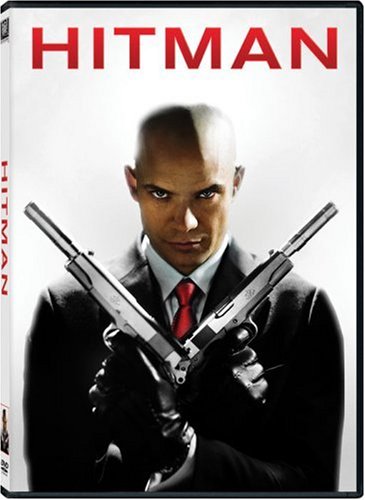
It's not that video game movies are bad because they are based on video games -- things that are usually void of character development and plot in favor of cheap thrills -- it's just that they've mostly been handled by hacks, from the director down to the caterer. This usually makes the movie about as tedious as the filmed vignettes you're forced to watch in between the video game's levels.

Hitman is the newest example of a video game movie, although by the time you read this review, chances are there's another video game movie out in theaters. Uwe Boll seems to crap out about a half dozen of these things each year. Anyway, Hitman does little to advance the fate of video game movies, due to bland characterization and a murky yet simple plot. That said, it's a visual feast of bullets, blood and Olga Kurylenko (Quantum of Solace). But that's about the only thing Hitman has going for it.

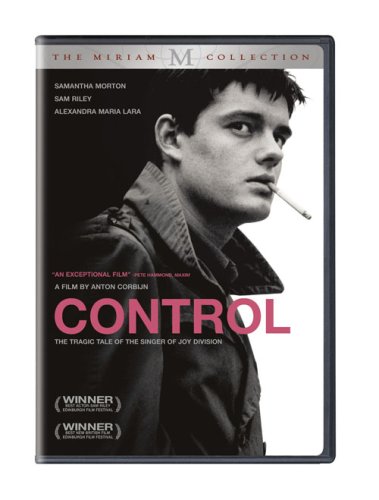
It’s nice when a movie lives up to its expectations and even surpasses them because it rarely seems to happen anymore. Such is the case with Anton Corbijn’s Ian Curtis bio-pic, Control.

I’ve been waiting to see Control for a long time. From the start, the film sounded interesting, since I am a huge fan of post-punk alternative rock music, the genre that Ian Curtis and Joy Division practically invented in the late 1970’s. But when I heard that long-time band collaborator and renowned music video director Anton Corbijn was directing the film, my anticipation rose to even higher levels.

Katherine Heigl gets her Juila Roberts on in the romantic comedy 27 Dresses as Jane, a friendly woman who can't say no to planning weddings for the many people she knows. Ever since she was young she's loved weddings, even though she doesn't seem to have the time to find a future groom of her own. She's in love with her boss, George (Edward Burns), but when Jane's sister Tess (Malin Akerman) drops in for a visit, Tess and George fall in love and before Jane knows it, they're engaged to be married and she's planning their wedding. Let the cliched rom-com hijinks begin!

Along the way Jane meets Kevin (James Marsden), a cynical, anti-marriage commitments writer for the fictional New York Journal and the two begin a bickering love/hate relationship. Chances are you know how it'll turn out.

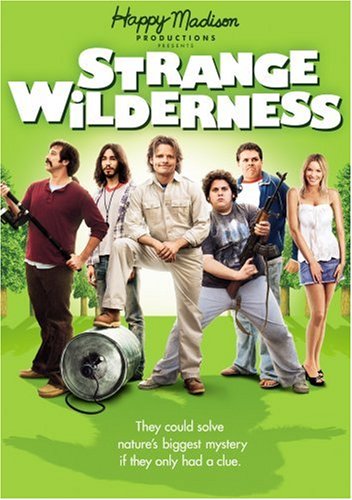
I’m not sure how many people are familiar with the process of moviemaking, but when a film is not up to studio expectation and takes a long time to finally arrive to theaters after filming has wrapped, the result is sometimes due to financial issues with the studio. But most of the time it’s due to the fact that the studio has seen the final product, and it’s so abhorrent and without any value, redeeming, comic or otherwise, that it will be released as quietly and without recognition as possible. Now I don’t know if there were any financial issues surrounding Strange Wilderness, but I will say this: the film was shooting as far back as December 2005 and was released in February 2008, and at this point on rottentomatoes.com, there is not one positive review from the three dozen that are on the site. I’ll leave it to you to decide what the reasons why are.

Strange Wilderness was written by Peter Gaulke and co-written (and directed) by Fred Wolf. Both of whom were writers on Saturday Night Live. Wolf, in fact, is the head writer for the show to this day. The film is based on a series of shorts the pair would put together, and in the feature, Peter (Steve Zahn, Rescue Dawn) is the son of a nature reporter and enthusiast, and does a show extolling nature, but things aren’t going his way. So, after an unproductive meeting with his network executive (Jeff Garlin, Curb Your Enthusiasm), he decides to go on an expedition for well-known wilderness legend Bigfoot. So he packs up his crew, which include Cooker (Jonah Hill, Superbad), Junior (Justin Long, Walk Hard), Fred (Allen Covert, Little Nicky) and Danny (Peter Dante, Big Daddy), and they all head out into the woods to find Bigfoot. Peter’s crew is a couple of cans short of a six pack, so wacky hijinks ensue.

Come on, admit it, you want to say that Hayden Christensen was the worst part if the latest trilogy of Star Wars films, and yeah, the guy did bring the suck, to be sure, but he wasn’t really that bad, right? Well yeah, he was, but he’s not the only thing wrong when it comes to Jumper, the latest film from writers David S. Goyer (The Dark Knight) and Jim Uhls (Fight Club), who adapted the Steven C. Gould novel. Directed by Doug Liman (The Bourne Identity), Jumper features Christensen as David Rice, a man who grows up with a genetic gift, the ability to ”jump” from place to place, Christensen’s performance was his first major role since transforming Darth Vader from an ominous, silently rueful and dominating presence, to a dude who thought his girl was cheating on him, so he started hanging out with a creepy old guy as a result.


David is unsure about his ability when he first discovers it but then starts to use it to his advantage, going to places ‘round the world, walking in and out of banks unnoticed, pretty much getting a chance to do whatever he wants. He leaves his Dad (Michael Rooker, Mallrats) early on in his life, and his mother (Diane Lane, Untraceable) had long since abandoned him, so the world is pretty much his oyster, right? Wrong. There’s a guy out there who captures and kills “jumpers,” a guy named Roland, played by Samuel L. Jackson with a grey wig, which, if I may, pretty much tells you it’s going to be a bad movie. Honestly, outside of a Quentin Tarantino movie, have you seen a really good movie that he’s in where he’s wearing some stupid hair prosthesis? Thank you. Soon, David finds someone else that can jump, a British guy named Griffin (Jamie Bell, King Kong), who, aside from telling David he’s not completely unique, also tells him that Roland is part of a group who hordes and kills jumpers named “Talismans,” so he’s generally got to watch his butt around them.