Posts by David Annandale

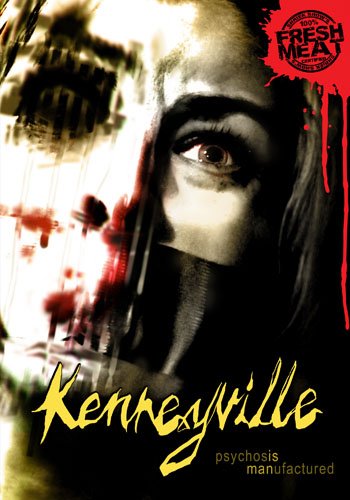
Two private investigators (Dany Gehshan and Vanessa Broze) are hired to look into the disappearance of a young woman. There search leads them to the small town of Kennyville. They have barely arrived before Gehshan is beaten bloody and Broze is kidnapped. Gehshan’s only ally in his search is a local (Michael Scratch) who wants nothing more to do with the town-wide conspiracy of silence. It seems Kennyville is home to a brainwashing outfit that transforms attractive young women into lethal, programmed assassins, and that is exactly the process that Broze is undergoing.

This is an odd little piece. It takes plot elements from The Manchurian Candidate and (especially) On Her Majesty’s Secret Service and marries them to a rustic, grimy aesthetic that owes more to recent torture porn efforts. (Why are the evil experiments conducted in squalid farm buildings? Because it’s creepier that way.) In this manner, Kennyville does its best to make a virtue out of its budgetary necessities. Though it deserves props for trying something different, it remains a prisoner of its tiny budget. Gehshan and Broze are too young to be convincing as experienced PIs, and villain Doran Damon Okkema is too familiar a suave Dr. Evil type (complete with pronounced eye tick). The rural setting, too, just doesn’t work for this kind of a conspiracy tale. Furthermore, it appears, from press material, that the film is actually a metaphor about bi-polar disorder, but this is an idea that doesn’t come across in the execution. Ambitious, then, but its reach exceeds its grasp.

His troops defeated and massacred, General Pang (Jet Li) staggers away from the battlefield, more dead than alive. After a brief by intense overnight encounter with a mysterious Lian (Xu Jinglei), he falls in with bandits headed up by Er Hu (Andy Lau) and Wu Yang (Takeshi Kaneshiro). He finds a renewed purpose in life with this group, and forges the band into a formidable fighting force, one that will play an ever greater role in shaping the conflicts that are dividing China. But the fellowship he forms with his blood brothers has a fatal flaw: as fate would have it, Lian is promised to Er Hu. Betrayal and tragedy lurk in the wings.

First, the positives: this is a very handsome production, with a visual sweep that is appropriately epic. The battle scenes are expertly staged, whether these be small-scale skirmishes or grand campaigns. These are spectacular, exciting moments in the film. The characters and their story, however, are far less interesting. The love between Pang and Lian is difficult to empathize with – we don't really understand why these two are obsessed with each other, and must take it on faith that they are. All of which makes it difficult to care about the relationship, and thus its consequences are more irritating than tragic. And while Pang's internal conflicts are sometimes compelling, Lian's characterization is so perfunctory that she comes across as little more than venal, misogynist caricature. In the end, then, the film seems to drag on longer than its 113 minutes, as one finds one's eyes glazing over between the battle scenes. This is a beautiful movie, but an uninvolving one.

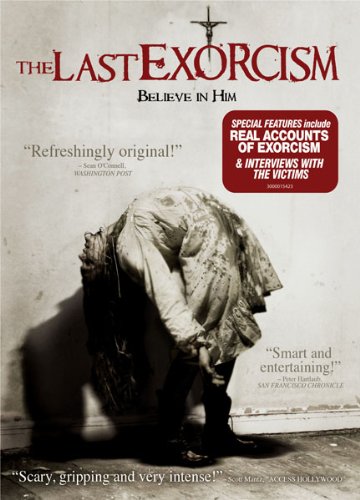
The Reverend Cotton Marcus (Patrick Fabian) has made a tidy living preaching the Gospel and working his specialty: exorcisms. But he has lost his faith and, along with it, his willingness to fleece the gullible. He does, however, acknowledge that an exorcism can prove psychologically beneficial if the recipient believes in the ceremony. All that said, Marcus wants out of the business, but he takes on One Last Case, and a film crew tags along with him to the backwoods (where else?), where the devout Louis Sweetzer (Louis Herthum) is convinced that his daughter Nell (Ashley Bell) is possessed. Marcus slips into his routine, but soon discovers that there is is much more afoot here than he could have imagined.


The first half or so of The Last Exorcism is not without interest. It does, in some ways, handle the faith-vs-reason question more interestingly than The Exorcism of Emily Rose, and it does a credible job of gradually building suspense. But as we approach the climax, the cracks in the found-footage conceit begin to show, and the resolution blasts straight past “frightening” and into “ridiculous” and makes nonsense of the entire mockumentary premise. Maybe it’s time to retire what is rapidly becoming a tiresome cliché. In the end, then, the film is a misfire, but kudos to Ashley Bell for her disturbing physical performance – she does all the back-breaking double-jointed shenanigans without the benefit of special effects.

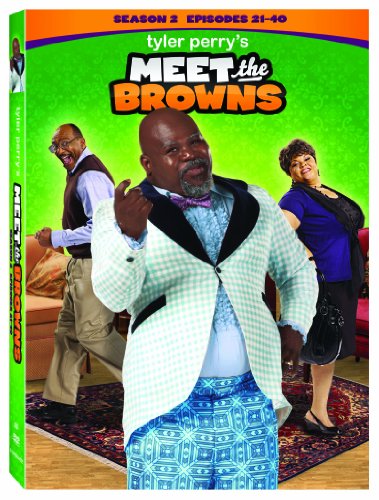
Season 2 of the Tyler Perry-created series continues misadventures of Leroy Brown (David Mann), who, last season, opened up a seniors’ residence. This season has all the characters firmly in place, and the stage is set for no end of misguided schemes and misunderstandings, all of which conclude with lessons learned and heartstrings tugged.

If the above sounds a little generic, that’s because so is the series, and furthermore, I’m referring to an archaic quality to this series’ generic nature. Put another way, this is an unapologetic (though it should be deeply ashamed) throwback to situation comedy’s dismal era of the 1980s. The performances broad, unfunny caricatures, all squealing yelps and bugging eyes. The laugh track comes in on every other line, underscoring just how desperately unfunny the dialogue is. As for the plots, I cry mercy. Brown hopes to get rich marketing his family’s barbecue sauce, Brown becomes an over-demanding patient after being grazed by a bullet, Brown wins twenty bucks in a lottery and becomes a gambling fiend, and so on and so on and so forth. Storylines that would creak even if the main character were named Ralph Kramden, overlaid with thudding sanctimony and Real Social Issues.

It’s willing suspension of disbelief time, folks, as this reality show chronicles the soap-operatic lives of a group of young lesbians. Cari and Kacy want a baby – will they find the appropriate sperm donor? Romi and Kelsey are are having trouble with their sex life. Whitney is having all sorts of girl trouble, while Sajdah (whose name oddly does not end with “y” or “i”) is seeking her first relationship.

And on and on and on we go. Can eyes glaze and roll at the same time? You’ll find out before too many minutes of this season have passed. Who the hell is this show aimed at? The flashes of nudity and coupling, not to mention the box cover art and uniformly attractive cast (I’m sorry, subjects) smack of catering to male fantasies, but is that audience going to sit through the oversharing psychodramas? Is anyone? (Apparently, I guess, since this is the second season.) Years ago, there was a moment in House where the titular doctor announces that he’s off to his office “to watch The L Word with the sound off.” I keep thinking of that line in connection with this show. It feels like nothing more than comic fodder for another program’s punchlines.

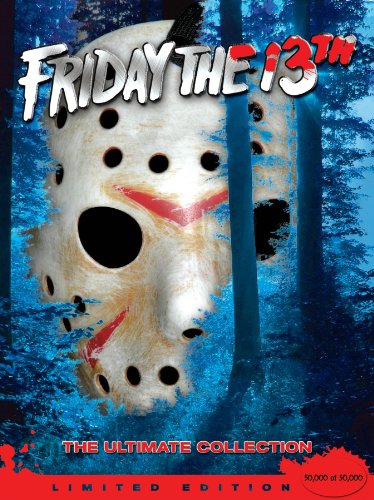
A few years back, Paramount released all eight of the studio’s Friday the 13th films in a so-called “Ultimate Edition.” With cut versions of the films and no 3D, it wasn’t really that ultimate. So here we are again, with another Ultimate Edition (also Limited!) and this time, the package is much more worthy of the name, bringing together all the deluxe versions of the series.

As those deluxe editions have previously been reviewed on this site, I am now going to surrender the floor for a while. The comments below on Part 1 are by Aric Mitchell, and on Parts 2-6 are by Gino Sassani. I’ll come back for 7 and 8.

In the wake of the financially successful but critically drubbed Transformers: Revenge of the Fallen, Michael Bay and company return to the fray with this considerably more coherent exercise. Given that this movie committed to advancing the cause of 3D like no other film since Avatar, the question arises as to how well its visual splendour and over-the-top technological extravagance will translate to home video. The answer is: pretty damn well.

Following the events of Transformers: Revenge of the Fallen, the Autobots are working hand-in-mechanical-glove with human authorities (in other words, the apparently all-powerful CIA), keeping close watch for Deception activity, but also helping out in human-on-human conflicts. Meanwhile, Shia LaBeouf has traded in improbably hot girlfriend Megan Fox for the equally improbable Rosie Huntington-Whiteley (an improbability that the script does have some fun with). He is also out of work and dismayed at not being given due consideration as a saviour of the planet.

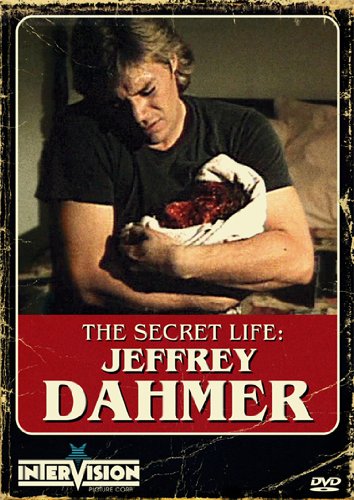
The grindhouses may be long gone, but their memory lingers on, thanks to releases like this one, which, being released in 1993, is from the twilight years of theatrical exploitation, and thus more accurately from the second, virtual life the grindhouse aesthetic found on home video. This is the life of Jeffrey Dahmer, narrated in retrospect by the serial killer (screenwriter Carl Crew). Dahmer recounts his obsessions and growing need to kill, and a fair bit of the film’s running time consists of Dahmer hooking up with young men and murdering them.

The film has, then, a very episodic structure, with very little clear narrative progression. Text on the screen fills us in as to dates and locations, and that is about it. The insights into the mind of a serial killer are of the most obvious kind. There is a bit of restraint present when it comes to the killings, in that there could have been a lot more gore, but they are certainly unpleasant, and I don’t necessarily mean that it a good way. No, they shouldn’t be fun, but the endless parade of murders becomes the film’s reason for being, and the lack of any connection between the audience and the victims is a problem. Given how recent the killings were when the film was made and released, it’s not too surprising that the victims’ families were a little upset. So this is an exploitation film in the purest sense, and interesting for that reason, and rather off-putting for the same reason.

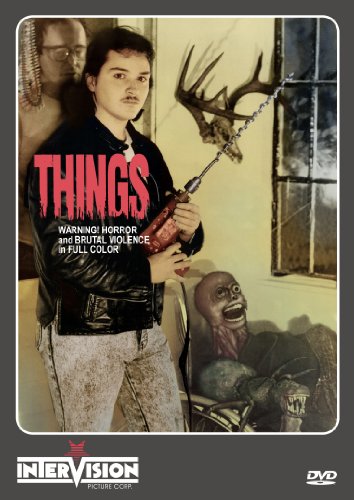
This is normally where I would summarize the plot of the film. I could tell you that this is the story of three friends in a woodland cabin who must fight monsters spawned by the wife of one of them. But that would be misleading. What the story is really about is two, sometimes three, guys sitting around and drinking beer. Later they switch to whiskey. And then there’s this one dude who puts a cockroach in the other dude’s sandwich...

As I’m hoping you will have realized from the above, this is no ordinary movie. In his excellent They Came From Within: A History of Canadian Horror Cinema, Caelum Vatnsdal argues that Things holds the title of Worst Canadian Horror Film Ever Made, and it’s really, really hard to believe that there could possibly be another contender. Badfilm connoisseurs, this release is manna from Heaven. This is a film that would embarrass Ed Wood. Tommy Wiseau would weep with despair over the future of cinema. Doris Wishman would beg to take over the camera and sound duties, just so such a thing could never happen again. I could go on.

Gregory Peck is an aging Scottish outlaw, and Desi Arnaz Jr is his “breed” (as Jack Warden’s racist sheriff refers to him) partner. Warden captures Arnaz, but Peck, who could have been free and clear with all the stolen money, rescues him, much to Warden’s puzzlement. Peck is wounded in the getaway, however, and as the two friends are pursued by the law across a barren landscape (with Israel playing the role of the American West), the younger, less-experienced man must take on the responsibility of saving both their lives.

Though directed by Ted Kotcheff (The Apprenticeship of Duddy Kravitz, First Blood, Fun with Dick and Jane), the film is co-produced by fellow Canadian Norman Jewison (The Hurricane, Fiddler on the Roof, In the Heat of the Night). Given Jewison’s involvement, it comes as no real surprise that there is considerable focus in the film on social issues – race relations in this case. So it does come across as a little odd, even in 1974, for a film with these particular concerns to have one of its leads playing a race that is not his. Then again, both our heroes are required to inhabit other ethnicities, which means we have to get through Peck’s attempt at a Scottish accent. He may not be Keanu Reeves in Bram Stoker’s Dracula, but he ain’t Meryl Streep either, can ya ken what I mean while ya sip yorrr wee dram? So there are some disconnects here that tend to take one out of the movie.