Posted in: Disc Reviews by David Annandale on August 4th, 2011
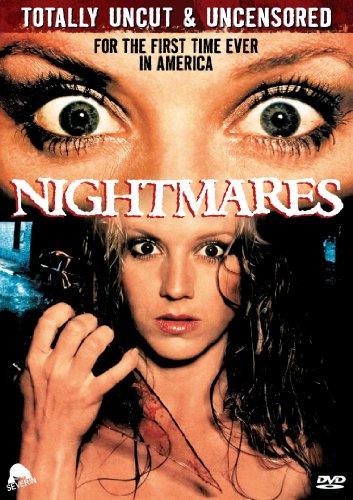
Having accidentally caused the death of her mother, Helen (Jenny Neumann) develops an unhealthy fixation with broken glass. Now an adult and an aspiring actress, she auditions for a role in an absurdist play. She gets the part, and also the attention of her handsome co-star. But then someone starts killing off the cast and crew of the play. Is it Helen?
It isn’t really venturing into spoiler territory to reveal that the answer to that question is “yes.” It is just one of the many odd aspects of this Australian slasher flick that the murders are staged in such a way (often, though not always, in first person) as to conceal the identity of the murderer, while the story makes it clear that there is only one person who could be responsible for the deaths. It then has the nerve to reveal Helen as the killer, right at the end of the film, as if this is some kind of surprise. Imagine if Halloween had concluded with the statement that “The murderer is... Michael Meyers!” and you have the idea. Meanwhile, the editing is frequently disorienting, with the 180-degree rule being violated on a number of occasions, and any sense of geography going right out the window (unless we really are supposed to believe that the critic’s home is an annex of the theatre itself). The storytelling is extremely choppy, with the film being broken up into short, barely developed scenes that have very little connective tissue between them. And as far as the plot itself goes, it’s a typical 1980 slasher in every way, just with Australian accents.
Now having said all that, the theatrical setting does add a measure of interest, and there are moments that call to mind Michele Soavi’s later Stagefright (1986). While the latter is by far the better movie, Nightmares (which was also, by coincidence, known as Stagefright) really comes alive in the rehearsal and performance scenes, with some genuinely witty barbs thrown out at the theatrical world, and some striking camera compositions tossed into the mix. So while this film will remain of interest primarily to fans of the 80s slasher movie, said fans will find just enough different here to make the film worth checking out.
Posted in: Disc Reviews by David Annandale on August 1st, 2011
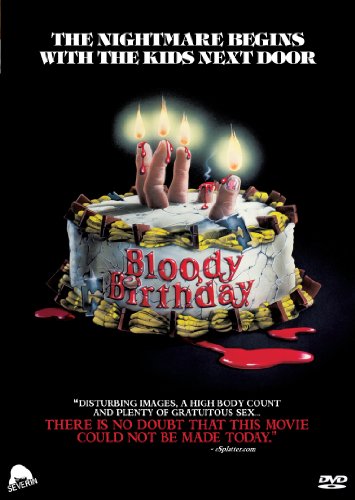
Three children are born at the moment of a total solar eclipse. On the even of their tenth birthday party, we discover that these kids, for astrological reasons, are complete sociopaths, and are having a merry time offing anyone in the community who even vaguely annoys them. The only ones who even gradually suspect that something is going on are high school senior Joyce (Lori Lethen) and her little brother Timmy (K. C. Martel). They soon become the target of the psycho kids’ wrath.
As slasher films flooded the screens in the early eighties, every conceivable minor variation was tried, while the rigid narrative formula was religiously observed. So if the variation wasn’t in the date (Halloween, Friday the 13th, New Year’s Evil, My Bloody Valentine, etc., etc., etc.), the change-up was in the the killer. And so here we have kids, though the elements remain otherwise familiar: prologue opening, young couples get naked and die, the Good Girl is the Final Girl, and so on. Though there is a bit of a nasty little punch in having the kids be murderous, this was hardly new in 1981 (The Bad Seed anyone?). The world of the film is a very difficult one to buy: the rash of murders has very little effect on the community, the junkyard features gassed-up and fully functional cars, astrology is apparently a for-credit subject at the high school, and everyone is very, very, very stupid. And while there is a certain demented pleasure in seeing tiny, WTF turns by the likes of Jose Ferrer (on-screen for maybe 30 seconds) and Susan Strasberg, this is a film that, in the final analysis, is nowhere as sick as it should be, unable to follow through on its own premise, as demonstrated by the singularly anti-climactic finale. Had this been an Italian or Spanish movie from the same era, I venture to think things would be a bit different.
Posted in: Disc Reviews by David Annandale on July 30th, 2011
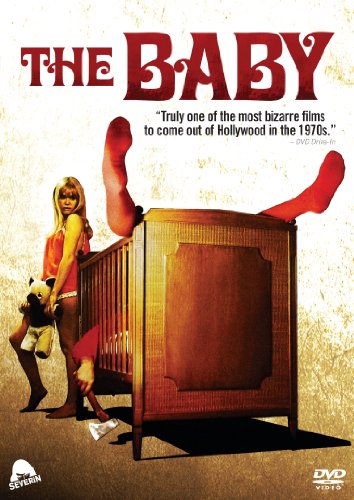
Ann Gentry (Anjanette Comer) is a social worker with a new case, one that she specifically sought. She has been assigned to the Wadsworth family. It consists of a terrifying matriarch (Ruth Roman), sexpot daughters Germaine (Marianna Hill) and Alba (Suzanne Zenor), and Baby (David Mooney, credited as David Manzy), a grown man with, apparently, the mental development of an infant. But Ann suspects Baby is capable of more, and that there is something fundamentally wrong going on at the Wadsworth residence. The Wadsworths, meanwhile, do not take kindly to Ann’s prying, and will stop at nothing to preserve their way of life.

Viewers lured by the promise of the film’s poster (Baby in crib, hatchet in hand) will no doubt be disappointed. This is not a body-count film, and there is very little that is overtly horrific for most of the movie. But make no mistake: this is a horror film. The horror is primarily conceptual, and the more we see of Baby’s life, the more we squirm. The performances are universally strong, and we buy into the characters, no matter how grotesque they are, and believe me, they are grotesque. The climax is exquisitely sick, as only the denouement of a movie made in 1972 can be, and is meticulously set up by everything that came before. This is a screwed-up movie, and I mean that as a term of extremely high praise. Absolutely not to be missed.
Posted in: Disc Reviews by David Annandale on July 28th, 2011
The third BloodRayne film (and second with Nastassia Malthe in the title role) sees the titular dhampir slicing up Nazis, and so the chronology of the third film rejoins that of the first game. During a raid on a death camp train, Rayne accidentally infects a Commandant Michael Paré. Becoming a dhampir himself (a human/vampire hybrid), he and Mengele-figure Clint Howard (because who else are you going to cast as a Nazi scientist other than Clint Howard?) plan to use Rayne’s blood to grant Hitler immortality.
Vampires and Nazis notwithstanding, the important thing here is that this is yet another Uwe Boll film. So what exactly does that mean for you, the discriminating viewer? As regular visitors to this site might know, I have, in the past, actually praised some of Boll’s more recent efforts. I may well have destroyed whatever critical credibility I could lay claim to by being so impressed by Tunnel Rats, but damn it, it was good. Here, though, is yet more evidence that the Indefatigable One is not at his best when dealing with video game material. Also World War II. Opening an action movie about vampires with shots of Auschwitz-bound prisoners is not, methinks, in the best of taste. Furthermore, Boll’s decision to go with a washed-out, gritty feel does a disservice to his heroine. The world of the BloodRayne video games is a fantastic, exaggerated one, Gothic in every sense. It is a world of decadent costume balls, and villains headquartered in castles, and it is the cartoonish, occult-obsessed, iconographically berserk side of the Nazis that lends itself to the kind of stories we fine in the games, not to mention the look of the character. Rayne’s revealing costume, hardly practical, looks even sillier when placed in a context of grime, washed-out colours and snow.
Posted in: Disc Reviews by David Annandale on July 26th, 2011
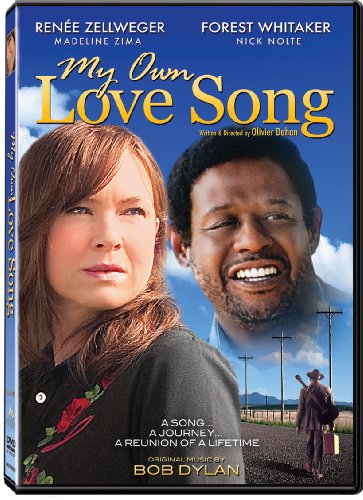
Renée Zellweger is Jane, a former country singer who has lost the will to live since an accident left her in a wheelchair. Forest Whitaker is Joey, who can talk to angels and ghosts since he witnessed the death by fire of his family. These two wounded souls bond and bicker, and when Joey finds a letter from Jane’s son, whom she gave up for adoption years ago, he decides that she must see him. Fortunately, there’s a talk being given in New Orleans by a man who is apparently an expert on communication with angels, so that gives Joey a reason-slash-pretext to drag Jane on a cross-country trip she wouldn’t agree to otherwise.
And so off we go, on yet another road trip discovery of America, this time filtered through the eyes of French writer/director Olivier Dahan (La Vie en Rose). As expected, it’s all very picaresque, with plenty of strange and quirky encounters along the way – Elias Koteas working the sleaze as the man who sells our protagonists an exploding car (and who is emotionally crippled, by his own admission – Symbolism!), Nick Nolte hamming it up as a musical hermit who trots out the old Robert-Johnson-sold-his-soul-for-music chestnut one more time, and so on. Zelwegger’s performance is serious of purpose, but she is done no favours by the voice-over she is saddled with, which babbles poetically on about this and that and is just as pretentious and annoying as Terrence Malick’s excesses in this department. Whitaker, meanwhile, takes his patented sensitive-with-tics shtick to some pretty zany heights. Despite some striking visuals (and sometimes because of the same), this is a pretty silly effort that occasionally rises to entertaining levels of camp, but more often just sets the eyes rolling.
Posted in: Disc Reviews by David Annandale on July 25th, 2011
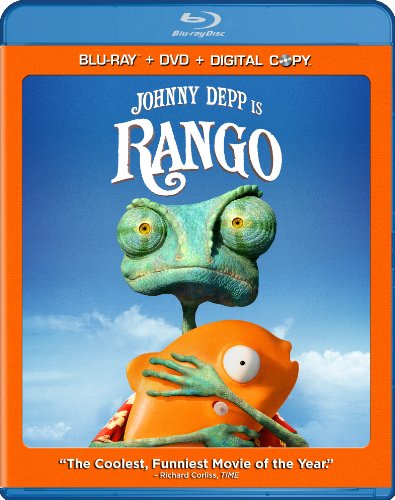
Rango (Johnny Depp) is a chameleon with an enormous imagination. In his terrarium, he has developed a social network with inanimate objects that would be the envy of Castaway’s Tom Hanks. He essentially lives inside his head, but then reality (perhaps – the film maintains a certain ambiguity here) suddenly intervenes and he finds himself cast from his safe, hermetic world. Marooned in the desert, he arrives in the town of Dirt, where his inclination for the dramatic has him claiming to be a sharp-shooting, quick-drawing hero. When he accidentally proves his claim by killing, through sheer stupid luck, a hawk that has been terrorizing the town, he is enlisted by the townspeople to defend them from the tyrants who keep them oppressed and thirsty.
Another day, another self-referential computer-animated film, this one taking on westerns rather than fairy tales. And sure, there are more references than you can shake a stick at, to westerns or otherwise (check out the lightning-fast nod to Depp’s Fear and Loathing in Las Vegas during the highway scene). But this isn’t just a pastiche. The love of classic westerns is palpable, and the film is unapologetic in its adoption of the genre’s convention, but it does take care to fully realize its characters. Visually, the film is extraordinary, displaying a rich palette of colours and moods, an imagination as exuberant as its protagonist’s (a dream sequence becomes exactly what Salvador Dali would have imagined had he been a thirsty chameleon), and the detail work of the animation is bleeding edge. Not everything in the narrative is exactly a surprise, but some pleasures are pleasures precisely because they are familiar, and there are plenty of charming eccentricities to make us forgive the occasional lapses into the been-there-done-that. Certainly one of the better animated films of the year.
Posted in: No Huddle Reviews by David Annandale on July 22nd, 2011
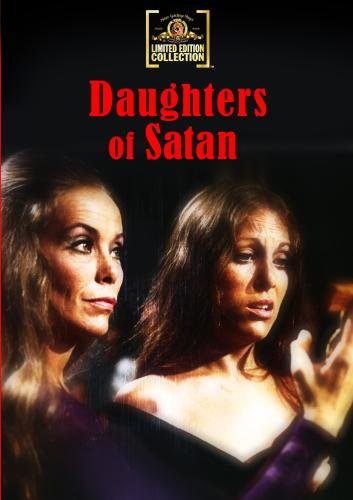
MGM's Limited Edition Collection heads into enjoyable but far-from-classic territory with this goofy horror tale. Tom Selleck is an art historian living in the Philippines with his in-therapy wife (Barra Grant). He buys a painting (supposed to be centuries old, but looking for all the world as if it were commissioned for a motel) that depicts witches being burned, and the central witch bears an uncanny resemblance to Grant. Then the weirdness begins.
The painting keeps changing. Other women, looking exactly like the other witches, show up with a mysterious agenda. Cultists make repeated attempts on Selleck’s life. Grant oscillates between terror and acting possessed. Will Selleck solve the mystery before his wife is inducted into a Satanic cult?
Posted in: Disc Reviews by David Annandale on July 19th, 2011
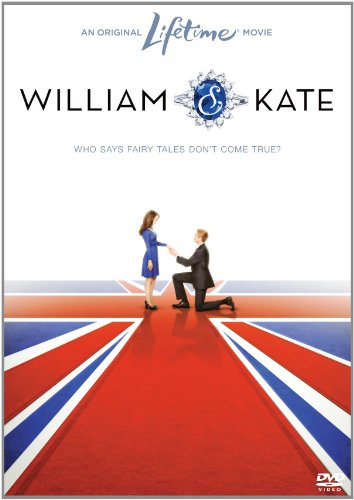
This is a biopic about two very obscure people whose relationship has escaped the attention of all but a select few. All kidding aside, what we have here is a dramatization of how the heir to the British throne (Nico Evers-Swindell) meets Kate Middleton (Camilla Luddington), and how their romance gradually blossoms. He arrives at university, and every blue-blooded young woman has him in her sights, but it is, naturally, the down-to-earth girl who draws him, the turning point being when she shows that she’s sexy as well as smart during a student fashion show. But the course of true love is not an easy one, especially with the pressures of the fishbowl life of royalty make themselves known.
If you’re wondering what on earth is the point of making a movie about something the entire planet has already feasted on (and is still doing so), then let me clear things up: there is no point. This is as bland a romance as was ever committed to film, hitting every tired cliché imaginable. Friends who discover they want to be more? Check. Bitchy Aristocrat Who Threatens to Steal the Heroine’s Man? Check. Third act falling out? Check. Last minute confession of love that saves everything? Check. Snore. The only tiny points of interest are the bits of unintentional comedy. So poor Ben Cross, in grotesque makeup, is stuck playing a Charles who is obviously about two feet shorter than the real thing. And do skip ahead to the final shot, where, after a montage of stock footage of African wildlife, William proposes against a hilariously fake sunset so whose colours are so supersaturated, the shot seems (but can’t possibly, can it?) to be echoing Gone with the Wind.
Posted in: Disc Reviews by David Annandale on July 13th, 2011
Courtesy of the website of the same name (check it out at http://trailersfromhell.com/index.php) comes this collection of trailers of horror, SF and exploitation films. The collection is eclectic, following no particular theme (though there are several Hammer films present), and the era covered ranges from 1941 (The Invisible Ghost with Bela Lugosi) to 1998 (Trauma’s Terror Firmer). Present are the likes of The Devil-Ship Pirates, Gorgo, Donovan’s Brain, Deep Red, Flesh Gordon, and so on. Twenty altogether.
Normally, commentaries would be dealt with below, but this case is an exception. Not only does the disc default to playing the introductions and commentaries, but these are the primary attraction of the release. The commentators are a high-powered lot: Roger Corman, Guillermo del Toro (who discusses Deep Red in both English and Spanish), John Landis, Joe Dante, Lloyd Kaufman, Jack Hill, and more. There are a couple of weaker moments here – Mary Lambert’s musings on Mothra vs Godzilla are disappointingly inarticulate, and she talks about Godzilla as a nuclear metaphor as if this were news; John Landis has a rather supercilious approach to the excellent Gorgo – but these are more than offset by the strengths. Brian Trenchard-Smith, Del Toro and Dante essentially give entire film courses in two minutes – no mean feat. This is a great, informative collection.
Posted in: Disc Reviews by David Annandale on July 11th, 2011
The setting is a comfortably large house in the English countryside. Kin and friends have gathered for the funeral of the family patriarch bringing with them their foibles, eccentricities, and disasters waiting to happen. At the centre are the two brothers, Daniel and Troy (Matthew MacFayden and Rupert Graves). The former struggles under the shadow of his famous brother’s success as a writer, his plight encapsulated by the fact that everyone in attendance is disappointed that Troy will not be giving the eulogy. But his problems are about to become much, much greater, as the funeral descends into a chaos of unwelcome revelations, blackmail, drug freak-outs.
Director Frank Oz here rebounds from the disaster of his Stepford Wives remake with a pure slamming-door farce, and, for the most part, he succeeds. While Dean Craig’s script isn’t exactly bursting with surprises, it does have plenty of fun antics, and there are many “oh boy here comes trouble” anticipatory moments to revel. The cast is strong, with Alan Tudyk (currently essaying yet another accent to fine comic effect in Transformers: Dark of the Moon) and Peter Dinklage turning in particularly funny performances. If the shenanigans are ultimately a little familiar, think of this as the comedy equivalent of comfort food. Shepherd’s Pie may not be enticingly new, but it goes down fine all the same, and so does this.