Posts by Gino Sassani

“We’re tiny. We’re toony. We’re a little bit loony. And in this cartoony we’re invading your TV. We’re comic dispensers. We crack up all the censors. On Tiny Toon Adventures, get a dose of comedy. So, here’s Acme Acres, it’s a whole wide world apart. Our home sweet home, it stands alone, a cartoon work of art. The scripts were rejected, expect the unexpected on Tiny Toon Adventures it’s about to start.”

What do you get when you cross Steven Spielberg with the tradition of Loony Tunes? You get Tiny Toon Adventures. Spielberg produced this 1990’s television cartoon show for the WB Network. Set in Acme Acres, this cartoon was intended as a Next Generation of Loony Tunes characters and stories.

Every once in a while a movie comes along that has a very strong social message, but never comes across as heavy handed or preachy. What Doesn’t Kill You is one of the best of those movies that I’ve seen in some time. It’s based upon the real life struggles of Brian Goodman, who wrote the screenplay while he was in prison. Goodman was a lifelong criminal who was also addicted to booze and drugs. With the inspiration he gained from his two young sons, Goodman turned his life around. He got himself sober and avoided the temptations that would lead him back into a life of crime and ultimately prison. Another danger sign in these kinds of films is when you have one man who wrote, directed, and stars in a movie. These “one man band” types of films more than not fail on almost every level. Again, I have to say that What Doesn’t Kill You manages to rise above these trappings. Goodman manages an almost impossible feat here. He tells a socially powerful story, from his own personal experience, and never forgets that ultimately the end result must entertain above anything else. The most important of messages falls completely ineffective if ultimately no one ever sees the movie. And, trust me, when I tell you. More people need to see this movie.

Brian Reilly (Ruffalo) (Goodman’s character) and Paulie McDougan (Hawke) are practically brothers. They grew up together in the same south Boston Irish neighborhood and were inseparable since they were in elementary school. They admire the local crime boss and neighborhood protector Pat Kelly, played here by Brian Goodman. Kelly runs the local criminal activities out of a corner bar. He gets a piece of anything that goes on in the hood. The boys start out as kids running envelopes and other errands for Pat. Fifteen years later, they’re still doing small jobs for the boss. They’re beginning to get frustrated that they haven’t graduated to better things and more money. They soon break the cardinal rule and start to go on their own. Mostly it’s small time stuff. They roust drug dealers and take down a few trucks. But their cowboy antics are about to get them in trouble. They risk making an enemy out of the still powerful Pat, but more importantly they have brazenly taken down quite a few punks. Brian is also beginning to drink too much and is eventually introduced to crack cocaine. He’s messing up. His wife is getting frustrated with him, and he’s making mistakes “on the job”. Those mistakes end up getting him shot. Miraculously, he survives, even though he leaves the hospital against medical advice to get high. The mistakes eventually lead the two friends to get busted and do five years in prison. Brian gets out first. He makes an attempt to stay sober and away from criminal activity. He’s helped by an AA mentor he befriended in prison, named Sully (Lyman). But when Paulie gets out, his need for money and his frustration at playing it straight threaten to bring him right back into those activities that put him in prison. What will he do? Will he repeat the mistakes of the past, or will he be strong for his wife and sons, who waited for him for five years of prison?

“The best movies you totally forgot about”

That’s the marketing slogan for this Lionsgate collection of mostly 1980’s films that never really broke any ground in their box office releases. They are, for the most part, cheap comedies. A few have somewhat of a cult following. None of them ever really set the receipts on fire. At just under $15 each, likely less if you shop around, they are good for a couple of laughs, but little more than that.

With so many cast changes, it didn’t really come as too much of a surprise to fans that the series was winding down. Only one more season would follow, and this year never clicked in quite the same way previous seasons had. By now the team was so significantly different that there was little of the cast chemistry that made this one such a winner. With its glory years behind and only one more struggling year to come, we reach the end of our journey with the IM Force.

Jim Phelps (Graves) led his team in a sixth season of Mission Impossible starting in 1971. The show continued its trademark traditions. Jim would receive a mission from the “self destructing” tape and would gather his IMF (Impossible Mission Force) team. The team was necessarily eclectic in nature, and it changed significantly in the sixth season. Gone were Leonard Nimoy, Leslie Ann Warren, and Sam Elliott in his signature role of Dr. Robert. Still in the team we had Barney Collier, the gadget man, played by Greg Morris. The muscle was still supplied by Willy Armitage, played by brute Peter Lupus. Together they took on missions that the government could not be officially a part of. They were always admonished that should they be caught “the secretary would disavow any knowledge” of them. Usually they were sent somewhere to put some evil mastermind out of business. Their tactics ranged from scams to outright theft. Sometimes they were a rescue team, while other times they would infiltrate a group of bad guys. There were certainly cold war elements to the whole thing. Each week the team concocted some convoluted con to play on their mark, walking away at the end of each episode often without getting any credit or congratulations.

Animal films have done quite well at the box office in recent years. Who can forget the astounding appeal of March Of The Penguins. With wonderful cinematography and the commanding narration of Morgan Freeman, the film took the box office by storm. There have been countless efforts to reproduce those results ever since. The latest of these to hit Blu-ray is the indoctrination piece, Arctic Tale. I say indoctrination because this movie is never content with following the natural migration or struggles of the animals it depicts. Instead the film uses contrived dangers that were staged, for the most part, to drive home the “undisputed” message that mankind is destroying the frozen habitat that these animals rely on for their existence. Whatever your politics, or opinions on global warming, there is still plenty of evidence to support the opposing position. With that said, it’s a little too early to use children and furry animals to attempt to present the theory as established fact to our children. The film attempts to work on the young folks’ emotions as we witness man induced pain, struggle, and even death on the polar bear and walrus populations. The film is even somewhat femalecentric. The female animals get names. The male animals are referred to merely as “the little brother” or “male polar bear”. It’s a slanted piece of propaganda, that doesn’t even break any new ground. Some of the footage is repeated in the similar release, A Polar Bear Adventure.

There is some remarkable footage here, in addition to the standard stock elements. It’s pretty obvious that many polar bears are photographed as the “family” we are supposed to be following. The work is the result of a husband and wife team who have made it their life’s work to study and capture these animals on film. The work is often good, and some of the footage is truly stunning. It’s a shame they decided to taint their remarkable efforts with so much posturing and bias. Queen Latifah provides the narration. She tries too hard to be sweet and dramatic in a “once upon a time” manner that she fails to truly inspire the way Freeman did with his narration. This approach further illustrates that the target audience here really is our children. There are better animal shows out there, which provide just as wonderful photography without the political spin. Even Animal Planet has provided some very memorable programs in recent years. There are really just too many comparable choices out there; many of them cost you only the cable bill you’re already paying. Let your children get their values and political beliefs from you, not from their movies. During the credits, children tell you how your actions are killing the cute Arctic animals. Just what I’d want my kid to think. “Daddy, why are we killing polar bears with out SUV?”

“Back to the days of the Gold Rush, as Sergeant Preston with his wonder dog, Yukon King, meets the challenges of the Yukon … A land inflamed with gold. Men who came quickly learned the heroism of sacrifice and the treachery of greed.”

These words first reached across the radio airwaves in 1947. Children and adults alike would gather around the warm glow of their large radios to hear the exploits of Canadian Mounties Sergeant Preston and his trusty companions Rex, his horse, and Yukon King, his Alaskan Malamute. When the early days of television arrived, it was no surprise that the more successful radio dramas would become some of the first television shows. Sergeant Preston was part of that transition wave of the new medium of television. Although filmed in color, the series ran in black and white, which was the only format available to the homeowner in those days. Now through the release of the series on DVD, we get to see the series for the first time in color.

“I’ll tell you a story, a real life story, a tale of the western frontier. The West, it was lawless, but one man was flawless, and his is the story you’ll hear. Wyatt Earp, brave, courageous, and bold. Long live his fame and long live his glory, and long may his story be told.”

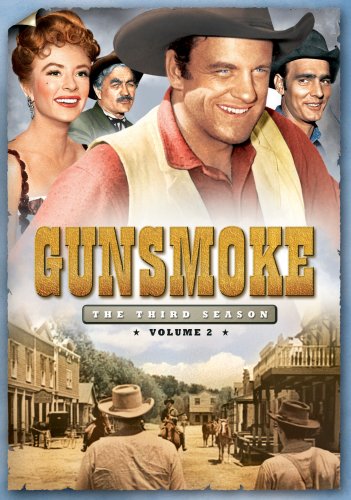
The catchy theme to The Life And Legend Of Wyatt Earp was written by Harold Adamson and Harry Warren. It was sung by The Ken Darby Singers. It set you up for the adventure and heroics that were to follow for the next 26 minutes in 1955 for anyone lucky enough to have a television set. The series was one of the first of television’s serial dramas. It used ongoing story arcs and complicated relationships to tell a story that evolved over the six years it was to be on the air. While the series was based on the writings of the real Wyatt Earp, there was nothing biographical about this show. Wyatt did carry his trademark Buntline Special 45’s with an extended barrel, and he was the sheriff of Ellsworth, Kansas. But little else of this tale was true. Even the actual setting changed to the more glamorous Dodge City after a couple of seasons. Of course, television viewers weren’t buying any of that. They knew the real law was Marshall Dillon, and in case they might have forgotten, Gunsmoke was on every week to remind them. By the show’s last season Wyatt had migrated to Tombstone, Arizona and his fateful encounters with the Clantons and a certain corral.

I’m not a wrestling fan. There is very little about that world that holds any charm for me. I find the grandiose posturing to be rather dull. The characters aren’t all that interesting to me, and I don’t find myself compelled to spend 100 bucks on a “free for all” pay per view event. With that said, this film did bring back a flood of memories for me. When I was a kid, perhaps 11 or 12, I looked at wrestling a little differently. I had an uncle who would watch it from time to time, but the television version never held much for me even then. I grew up in a relatively middle sized town in eastern Pennsylvania. If you play Monopoly, you’ve heard of the Reading Railroad. I grew up in Reading. By the way, it’s pronounced Red not Reed (ing). Nearby in a place called the Hamburg Field House, the regional wrestling federation of the time would film a month’s worth of television episodes in one night. Our parents found out that for about 5 bucks they could drop us off for 5 hours or so and we would be entertained. It didn’t hurt that the place featured 25 cent hotdogs. So my friend David and I would hang out at the joint every second Tuesday and watch live wrestling. To an 11 year old kid, it was as much about being trusted out on our own than it was the event. Still, we did become familiar with the regional names and characters. I even got smacked upside the head by one ranting wrestler’s shoes. It hurt, but it was a bump I wore with some kind of twisted feeling of honor for three days. I don’t even remember the name of the wrestler, but I remember that bump. Times have changed and Championship Wrestling has been gobbled up by the Vince McMahon empire that most of those regional outfits have succumbed to. I haven’t talked to Dave in years, and honestly I haven’t even thought of those summer Tuesday nights at the Field House in a long time, filled up with quarter hotdogs and plenty of soda. Then came The Wrestler.

Randy “The Ram” Robinson (Rourke) is at the end of his career as a superstar wrestler. He’s known for his trademark move, the Ram Jam, where he climbs up on the ropes and leaps down on his helpless opponent. You can feel the pain, not only of his current bout, but the decades of abuse he’s put his body through. In the ring he’s beloved by thousands and respected by his peers. Outside of the ring he’s alone. He seeks comfort in the guise of stripper, Pam (Tomei). Pam is also at the end of her career, finding it harder to compete with the younger girls at the club. She’s drawn to Randy, but resists hooking up with one of her clients. When Randy finally pushes his body over the edge, he has a heart attack. The doctors warn him that he’s got to stop pumping the steroids and growth hormones into his body, and worse, that he has to stop wrestling. Randy tries to acclimate himself to the outside world. He increases his hours at the Acme by working the meat counter and attempts to reconcile with his college age daughter. He even has hopes of breaking through Pam’s resistance. Perhaps it’s too late and he’s too old, but he learns that the only place he was ever really good at anything was in the ring. There he’s accepted and loved for what he is. Randy accepts a rematch, celebrating the 20th anniversary of one of his most famous matches. He’s determined to go through with it and please the crowd, if it kills him.

Sin City arrives in high definition with some pretty high expectations. You get both versions of the movie here, and I have to say that I’m very pleased to see that. By now fans of the movie have seen the recut version of Sin City and likely have your own opinions as to what you thought of it. The fan base appears to be somewhat divided on the effort. For me it’s never been a case of better or worse. It’s merely a case of different. The two versions are very different experiences. Watching the recut version is not really like watching a movie at all. Frank Miller presents them more akin to the original graphic novel experience. For those we don’t already know, this version offers the movie split into four very separate pieces. They each come complete with their own title page and closing credits. You should be warned that these closing credits actually account for more than half the promised 20 minutes of extra footage. They are not even presented in the same order as the original film. Watching the movie this way appears a bit disjointed and leaves many of the movie’s fans feeling like they have been served up their favorite movie in television-like installments. But, there is value to this presentation. It allows you to watch it with a new perspective and a new completeness, albeit within itself. The only segment that just totally doesn’t work is the short The Customer Is Always Right segment, which originally bookended the movie in theaters. On its own it feels rather incomplete and makes very little sense. It’s only after watching the final segment that a newcomer to this material will finally make any connection. There are also many moments where characters appear in the background of one segment leading directly to their own moments. These subtle touches are a bit wasted when one views the parts independently. Of course, there is no escaping the joy of merely watching the original film the way it was presented at the box office. I won’t deny that it is only in that form that the true movie experience can be realized. So what to do with this duality of purpose and divided audience? You give us two complete Blu-ray discs in one release and offer us the choice. That’s exactly what Dimension Films has done for us in this eagerly anticipated high definition release of Frank Miller’s classic Sin City.

For the purposes of this review I spent most of my time in the recut version. I’ve seen the film countless times by now in the theatrical cut and decided to experience my Blu-ray journey with the new version. The audio and video elements are virtually the same, so all aspects of the review remain unchanged. For those new to this incarnation of Sin City, here’s a breakdown of the four segments as they appear on the second disc of this set.

After five years on the air, Hawaii Five-O entered its sixth season pretty much unchanged. There was actually very little change over the years. McGarrett was still on the case with his trusted Danno and Chin-Ho. The Hawaiian settings continued to showcase the locations of the island chain as well as much of the state’s local acting talent. But most of all, the show kept up with the quality of stories. The season began with an armless man out to kill the cops he holds responsible for his condition. The episode, Hookman, would get the season off to a solid start. Charter For Death brings plague infested rats to the island and a quarantine. The Sunday Torch means there’s an arsonist on the loose who only sets fires on Sunday. Is a Federal officer to blame for the death of a wealthy tax evader? McGarrett must catch one of their own in Murder Is A Taxing Affair. McGarrett must protect a visiting dictator from a female hired killer who looks like the target’s own daughter in A Bullet For El Diablo. Is a cop on a rape and murder spree in Hawaii? Find out in Nightmare In Blue. These are just a few of the cases for the gang at Five-O in this 6th season collection.

Working in Hawaii on one of televisions hottest shows in the 1970’s was too good a job for most of the cast and crew of Hawaii Five-0. This meant that there was very little cast turnover for the series in general, and none going into the fourth year. Jack Lord saw his star rise considerably, and while he began to see some serious pay hikes, even he wasn’t about to kill the golden goose. With this kind of consistency, fans were never disappointed or turned off by drastic changes in the cast or formula. With this cop show, it was all about tropical locations and formula. The fifth season was no exception to the rule.