BD-Live

Most people associate the book, War and Peace in the same respects as they do torture. A one thousand, two hundred and twenty five page book that is regarded as one of the most brilliant pieces of historical fiction is a nightmare to most advanced high school and college kids. However, perhaps more fascinating than any single piece of work by Leo Tolstoy is the life in which he lead. Last Station attempts to give us the last few years of the Count’s life in film form.

It is the last year of Leo Tolstoy (played by Christopher Plummer)’s long and prosperous life. He has developed principles that reject private property and advocates passive resistance. Those same principles have led to the birth of the Tolstoyan movement, championed by his disciple, Vladimir Chertkov (played by Paul Giamatti). Chertkov has unfortunately also been placed under house arrest and has no way to keep regular ties with Tolstoy who is in failing health.

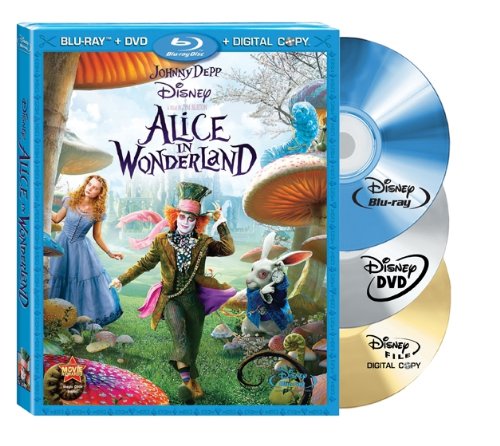
"I try to believe in as many as six impossible things before breakfast. Count them, Alice. One, there are drinks that make you shrink. Two, there are foods that make you grow. Three, animals can talk. Four, cats can disappear. Five, there is a place called Underland. Six, I can slay the Jabberwocky."

To be perfectly honest with you, I have never read either of the two Lewis Carroll books on which this film has been based. Under ordinary circumstances, that would put me at a decided disadvantage in both watching the film and certainly in providing an insightful review of the movie. But these are not ordinary circumstances. The characters and their stories, originally told in both Alice's Adventures In Wonderland and Through The Looking Glass And What Alice Found There, have become an indelible part of our culture. One need not have read a word to be intimately familiar with Alice and her fanciful friends and rivals from Underland, which Alice herself interprets for us as Wonderland. There have been animated features as well as other live action attempts. The characters have become iconic and have appeared in advertising campaigns and even an episode of Star Trek. The surprise isn't that I feel like I know this story without having read the source material. The real surprise would be if there was anyone out in the civilized world who wasn't familiar with these characters.

"On Robben Island, in Pollsmoor Prison, all of my jailers were Afrikaners. For 27 years I studied them. I learned their language. Read their books, their poetry. I had to know my enemy before I could prevail against them. And we did prevail, did we not?"

Leave it to Clint Eastwood to make even rugby look interesting. Of course, Eastwood himself would correct me and observe that Invictus isn't really about rugby. As the words of Nelson Mandela above suggest, this movie wasn't really about rugby at all.

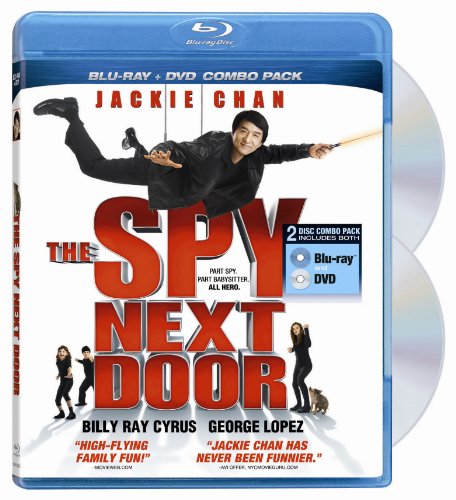
"It doesn't look like they have chicken tenders here."

How can you not like Jackie Chan? If there has been a more versatile action or martial arts star, I haven't heard from him. The man made a name for himself in China's film industry as a remarkable martial arts performer. For decades he's been the closest thing the film industry has seen to Bruce Lee. But, unlike Lee, Chan wasn't content with being the best in a single genre. When he finally came to Hollywood, he decided it was a good idea to work a bit more lightheartedness into his films, something he had already begun to do in his homeland, China. The result made him a unique personality on film. It didn't matter if it was straight-out comedy like the Rush Hour or Shanghai films or more serious action adventures like his Police Story outings. Chan is first and foremost ... Chan, not just an action hero. Not afraid to poke fun at himself, he's become a reliable property at the box office.

"You, sir, are guilty of disseminating disbelief. Killing dreams. Committing first-degree murder of fantasy, which by Fairy Law, in order to pay your debt to humanity, you are hereby ordered to serve time as a Tooth Fairy. The normal sentence is one week, but because you have the nerve, the unmitigated gall, to actually call yourself a Tooth Fairy, thus making a mockery of everything we stand for, I'm sentencing you to two weeks Tooth Fairy duty."

Dwayne (once The Rock) Johnson has made a bit of a new career move over the last few years. When he left the wrestling ring to "go Hollywood" the expectation was always that he would become an action hero. It's what his fans expected. It's what Johnson wanted, at the time. Movies like The Scorpion King were created completely as vehicles for Johnson to show off his physique and join the ranks of the big strong action heroes. It didn't exactly work out as well as everyone involved expected. He wasn't a flop, but he wasn't setting the movie industry on fire either. But with movies like The Game Plan and Race To Witch Mountain, Johnson appears to have a knack for working with kids in films targeted primarily at kids. He's become a big teddy bear, and it's paying off quite handsomely. While he still hasn't given up the wrestling gigs and an action role here and there, his biggest success so far in Hollywood has been with the kids.

For most of this last decade Mel Gibson might as well have vanished from the face of the planet. The once extremely popular actor had charmed the world. Women found his childish grin to be irresistibly sexy, and men bought into the “kick ass and crack a joke” style that made the Lethal Weapon films such a romp of fun. But lately, you expect him to be the subject of a “Where Are They Now” segment from a late show on television. It's no secret why Gibson climbed so quickly out of the public eye. I'm sure everyone still remembers the drunk-driving arrest where Gibson compounded his already serious case of bad judgment with even worse judgment. He tussles with the police officers who stop him and lets loose one of the worst anti-Jewish rants since Pharaoh unloaded on Moses. He apologized, of course, but some things just can never be put back into the box. There's an old Latin phrase that roughly translates to "In wine there is truth". The idea is that Gibson's true feelings were revealed by the reduced inhibitions of alcohol. Whatever his real feelings might be, none of us will ever know, and I don't really have an opinion, or care for that matter, except for the fact that it has removed Mel Gibson from the front of the camera pretty much ever since. His only projects have been as director, producer, and even writer. Even those efforts have been controversial. It's hard to watch The Passion Of The Christ without a visceral reaction to what you've seen. It's been a rough decade for Mel Gibson.

For those who have seen the British mini-series, and I reviewed it in these pages some time ago, you'll find that while the story doesn't really change, the dynamics of the story certainly change, and for the better. This wasn't a good story to drag out over six hours. The British version went into some fantasy elements that this version absolutely avoids. While Craven still appears to be seeing the "ghost" of his dead daughter, it appears to be more in his mind and a product of the grief. In the British series it got rather silly with her teaching him how to do laundry. It was quite absurd, after a time. The basic story elements do remain:

Growing up in life came a little later for me than most people. Most people seem to hit maturity right around their later teen years and early twenties. Honestly, I didn’t really grow up until I hit my mid twenties. But what would happen if one was forced to grow up sooner, say around their seventeenth birthday? Well then, you might be like Jenny Mellor from An Education who had to grow up a lot sooner than she probably expected to.

It’s 1961 in England. Jenny Mellor (played by Carey Mulligan) is 16 and entering her last year of school. She studies literature, plays the cello and is certain to ace her A-levels and be accepted to Oxford University. Her weakness is currently Latin but she promises to bring up that grade as soon as possible. Or else her father, Jack (played by Alfred Molina) says that she won’t make Oxford.

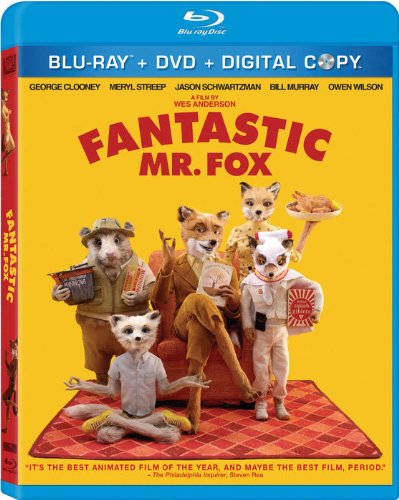
"Boggis, and Bunce and Bean. One fat, one short, and one lean. These horrible crooks, so different in looks, were none the less equally mean."

Roald Dahl was one of the more eccentric writers to come upon the scene. While he often wrote for children, his work is most decidedly dark and often quite sinister. He's most known for such tales as Charlie And The Chocolate Factory. His work has not been adapted to film as often as you might suspect given his popularity. The most famous was certainly Gene Wilder's Willy Wonka And The Chocolate Factory, which was far brighter and more cheerful than the original work. It took Tim Burton and his trademark brand of darkness to create the story Dahl intended in a more recent film which used the correct title of the work. This is not the first stop motion film to be adapted from his stories. Quite a few years ago we were given James And The Giant Peach, which enjoyed little box office acclaim. Wes Anderson is obviously a Dahl fan and immersed himself in the author's world as he prepared his screenplay for Fantastic Mr. Fox. The effort shows in the way Anderson captures Dahl’s pointed wit and social sarcasm. I think that if you're looking for something Dahl himself might have created, this is your movie.

"More of this is true than you would believe."

What was intended as a somewhat thought-provoking quirky comedy looks a lot like something you would expect to see on a late night rerun of The X-Files. All of the subject matter has been covered there, just not quite in this way. It all started with a non-fiction book written by Jon Ronson. He claimed to have researched various government studies in human behavior that entered into the world of the paranormal. It was part of an ideology of waging non-lethal war. It was a strange combination of 1980's new age mysticism and actual studies that showed that soldiers in World War II were, in fact, quite reluctant to kill or even harm the enemy. The study claimed that almost 80% of the soldiers deliberately looked for excuses not to fire or merely aimed inaccurately to avoid killing. The study went further and claimed that of the minority that did shoot with deadly results, most of them suffered terrible guilt over the experience, often making them unable to remain effective soldiers. The study regards the remainder of the study group, the ones who did fire accurately and did not suffer guilt as psychopaths. In short, the book gathered a lot of speculative ideas and put them into a rather oddball collection of "facts".

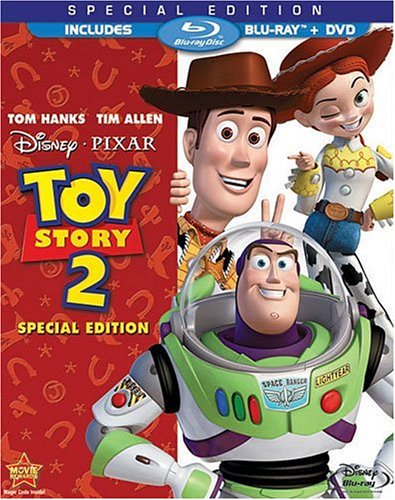
In the long run what was more important to Pixar and its relationship with Disney wasn't the milestone that Toy Story provided being the first computer animated feature. Movies are, as much as we'd like to think otherwise, a business. In the end, a film has to make some money. Toy Story was like a private printing press for the two companies bringing in nearly $200 million at the box office. Add another nearly $200 million in foreign receipts, and this prototype of a movie pulled in nearly a half billion dollars before the first DVD was released. That's huge for what was basically a children's cartoon. The second Pixar film would be A Bug's Life, and it would bring in nearly the same kind of jingle. The cry was too loud to ignore. The people wanted to see more of Buzz, Woody, and the rest of Andy's toys. The edict came down from on high, and what once took them 4 years to do, Pixar was asked to do in about 18 months. Now we would find out if Pixar was a viable company that could produce films reliably and on a faster turnaround. Would the studio compromise on quality just to answer the gate call of millions of dollars waiting to be plucked from the pockets of eager moviegoers? Several films later we know the answer to that question, but it was very much an answer in doubt in 1999. But another $485 million later in worldwide box office settled the question once and for all. Pixar didn't just start the computer animation business. They didn't just define the industry. They would continue to lead it for the next decade ... and apparently, beyond.

All of your favorite toys came back with their original voice cast. This time Woody (Hanks) attempts to rescue Wheezy The Penguin (Ranft) from the 25 cent box at Andy's mom's garage sale. The rescue brings him to the attention of Al (Knight) from Big Al's Toy Barn. Unfortunately for Woody and his friends, Big Al has the largest collection of Woody's Roundup collectibles on the planet. He's been trying to close a deal with a big Japanese firm who want to buy the collection for huge bucks. But Big Al has been missing only one piece in the collection, the most important piece, however ... Woody himself. The Japanese won't buy any of it without Woody. So Al steals Woody and brings him back to complete the collection. There Woody learns about his roots and the television show that he was based upon. He meets Jessie, The Yodeling Cowgirl (Cusack), Stinky Pete, the hapless old prospector (Grammer), and Woody's trusty horse Bullseye. While Woody's friends stage a rescue lead by his now best buddy Buzz Lightyear (Allen), Woody begins to feel sorry for his new companions. They've been kept in dusty old storage for years waiting for that final piece so they can be put on display at a museum and be admired by generations of new kids. When his friends finally arrive to save the day, Woody must decide between his old friends and his television comrades.