Dolby: Atmos

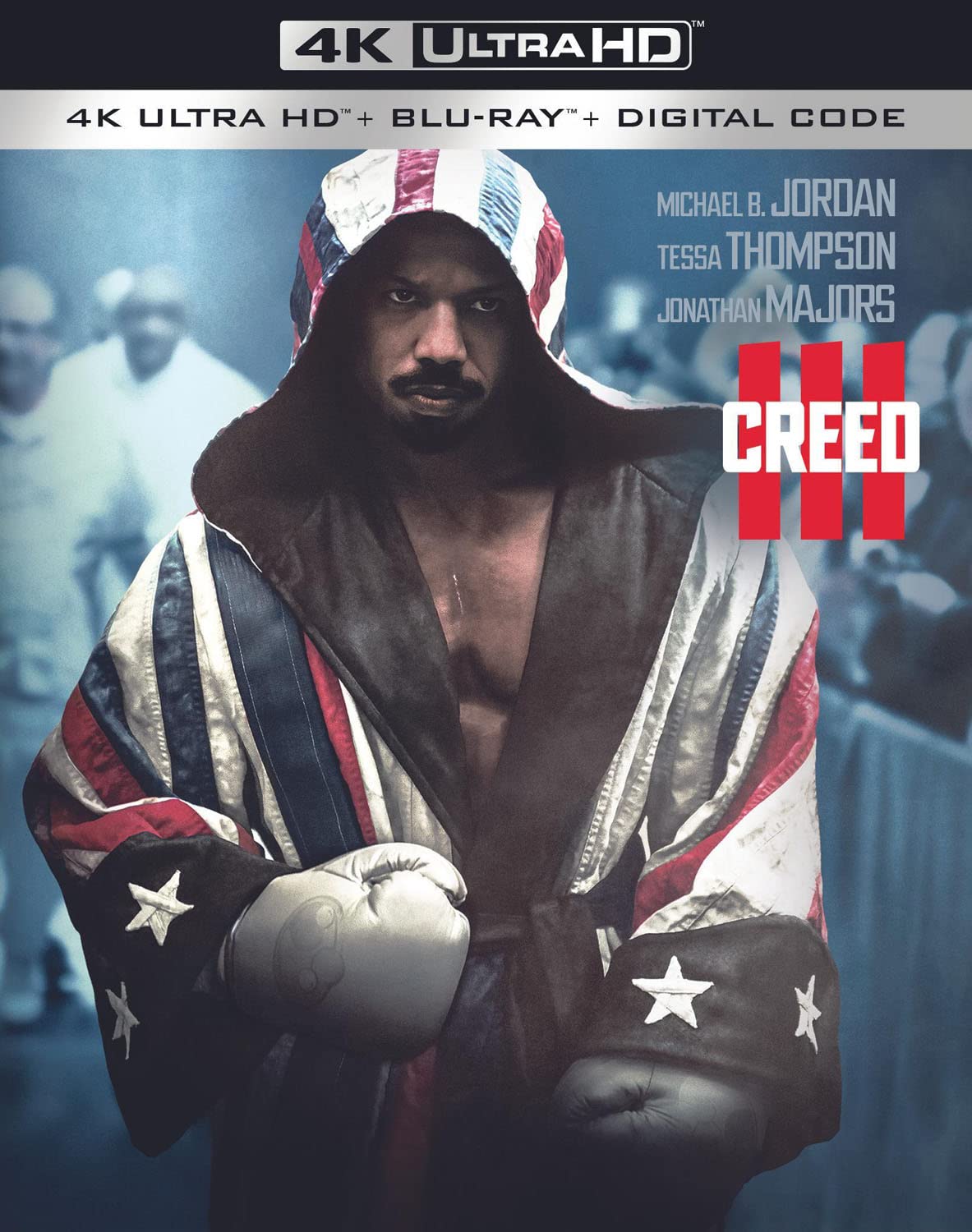
I would be remiss in my duties if I didn’t address the elephant in the room first. For the first time in the nearly 50-year history of this franchise, Sylvester Stallone was not featured in the film as Rocky Balboa. We could delve into the reasons behind why he elected not to take part in this installment, but that would be a review in itself and take away from this film. I mention it off the bat, so we can all process it and view the film with clarity. Long story short, I will say that his absence was noticed, and he was missed. I think his absence is notable due to the lack of an explanation as to his absence. I suppose the film being set in Los Angeles instead of Rocky’s native Philadelphia is meant to serve as a workaround, but still, I’d hope for some kind of explanation or at least a casual mentioning of the character. The lack thereof is what really drew attention to it. To be fair, the case can be made that that the previous film provided a pretty good conclusion for the Rocky chapters of the franchise. His finally making the trip to meet his grandchild was good catharsis for the character. What this means for the future of the franchise now I will not speculate; only to say that there is nothing saying that we’ve seen the last of Rocky. Now that we’ve gotten that out of the way, we can concentrate on fairly assessing Creed III.

Of significance, this film signifies Michael B. Jordan, our titular character, stepping behind the camera to make his directorial debut. But who better to take the helm than the man who brought the character to life. This in my opinion was a solid debut for Jordan and showcased his abilities both in front of the camera and behind it. Returning to back Jordan up on the screen are Tessa Thompson, Phylicia Rashad, and Wood Harris. However, if there was one person who outshone this cast of Creed veterans, it was the man who was making a debut of his own via his introduction into the Rocky franchise. A man who has been making quite the name for himself. Creed III introduced us to Adonis’ rival, Damian “Dame” Anderson, known as Mr. Jonathan Majors.

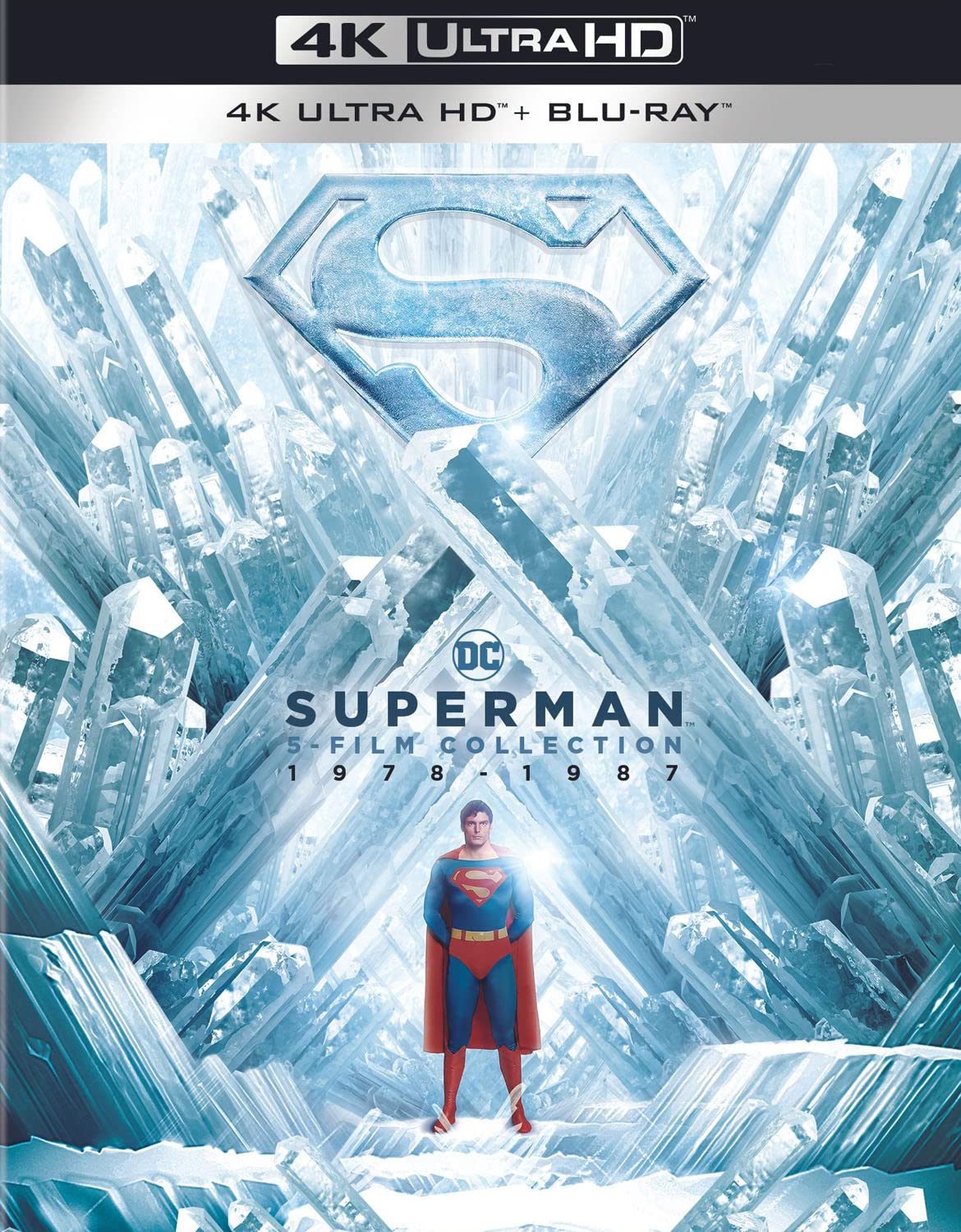
The 1978 Superman film set the standard for what a quality comic hero film should be. The tagline promise: “You will believe a man can fly” was kept. All future comic films would be judged by this standard. Superman II had its faults. Certainly it was not the modern classic like the first film. The plot was bogged down with a rather silly love story that broke down the barriers of the Kent/Superman identity for Lois Lane. Luthor, while played again with style by Gene Hackman, is reduced to a comedic backseat to the real villains. Plot contrivances abound, along with plenty of corny lines. Yet, even with these limitations, this has always been a rather enjoyable film, particularly when compared to the dreadful sequels that followed.

"You will believe that a man can fly."

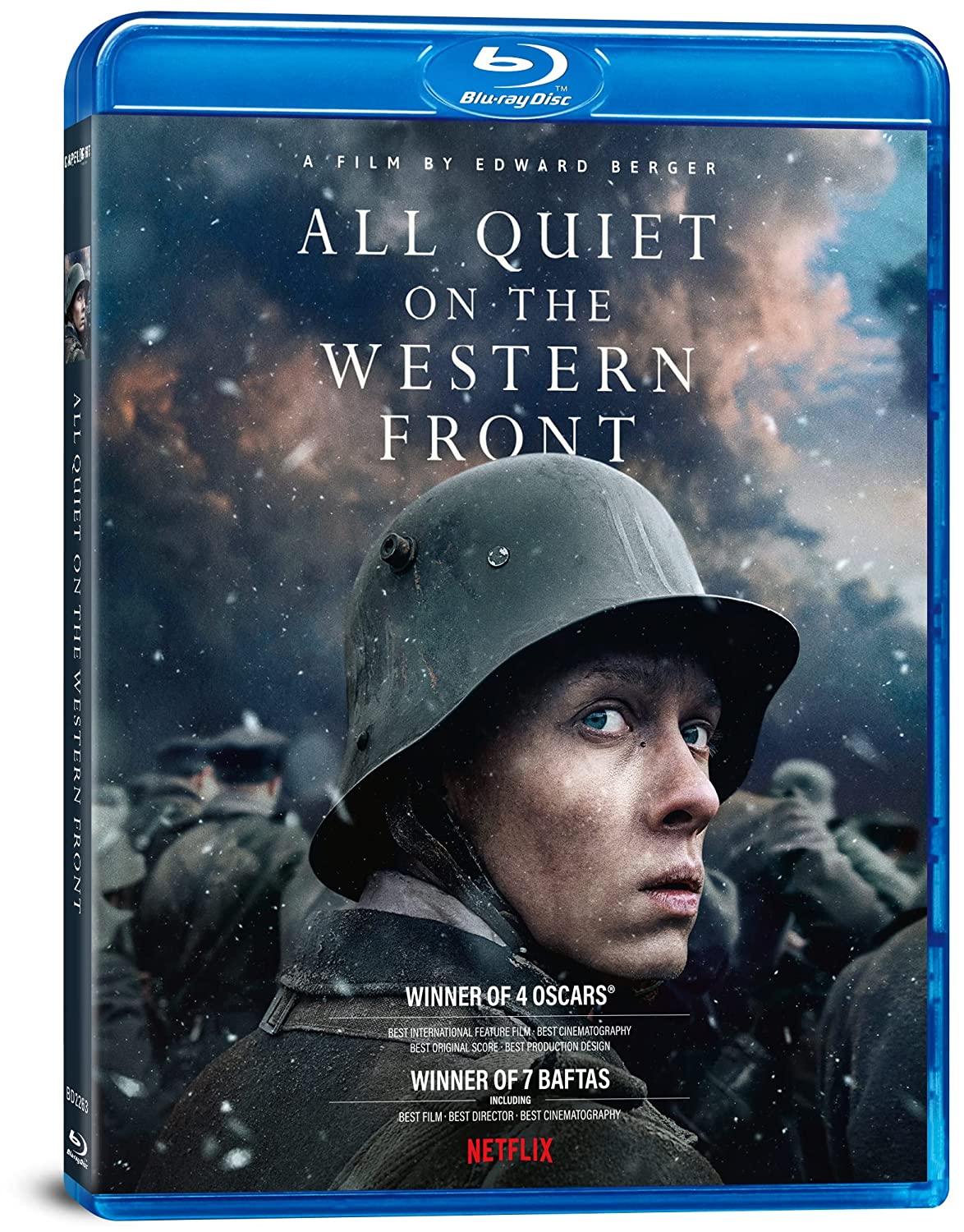
I’ll admit it; when it comes to Netflix, I’m a fan of the shows that they put out, but their movies rarely impress me.  I kind of look at Netflix films as the modern version of direct-to-video releases. They have big stars, but the quality just isn’t up to par with the big releases you’ll see in the theater. Even big name stuff like The Irishman -- it was good,  but not the masterpiece I was expecting. Honestly, my favorite films on Netflix are The Babysitter films with Samara Weaving, just a fun little film, that is basically the kind of expectations I have for a Netflix film, and even the more recent release of We Have a Ghost I thought was charming and may have done well on the big screen. As for Knives Out 2, fun but forgettable. So when I see films from the streaming service get Oscar nominations and even win, I can’t but feel the need to pull the wax out of my ears and make sure I heard that right. This is also why we’re in May and I’m just now watching the adaption of the film All Quiet on the Western Front.  This is the third time the film has been made, but this is the only version I have seen, and, well, I have to admit not only is this a good film, but it is a great film, and I feel it deserves every bit of recognition it has received.

One of the most impressive moments in this film comes early on in a brief battle sequence, but it is the aftermath of the battle that matters here. We get to see the journey of a uniform as it is stripped off the corpse of a soldier and then is shipped away to be washed up, sewn up, and prepared for the next soldier to call it their own. It’s an effective moment early on to remind us that not only is war unkind, but that it is a machine that is always working and churning out the next shooter and inevitably the next unfortunate soul to watch a bullet, a stab wound, or a random bit of shrapnel, and then the cycle starts all over again.  Then for an added touch of inhumanity to it all, when a name tag on a uniform is ripped away and discarded with many other discarded name tags on the floor, that visual reminder that these boys are nothing more than bodies of flesh, and who they really are doesn’t even matter.

"If I had one day when I didn't have to be all confused and I didn't have to feel that I was ashamed of everything. If I felt that I belonged someplace. You know?"

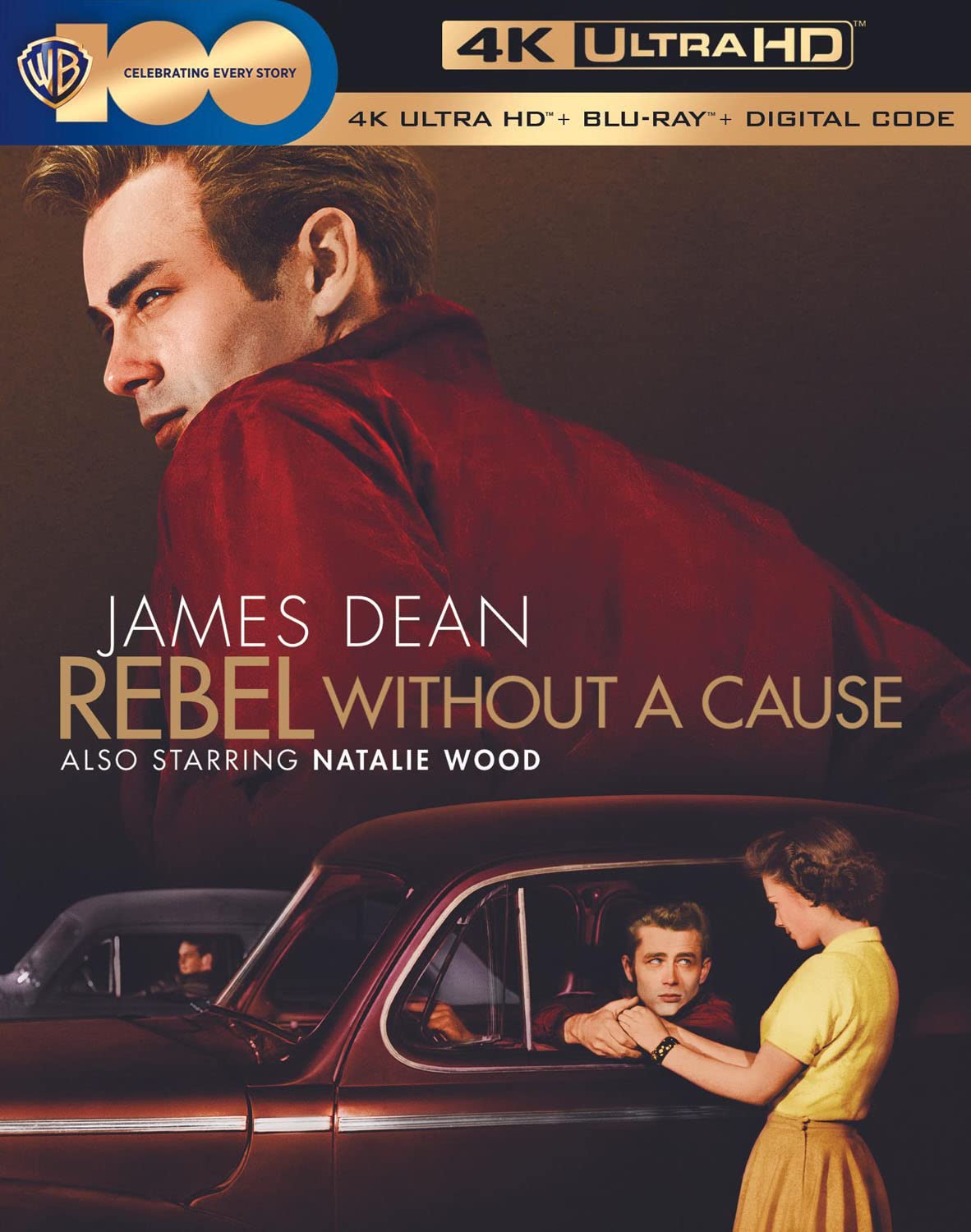
There are a handful of films in Hollywood history that have stories as compelling if not more so than the story the film itself tells. I don't know if there has ever been a film about the making of Rebel Without A Cause. There have certainly been several books, but this is one of those classic films which is surrounded by so many legends, some of them urban myths, but so many of them were true that I find it rather difficult to watch the film on its own terms. With Warner's 100th anniversary celebration of 100 classic films, I had a nice chance to revisit the classic motion picture, and this time I tried my best to watch it without all of the noise that goes along with it. That wasn't easy, but I think I've now seen the film for itself more now than I ever did before. It was a groundbreaking film with an incredible cast that broke so many taboos of the time that you get the idea someone wasn't really paying attention to what was going on on the screen. It's as compelling today as it was then, and maybe more so with all of the baggage. The truth is I've never been able to watch Rebel Without A Cause the same way twice. Now I can try as often as I like with a nearly flawless print finally in UHD Blu-ray and in 4K. Warner Brothers is having a birthday, and I've been unwrapping all of the presents.

"Space ... the final frontier. These are the voyages of the starship Enterprise. Its continuing mission, to explore strange new worlds. To seek out new life and new civilizations. To boldly go where no one has gone before."

From 1978 through 2002, 10 Star Trek films were released at the box office. The franchise almost ended with the first, but it was followed up by what I consider the best of the 10. The films are a collection of ups and downs, but you know you want the complete collection up there on your shelf. You already have the first six, starring the original crew. Now your wait for completion is over. The Next Generation films are out from Paramount Home Entertainment, and here they are ...

Damien Chazelle seems to have a thing for dreamers, or at least those who want to be larger than life. Whether it is a drummer aspiring to reach perfection in Whiplash, or an actress wanting to be a star in La La Land, to even being the first man to walk on the moon in First Man, he’s always made these films with an enthusiasm and energy that we can’t help but want to see them succeed. In his new film Babylon, he seems to be doing something  a little different and on a grander scale as he explores  the early days of Hollywood  as it made the transition from the silent film era to the “talkies” (basically what we’re used to seeing on the big screen today, just minus all the CGI effects).  A lot of money was injected into the production of this film, and you see it in every frame of this movie that is certainly a love letter to a time when Hollywood was trying to figure things out and entertain its audiences. But what I don’t think anyone was expecting is how deep this film was willing to go into the drug abuse and the sordid debauchery that went on in these early days of cinema.

The film opens innocently enough with Manny Torres (Diego Calva) simply trying to get an elephant to a big Hollywood party. Manny is a Mexican-American who is just trying to get his foot in the door, and we get to see these early struggles pay off, but first we get to experience this party that is lavish and epic with a strong Caligula-on-cocaine vibe. It’s at the party where we meet the rest of the cast we’ll be following over the course of the film. There’s Nellie LaRoy (Margot Robbie), who believes she is a star who just simply hasn’t been discovered yet; there is also Sidney (Jovan Adepo), a horn player who is just trying to get by; there is Elinor St. John (Jean Smart), a Hollywood gossip reporter, and then there is Jack Conrad (Brad Pitt), the biggest silent film actor in the business. Then we get to see the moment where Manny first meets Nellie and the moment where he falls in love with her; then moments later see how Nellie is simply plucked from the crowd to become a star, This sequence is so well crafted at letting the audience experience the party while getting to know these characters and several others, all while we are subjected to various sex acts and body fluids and drugs that when it ends we can feel the hangovers that these characters are experiencing.  Unfortunately for most of these characters, they are due on set in just a matter of hours.

"King Kong ain't got nothing on me."

Training Day stars Academy Award-winning actor Denzel Washington in the role of Alonzo Harris. Harris, who is one of the meanest, baddest cops in the city of LA, is a person who cruises the streets in his customized Caddy. Harris, in one of the film’s opening scenes, meets Jake Hoyt (Ethan Hawke), a young cop whose dream is to be promoted to the elite narc squad. Naturally, this is Jake’s first day of training, and he is thrown into the arms of Harris. Alonzo tries to show him the streets so he can understand everything. He has Jake smoke pot just because he can. In one interesting scene, possibly Alonzo being a tough-ass to Jake, he doesn’t arrest two rapists like Jake wants to, but instead, proceeds to beat the living crap out of them.

"My son dreamt of a better world. That's why he saved me. But the world was only a better place with him in it. Khandaq needed a hero. Instead, it got me. All this power. And the only thing I can do with it is hurt people. I will speak the word my son gave me, and I will give up my power. And when I do, you must ensure I never speak it again. Shazam."

Black Adam was a unique experience. It was an occasion where a being who kills without hesitation is viewed as more of a hero than those who exercise restraint while fighting for justice. This is a principle that was leaned into during the film’s marketing campaign, which for me generated a great deal of intrigue, and I was glad that it was not just a marketing ploy. The fact is that Black Adam is very much an anti-hero. However, he did not start out that way. He was initially just a supervillain, one that was and likely still is intended to serve as the primary antagonist to Zachary Levi’s Shazam. For this film, he embraces the role of anti-hero, which is in keeping with his comic book roots, which saw the character shift from villain to anti-hero. Simply put, he is a dark hero, someone you love watching even when he is doing morally questionable things. Who better to embody that idea than Dwayne Johnson. During his wrestling days, Dwayne Johnson, then known as The Rock, did stints as both a face (a good guy) and a heel (bad guy). Even when he was a heel, he was among the most popular superstars of that era. He could make you cheer for him, even when he was cheating. He had presence. And in Black Adam, Johnson very much calls on those talents.

I am not usually into serious zombie movies or television series. I am not a particular fan of The Walking Dead or The Night of the Living Dead.  I do allow exceptions for, say, the Resident Evil series, or perhaps something funny like Shaun of the Dead.  So the first time I saw Paranorman probably about half a dozen years ago, I wasn't expecting much.  Thankfully I did not let my biases creep in, and to be honest, quite enjoyed myself.  So I was very excited when I saw the 4K slide across my desk.  Let's dive in.

This is a feature presentation.  We join a horror movie already in progress.  There are monsters, lost of squishy stuff, and some bloodcurdling screams.  Then the zombie goes munch munch on the brain matter of the blonde heroine.  Rumor was that it was far from satisfying.

LAIKA Films has produced some amazing movies which have elevated the wonderful world of stop motion animation.  Paranorman, Boxtrolls, Kubo and the Two Strings, and Missing Link (all underappreciated by mainstream movie audiences).  But one movie stands above those fine films and is the one for LAIKA that started it all.  Coraline.  Today, I received the Steelbook edition (along with Paranorman) in brilliant 4K.  I can hardly contain myself.  Let's take a look.

As the credits start to roll, we see a doll being undressed as well as un-stitched.  Then that doll is filled up with sand and re-stitched.  A couple of buttons are carefully selected and hair is sewn-in.  It is finally thrust into the world.  Hey, that kinda looked like Coraline, who we will meet shortly.