Posted in: Disc Reviews by Archive Authors on March 18th, 2010
In the realm of family sitcoms, My Two Dads is sort of ahead of its time. While sitcoms today break stereotypes with ethnic and racial diversity, this show was the first to cover same-sex parenting. Premiering the same year as the film Three Men and a Little Baby, this Michael Jacobs (Boy Meets World) creation chronicles the struggles of two single, hetero fathers (Mad About You’s Paul Reiser and B.J and the Bear’s Greg Evigan) sharing custody of their teenage daughter, Step By Step’s Staci Keanan. Financial advisor Michael (Reiser) is the more conservative of the two; Joey (Evigan) is the artistic lothario. Their conflicting ideologies present them with a few comical communication breakdowns along the way.
The show debuted in September of 1987 and lasted for three seasons on NBC. The second season continues daughter Nicole’s emergence as a young woman entering the dating world while her fathers seek advice from friends—Judge Margaret Wilbur (Florence Stanley) and football legend Dick Butkus as café owner Ed Klawicki—to help raise her along the way.
Posted in: Disc Reviews by Archive Authors on March 17th, 2010
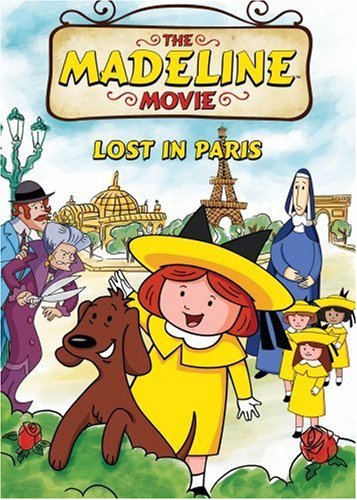
“In an old house in Paris that was covered in vines lived twelve little girls in two straight lines.” That simple opening rhyme has wooed children around the world for more than 70 years. Author Ludwig Bemelmans’ Madeline books have been reincarnated as Academy Award-nominated animated shorts, syndicated cartoons, soundtracks and a live-action film. Madeline: Lost in Paris celebrated its 10th anniversary in 2009 and continues the party with a Shout! Factory DVD release.
Our story begins when a letter for Madeline from a stranger named Henri Horst (Jason Alexander) arrives at the boarding school. The man claims to be her only surviving relative and announces his intention on visiting his orphaned niece. Horst is, of course, a fraud only interested in kidnapping Madeline so he and the decrepit Madame Lacroque (Lauren Bacall) can collect her inheritance. Before Madeline can figure out the truth, it’s too late—she’s whisked away onto the Metro to a sketchy neighborhood harboring a child-labor camp masquerading as a lace shop. When Miss Clavel (Louise Vallance) catches wind that something’s up, she enlists the help of the police—and all of Madeline’s friends—to find her.
Posted in: Disc Reviews by Michael Durr on March 11th, 2010
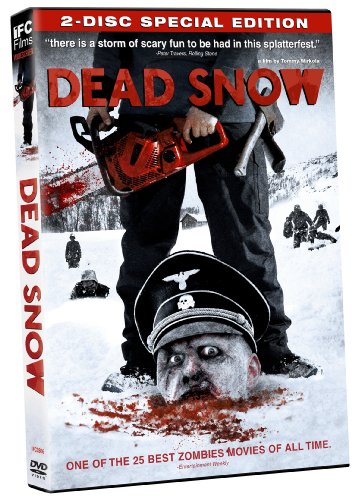
In my lifetime, I’ve really only liked five zombie movies. There is Shaun of the Dead, the three Resident Evil movies, and Zombieland. Most of the other zombie type films either belong in the “Way too Gory” or “Nonsense” designation. So, naturally when I receive a zombie movie like Dead Snow, there is some apprehension. However, in this case I can say that this movie belongs in both of those designations and delightfully so.
The movie opens with a lady (played by Ane Dahl Torp) and she is chased through the snowy mountains of Norway. The creatures ultimately corner her and eat her alive. We notice that the zombies have strange costumes as we fade to black. We re-open with seven medical students who are spending their vacation at a cabin up in what appears to be the same mountains.
Posted in: Disc Reviews by Gino Sassani on March 11th, 2010
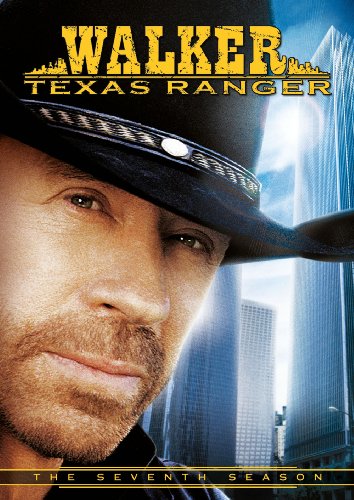
There was a new Cowboy in Dallas, and he wasn’t throwing touchdown passes. But Walker was almost gone before he could really get started. After just four episodes the show’s production company suffered financial collapse, and the show was rescued at the last minute by CBS Productions, who would continue to run the show for its nearly decade-long run. For nine years Chuck Norris brought us the ultimate Texas Ranger in a formula cops and robbers show. The show often became a parody of itself, but maintained a solid viewer ship throughout. Hell, Norris even sings the theme song. Truthfully, what started as a one man show (it was originally called Chuck Norris Is Walker, Texas Ranger) became a good working ensemble that probably kept the train going for so long. Walker (Norris) is a tough guy Texas Ranger. He is partnered with Sydney Cooke (Peebles) and Jimmy Trivetti (Gilyard) who’s an ex-jock with a brain. Walker had a love interest and eventual wife in the local assistant district attorney Alex Cahill (later Walker). Together they fight the evils that come to the high plains of Texas armed with their fists, six-shooters, and Stetsons. After starting with the final season, CBS is finally halfway through the series back from the beginning.
Norris almost deadpans his entire performance. Let’s face it, the man is no accomplished thespian. Still, Norris fans are quite passionate about their guy. There’s a popular T-shirt design that lauds their hero in epic fashion. One of my favorites is : “McGyver can build a plane out of gum and paper clips but Chuck Norris can kill him and take the plane.” Another brags: “Some people wear Superman pajamas. Superman wears Chuck Norris Pajamas”. And there’s the humorous: “Chuck Norris knows what Willis is talkin’ about”. Fans of Norris were never disappointed in what they got here. The requisite martial arts and tough guy talk are present pretty much in every episode. Season 6 is no exception. You should also note if you’re using an episode guide: this is really season 8, as the first two were combined in the first season release.
Posted in: Disc Reviews by Gino Sassani on March 11th, 2010
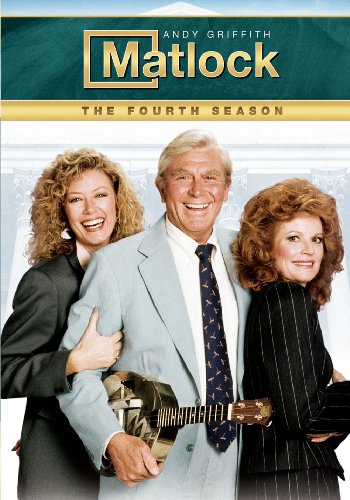
The fourth season of Matlock brought more of the same. If you’re a fan, that’s very good news indeed. What is that, you ask? Imagine Sheriff Andy Taylor older and now an attorney, and you pretty much have the setup for Matlock. Forget for a second that both characters were played by Andy Griffith. That’s not all they have in common. Matlock is every bit the “southern gentleman” that Taylor was. He might be a little smarter, but he walks and talks like Andy Taylor.
Matlock began life as a television movie from Dean Hargrove, who brought us Columbo. Hargrove would later work the same magic with Dick Van Dyke in Diagnosis Murder. In fact, the two shows could easily have been companion pieces. Both featured sit-com stars from the 1950’s and 60’s that had become somewhat iconic characters. Both would don the role of professionals. Both shows would subscribe to the “formula” mode of storytelling. Diary Of A Perfect Murder would set up the Matlock formula. It’s simple, really. Matlock was a lawyer in Atlanta. Some wronged defendant, usually charged with murder, would show up asking for Matlock’s help. Matlock and his team would investigate the crime with an eye toward, as OJ Simpson is fond of saying, finding the real killer. His team consisted of his daughter Charlene, herself a competent lawyer, and Tyler Hudson (Holliday), his private investigator. In the pilot the Matlock character was less Andy Taylor and a little more slick at first. I’m sure that while it was intended to show Matlock’s prowess as a high priced attorney, somewhere along the line it became obvious that the show’s finest asset was Griffith himself and that southern charm he was already famous for. Whatever the reason, you can see the character soften significantly during the early episodes of the season. And that decision was a smart one, as Matlock would continue for nearly a decade.
Posted in: Disc Reviews by David Annandale on March 11th, 2010
Laurel & Hardy. Abbott & Costello. Martin & Lewis. And now... Harold & Kumar? Perhaps the comparison is a bit forced, but that latter day pair certainly follows the classic set-up: best friends who are also polar opposites (Kumar is the confident, slacker stoner; Harold is the shy, conservative stoner); one has mad schemes (Kumar); the other (Harold) suffers for those schemes, and so on. At any rate, here we have the complete oeuvre of these two characters (and since Kal Penn, who plays Kumar, has subsequently gone on to a couple of season of House before taking a job for the White House, I think it safe to say that we are unlikely to be seeing any further episodes).

Harold & Kumar Go to White Castle sets the picaresque model for the two films. Our boys contract a bad case of the munchies after smoking up, and only White Castle hamburgers will satisfy their craving. Their journey to the fast food joint is beset by misadventures, and before the long night is done, they'll have been arrested, ridden a cheetah and encountered grotesques who seem to have wandered in from After Hours and Pee-Wee's Big Adventure.
Posted in: Disc Reviews by Gino Sassani on March 2nd, 2010
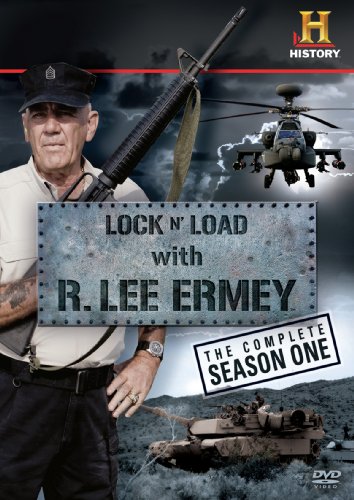
"Hoorah! Semper Fi! Do or die! Hold 'em high! Gunnery Sergeant R. Lee Ermey here. Listen up! Ever wonder how warriors on the battlefield went from throwing rocks to this? Then this is your lucky day."
You've seen R. Lee Ermey in several movies and television shows over the years. He pretty much plays the same character, most notably Gunnery Sergeant Hartman on Full Metal Jacket. He always does a fine job with these roles, but there's a good reason for that. Ermey was, in fact, a Gunnery Sergeant in the Vietnam War. Not much acting required out of the man. His authenticity has been what's made him such a dependable stalwart in these military films. You've got to give the guy some props. He is the real deal, and it has always shown in his roles.
Posted in: Disc Reviews by William O'Donnell on March 1st, 2010
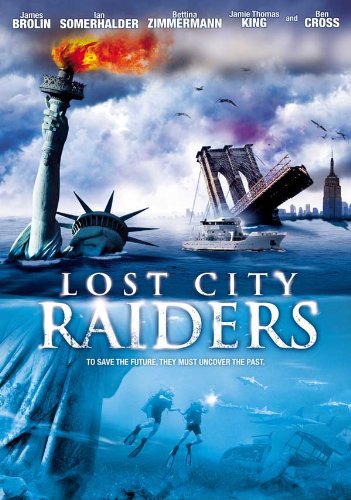
The ice caps have melted, leaving only 10% of the world livable, according to the opening narration of this adventure/disaster film. Salvaging relics from “lost” cities is a means of making money for our heroes, a boat crew that comprises of James Brolin as a Captain with a secret connection to the Vatican, and his two sons. As they pick up goodies to trade or sell they also search for clues towards a grand solution to the global flooding problem that the Vatican is housing.
Posted in: Disc Reviews by Gino Sassani on February 23rd, 2010
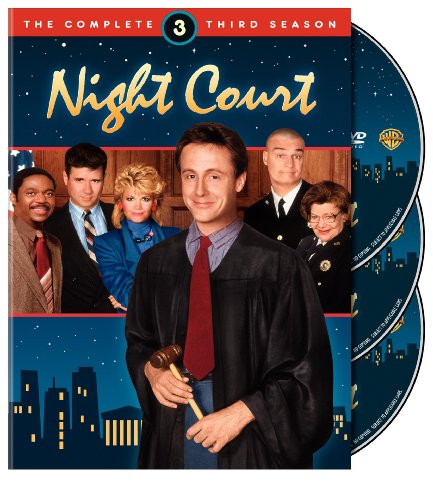
Night Court appeared on the docket at NBC in 1984 and was to last 8 seasons. If you thought it looked and sounded a lot like Barney Miller, you won’t be surprised to learn that a number of key people, including creator Reinhold Weege, came from that classic cop comedy. Several key elements of Miller can be found in Night Court. The themes are almost identical, with both beginning with an easily identifiable bass run. The most important imported element from Miller was the constant parade of the kookiest and craziest criminals this side of the Cuckoo’s Nest. From a hick farmer played by then beginner Brent Spiner to hookers with hearts, Night Court relied heavily on the eccentric character to provide most of its laughs.
Harry Stone (Anderson) is a young hip judge who almost blunders into a judgeship of a Manhattan evening session courtroom. The role appears tailor-fit for Anderson’s style of humor. The character even retained Anderson’s flair for amateur magic. He was always trying to bring levity to even the most dire of circumstances. Joining him in his courtroom was prosecutor Dan Fielding, played by the extremely funny John Larroquette. He was a material man with an overactive lust for the ladies. He was self centered and always looking to gain from someone else’s misfortune. He would often find himself having to suck up to the young judge, who he found too footloose with the law. His groveling always brought the judge a perverse pleasure. The court was presided over by two bailiffs. Bull was played by Richard Moll. He was a mountain of a man with a bald head. While he might look and act like a monster who would eat little babies, he was in fact, a gentle and often childish character with an IQ lower than his shoe size. His partner and mentor was Selma, played by the raspy-voiced Selma Diamond. Selma was a no-nonsense, say what she wanted to, chain smoking authority in the courtroom. Unfortunately, Diamond passed away after the second season. Replacing the gruff character and actress was Florence Halop playing Florence Kleiner, but she would only last this season. Charles Robinson joined the cast in the second year as the court’s new clerk. He was likely the most “normal” member of the cast. Throughout its run there were a rather large number of actresses to play the public defender role in the series. Eventually that role went to Markie Post, who kept it for the longest time. In season two it was Billy Young playing a very awkward Ellen Foley. The character never clicks with any of the others, and she would also be gone at the season’s conclusion.
Posted in: Disc Reviews by David Annandale on February 22nd, 2010
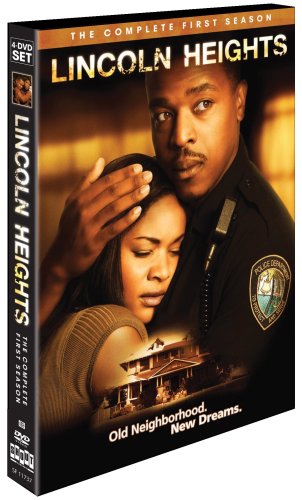
Eddie Sutton (Russell Hornsby) is an idealistic police officer, dreaming of making a real difference. His family (nurse wife and three kids) is currently living in a too-small apartment. The chance to kill two birds with one stone comes up with a program that encourages officers to buy homes in depressed neighbourhoods, and so Eddie moves his family into a spacious former crack house in the titular LA district. Things, as one might expect, are not easy. Eddie discovers (to his unaccountable surprise) that his new neighbours are suspicious of the police. His son is bullied in school. The girls have their own problems fitting in. And crime keeps rearing its ugly head. But as the series progresses, Eddie and his family make of their new house, and its neighbourhood, a real home.
Back in 2007, Variety reviewed this series, and compared it unfavorably to The Wire. Given that show's status as one of the best series EVER to grace American television, just about anything would look back in comparison. But Lincoln Heights doesn't do itself any favours by yoking together (with violence) gritty urban drama and Hallmark-style sentimentality. The latter makes the former hollow, while the former shows up the latter for the lie that it is. The show has stars in its eyes, and its heart may perhaps be in the right place, but that does, unfortunately, make it good, despite the best efforts of its able cast. The characters remain familiar mainstream TV types, and so when Eddie warns that their new neighbourhood “isn't Disneyland,” he is, in fact, wrong. He simply moves his family from one area of the amusement park to the other, from Cosbyland to Gangstaland, and there is no more authenticity than at Disneyland. I won't even get started on the action scenes, which feature the most gratuitous use of splitscreen this side of CSI: Miami.