Posted in: Disc Reviews by Gino Sassani on November 13th, 2009
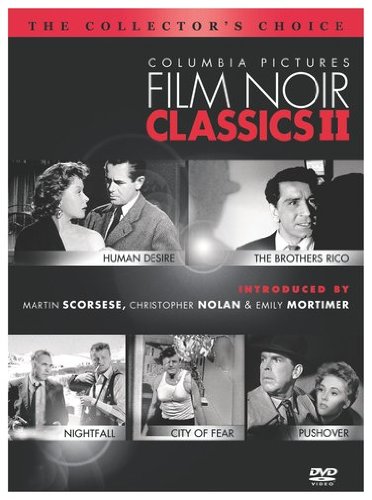
“In the 1940’s, a new genre – film noir – emerged from the world of hard boiled pulp magazines, paperback thrillers and sensational crime movies. These films, tough and unsentimental, depicted a black and white universe at once brutal, erotic, and morally ambiguous.”
And so Sony collects 5 of these films as part of what looks like is going to be an ongoing series. But what exactly is film noir? You hear the word used from time to time, but what does it mean?

Posted in: Disc Reviews by Gino Sassani on November 13th, 2009
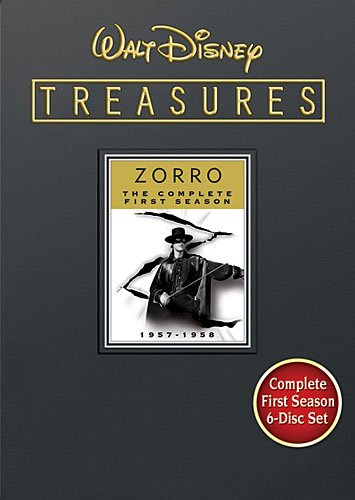
“Out of the night when the full moon is bright comes a horseman known as Zorro. This bold renegade carves a “Z” with his blade, a “Z” that stands for Zorro. The fox so cunning and free, Zorro who makes the sign of the “Z”. “
Zorro first appeared in pulp magazines in 1919 written by Johnston McCulley. He told the story of a talented swordsman who masqueraded as a dull, inept, and spoiled young rich man. But, when he put on his trademark black cloak and mask he took to the countryside of Spanish California in 1820, fighting for the peasants and anyone treated unjustly. He was a regular Robin Hood. While he did not steal, he was considered an outlaw and had to spend much of his time fighting off the law. He was known for using his sword to cut a “Z” on anything from trees to the clothes of his enemies. He lived by a strong code of honor and morals. He never killed, unless it was absolutely necessary, which it seldom was. It didn’t take long for this inspiring character to reach the silver screen. In just a year from his publishing debut, Zorro was a movie staring Douglas Fairbanks as the heroic vigilante. But it didn’t end there. McCulley kept writing books, and the character became one of the most famous characters of the age. Republic created serials and the films kept coming. From 1920 through 1990 there wasn’t a decade that did not feature a live action version of the hero. Comics would follow.
Posted in: Disc Reviews by Gino Sassani on November 10th, 2009
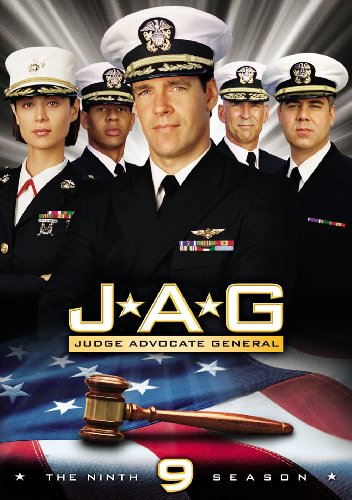
Finally, this show has really gotten to me. I don’t know what it is about this 8th season, but I was far more interested in the show than I had ever been. Maybe I’ve spent so long with these characters that they started to come alive for me. Maybe I was resistant to a slightly different way of telling stories. Maybe it was that the stories became less about who was with who that I was finally able to enjoy the great courtroom drama and investigation elements of the series. Whatever it was, I am finally a fan.
Most of each episode is dedicated to the investigation of the particular case. For action junkies, this often means flying some sweet high tech aircraft. The show’s primary character, Commander Harmon “Harm” Rabb (Elliott) does a lot of the high flying investigations. He was once an ace pilot who developed night blindness, which essentially grounded him.
Posted in: Disc Reviews by Gino Sassani on November 10th, 2009
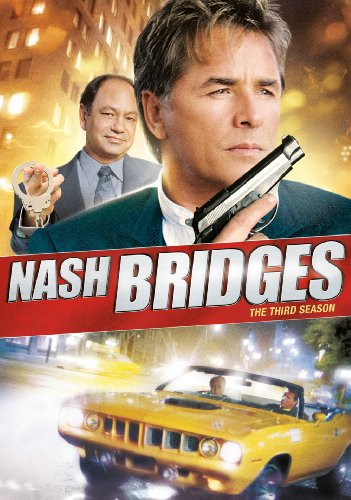
It’s been some years since I had seen an episode of Nash Bridges. I had almost forgotten everything about the show except for two things. I remembered how great Johnson and Marin were together and, of course, that ugly-colored Cuda. I watched these episodes and found that my perspective hadn’t changed. Who cares what the story is about? Who remembers any of the cases? I remember the characters and the car, and 10 years later it feels exactly the same way. In many ways Nash Bridges was the last of its kind. The cycle of buddy cop and car chases was pretty much over. What started with James Rockford and Starsky and Hutch was now evolving into Law & Order and CSI. We still had procedurals, but they had changed their procedures. If you have to say goodbye to a beloved era, what better way than with Nash Bridges?
When Miami Vice finally left the air in 1989, Don Johnson was a very hot commodity indeed. He decided to try and parlay that success into a film career that never really brought him the breakout roles and fortunes he envisioned. Not too proud to return to his roots, he signed a deal with CBS that gave him pretty much a blank check to star in whatever kind of television series he wanted. It was a rare deal that forced CBS to air, or at least pay for, whatever Johnson came up with. Many of us were expecting pretty much a Miami Vice clone when it was announced he would once again be playing a cop. It was all sounding pretty familiar. Bridges was a super cool cop, this time from San Francisco with a rather tattered personal life. He was going to be teamed up with a partner, who wasn’t going to be a cop, but an investigator whose cases would cross paths with Bridges’. It was rumored that the partner might not survive the pilot, thereby killing the buddy cop routine that was beginning to sound very much like Johnson’s previous show. It appeared doomed to failure, and even CBS was at first looking to back out of the deal. They tried to buy Johnson off, but he was by now very excited about the new show and insisted he get his episodes. But how could this new show not be compared to the old? How could anyone have the kind of chemistry with Johnson that John Diehl had? On March 29, 1996 everyone held their collective breaths as Nash Bridges appeared on the scene. Cheech Marin ended up with tons more chemistry with Johnson, helped by the fact the two had been friends for over 25 years. In short order Nash Bridges had arrived, and television audiences everywhere found themselves saying: “Miami Who?”
Posted in: Disc Reviews by Gino Sassani on November 5th, 2009
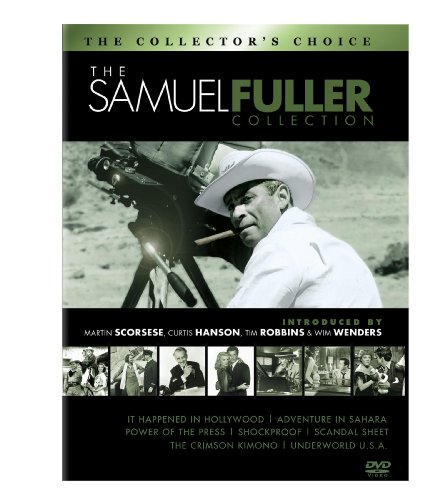
Sam Fuller lived quite a life before he ever even thought about working in the film industry. He was a crime beat reporter at 17 years old. He served in the infantry in World War II, turning down a cushy press corps assignment. Both of these experiences would shape the man, writer, and filmmaker he was to become. His newspaper experience gave him access to a lifetime of stories, an understanding of the newspaper business, and a honed writing skill. That ability would serve him most. Fuller was a writer more than a filmmaker, and it was with his typewriter that he most excelled. The war would emotionally scar him. He may have entered with the typical young ideas of glory in the battlefield, but he left with visions of death and gore that he could never forget. It hardened the man. Instead of turning bitter, he found a way to exorcise those demons and ultimately made a heck of a living in the process.
His films are, if nothing else, quite unique. He wasn’t raised in the same studio environment as most filmmakers, and there was always a kind of docudrama feel to almost everything he wrote or created. He was excessively patriotic in his younger years, but at the end of his life he became disillusioned and moved to Europe. His films were almost always steeped in the film noir of the early 30’s and 40’s, even his later works. Everything from the characters to the words they spoke had a decidedly Fuller reality to it. Known mostly for smaller budget films, Fuller was prolific and could work quickly.
Posted in: Disc Reviews by Gino Sassani on November 4th, 2009
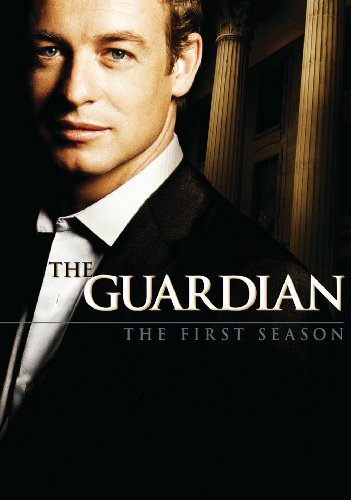
Simon Baker is riding high these days. Last year his new series, The Mentalist, was the highest ranked new drama of the year. That accomplishment got the show paired with CSI in that enviable Thursday night time slot. I’m amazed when I hear folks tell me how the actor appeared to come out of nowhere. A few film roles and he’s Mr. Television. Well, count me in with the small group that isn’t so surprised and saw him coming as far away as 2001 with a sleeper CBS series called The Guardian.
Baker played Nick Fallin, a talented young lawyer who just got busted for cocaine. Nick won’t see the inside of prison, however. His father, Burton (Coleman) is the senior partner at one of Pittsburgh’s most influential corporate law firms. Instead of jail, Nick is given 5 years probation and ordered to serve 1500 hours of community service. His court ordered assignment is Legal Services Of Pittsburgh, formally Children’s Legal Services. He’s placed under the charge of Alvin Masterson (Rosenberg), an idealist who set up the law clinic originally to speak for children who have no one else to do so. He’s resentful of Nick’s pampered lifestyle and at first wants to make the gig hard enough on him that he might ask to be assigned elsewhere. Eventually they warm to each other as Nick becomes more vested in the job than he thought he would be. Much of the show’s conflict is derived from Nick juggling these two worlds. He still has a duty as a shark attorney for his father’s firm, yet must find time to help these indigents and children that have come to the clinic for help.
Posted in: Disc Reviews by Gino Sassani on November 2nd, 2009
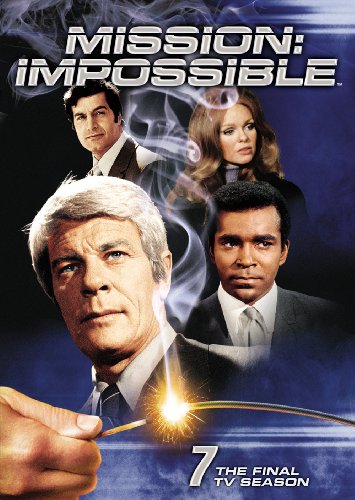
With so many cast changes, it didn’t really come as too much of a surprise to fans that the series was winding down. Only one more season would follow, and this year never clicked in quite the same way previous seasons had. By now the team was so significantly different that there was little of the cast chemistry that made this one such a winner. With its glory years behind and only one more struggling year to come, we reach the end of our journey with the IM Force.
Jim Phelps (Graves) led his team in a sixth season of Mission Impossible starting in 1971. The show continued its trademark traditions. Jim would receive a mission from the “self destructing” tape and would gather his IMF (Impossible Mission Force) team. The team was necessarily eclectic in nature, and it changed significantly in the sixth season. Gone were Leonard Nimoy, Leslie Ann Warren, and Sam Elliott in his signature role of Dr. Robert. Still in the team we had Barney Collier, the gadget man, played by Greg Morris. The muscle was still supplied by Willy Armitage, played by brute Peter Lupus. Together they took on missions that the government could not be officially a part of. They were always admonished that should they be caught “the secretary would disavow any knowledge” of them. Usually they were sent somewhere to put some evil mastermind out of business. Their tactics ranged from scams to outright theft. Sometimes they were a rescue team, while other times they would infiltrate a group of bad guys. There were certainly cold war elements to the whole thing. Each week the team concocted some convoluted con to play on their mark, walking away at the end of each episode often without getting any credit or congratulations.
Posted in: Disc Reviews by William O'Donnell on November 1st, 2009
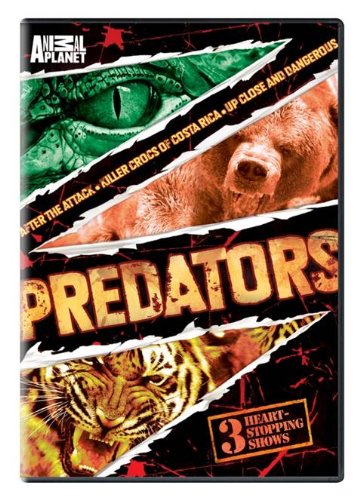
Google this title now while you can, before Robert Rodriguez completes his Predator sequel "Predators" forever consuming your search results.
This DVD is a mashing of three different Animal Planet programs, After the Attack, Up Close, and Dangerous and Wild Discovery, together to make a compilation that is dedicated to the world's most dangerous animals (perhaps in an attempt to steal some of Shark Weeks thunder).
Posted in: Disc Reviews by Michael Durr on October 30th, 2009
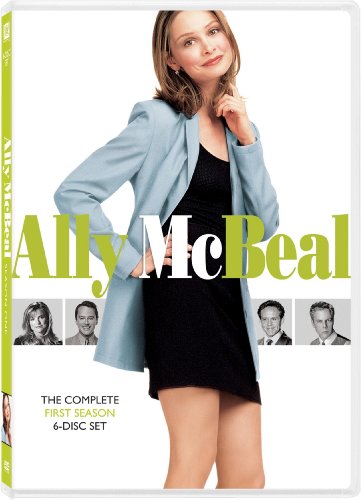
It is true, I’m not a big fan of lawyer shows. A long time ago when I was about twelve years old, my future vocation wish was to become a lawyer. I visited lawyers, I talked to them for what seemed like hours. Except it wasn’t hours at all, it was more like thirty minutes. My realization then was that I wasn’t cut out for the business and went into what I do now. However, after watching Ally McBeal for a season of episodes, I come to the realization that I’m so very glad that I didn’t stick around.
Ally McBeal (played by Calista Flockhart) has just lost her job at her law firm. It seems that a co-worker decided to touch her rear in an unprofessional manner. The co-worker decided to say it was OCD and unfortunately Ally found herself on the streets. She is immediately picked up by an old colleague of hers named Richard Fish (played by Greg Germann) and invited to work at his firm.
Posted in: Disc Reviews by Gino Sassani on October 28th, 2009
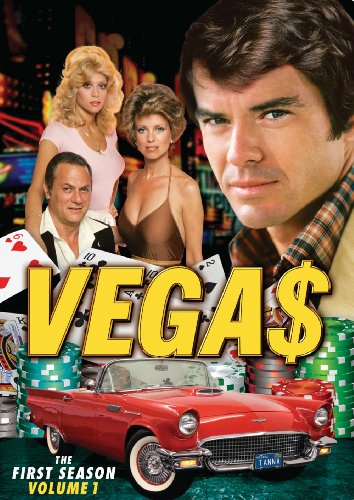
By 1978 the television detective model had been nearly complete and possibly already a cliché. Dan Tanna might have well been the complete model as far as the formula goes. It was almost as if you could go down a checklist and, like Dr. Frankenstein creating a monster, you would check off the necessary elements. The scripts could then almost write themselves, and you let the show fly on autopilot for three seasons or so until someone decides to look behind the curtain.
So let’s go down that checklist, shall we?