Dolby Digital 2.0 (English)

Host Tom Cavanaugh takes us for a tour of the some of the lesser known or rarely seen corners and byways of the Smithsonian Institution. The tone is breezy and mildly irreverent, and the exhibits encountered are unfailingly interesting. The episodes this season are “Let's Eat!”, “Top Secret,” “Nature's Vault,” “Crystal Ball,” “Going, Going, Gone,” “Sex 101” and “Villains and Rogues.” The episodes are actually even less specific than the titles might suggest (and they already grant a fair bit of freedom to jump from topic to topic). Thus, “Villains and Rogues” looks at a couple of, well, rogues, and then having Cavanaugh refer to them as snakes is enough of a segue for the episode to suddenly shift its attention to – you guessed it – actual snakes.


Neat as many of the topics are, the sheer range of items covered in a single episode does tend to rob the show of focus. And I'm of two minds about Cavanaugh's hosting. Young viewers will likely enjoy the horsing around, but older ones might well find the steady stream of one-liners a bit grating. Still, if there isn't something here to make you sit up and say, “I never knew that!” then you haven't been paying attention.

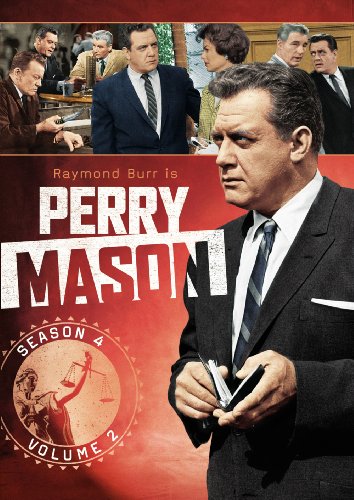
Erle Stanley Gardner wrote crime fiction, and while many of his 100 or so works are unknown to most of us, he created a character that has become as identified with criminal lawyers as any other in fiction. It was in these crime novels that Perry Mason first faced a courtroom. He developed a style where he would investigate these terrible crimes his clients were on trial for. He would find the real killer, and in what has become a Hollywood cliché, reveal his findings in a crucial moment during the trial. While we may not remember the novels, we all remember the man in the persona of Raymond Burr. Burr had a commanding presence on our screens and enjoyed a well deserved 11 year run as the clever lawyer. What makes this run so amazing is that the show followed pretty much the same pattern the entire time. We always know what’s going to happen, but we wait eagerly for that gotcha moment when Perry faces the witness on the stand. We know when he’s got the guy squarely in his sights, and we can’t sit still waiting for him to pull the trigger. OK, so maybe that’s a little over the top, but so was Perry Mason. From the moment you heard that distinctive theme, the stage was set. To say that Perry Mason defined the lawyer show for decades would be an understatement. Folks like Matlock and shows like The Practice are strikingly similar to Perry Mason. If you haven’t checked this show out, this is your chance. See where it all began.

At this rate, it’s going to be quite some time before you complete your collection. I’m not even sure that DVD will still be a viable format before the end of the series on DVD. It’s another half season, and the episodes continue to fly at us at a snail’s pace. But slow and steady wins the race, and as long as the quality episodes continue to deliver that classic Mason charm and style, I guess folks like us will continue to come back for more.

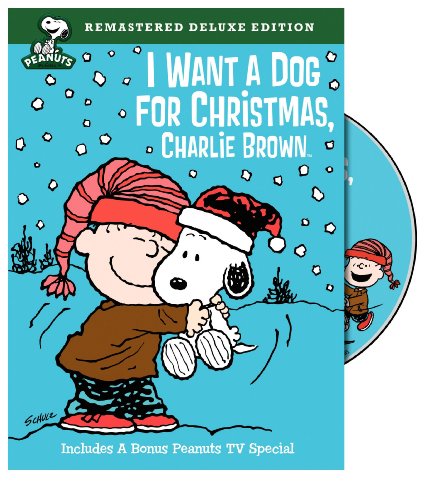
We all know what a classic A Charlie Brown Christmas still is. It's a fact of life that when you have a hit there is a tendency to continue to reach for that lightning in a bottle over and over again. That is certainly the case with the Peanuts specials. The results have been mixed, and while I won't say that these recent specials aren't quality stuff, I doubt there is anyone out there who believes that the same quality of heart and charm has existed in the series since the 1970's. When Charles Schulz died, it was agreed that no new material was to be allowed with these characters. Every special since that time has had to use dialog and stories already published in the cartoon strips. Now, that's not as limiting as you might think when you consider the strip ran for bout 50 years. That leaves a lot of untapped material out there to keep the specials running, and run on they do.

I Want A Dog For Christmas is a unique episode in that it does not really center much on the main Peanuts gang. Charlie Brown himself is reduced to a background character here. The star of this show is Rerun. The character was added as a baby brother to Linus and Lucy back on Mother's Day in 1972. His exposure in the shorts has been limited, to say the least. So, it is actually refreshing to have the character carry the load for this 2003 effort.

This series from Comedy Central began as a low budget film hosting show in a small television station in Minnesota. It was the brainchild of Joel Hodgson. It ended up running for 11 years and a feature film version.

Mystery Science Theatre is an acquired taste. For me, I’ve really got to be in that certain mood to watch it. That’s the beauty of these DVD’s. You pop them in when you’re ready. The idea is pretty whacked. Depending on the season you’ve got, Joel or Mike is trapped in space on the “Satellite of Love”. Doomed to spend his life watching very bad films, our hero makes the best of a bad situation. He uses his resources to construct a couple of robot pals. There's Crow T. Robot (Beaulieu), Tom Servo (Murphy), and Gypsy (Mallon). As part of an experiment together, they watch the films from the front row, constantly ranting throughout. If you’re like me, you’ve invited a few friends over to watch a schlock festival. The movies weren’t as important as the banter you created while watching. That’s exactly what you see here. The silhouettes of our host and his robots dominate the lower portion of the screen, where they provide alternative dialog and sometimes witty commentary on the action. The two evil station owners/mad scientists send them a new bad film each week to observe their reactions to the bombs. The films are broken up by off the wall skits and fake commercials to alleviate the tedium. This DVD collection is better than some because it includes films from four different seasons to give you a good sample of the overall series.

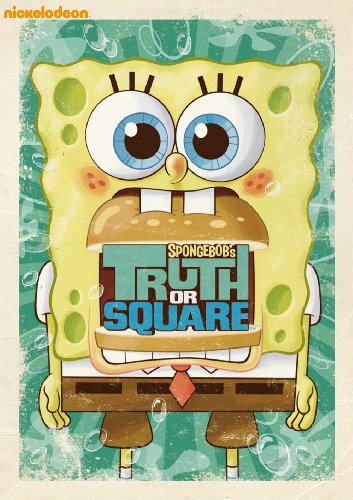
Spongebob Squarepants is such the cultural phenomenon that anytime an anniversary or a full length motion picture comes into production, the show can usually get a slew of good actors and sports stars to do a cameo. For Spongebob’s tenth anniversary and third tv movie of the series: he decided to bring out a slew of guest stars. The only question that remained was the hour long episode any good or was it the show’s version of week old bread with those really crusty parts?

Today is the day of the eleventy seventh (that’s 117 for you land dwellers) of the Krusty Krab. It was just yesterday when Spongebob had tasted his first Krabby Patty and knew his life’s goal would be to work at the establishment. Spongebob showers, puts on his clothes including his eager face and goes to the Krusty Krab to clock into work. When he gets there, he realizes that the place is surrounded by customers all eager to get in.

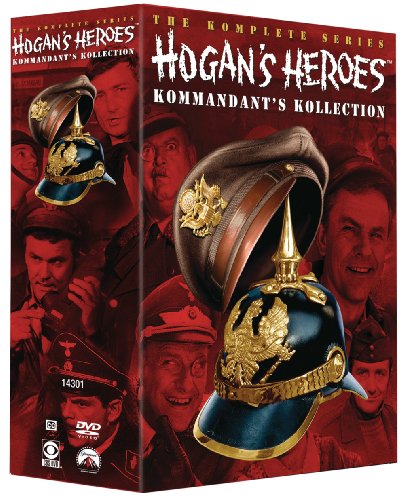
Who would have believed that you could do a situation comedy based on Nazi Germany and a group of POW’s in World War II? It wasn’t an easy sell. When Albert S. Ruddy first came up with the idea, it was a contemporary story about a group of guys in a normal U.S. prison. There were a lot of problems, mostly with the idea of making your main characters criminals. Of course, that’s not so much the problem today. But this was the 1960’s, and those kinds of “heroes” were not quite as accepted. Eventually the concept developed to put the characters in a prisoner of war camp in Nazi Germany during the World War II. Remember that we were only 20 years removed from the end of the war and the discovery of the concentration camps and all of the horrid images these things evoked in people. Any smart betting man would have given the chance of getting such a series to air at somewhere between zero and Hell freezing over. And when the show was pitched to CBS, that’s exactly what the execs had to say.

Somehow they were convinced enough to do a pilot episode. It was too funny to pass up, even with the more sober circumstances. By the end of that first season Hogan’s Heroes was one of the top rated shows on television. Larry Gelbart often credits the success of Hogan’s Heroes as the precedent that allowed shows like MASH to be sold. Suddenly it was okay to find laughter in such places. The show ran for 6 seasons from 1965 to 1971. The cast would remain completely intact throughout the show’s run. The show would also have to hold off a plagiarism suite from the writers of Stalag 17.

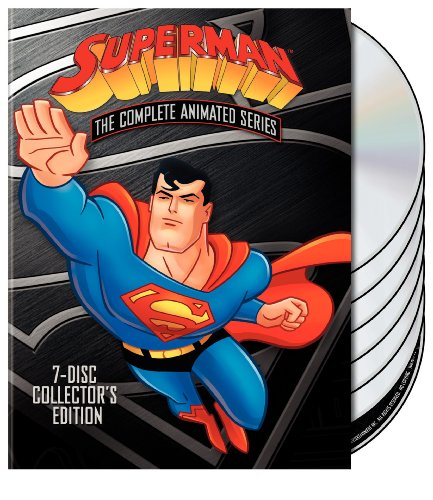
Superman: The Animated Series was made in the same fashion as Batman: The Animated Series. The tone was a little more serious and a lot more action. It was first produced in 1996 and made 54 episodes through the year 2000. The show received high praise for raising the bar but at the same time keeping what was important to the mythos of Superman. In fact, it even received a nomination for an Emmy. Besides Smallville, this probably stands out as the best television adaption of the one known as Superman, the Last Son of Krypton and hero to the planet Earth (and beyond).

Most of us know the story of Superman, but perhaps it is best that we run it over a little bit adapted to the actual animated series. Krypton is approaching devastation but only one scientist believes it to be true, Jor-El. He feeds his information to a computer named Brainiac who is in charge of the planet and all of its major operations. The computer analyzes the information and says the planet is safe. Jor-El knows the computer is lying and can't convince the others of the danger.

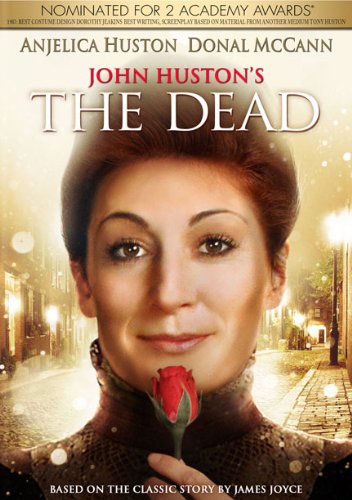
In early-20th-Century Dublin, a winter's musical gathering is being held. The first two-thirds of the film takes us through the course of the evening, from the arrival of the guests, to the musical entertainment, to the dinner and its discussions (and arguments), and finally the departures. During the party, one is aware of a certain tension or distance between one couple: Donal McCann (nephew to the hostesses) and his wife (Anjelica Huston). As they prepare to leave, Huston hears one of the guests sing, and is rooted to the spot. Later, McCann asks her why the song affected her so much, and a painful memory from her past comes out.

John Huston's last film is suitably elegiac. Based on the James Joyce's short story of the same name, the movie is itself in short story form, barely clocking in at 73 minutes, and that's including the credits. The running time is just right, though, as this is a compact, moving tale, whose title does not become clear until the closing minutes. Were the film any longer, audiences would likely become restive at the apparent lack of story during the first two acts, but everything is present for good reason, working in unity towards a powerful conclusion. In all of this, the film is deeply faithful to the Joyce story. But the story also presents an enormous challenge: its conclusion relies on the thoughts of its protagonist, not on dialogue or action, the bread and butter of cinema. What to do? Huston takes what is probably the only path open to him, and goes for a voice-over as the camera gazes at mournful scenes of snow falling in the Irish night. The voice-over, having been absent until this very moment, is a bit jarring, even as its necessity is understandable. So the film might not be flawless, but it is a heartbreakingly moving valedictory gesture from one of cinema's greatest directors.

Here is a rather strange fish. Imagine a series of very economical Blair Witch-style mockumentaries, featuring a different creature each week (giant lizards, giant snakes, werewolves, you name it). The “found footage” is interrupted every few minutes by actual footage of real animals related to the supposed monster while factoids parade on the screen. Most peculiar. Individual episodes have a certain ripe-cheese entertainment value, but you'll want to watch them in widely separated screenings, as the mockumentary approach feels repetitious and tiresome quite quickly. Viewers expecting to get their monster fix in will also likely be disappointed by the brief and unconvincing FX.

Hard to give a rating on this, since the footage is supposed to look raw (this is supposedly taped by the unfortunates who conveniently leave the camera running even as they are about to be swallowed up by the fearsome whatsit). The simulation is fairly effective, with all sorts of convincing grain and camera shake. The less frantic scenes are prone to a certain degree of aliasing, though that too is hard to blame on the transfer.

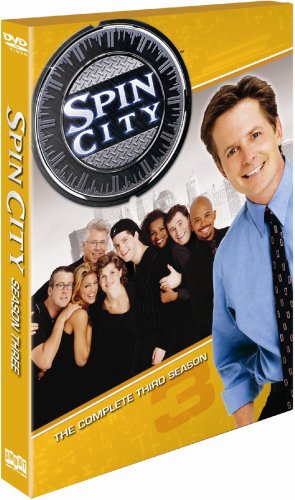
So here we are for the third season of the farcical political adventures of NYC Deputy Mayor Mike Flaherty (Michael J. Fox) and his crew. We follow them work to keep the buffoonish mayor (Barry Bostwick) in power and out of trouble, while finding plenty of time to get themselves into all sorts of predicaments. This is one of those shows that, back when it aired, struck me as clever, but not as clever as it could be, and that impression remains. The cast is a crack team of wits, and they bounce off each other with great energy and snap. There are numerous situations and plenty of lines that are funny indeed. And yet, there is a certain laziness to the humour, too. This is a comedy set in a the world of politicos and spin doctors, for crying out loud. The terrain is rich, so why do so many episodes revolve around time-worn sitcom scenarios (office hijinks, romantic pratfalls, punctured pride) that could show up in any context, and make little use of the show's particular world. There's a certain smugness to the sexual humour as well, like that of a seventh-grader who has just discovered the joys of talking dirty. Still, the show is fun, simply too easily satisfied with itself.