Dolby Digital 2.0 (English)

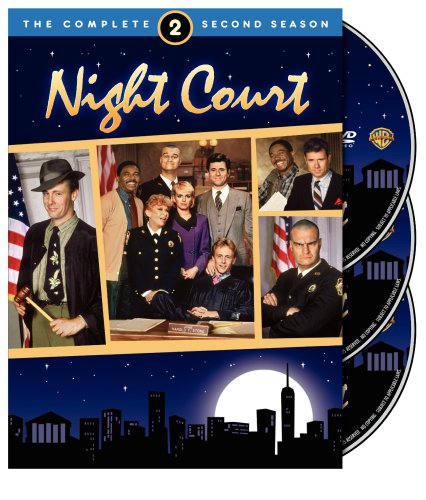
Night Court appeared on the scene at NBC in 1984 and was to last 8 seasons. If you thought it looked and sounded a lot like Barney Miller, you won’t be surprised to learn that a number of key people, including creator Reinhold Weege, came from that classic cop comedy. Several key elements of Miller can be found in Night Court. The themes are almost identical with both beginning with an easily identifiable bass run. The most important imported element from Miller was the constant parade of the kookiest and craziest criminals this side of the Cuckoo’s Nest.From a hick farmer played by then beginner Brent Spiner to hookers with hearts, Night Court relied heavily on the eccentric character to provide most of its laughs.

Harry Stone (Anderson) is a young hip judge who almost blunders into a judgeship of a Manhattan evening session courtroom. The role appears tailor fit for Anderson’s style of humor. The character even retained Anderson’s flair for amateur magic. He was always trying to bring levity to even the most dire of circumstances. Joining him in his courtroom was prosecutor Dan Fielding, played by the extremely funny John Larroquette. He was a material man with an overactive lust for the ladies. He was self centered and always looking to gain from someone else’s misfortune. He would often find himself having to suck up to the young judge who he found too footloose with the law. His groveling always brought the judge a perverse pleasure. The court was presided over by two bailiffs. Bull was played by Richard Moll. He was a mountain of a man with a bald head. While he might look and act like a monster who would eat little babies, he was in fact, a gentle and often childish character with an IQ lower than his shoe size. His partner and mentor was Selma, played by the raspy voiced Selma Diamond. Selma was a no nonsense, say what she wanted to, chain smoking authority in the courtroom. Unfortunately, Diamond would pass away after this second season, and this is your last chance to catch the character. Charles Robinson joined the cast in the second year as the court’s new clerk. He was likely the most “normal” member of the cast. Throughout its run there were a rather large number of actresses to play the public defender role in the series. Eventually that role went to Markie Post who kept it for the longest time. In season two it was Billy Young playing a very awkward Ellen Foley. The character never clicks with any of the others, and she will also be gone at the season’s conclusion.

Top Secret comes to DVD in a new "I Love the '80s" edition. The film continues the legacy of David and Jerry Zucker and Jim Abrahams as kings of sight gags and the ludicrously unexpected. Made in 1984, the film stars a young Val Kilmer as rocker Nick Rivers, an artist so clearly modeled after Elvis that he even sings potential lover Hillary Flammond a spoof version of "Are You Lonesome Tonight".


"When you give up your dream, you die."

Welcome to 1972, when the sexual revolution is simultaneously in full swing, yet also showing signs of exhaustion (all that swinging can wear a body down, don’t you know). Barbi (Anna Biller) is a model housewife who is awakening to the feeling that there is a world outside her four walls. When she and her husband have a falling out, she hooks up with her more extroverted neighbour Sheila (Bridget Brno), who is also in the midst of a marriage crisis, and the two of them seek new love by taking work at an escort agency. What follows is a picaresque series of encounters, with nary a sexploitation angle ignored.

This film is a textbook definition of “labour of love.” Anna Biller no only stars, she directed, scripted, co-produced, edited, and took care of production and costume design. The latter took ages, since she wanted the costumes to match the decor, but the result was worth it – no small part of the film’s humour comes from its rigorous fidelity to the worst of seventies’ sense of aesthetics. Biller has recreated the classic sexploitation film down to the smallest detail. There are just enough winks to the audience to acknowledge the passage of time (and there is one address to the camera, describing the era as a fleeting utopia for the male of the species, that is as incisive as it is hilarious). The performances perfectly nail their models, capturing stilted, unnatural expressions and their forced enthusiasm. But no matter how much fun is poked at those bygone films, Viva also radiates an enormous love for them. As funny as the movie is, though, at 120 minutes, it is simply too long, and the pace is too measured. Lost of fun, all the same.

What a sordid mess!

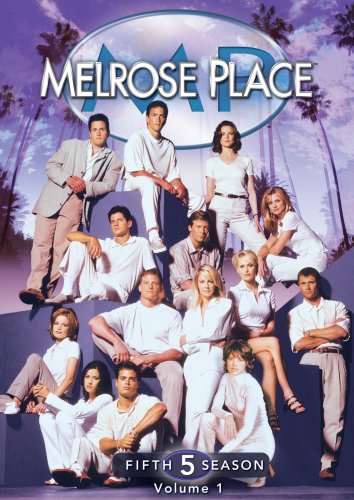
Melrose Placelingered in the dark recesses of viewers’ hearts and souls as the guiltiest of pleasures for seven seasons. Wrapping up at the end of its seventh season with a ridiculously clichéd fake death twist for two major characters, the ingredients for it all are here in the fifth season – or the first half of it.

My place of birth was in Jamaica, NY in the summer of 1975. However, my parents decided to move me around a bit and where I grew up was actually a lot more south than that. Many times in my youth I visited New York to see my grandmother and wondered (often aloud) what it would be grow up in New York rather the suburbs of a southern state. My grandparents would tell me stories, my dad would tell me stories as well as people within earshot of my curiosity. Films helped in this respect too and another fine film about that experience ended up in my hands.
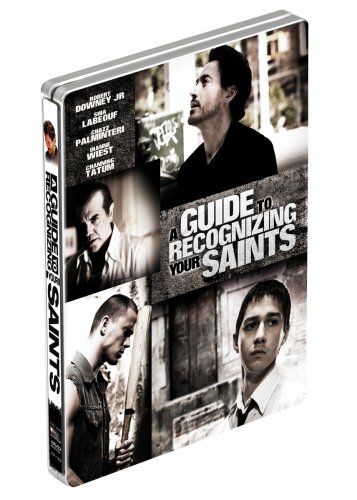
A Guide to Recognizing Your Saints was released in 2006 and is based on the true story of Dito Montiel.

Dito (played by Robert Downey Jr) is a successful writer and lives in California. His book speaks of his youth, living in the heart of New York. After all of these years, his mother Flori (played by Dianne Wiest) calls Dito up and tells him that his father, Monty (played by Chazz Palminteri) is ill and will not go to the hospital. After calls from friends and family, Dito decides to make the journey to New York. In the film and his mind, he really travels back to 1986 when he was just a teenager struggling to get by.

Woody Allen lands a terrific cast with his latest attempt at comedy, Vicky Cristina Barcelona, but there is something very off about the way these characters are written. Annoying pretentious dialogue renders a whimsical, fairy-tale-like backdrop ineffectual, causing each moment of silence to come all too slowly.Rebecca Hall is Vicky. Scarlett Johansson is Cristina. They are two differently wired friends enjoying an extended vacation in Barcelona, where they meet up with ruggedly handsome artist Juan Antonio Gonzalo (Javier Bardem), whom both girls can’t seem to resist. Juan Antonio asks both girls to join him in bed the first time he meets them. Vicky is offended, while Cristina finds his approach radically interesting – enough so to decide she’ll take him up on the offer. Unfortunately for Cristina, food poisoning cuts her plans short, and in steps the combative Vicky to fill the empty slot.


Hedda and Neal (Lydia Lunch and Don Bajema) are a couple whose relationship needs work. They have retreated to an old plantation house for precisely that reason, but then Hedda invites over her former lover, Jackson (Henry Rollins). The inevitable triangle that occurs is intercut with flashes of other events from the house’s past.

The fact that the film is barely more than half-an-hour long will be perceived as either a blessing or a curse, depending on the viewer. While this is not as abrasive as Lunch’s collaborations with Richard Kern (Fingered), it will be a hard sell for many viewers due to technical aspects alone (see below). Lunch cuts loose as a femme fatale, but her revealing outfits and pale-face-and-crimson-lips makeup remain resolutely New York Underground, looking rather silly in the rural setting. Some evocative shots, then, and some amusing bits of dollar-store surrealism (check out the bunnies in the kitchen), but also rather more pedestrian than it thinks it is.

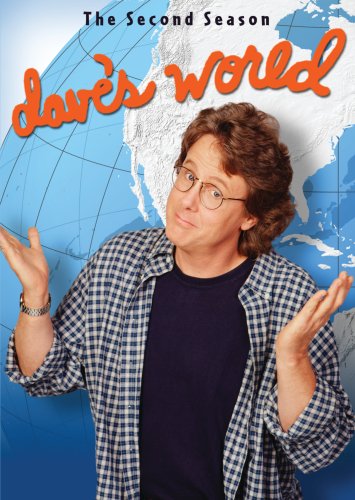
I was first introduced into the somewhat twisted world of Dave Barry in 1986 when I moved to Florida. The Tampa paper carried his Sunday column, and all I can remember is that it had something to do with dinosaurs on the beach and that I couldn’t stop laughing. For years afterward both my wife and I made the column regular Sunday reading. As years went on other things fill one’s life, and I only occasionally read the material until he disappeared almost completely from the Central Florida scene, keeping more to himself some 250 miles to our south. He’s since spent a lot of time playing in a writer’s band with the likes of Stephen King. So I was pretty eager when Dave’s World first came to television in 1993. To say I was disappointed wouldn’t exactly be fair. The show was pretty funny, but Harry Anderson was so ingrained in my mind from his Night Court role that I never did accept him as Dave Barry. Once I was able to separate the character from the writer, the show was a little better going for me.

Anderson supplies narration to the show in a voice much like that of his column so that we’re placed into that world. It was a nice touch. Dave (Anderson) worked from home. He had a wife (Matthews) who was a teacher. He also had two young children. Most of the show dealt with Dave’s childlike look at the world around him. He found life to border on the ridiculous, and that’s what he wrote about. His world was also populated by the typical guy friends that have become staple in shows like King Of Queens and Everybody Loves Raymond.

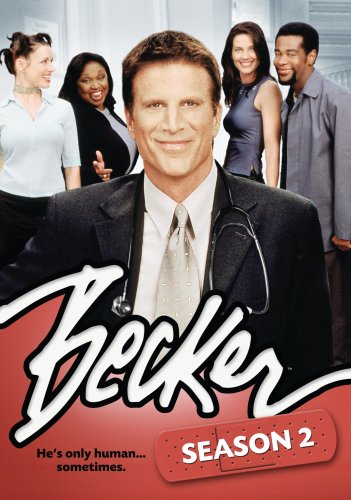
Who says no one likes a guy who’s negative all the time? Becker has got to be one of the most cynical, grumpy, and negative characters to grace our sit-com screens. He’s a guy you probably love to hate, and he’s also hilarious. Ted Danson spent over a decade behind the bar at Cheers and could have easily called it a career. You know, stop while you’re ahead. Instead he climbed right back into the television saddle and reemerged as Dr. Becker. This time he’s a medical doctor who hates everything and everyone around him. Refusing to display that little bit of a heart we all know he has, Becker spends most of his life complaining about everything. Never before has it been so much fun to watch a guy moan and groan for twenty minutes at a time. Fortunately for him, Becker is truly a dedicated doctor, and while he’s likely to complain about it the whole time, he’ll go to any extreme to help a patient.

The secret to Becker’s genius is characters. Like Cheers before it, Becker is populated with wonderfully distinctive characters played by actors carefully cast for the roles. To start with there’s his office nurse, Margaret, played skillfully by Hattie Winston. Margaret runs things for Becker in his doctor’s office. She’s pretty much his mother and the brains behind the outfit. She’s one of those straight talking ladies that don’t take any guff, and that means not even from Becker. The office assistant is Linda, played by Saw star Shawnee Smith. Linda’s used to getting by on her looks, which is fortunate because she’s naive and a little short on the intelligence front. How she got the job and holds it is anyone’s guess, but her blundering makes for some classic comedy. Becker spends much of his off time at a café owned by Reggie. Reggie is portrayed by Star Trek: Deep Space Nine’s resident Trill, Terry Farrell. There’s a hint of a romantic interest here. Reggie is more interested talking about her own pitiful social life than serving her customers. Jake, played by Alex Desert, is blind, and interestingly enough runs a newsstand out of Reggie’s Café. He’s pretty much Becker’s best friend and often foil. A frequent patron of the Café is sleaze Bob, played by Saverio Guerra. He’s got the hots for Reggie and just about any other woman who meets his criteria (breathing) even though he’s married to an unseen wife. Bob always refers to himself in the third person and is clearly the most entertaining support character on the show. He was a recurring character up to year three where he was finally upgraded to regular. I can’t imagine the Becker universe without him.