Posted in: Disc Reviews by Gino Sassani on February 4th, 2009
The second season of The Invaders saw a shift in the show’s focus. Vincent has started to get his message out there, and some of these people are organizing. There’s no doubt, that if left to continue, the show might have taken on a more resistance center much like Kenneth Johnson’s V mini-series. If you’re looking for a conclusion, you won’t really get it. Vincent’s still out there, and so are the Invaders. Unfortunately, The Invaders only lasted for two seasons, and David Vincent never did manage to warn the world. While he was able to defeat the many tasks The Invaders were plotting, all he was able to do was delay the inevitable. There was a revival mini-series in the 90’s that did include Roy Thinnes reprising his role of David Vincent, but he was not the central character. Instead it was Quantum Leap’s Scott Bakula that took on the job of trying to warn the world and stop the Invaders from completing their tasks. The mini-series was intended as a back door pilot for a new show, but whether it be ratings or lack of network interest, the new series never materialized, leaving the invaders and their plots to dissolve in the otherworldly existence of cancellation. There is some talk that the Sci-Fi Channel has considered at potential show, but again nothing has ever really come of those rumors.
Just because you’re paranoid doesn’t mean they’re not really out to get you. That old axiom has never been more true than for David Vincent in the Martin Quinn series The Invaders. Quinn was best known for his police procedural shows like The FBI. At the time of the The Invaders Quinn was going into the final season of one of his most popular shows, The Fugitive. While most people over the years have compared The Invaders to that Quinn production, they were really not as similar as all that. In The Fugitive the hero, Richard Kimball, played by David Janssen, had a very specific mission. He was wrongly convicted of killing his wife and was on the trail of the real killer, whom he had witnessed. The “one armed man” became an iconic figure in television history and provided Dr. Kimball with his “Holy Grail”. David Vincent’s mission was far more complicated and seldom so cut and dried. He was honestly more akin to Dr. Bennell, played by sci-fi favorite Kevin McCarthy from Invasion Of The Body Snatchers. In both cases you had one man who knew that aliens were invading and even replacing humans. As I watched this collection of Invaders episodes, I couldn’t help but be reminded of McCarthy’s famous scene running down the street trying to convince the world of the impending invasion.
Posted in: Disc Reviews by Archive Authors on February 3rd, 2009
In America, he is wanted. In France, he is desired. Worldwide, his films are praised for their ethereal, disturbing, and sometimes humorous qualities. But his life overshadows his accomplishments. He survived a concentration camp. His parents did not. He found Hollywood success with films such as Rosemary’s Baby, The Tenant, Repulsion, and The Fearless Vampire Killers. His marriage to wife Sharon Tate ended in a brutal homicide that took both her life and the life of their unborn child.The case would later introduce the world to Charles Manson, a crazy-eyed charismatic with a thirst for blood, and his murderous followers. It would also create a disdain in Polanski for the media, one that grew in the wake of an underage sex scandal several years later.
Posted in: Disc Reviews by David Annandale on February 3rd, 2009
Director Rene Daalder is best known in cult film circles as the man who gave us Massacre at Central High. But now Cult Epics has released a pair of his films (this and Here Is Always Somewhere Else) that seem more in keeping with his real interests. A long and twisting road led to this effort, starting with an abortive collaboration with Russ Meyer and the Sex Pistols, which brought Daalder into the world of punk rock. In that field he met Tomata Du Plenty, vocalist for The Screamers. After funding for their proposed collaboration Mensch collapsed and Du Plenty’s HIV-positive status became apparent, they put together the present film out of a mixture of footage from the abandoned project, plus new elements. The striking result is Du Plenty as the last survivor of nuclear holocaust, holed up in his bunker, declaming/singing poetic rants about the history of the United States, all the while surrounded by a phantasmagoria of bizarre sights. Whether the result is compelling or pretentious (or both) will depend on one’s sympathies with respect to the art scene from which it emerges, but that it is a work that rigorously works out its conceptual and artistic premises all the way to the end cannot be denied.

Audio
Posted in: Disc Reviews by David Annandale on February 3rd, 2009
This is another of Cult Epics’ entries in their new Rene Daalder Collection. His most recent film, it’s a documentary about conceptual artist Bas Jan Ader. The brief body of work he left behind is best known for using gravity as a medium (so, for instance, he did a number of filmed pieces of himself or objects falling). He was lost at sea in1975 while attempting to cross the Atlantic in a minuscule boat as part of a piece to called “In Search of the Miraculous.” Daalder’s 68-minute film retraces Ader’s life, but does so in part through the filter of Daalder’s own parallel experiences as an expatriate Dutch artist. The film is very interesting, though I would have like a bit more analysis of Ader’s work, in order to have a better understanding of exactly what it was doing, and Daalder’s speculations about what Ader’s final thoughts might have been are a little too definitive. Still, a strong documentary.
Audio
Posted in: Disc Reviews by David Annandale on January 31st, 2009
If ever there was a release whose title told you everything you need to know, this is it. Yup, the second part of season 5. There you go. Which is in no way a condemnation. Well over four hours of prime silliness is reason enough to pick this up. Unless, of course, you have picked up any of the other recent SpongeBob releases, in which case the curse of double-dipping will likely befall you. Many of these episodes have already been released on the shorter compilation discs. If you held off until now, though, this is a wonderful fix for nautical nonsense junkies.
Audio
Posted in: Disc Reviews by Gino Sassani on January 28th, 2009
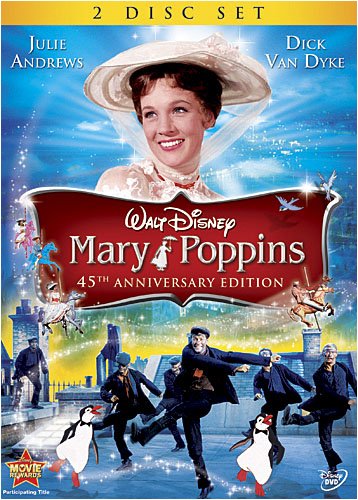
Mary Poppins was the subject of a series of books by P.L. Travers. Long before Harry Potter came on the scene, Mary was delighting children all over the world with her spectacular magical abilities. At the time Walt Disney was making a name for himself and his studio by bringing many of the children’s classics to the big screen. From fairy tales to Winnie The Pooh, the studio was providing the look and the soundtrack to the imaginative worlds already known and beloved by millions. It was a magnificent strategy, and it would pay off huge for the company. The problem with Mary Poppins was that it needed to be a live action film. Mary and her pals needed to appear as real people. The worlds themselves could be animated, of course, but Mary and Bert and the children had to be real. Walt insisted upon it. And so a painstaking effort was begun to bring the story to life on screen in a way no film had yet done before. The results were as magical as Mary herself and have captivated children of all ages ever since.
In the 1960’s Walt Disney was the center of some of the most groundbreaking f/x technology in Hollywood. Disney was that era’s Industrial Light & Magic. Even films not produced by the Mouse Factory went to their f/x wizards for their high end work. Films like Forbidden Planet made use of the Disney magic for a few of their trickier sequences. Mary Poppins is a wonderful example of the magic that Disney was capable of at the time. The film is a wonderful blend of live action and hand drawn animation work. The two worlds interface seamlessly even by today’s standards.
Posted in: Disc Reviews by Gino Sassani on January 28th, 2009
“You wanna be where everybody knows your name”
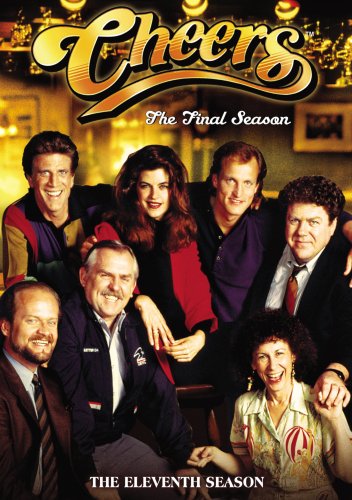
Cheers was that kind of place that songs have been written about. Billy Joel’s Piano Man describes such a place where the patrons are, for the most part, regulars, and pretty much family. In the days before huge screen televisions and satellite networks, Cheers would likely have been considered a sports bar. In those days the sports was more the talk of the place and not merely gathering to watch 127 games at a time. The bar’s owner was Sam Malone (Danson). Sam was a washed up baseball player for the local Boston Red Sox. He was a pitcher who liked to drink a bit too much. So, what does he do? He buys a bar. Actually the character has kicked the drinking and is always seen sporting a bottle of water. At first his bartender was his old baseball coach, until Nicholas Colasanto passed away after 3 years. Coach was replaced by Woody, played by Woody Harrelson. Woody was a farm boy with naiveté and small town charm reminiscent of Radar from MASH. His innocence was often the butt of the jokes. In a strange coincidence, the show’s popular theme song, performed by Gary Portnoy, sounded a lot like Harrelson’s voice, and for years it was believed by anyone too lazy to read the credits that Harrelson sang the tune. The barmaid was Carla, played by Danny DiVito’s wife Rhea Perlman. She reminded us a lot of her husband’s Louie character from Taxi. She was abrasive, sarcastic, and more than willing to kick a guy when he was down. She had a soft spot for Sam, however, and was often protective of him. Kirstie Alley played Rebecca Howe, an on again off again romantic interest for Sam and also on again off again owner of Cheers in later years. She replaced Shelley Long, who played Sam’s romantic interest and barmaid Diane for the first half of the show’s run. The steady customers offered most of the stories for Cheers. Cliff, played by John Ratzenberger, was a postman who spent more time nursing a beer than actually delivering the mail. He often joked about how hard it was to fire a civil service employee. He was a know-it-all and too often bored his comrades with longwinded explanations for even the simplest concepts. His best friend was Norm (George Wendt). Norm was one of the more popular patrons, greeted with shouts of “NORM” whenever he entered the bar. He sat in the same stool, usually griping about his life but unwilling to move off his seat and actually do anything about it. He was married to an unseen wife who worked while he loafed at Cheers. Finally, Kelsey Grammer played psychiatrist Dr. Frasier Crane. You might recognize that character the most, because he got his own show after 9 years on Cheers which lasted another decade. Frasier was the elitist who acted superior to the others but deep down just wanted to be one of the guys.
Posted in: Disc Reviews by Archive Authors on January 28th, 2009
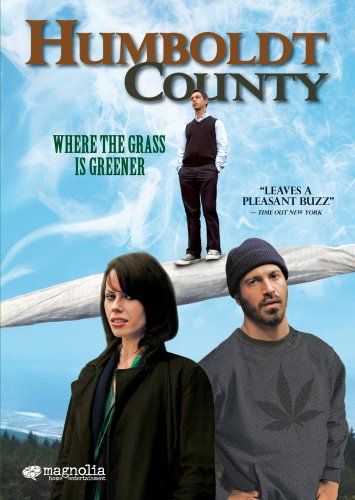
Humboldt County, the new independent comedy-drama from writers/directors Darren Grodsky and Danny Jacobs, sneaks on to shelves this month with a quietude as serene as its iZLER-composed musical score. Despite apt writing and direction, this slice-of-life piece simply fails to assert itself and leaves viewers with an indifference to the material.That’s not to say Humboldt County lacks competence. There isn’t a bad performance in the film. Two performances, in fact, are absolute dynamite. The always dependable Brad Dourif does what he does best, playing the crazy eccentric type, but this time he has a very human twist that endears him to the audience like never before. And Madison Davenport, a stunningly talented child actress, marks her debut with a strong performance that captures every scene she’s in.
Posted in: Disc Reviews by Gino Sassani on January 28th, 2009
The Great Polar Bear Adventure is indoctrination pure and simple. Disguised as a warm and fuzzy nature show in the realm of Meerkat Manor and its like, this film has really only one theme.: Humans are very bad creatures, for the most part. It follows the plight of a family of polar bears who can no longer find the frozen ice river floes that provide them with tasty seal meat. The reason, of course, is what the bears call the two legs. Somehow the bears know that it is the two legs that are causing the winter to grow shorter and the ice flows to disappear earlier every year. Of course, for the last two years ice floes have returned to normal, but let’s not confuse the issue with the facts. Eventually the bears are driven closer to a two leg settlement where they are forced to rummage through trash piles in order to survive. Eventually one of the rare good two legs darts them and takes them further north where they can roam and survive…for now.
Whatever your politics, I would hope that the idea of using children’s entertainment to push an agenda would not be why you might buy a video for the kids. There are plenty of good programs out there, so that it doesn’t seem necessary to have to have a conversation with your kids to explain why humans are so evil. Not the message I would want to send to children. Sure, the bears are cute and the CG animators did a great job of making it look like they were actually speaking. I don’t even mind a moral or a good message at the end of a kid’s show, but I assure you that you will find this program heavy handed.
Posted in: Disc Reviews by Archive Authors on January 28th, 2009
Imagine waking up in the morning and opening your eyes only to be greeted by more darkness. You feel your way out of bed. Scoot your feet slowly across the floor to make sure you’re not bumping in to anything. You make it to the kitchen and feel around for cabinets. Based on the shape of the objects you find inside them, the sounds those objects make (if any), the texture of their contents, you manage to make breakfast. The rest of the day consists of listening to the TV or radio and more feeling and sensing your way through life. Now imagine having such an affliction while living in abject poverty and being looked upon by the dominant culture as demon-possessed and deserving of your state.