Dolby Digital 2.0 (English)

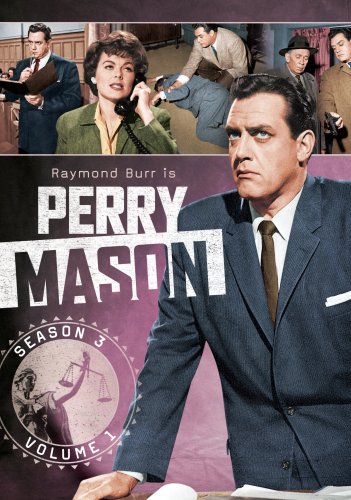
There was some speculation from folks out there, myself included, that Paramount might be backing away from future releases of the popular legal show. This was sparked by a 50th anniversary release that did included episodes from the 3rd season onward, making it look like a catch-all effort. It was loaded with extras, which these collections have not been. I’m happy to report that, at least for now, these sets appear slated to continue. With the first half of the 3rd season Perry Mason continues, unfortunately in these double grab half sets.


 

Can animals actually talk to humans? Can we understand each other enough to consider it communication? Heck. You don’t need to watch some show on television to answer that question. I can do it for you right here and now. I’m Athena. I’m Gino’s 13 year old Siberian Husky, and Gino’s letting me communicate with you so that I can tell you what I thought about When Animals Talk. I’m here to tell you that we can talk pretty good. We also understand a lot of your human words as well. My favorite are words like Belly Rub, and Want. If you have a dog of your own, you already know how to communicate. And that spells T R E A T. I don’t know so much about other kinds of animals so I watched this DVD that Gino got, and here’s what I thought:


I often have trouble believing that South Park has been around for as long as it has. It’s not just the passing of 11 years but the sheer brilliance in the face of an increasingly politically correct society. It’s like watching old episodes of All In The Family. Who believes that Archie Bunker would have any chance of survival in the 21st Century? It’s no wonder that Norman Lear has become involved in the series. It’s the last remaining vestige of a once great freedom to be ridiculous and offend. Eric Cartman’s a lot worse than Archie ever was. We always knew that, in his heart, Archie had a soul. Cartman’s a psychopath without a conscience, and in a civilized society we would be terrified of the existence of such a demon spawn…except he’s just so dang funny. Trey Parker and Matt Stone have been walking a tightrope for over 11 years now, and it just doesn’t get old.


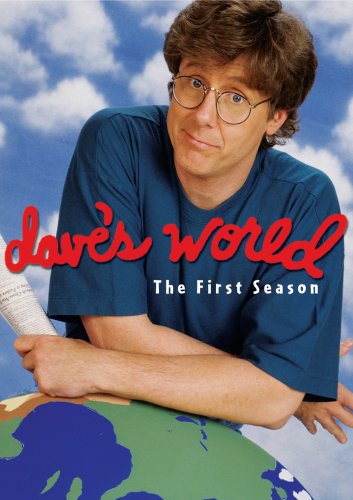
The first season release of Dave’s World is going to upset the show’s fans a bit. Paramount has decided to change the opening theme from Billy Joel’s “You May Be Right” to some jazzy piece that doesn’t come close to saying the same thing. This wasn’t even Joel’s performance of the song we’re talking about on the original. I know that the musical rights issues can be a problem. Shows like WKRP suffered from being loaded with songs and racking up a fortune in royalties for home video release. Most of these shows were aired in the days before anyone even knew there was going to be a home market for these programs. But I still don’t understand this one. It’s the show’s theme song and an important part of the show’s look and feel. We’re not simply replacing incidental music or songs that take up significant portions of the show. I think it was a bad move, and I’d be very curious as to just how much money Paramount saved by replacing the song. Average that number out over the set’s sales figures, then find out if the fans would have been willing to pay the difference.

I was first introduced into the somewhat twisted world of Dave Barry in 1986 when I moved to Florida. The Tampa paper carried his Sunday column, and all I can remember is that it had something to do with dinosaurs on the beach and that I couldn’t stop laughing. For years afterward both my wife and I made the column regular Sunday reading. As years went on other things fill one’s life, and I only occasionally read the material until he disappeared almost completely from the Central Florida scene, keeping more to himself some 250 miles to our south. He’s since spent a lot of time playing in a writer’s band with the likes of Stephen King. So, I was pretty eager when Dave’s World first came to television in 1993. To say I was disappointed wouldn’t exactly be fair. The show was pretty funny, but Harry Anderson was so ingrained in my mind from his Night Court role that I never did accept him as Dave Barry. Once I was able to separate the character from the writer, the show was a little better going for me.

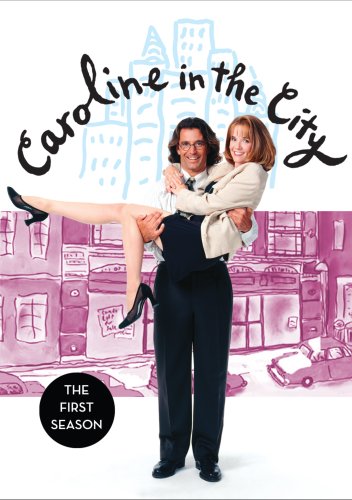
While nowhere does anyone actually say it, Caroline In The City is obviously inspired by/ripped off from the popular newspaper comic strip Cathy. Each episode, for a time anyway, would begin with an animated scene from one of the “Caroline” strips. The topic mostly deals with the pitfalls of being a single New York City girl. From these roots there was an often awkward attempt to create a warm and fuzzy romantic comedy that never seemed to find its own focus, let alone footing. It didn’t help matters that the title character was played by Lea Thompson, best known for her role as Michael J. Fox’s mom in the Back To The Future films. Here as she was there, Thompson is relatively unemoting, a tragic flaw in a romantic character. She’s a good enough actress, but she does appear to be missing charisma in the role. Caroline was joined by her comic strip colorist, Richard, played by Malcolm Gets. Here again we have a pretty reserved actor. Now we’ve got a couple of very low key actors playing a couple where sparks should be flying, and it never works. Most of the laughs, in fact, don’t even come from our leads. Instead Amy Pietz has most of the funny lines as intrusive next door neighbor Annie. Annie’s a cast member in the then huge Broadway production of Cats. She would often barge into the apartment where Caroline and Richard are working/sniping at each other and offer the comic relief in this situation comedy.


Family Ties is likely remembered most as the series that launched the career of Michael J. Fox. There’s no question that he owes a great debt to Alex Keaton. It’s almost a bit awkward now to watch him as this young, extremely conservative teenager after Fox has spent so much of his life as a liberal poster boy in the last couple of elections. Politics aside, it’s hard not to credit his performances in Family Ties and the Back To The Future films for launching him into a well deserved lucrative career. The Michael J. Fox issue, however, might hide some of the other assets the show had going for it in its time. For one of the first times parents were portrayed as humanly flawed, and families were not the perfectly functional institutions most of these shows described. Up until Family Ties, these households were either perfect little examples of American ideal or they were so dysfunctional that they could hardly be considered families at all. This show obviously went for a bit of realism.


Can you take the dump of death”, or What’s the fastest way to get drunk”. These are the types of questions and answers that make up the Spike TV series Manswers. The idea is that the show answers those pressing questions that you guys out there might have been to afraid to ask. On first look you might get the mistaken idea that this is a copy of A&E’s far superior Mythbusters. On the surface the premise appears the same. Both shows appear to tackle the oddball question and attempt to find the truth behind the BS. Both shows also appear to be targeted to the male members of the audience. Mythbusters uses cool tools and gadetry to prove or debunk the common myths. The guy appeal is obvious, and there’s always a good chance something’s getting blown up. Guys are naturally curious, and we love to see things blow up. Manswers takes the far more pedestrian view of a guy’s interests. Instead of blowing things apart Manswers tries to draw you in with body parts; female body parts, that is. Just about every other segment has something to do with the female breast: “What does shape tell you about how easy she is”, “Can a breast crush a beer can”,  Which float better real or fake”. You get the idea. Now most guys don’t have a lot of trouble with all of this close examination of female anatomy, but the Manswer I want answered is: “Can you go too far?” Turns out the answer is, who could have known, yes.


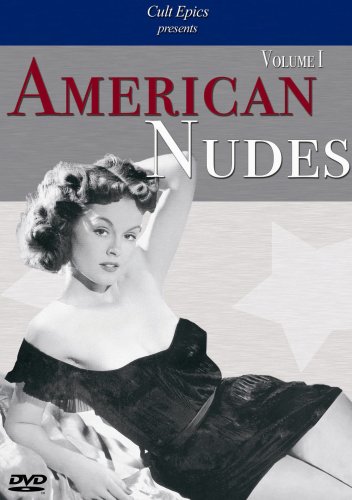
Cult Epics continues its erotic archival work with these two collections of short films. Volume 1 consists of pieces from the 1940s (with at least one from 1938 thrown in), while Volume 2 deals with the 50s. The former has such amusing “documentary” shorts as “They Wear No Clothes” (*gasp*) and various comedy routines. The latter has the inevitable Irving Klaw shorts. None of these films are by any definition “good,” but they are fascinating records of the state of American sexuality at that time. Watching all of these at one sitting would be quite the chore, but then, when was the last time you read an encyclopaedia straight through? There is a similar documentary value here.

Audio

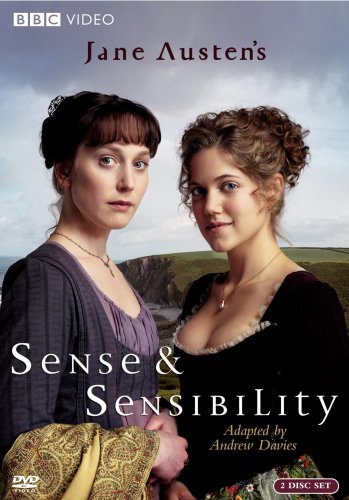
This BBC mini-series has the unenviable task of winning over audiences very likely familiar with Ang Lee and Emma Thompson’s excellent theatrical adaptation of the Jane Austen novel. And the opening scene might very alarm many a viewer: the rather steamy seduction on display does not, at first blush, seem to fit in to the comedy of manners one is expecting. The post-credit sequence is also rather more gothically melodramatic than one might anticipate (or hope for). Thereafter, however, the series settles into a tone more befitting Austen. The script is by Andrew Davies, easily one of the best scribes British television has to offer. He has graced us with contemporary pieces such as a version of Othello set amidst the members of the London Metropolitan Police and the House of Cards trilogy (an adaptation that is superior to its source material), as well as superb period adaptations (Middlemarch, for example). Here, his acid wit finds kindred spirit in Austen, and the result is very fine indeed.

Audio

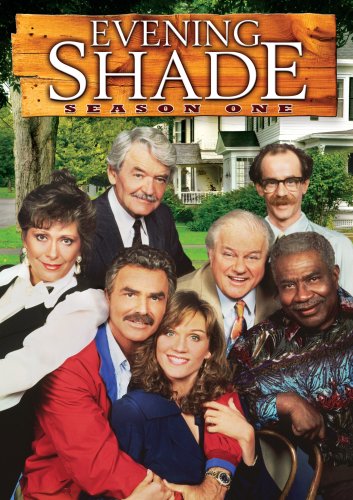
Think of it as Coach meets Newhart. That’s about the best way I know how to describe this somewhat quirky sitcom from CBS. It was mostly intended as a television project for its star, Burt Reynolds. The character would echo Reynolds’ own life somewhat. His character, Wood Newton, was a running back who had moderate success, just as Reynolds himself had. In the show he retired to his rural hometown of Evening Shade. He ends up coaching the local high school football squad which had a propensity for getting blown out in their games. The show was filled with the usual small town hick kind of characters, most notably the show’s narrator and owner of the local barbecue joint, Ponder Blue (Davis). Wood’s family consisted of his wife, Ava (Henner) who was much younger than Wood was. She was a young attorney who gets elected the town’s prosecuting attorney. There was a ton of comedic material to be found in his rather dimwitted intelligence and her more formal education. In this first season she was pregnant with their third child. Wood’s dad was played by Hal Holbrook, and he owned the local newspaper. Wood’s assistant coach was Harlan Elldridge, played by Charles Durning. Eldridge was really a math teacher and pretty much a geek, which offered plenty of comedy fodder for Reynolds. The relationship was very much like that of Craig Nelson and Jerry Van Dyke on Coach.