Dolby Digital 2.0 (English)

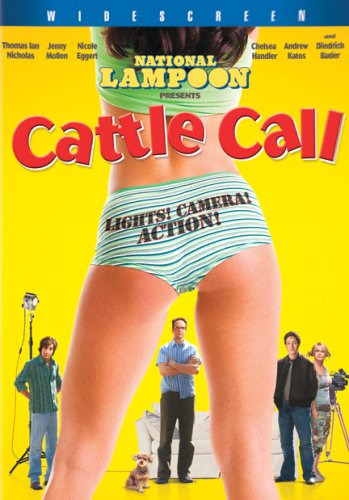
The movies of National Lampoon haven't always had the best track record. On on the good side, we have Christmas Vacation, Van Wilder or European Vacation (Chevy Chase is gold after all). On the bad side we have movies like Senior Trip, Dorm Daze, or Dorm Daze 2 (Wretchedness has sequels?) But every once in a while, you can take a bad movie and suddenly realize that you are holding something that is worse than any National Lampoon movie to date (I don't care what anybody says but Loaded Weapon wasn't half bad). A movie so bad, that even Jonathan Winters or Diedrich Bader could not save it.


Richie (played by Thomas Ian Nicholas) doesn't have the greatest luck in love. His best friend, Sherman (played by Andrew Katos) wants to bed as many chicks as possible regardless of the fallout that might occur. They hatch an idea that involves taking discarded casting call pictures and actually having their own casting call to find their perfect soulmate (or in Sherman's case, just a hot chick or several). However, they have to impersonate having a real film in place before they get any real girls to fall to their claim. They also need an office and resources. They decide to include their friend Glenn (played by Diedrich Bader) who has the office space and resources to make it happen.

If it's Wednesday, that must mean another batch of SpongeBob cartoons. The lead-off here is the is title episode, a 22-minute piece that recounts the adventures of SpongeBuck SquarePants, our hero's 19th-Century ancestor. The rest of the episodes are an eclectic bunch, and the thematic consistency is less than that of some other collections (there is a vague adventure link that runs through several of the stories). At any rate, the silliness is just as engaging and bizarre as ever, and there are plenty of quick absurdist sight gags to keep you chuckling.

Audio

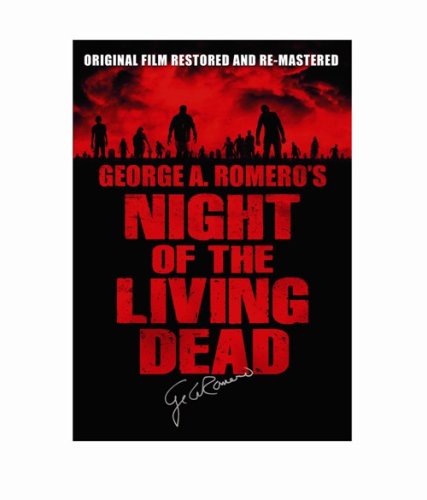
Some years back, I reviewed Elite's Millennium Edition of the NOTLD. That was certainly the most definitive edition at that time. So now we have another deluxe edition. How does it stack up? Before we get to that, a few (largely unnecessary) words about the film. There's a blurb on the box that calls this “the most influential horror film since Psycho,” and there is a great deal of truth to that. As has been pointed out before, the film single-handedly transformed the mythology of the zombie, changing the monster from mindless slave to flesh-eating ghoul. I can't think of any other instance where a mythology was changed so completely and with such finality. And there are plenty of reasons why it had such impact. Sure, there's the gore. And while the intestine-gobbling was pretty intense for 1968, H.G. Lewis had been pumping out gore films just as (if not more) excessive for half a decade. Unlike Lewis' films, George Romero's picture is extremely well made. The pace is lightning-fast (we have our heroine pursued by a zombie less than ten minutes into the film); the cinematography is imaginative, with plenty of energetic editing and lively camera work; and the lighting is dramatic exercise in stark high contrast. I haven't even mentioned the intelligence of the script. So let's just place this among the greatest horror films ever made and leave it at that.

Audio

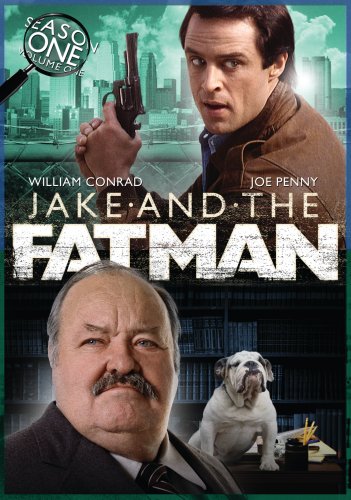
They say that it isn’t over until the Fat Lady sings. Did you ever wonder what “it” was or who the heck this Fat Lady is they keep talking about? I can’t help you there, but I do know who the Fat Man is. It’s William Conrad, who came back to television in 1987 as J.L. McCabe, better known as “the Fatman”. McCabe was one of those tough as nails district attorneys. He was actually an ex-cop, so had great criminal instincts. McCabe wasn’t above bending the law to put away the bad guy, and he wasn’t considered a very friendly type of fellow. He majored in stubbornness and plain speaking. He relied on Jake Styles, his private investigator, to do much of the leg work for the office. Jake was a bit of a flashy playboy, but he always delivered the goods for his boss. Again, Styles wasn’t against breaking a few rules to get what he needed. Styles was played by Joe Penny. McCabe also served as a mentor, of sorts, to young District Attorney Derek Mitchell, played by Alan Campbell. Mitchell was quite wet behind the ears and a little too eager sometimes. His ambition often got the better of him, and it was the gruff McCabe who kept him out of trouble. Finally, the team was completed by Gertrude, McCabe’s loyal and trusty secretary, played by Lu Leonard. While The Fatman put crooks away instead of defending innocent defendants, there could be no mistaking the parallels between Jake And The Fatman and Perry Mason. The two shows were from different times and the styles might not have been the same, but the dynamic was very much the same. You can see a lot of Della Street in Gertrude and more than a little of the Drake/Mason relationship in the two leads. There was far more action but that was more a reflection of the change in decades than anything else. And like Mason, the Fatman rarely lost a case.


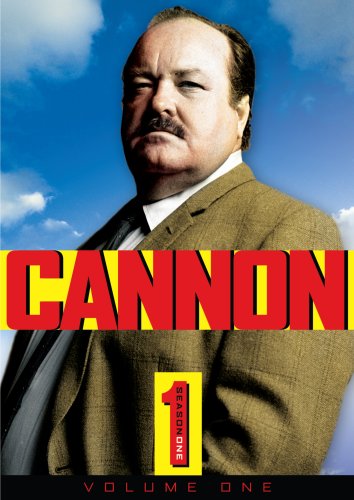
William Conrad was no stranger to audiences when Cannon joined the Quinn Martin stable of television dramas. In fact, most folks knew his voice before they got to know his trademark girth. Conrad was the original Matt Dillon when Gunsmoke was a radio drama. When the drama entered the visual medium of television, even Conrad admitted later that the audience, who thought of him as tall and handsome, would have been disappointed. His voice lent authority to any role he played, and on radio his size was never an issue. He was famous as the voice of the stern narrator in the Rocky and Bullwinkle cartoons who often crossed the laws of the trade and interacted with the titular characters. He was also the voice that narrated the struggles of Dr. Richard Kimble on The Fugitive, another Quinn Martin Production. He continued to narrate series intros even after his own success. He gave us the informative opening dialog in Buck Rogers In The 25th Century. As a voice, Conrad, was one of the bes, but when CBS approached Quinn Martin asking for a television vehicle for Conrad, it was a huge gamble. The gamble, of course, paid off… well… huge, and Cannon became an iconic figure in television. Cannon was so popular he was showing up on other shows as well. He appeared on the pilot for Barnaby Jones. The show ran 5 seasons and returned with appropriately enough The Return Of Frank Cannon tele-film in 1980. It is also interesting to note that Conrad, while greatly overweight, lived to be 74.


Todd Haynes continues to dazzle and amaze with his body of work. In Velvet Goldmine, he told the story of a fictitious glam-rock band in David Bowie/Ziggy Stardust style. Far From Heaven found him taking the Douglas Sirk films of the ‘50s into a nontraditional turn. In his follow-up film I’m Not There, his first directorial effect in five years, Haynes examines the persona and essence of Bob Dylan without actually really using the name or the words together at all in the film in a film released in 2007, where features like No Country For Old Men and There Will Be Blood earned a slew of awards, I’m Not There was an understated gem, and yet summing it up is a little difficult.

First off, while I’m Not There is a film inspired by the life of Bob Dylan, semantically it’s not a biopic. It examines the more notable images created by Dylan; one of the adolescent who portrayed himself to be the poor white kid who liked the work of Woody Guthrie and who, ironically enough, is named Woody (Marcus Carl Franklin, Be Kind Rewind). Arthur Rimbaud (Ben Whishaw, Layer Cake) is the mid-‘60s Dylan and de facto narrator whose words appear to be lifted from magazine articles of the era; Jack Rollins (Christian Bale, Batman Begins) is the folk hero and later born-again Christian-era Dylan; ironically Rollins is played by Robbie Clark (Heath Ledger, Brokeback Mountain), who watches his marriage deteriorate while he deals with the period of fame he has wrought; and Cate Blanchett (Elizabeth) plays the electric Dylan, touring in England, addicted to pills and alienating his acoustic fans. In his later years, Billy the Kid (Richard Gere, Pretty Woman) plays Dylan as the aging anonymous hero in the west, which in a way Dylan seems to want to do in reality. While none of these interpretations can be claimed to be accurate, they are, as Haynes says, fleeting glimpses of the image that Dylan created for himself. Using surrealistic and style choices influenced by Fellini and Goddard, Haynes helps make the worlds of Dylan all the more emotionally affecting.

If you’ve followed my reviews, you know that I love Stargate. SG-1 or Atlantis; I can’t get enough of them. When the collection of Stargate Infinity discs arrived at my doorstep, I tore into them like a Wraith into a red shirt. Now the Stargate might be an incredible mystery that delights a legion of fans. What is not much of a mystery is why this children’s cartoon version of the franchise only lasted one year. I missed the original broadcast window and having watched these DVD’s I’m glad I did. I found the series to be an insult to Stargate fans. I understand that the show has been dumbed down and is geared toward the very young, but there’s no excuse for the preachy nature of the stories and the lack of respect shown toward the original material. Unfortunately, even the animation is sub par looking like an early 1980’s Saturday morning cartoon.


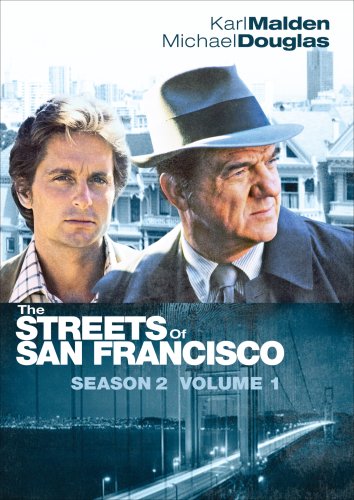
Inspectors 81 are back on the tough streets of San Francisco for a second season of gritty police work. Remember, these are the same streets Dirty Harry worked during the same decade. There are some memorable moments in this next half season release of “Streets”. Stone goes undercover as a Catholic priest to trap a serial killer who preys on priests in For The Love Of God. It’s a tough assignment in Before I Die. The pair must stop a terminally ill cop who decides to take justice in his own hands before he goes out. A Manson-like clan is led by a man who appears to have an almost magical spell over young woman, leading them into his prostitution ring in the very nice episode, Harem. Three seemingly unrelated murders connect the dots for the pair in No Badge For Benji. The three victims are a rich foreign entrepreneur, a street informant, and a Japanese industrialist. The set ends in The Victims, which finds three escapees from prison leaving a bloody trail everywhere they go.


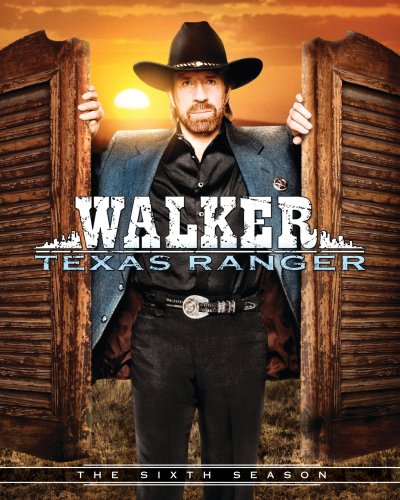
There was a new Cowboy in Dallas, and he wasn’t throwing touchdown passes. But Walker was almost gone before he could really get started. After just four episodes the show’s production company suffered financial collapse, and the show was rescued at the last minute by CBS Productions, who would continue to run the show for its nearly decade-long run. For nine years Norris brought us the ultimate Texas Ranger in a formula cops and robbers show. The show often became a parody of itself, but maintained a solid viewer ship throughout. Hell, Norris even sings the theme song. Truthfully, what started as a one man show (it was originally called Chuck Norris Is Walker, Texas Ranger became a good working ensemble that probably kept the train going for so long. Walker (Norris) is a tough guy Texas Ranger. He is partnered with Sydney Cooke (Peebles) and Jimmy Trivetti (Gilyard) who’s an ex-jock with a brain. Walker had a love interest and eventual wife in the local assistant district attorney Alex Cahill (later Walker). Together they fight the evils that come to the high plains of Texas armed with their fists, six-shooters, and Stetsons. After starting with the final season, CBS is finally halfway through the series back from the beginning.

Norris almost deadpans his entire performance. Let’s face it, the man is no accomplished thespian. Still, Norris fans are quite passionate about their guy. There’s a popular tee shirt design that lauds their hero in epic fashion. One of my favorite is : “McGyver can build a plane out of gum and paper clips but Chuck Norris can kill him and take the plane.”  Another brags: “Some people wear Superman pajamas. Superman wears Chuck Norris Pajamas”. And there’s the humorous: “Chuck Norris knows what Willis is talkin’ about”. Fans of Norris were never disappointed in what they got here. The requisite martial arts and tough guy talk are present pretty much in every episode. Season five is no exception. You should also note if you’re using an episode guide: this is really season 6, as the first two were combined in the first season release. The series had its share of heartstring episodes, most notably the two part story, Lucas. Here Walker helps a young boy with AIDS find his mother and go on to become an AIDS awareness icon.  There’s another old west tale of Hayes Cooper in Last Of A Breed. Walker entertains some kids with another tale of his legendary forefather. It’s another two part episode and takes place in the old west. If you just want some good old Walker butt kicking, you won’t have to wander far. Walker kicks butt to protect some orphan kids in Small Blessings. In Warriors, Walker goes up against a group attempting to build genetically altered “super soldiers”. The season ends on a powerful cliffhanger. In The Wedding, Alex is shot and clinging to life while Walker sets out to find the shooter. That brings to mind one more of those Norrisisms: “Chuck Norris’s chief export is pain”. Ouch!

<>Imagine waking up one morning to find a newspaper on your front porch. Here in Tampa, the fact that the paper is actually on your front porch is miracle enough. Imagine further that this ordinary looking paper isn’t today’s paper at all, but rather tomorrow’s edition. If you could trust that what you held was the genuine article, so to speak, just think of the possibilities. For most of us our thoughts turn to the myriad ways in which we could enrich ourselves: sports scores, lottery numbers, even stock tips.<> If, however, you’re less selfish, there is an equally endless number of ways in which you could help your fellow man, or woman as the case may be. You would have advance knowledge of tragic accidents, crimes, and other unfortunate events about to befall your fellow human travelers. That’s the essence of Early Edition.