Dolby Digital 2.0 (English)

PBS and producer Steve Boettcher have put together a rather nice time capsule. This four part series looks at four aspects of television: Late Night, Game Shows, Sit Coms, and Variety Shows. Each hour-long entry looks backward to the very infancy of the medium of television. The pieces examine the pioneers who gave birth to these genres and the innovative people who followed. There’s no question that some of the vintage clips alone are priceless, more than worth the value of a single DVD. You’ll see vintage and more recent interviews with the likes of: Dick Van Dyke, Bob Barker, Johnny Carson, Monty Hall, Merv Griffin, Andy Griffith, Betty White, and literally 100 early television personalities. From the days of live talk shows to the quiz show scandals, the series covers a lot of ground in a short amount of time. It is there that the series faces its most fatal flaw. Each of these segments will leave you wanting to know more. You’ll leave each one feeling like you’ve only heard a small part of the story.


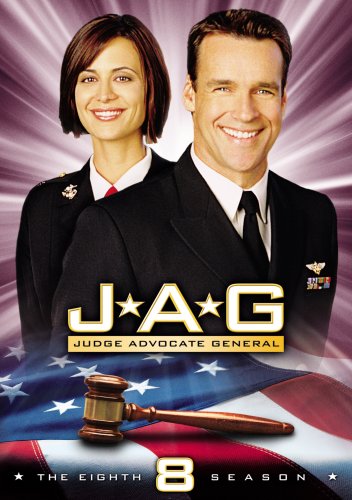
JAG or Judge Advocates General might have gone silent on our television screens in 2005, but it really remains with us in its spin-off NCIS. Both shows explore the world of military justice. Both shows are also the masterworks of successful television producer David P. Bellisario, who also brought us Magnum PI and Quantum Leap. The idea behind JAG was likely inspired by the film A Few Good Men. Most of us remember the “You can’t handle the truth” rant that Jack Nicholson delivers from the stand, but fans of the film rather enjoyed the rare look behind the Judge Advocate General’s office in our military. Like that film, JAG spends its time pretty much split in three directions.


Teens seem to have a lot of angst. They like to have angst regarding what they wear or who they make friends or simply because their hair has a split end. In the middle of their angst, they form groups who share angst. These groups are more pseudo-families where they share experiences and care for each as if they resembled a sibling or a close relative. Enter Normal Adolescent Behavior: Havoc 2 where a group of 6 teenagers form a bond where only the 6 of them exists in each other's hearts. But would this bond step over the line and create a situation that one or more could not bear to take?

Wendy (played by Amber Tamblyn)is part of a group of six friends who have grown up together. They go to school together, they hang out together, and they sleep together. Yes, with each other. Any relations with other people outside of the circle are strictly forbidden. They kinda want to keep their cooties all to themselves, touching I think. Wendy and her brother Nathan (played by Daryl Sabara) meet a boy named Sean (played by Ashton Holmes). Wendy falls for the boy and the two do their best to keep it from the group. The group's un-official leader, Billie (played by Kelli Garner) finds out about the relationship and is not interested in losing her best friend or a valued member. True love is precious but hard to keep in perspective when 5 other people grow up beside and demand your utmost attention.

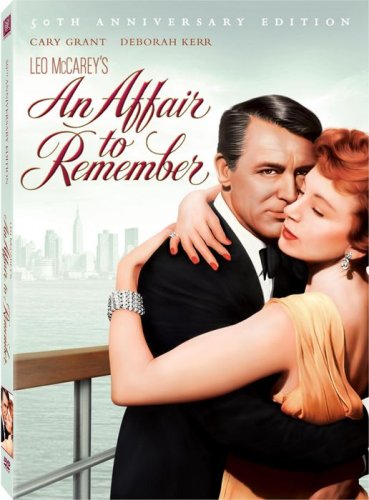
Fox re-releases this beloved weepie in a new edition with a number of new extras. Beyond those additions, this version is identical to the one reviewed here previously. Therefore, my deathless prose once again: “On a luxury ocean liner, playboy Cary Grant meets singer Deborah Kerr. Each is involved with someone else, but they fall deeply in love with each other. Upon arriving in New York, they decide to part and, if all goes well, reunite in six months at the top of the Empire State Building, by which time their lives should be in order. If you’ve seen Sleepless in Seattle, you know what happens next. Though this is one the most celebrated weepies ever, I found it curiously uninvolving. The banter on the ocean liner, though amusing, fails to make us believe in the depth of the relationship, and so the tragedy that comes later lacks punch. The plot meanders interminably, is padded out by Sound of Music-style songs involving sweet widdle kiddies, and the reasons for keeping the characters apart during the third act are so contrived that suspension of disbelief crashes and burns. The ‘scope cinematography is nice, and it’s always fun to watch top stars like Grant and Kerr, but if you want a more convincing heart-tugger, see Now, Voyager.”

Audio

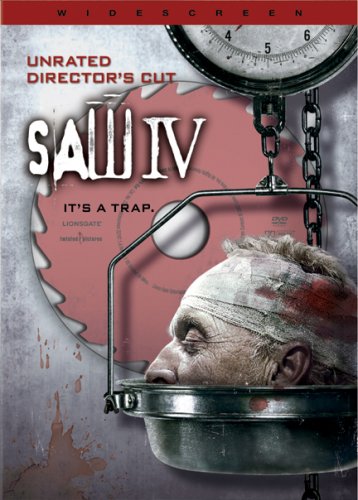
Despite being very thoroughly dead, Jigsaw is up to his old games again. This time, SWAT commander Rigg must race against time to rescue to kidnapped fellow officers. Jigsaw's messages send him all over town, to one gruesome event after another. Meanwhile, the FBI is also on the case, interrogating the killer's ex-wife, which means the audience finds out quite a bit more about Jigsaw's backstory.

The film gets right down to work with an extremely detailed autopsy of Jigsaw, so the target audience should feel well-served. The torture devices are as baroque as ever, and the deaths are elaborately gruesome. “Elaborate” and “baroque” are pretty good terms to describe the plot as well, only not necessarily in a good way. The main problem here is excessive flashbacking (rarely a good tactic in cinematic narrative) and equally excessive reliance on the audience remembering every detail of the previous entry. On the other hand, there are some very nifty transitions between scenes, and I confess to being rather more caught up in the story than I was expecting, this many episodes in. For the most part, this is actually an improvement over the third entry. Then there's the difficulty of the ending. The need to have each film end in a twist here results in a conclusion that's borderline incomprehensible rather than shocking.

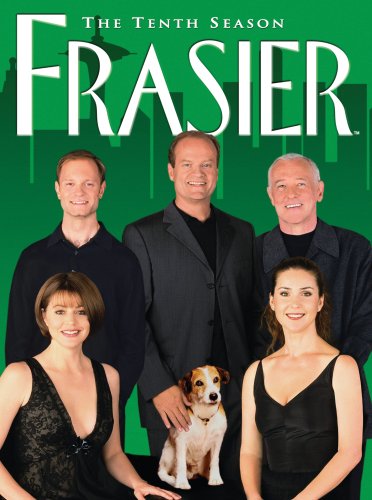
So from time to time, I get television shows to review that frankly I don't really follow. However, my wife does, so she grabbed the tenth season of Frasier from me quicker than a crackhead getting a fix at the methadone clinic. I encourage you to peruse and enjoy her literary stylings.

For about 20 years, the character of psychiatrist Frasier Crane gave us awkward humor, taught us about Freud, and was the only character on television who tried to get sherry promoted from cooking liquor to a regular drink.

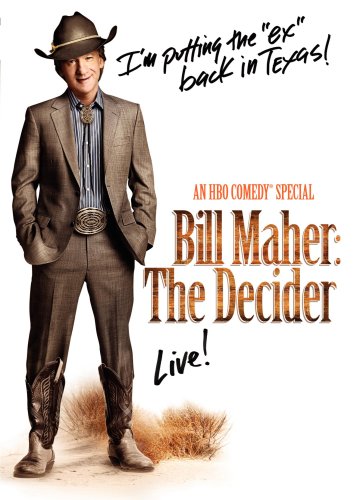
Political humor has been around since the dawn of time. Just go look at History of the World Part One. Of course, these days, comedians aren't getting fed to the lions. In fact, on some occasions they are even invited to the White House. Bill Maher has been doing leftist political comedy for quite some time. I had not watched him on standup in nearly 20 years (One Night Stands) prior to receiving this dvd but I have enjoyed his show Politically Incorrect fairly recently. I honestly hoped that it wouldn't be all political humor but we shall soon see.

This stand up special was filmed on July 21st, 2007 at the Berklee Performance Center in Boston, Massachusetts. "The Decider" as a title is a play on one of the nicknames that George Bush has accumulated over the years. Bill Maher starts a strong set of material. His topics range from the Iraq War to sexuality to the current presidential race to double standards to his favorite subject of choice: our current president George Bush. Maher has the crowd firmly behind him as he delivers a near full hour of side splitting comedy.

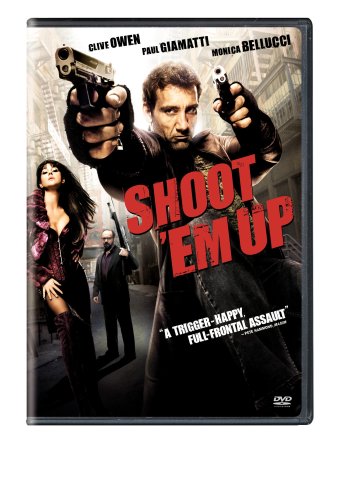
Back in the summer of '89, a popular action flick was calling my name from the shelves of the local video rental store. It was Young Guns, and I'd heard it was wild, gun-toting ride from start to finish. Problem was, I was eight years old and there was no way my folks were going let me see such a violent movie, for fear two hours with Billy the Kid would make me a career criminal.

Boy, have times changed. Granted, Young Guns wasn't the baddest film on the block 18 years ago, but it was reflective of the then-current action standards. In 2007, we've got stuff like Shoot 'Em Up, a film so over-the-top violent that the tables have turned — I wouldn't let my parents anywhere near it, for fear they'd have simultaneous, massive myocardial infarctions.

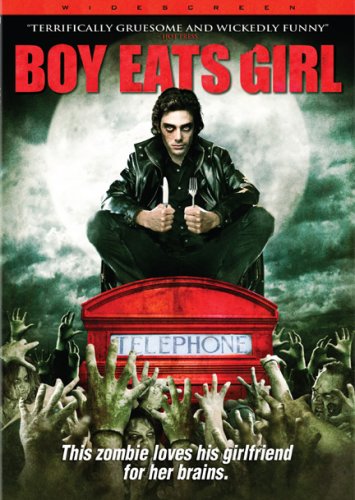
Nathan Maguire (David Leon) is having a very bad day. The boneheaded bully at school has it in for him. Jessica (Samantha Mumba), the girl he loves, doesn’t show up for their meeting where he was finally going to declare his feelings, and then he sees her in the car of one of the local studs. Plus he gets soaked in the rain. And just to cap things off, he is accidentally hanged, and his distraught mother performs a voodoo ritual to bring him back from the dead, only the manual was missing a page and he returns as an infectious zombie. Oops.

Thank you, Shaun of the Dead, for turning the zombie comedy into a veritable cottage industry. Boy Eats Girl certainly doesn’t have the brilliance of the former film or the likes of Fido. The characters are pretty generic (the Nice Girl, the Losers, the Jocks, the Slut, etc.) as well. But the film is efficiently paced (a mere 80 minutes), and the performances are engaging. We may have gone down these teen comedy paths before, but the conviction of the cast and script makes it all seem fresher than it should be. There are some very funny moments (as Nathan starts exhibiting superhuman strength and an alarming lack of pulse, for instance), and the gore, which is remarkably restrained for most of the film, explodes with would-be Dead/Alive enthusiasm at the climax.

So here we are again with a second collection of episodes from The Young Indiana Jones Chronicles television series. This is the middle of a three volume set and concentrates the stories around World War I and II. It can hardly be a surprise that Young Indy kept himself quite busy during these war years in Europe. He was a pilot, secret agent, and even ballet dancer all for the cause. The set has as an appropriate subtitle: The War Years. Except for the bountiful features, the information from the first set is still valid and repeated here for the sake of convenience.