Dolby Digital 2.0 (English)

After going all the way back to the 20s with the last entry in this series, now Cult Epics gives us a collection from 1960s, a period that marks the beginning of the end for this kind of pornographic short. Theatrical hardcore is just around the corner, and things will never be the same. In the meantime, though, things are remarkably the same. Other than some clothing styles (in those brief moments when clothes are actually on), it’s interesting to note that there is very little to distinguish these twelve entries from those of any other decade, a point driven home by the bonus short from the 1940s, which doesn’t feel very different from the rest of the offerings. Artistically, there is not much going on here (surprise, surprise), but the star rating indicates the fact that, despite this, there is some clear archival value here.


Audio

In the manner of the 1920s release, the audio track that had been standard for the rest of this series (the sound of film running through a projector) has been replaced with a music score. In this instance, it’s a series of swinging grooves, very much in keeping with the 60s, and acting as one of the only reminders of when these movies were actually made. The music is treated well by the 2.0 mix. The movies themselves are, of course, silent.

Video

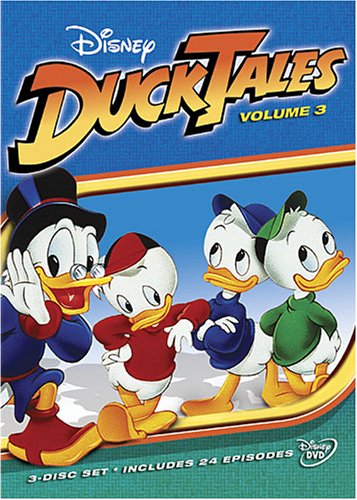
Disney Studios reinvented the afternoon cartoon when they introduced something they called Disney Afternoon. It was the brain child of studio animation head Bob Jacquemin. He saw the potential of taking famous Disney cartoons that were already beloved by millions and spinning them off into regular television cartoons. Not willing to take chances with the studio’s icon, Mickey Mouse, Michael Eisner allowed the Donald Duck universe to serve as the launching pad for this new venture. In 1987 Disney Afternoon and Duck Tales was born.


The Jungle Book was a milestone event in the history of Walt Disney’s animation history, so it shouldn’t come as too much of a surprise that the studio would tap this source for future adventures. The Disney Afternoon series has been a chance for the studio to continue many of the beloved characters. Tailspin was just such a series. The show is set in the Jungle Book world but minus little Mowgli. Now lovable bear Baloo runs an airline service with his new little friend baby bear Kit Cloudkicker. All of the other characters show up, from Shere Kahn to King Louie. This isn’t a musical, so the songs aren’t there, and there is no real mention or connection to the events in The Jungle Book. The stories are a kind of Indiana Jones affairs with plenty of tomb raiding and high flying stunts and narrow escapes. Ed Gilbert takes over the voice of Baloo, and while some of the original intonation is there, it’s clear how much the voice of Phil Harris gave Baloo so much character and charm. Obviously none of the same voice cast returns. The cost would have been prohibative for a television show, and unfortunately many of those voices are no longer with us.


Erle Stanley Gardner wrote crime fiction, and while many of his 100 or so works are unknown to most of us, he created a character that has become as identified with criminal lawyers as any other in fiction. It was in these crime novels that Perry Mason first faced a courtroom. He developed a style where he would investigate these terrible crimes his clients were on trial for. He would find the real killer, and in what has become a Hollywood cliché, reveal his findings in a crucial moment during the trial. While we may not remember the novels, we all remember the man in the persona of Raymond Burr.  Burr had a commanding presence on our screens and enjoyed a well deserved 11 year run as the clever lawyer. What makes this run so amazing is that the show followed pretty much the same pattern the entire time. We always know what’s going to happen, but we wait eagerly for that gotcha moment when Perry faces the witness on the stand. We know when he’s got the guy squarely in his sights, and we can’t sit still waiting for him to pull the trigger. OK. So, maybe that’s a little over the top, but so was Perry Mason. From the moment you heard that distinctive theme, the stage was set. To say that Perry Mason defined the lawyer show for decades would be an understatement. Folks like Matlock and shows like The Practice are strikingly similar to Perry Mason. If you haven’t checked this show out, this is your chance. See where it all began.


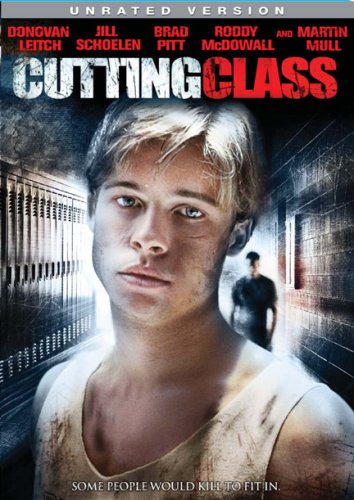
It’s probably a pretty bad sign when a film’s star makes a public apology to his fans for doing the film just when it is getting released on DVD. Brad Pitt did just that, and you know what? He should be sorry. This film is an absolute mess all the way around. I think it’s supposed to be a slasher film, but there are never any good 1980’s slasher moments to be found. It’s true that at this point in his career Pitt wasn’t exactly being offered the cream of the crop. He wasn’t paling around with George Clooney and friends just yet. So perhaps it’s not Pitt but the folks who made this film who should be apologizing. Cutting Class has no idea what it wants to be when it grows up. Is it a comedy or is it a drama? Ultimately it fails on both counts.


Wings was one of those unusual sitcoms that depended more on the characters than the situations they were in. While the setting was a small Nantucket airline owned by two brothers, most of the episodes had very little to do with flying. Rather, the writers populated this small airline with very distinctive personalities and let these interactions be fodder for the funny. The characters were played by more than competent actors, many who have proven themselves beyond this quaint sitcom. Timothy Daly played Joe Hackett, the older, more responsible brother who was often the show’s straight man. His rather adolescent sibling Brian was played by Steven Weber. I wouldn’t exactly say this was Oscar Madison and Felix Unger, but their conflicts over maturity fueled the characters. The airline’s love interest was Helen Chappel played by Crystal Bernard. She was an aspiring symphony cellist who worked the airport’s lunch counter. For much of the show’s run she had an on again off again romance with Joe. By far the most animated character was mechanic Lowell Mather played by Thomas Haden Church. It’s still amazing to me that this rather unintelligent character was played by the same guy who brought us Sandman in the latest Spider-Man film. Finally there was cabbie Antonio Scarpacci, played by the current Adrian Monk, Tony Shalhoub. Antonio is an Italian immigrant who has trouble understanding things most of the time, leading to some of the better moments in the series. Fay, played by Rebecca Shull, is the mothering member of the cast. And Roy Biggins (Schram) runs the rival airline and is often engaged in one underhanded scheme or another.


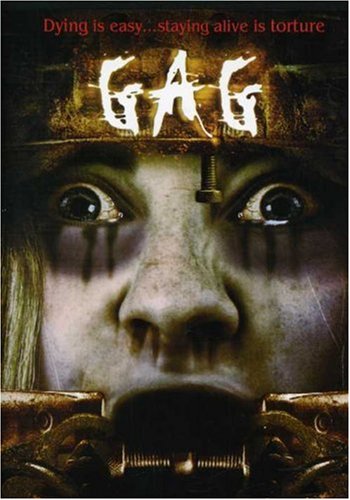
Hmm. A vision of elaborate torture in washed-out tones on the cover. A three-letter title. Gee, could Gag be inspired by Saw? Perhaps, but fortunately not in any slavish way, limiting its connections to the idea of extended torture, and that’s hardly something Saw invented. As opposed to the Saw franchise’s increasingly risible plot convolutions, Gag keeps its setup simple: a pair a burglars break into a house where they first discover a man chained to a bed, and then are captured themselves by the resident nutjob. The ensuing drama is a claustrophobic one, with the main characters trapped in the torture room at the mercy of a lunatic who has a definite, if mysterious, goal.

The film handles the grime and oppression quite nicely, and the torture scenes are genuinely disturbing. The limited budget is apparent in some of the sound design limitations, and the quality of the performances is variable, but still, this indie effort is far from dishonorable. I can’t help but feel, though, that the opening scene’s drooling voyeurism of a naked woman’s body just before she’s gruesomely killed isn’t gratuitous in the one sense that even this sort of film would do well to avoid.

A woman scorned is a dangerous thing. They will break you, hurt you and leave you for dead in the most unimaginable ways possible. In fact, it might be best for most men to sleep underneath their covers with a flashlight, a security system and no contact with the outside world. It probably wouldn't help. So it makes only sense that one would make films that deal with this subject. However, they had to make it believable even if a scorned woman sometimes does the unthinkable.

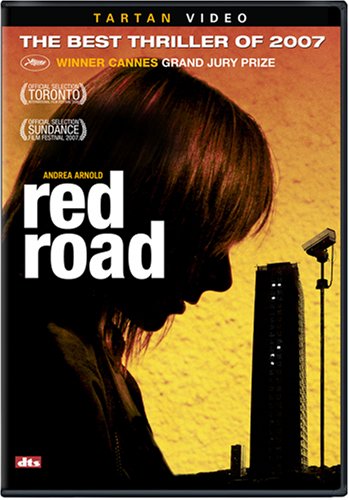
A plethora of tv monitors fill into the screen and we see Jackie (played by Kate Dickie ) fulfilling her role as a CCTV operator by watching a particular part of the Scotland streets. She watches for crimes or other point of interest as part of her workday. On the outside, her life is very simple and she keeps to herself except to meet a guy every couple of weeks or going to see her parents for special occasions. One day while on the job she spots a man, one that she never expected to see ever again or at least so soon. That man is Clyde Henderson (played by Tony Curran ). From what we can find out Clyde was in jail for a crime and is out on good behavior. We suspect that it has something to with Jackie but we aren't sure on the role she plays. As the story unfolds and Jackie gets to the point where she confronts him, more of the story is given away until we reach a shocking finale that tells it all.

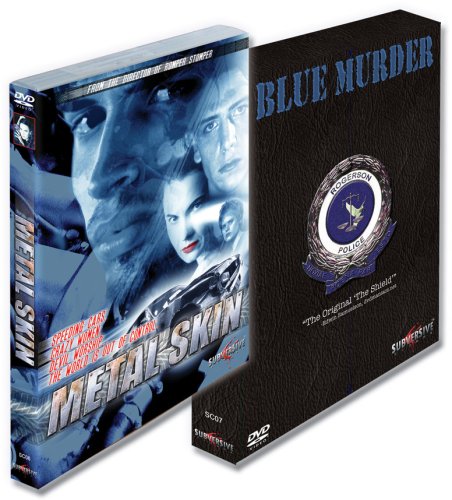
The name of this double-pack is slightly misleading, but that is not to suggest the film and television mini-series on offer are in any way bad. Quite the contrary, in fact. It’s just that they aren’t exactly “action” films per se. So don’t pick this up hoping for something in the vein of The Road Warrior. Instead, these are brutally intense dramas with strong action elements. Both titles are excellent.

Metal Skin is a 1994 effort from director Geoffrey (Romper Stomper) Wright. He returns here to the world of youth subculture. Here, instead of Skinheads, this is a world of underground races, but the denizens are just as doomed as in the earlier film. The main character is a disturbed young man whose dreams of driving a fast car and forming a romantic attachment are utterly deluded. He has a fraught relationship with a trio, each of whom has his/her own reasons to see the world as a black hellhole. When the car-duel climax arrives, it is earned at the emotional level, and makes the likes of The Fast and the Furious look even more anaemic than it already is.

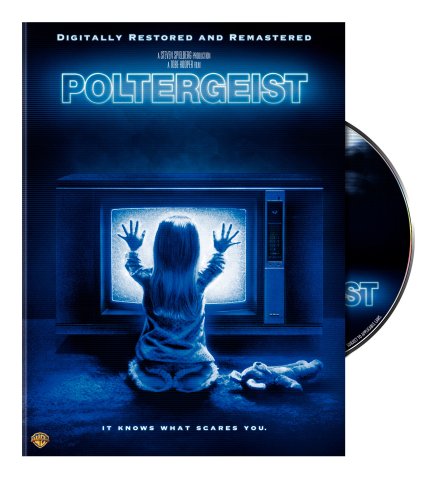
Everybody remembers the first scary movie that gave them nightmares for days and months after they saw it. For some, it was the Exorcist and for more recent folks perhaps it was Scream or Saw. For me, it was Poltergeist. I was but seven years old and thought it would be something like E.T. Phone Home, but with swirly demons and ghosts? It was PG, how bad could it be? In the next two hours, I was treated to something that resonates with me to this very day. From the moment I heard "They're Here", I knew I would never see static on televisions the same way.

It's 3:00 in the morning, the national anthem is playing and then the television goes to static (remember those days, now we just get infomercials about losing weight). A small child named Carol Anne (played by Heather O' Rourke) gets out of bed and walks towards the television. She starts talking to the set and works up a pretty good conversation. The people inside the television were trying to communicate with the 5 year old child. However, there was something else in the television set, something far more sinister. There was more at work here than a girl perhaps making an imaginary friend.