Dolby Digital 2.0 (French)

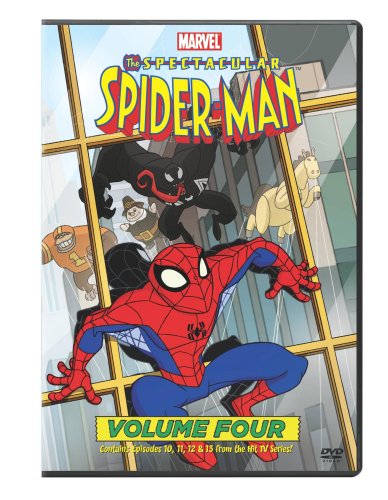
The title of Spectacular Spider-Man was once used to refer to a second-rate line of comics about the web-crawler. The Amazing Spiderman always led the way in sales but the Spectacular production always had its line of fans too. As well as the critics. The critics were often on the books because they had a more casual tone and sometimes didn’t even go along with the original book in terms of plot development. The comic eventually died off and in 2008, the Kids WB decided to use the name for their new animated show. Two seasons and 26 episodes later, this show has done quite well. Volume Four is now released and includes episodes 10-13.

Episode Ten starts out with Dr. Conners and his crew being allowed to study an alien symbiote. However, that symbiote is lost when the Black Cat & Spiderman have an altercation in the lab when Black Cat was trying to steal the life-form. It is soon found that the symbiote has actually affixed itself to the Spider-Man costume thus changing his powers and his personality.

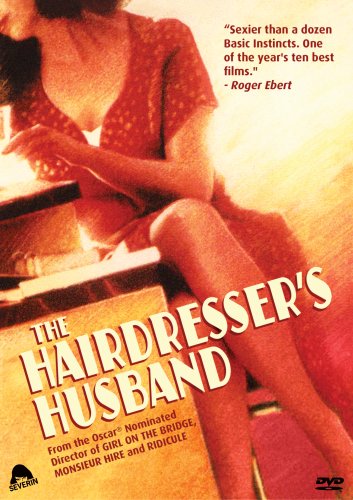
A middle-aged man (Jean Rochefort) recounts his youthful sexual awakening to the charms of the local hairdresser. Developing a fixation on the erotics of a women cutting men's hair, he resolves to marry a hairdresser, and decades later, he gets his wish. His wife is the lovely Anna Galiena, and once wed, they rarely leave her little shop (indeed, they also get married there).

Writer/director Patrice Leconte is dealing with a pretty specialized fetish here, but he in the early goings, he actually comes close to making us understand Rochefort's obsession. Leconte's precise attention to sensual details sells us the young boy's developing passion, but in the long run, the older Rochefort's inclination is rather harder to take seriously, or even be that interested in. The couple's idyllic life in the salon is obviously not mean to be seen in any realist sense, but even as a parable, it's rather thin. Rochefort spends his days doing crossword puzzles while Galiena reads gossip magazines, gazing adoringly at her as she tends to various customers (whose eccentricities feel like the inevitable conventions of this sort of art film, even as they do provide a necessary spark of life to the very still narrative), and launching, at the drop of a hat, into improvised dances to Arab music. This last quality is supposed to be charming, but by the third number (in a short, 82-minute film), it is simply irritating. Having created a situation where, once the courtship is accomplished (a matter of mere minutes of screen time), nothing can happen, Leconte decides to wrap things up with a conclusion that is clearly supposed to be poignant, but is utterly fatuous. The film is delicately wrought, and quite lovely, but also fundamentally empty-headed. In the end, it comes across as little more than a precious presentation of a middle-aged, rather misogynist fantasy.

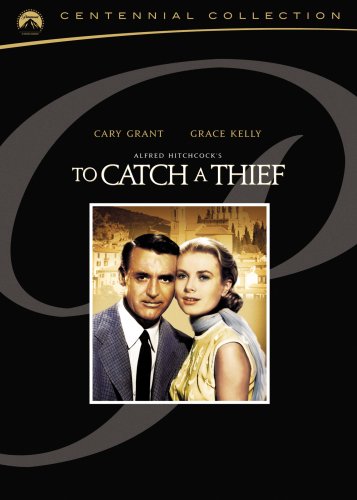
To Catch A Thief is not typical Alfred Hitchcock territory, but then again, it really is. It’s not a terribly suspenseful film coming from the acclaimed “Master of Suspense”, nor is it at all a frightening film even though it was directed by one of horror’s genius minds. What really is scary, however, is how close to a different film this almost was. Cary Grant had exiled himself into retirement. If you can believe his statements at the time, he was concerned that the moviegoing public was pretty much sick of seeing him and preferred the younger actors just then coming of age. He turned Hitchcock down for the role at least twice, before Hitch made a personal visit and appeal to the Hollywood legend. Grace Kelly was also reluctant to do the part. She did it because she loved working for Hitch. Unfortunately, Paramount had other plans. They were troubled that Grant was nearly twice Kelly’s age, and worried either the public or the standards censors would not accept the situation. They were half right. While the film was one of Hitch’s toughest battle with the Standards folks, the public flocked to see Grant and Kelly on the screen together. Grant would continue his return to acting for over a decade longer. Not so Grace Kelly. The Philadelphia native would have her faithful meeting with Prince Rainier of Monaco and would spend nearly 30 years portraying the larger than life, but real nonetheless, Princess Grace of Monaco, before a tragic automobile accident would end her life. All the same, To Catch A Thief would remain one of her last films. Hitch almost lured her out of retirement some years later, but she declined, saying that if she were to do a film, Hitchcock was about the only man she would have done it for.

John Robie (Grant) is a renowned jewel thief and cat burglar. While he’s been retired for fifteen years, he’s still the prime suspect when a rash of burglaries occurs on the French Riviera. The MO is the same as Robie’s, and before long the police are blaming him for the work of France’s newest celebrity thief, The Cat. Robie sees only one chance to get himself out from under the mess. He has to go to the area and catch the real thief. Once there he hooks up with insurance agent Hughson (Williams) who cooperates on the off chance his company can be spared these high payouts. Robie also meets young and attractive socialite Frances Stevens (Kelly), who sets her sights on catching this thief for her own. She constantly tries to seduce Robie, knowing who he is and suspecting him of being The Cat. When her own family jewels turn up missing, she begins to rethink the dangerous game she was playing. That only gives Robie even more incentive to catch the real crook. Will Robie catch The Cat? Will Frances catch Robie? Only Hitch knew for sure, and in 1955 audiences found out in the film classic, To Catch A Thief.

There’s a lot to want to love about this film. You have the return of the super powered Malone children, and more importantly, the same actors to portray them. Director John Hough returned to direct the sequel. The film also includes Christopher Lee and Bette Davis as the villains. Like I said, a lot to want to like. Something went terribly wrong along the way. Neither Christopher Lee nor Bette Davis take their roles seriously at all. I don’t think I’ve seen either accomplished thespian show so little effort in a performance. It’s very obvious they considered them to be throwaway roles. Davis remarks she did it only because she wanted to be in a film her grandchildren would like. She’s particularly bad in a role that has her so caked in makeup that she could be a Jack Pierce creation from the Universal horror days. What’s worse, the children spend about 80% of the film apart.

It’s three years later, and the children are returning from their home on Witch Mountain for a holiday, of sorts. They’re placed in a cab and sent off on a destination that they never do reach. Instead they play a prank on the cab driver and disable the engine. Believing he has run out of gas, he sets off to get some. In the meantime Tia has another vision of yet another unfortunate accident. For the second time, the children try to save the day only to be exposed to those who would profit from them. Victor (Lee) is a mad scientist who was experimenting with mind control at the time. When he sees Tony hold his subject in mid air to prevent his death from falling off the roof, he decides he wants to control that power. Along with his rich patron, Letha (Davis) they drug Tony and take him away before Tia knows what happened. Now Tia has to find and rescue her brother. Fortunately, Tony has advanced since the first film. He no longer needs the harmonica and he can now communicate with Tia, but the drugs are interfering. Tia encounters the Earthquake gang, a group of young boys who wanna be tough and bad, but aren’t. With their help she has to rescue Tony, who has fallen under Victor and Letha’s control. They use his powers to their own ends, eventually to hold the world hostage at a plutonium plant.

Does the name Quasimodo ring a bell? It should, and he did. The deformed cathedral tower bell ringer first appeared in the famous French language novel by Victor Hugo. The story is one of the more frequently filmed tales, going back as far as 1923 and the silent film starring Lon Chaney. Chaney created the definitive appearance from his own collection of grease paints and handmade appliances. The physical restrictions he placed upon himself then nearly crippled the actor. Charles Laughton put his own stamp on the character in 1939. This would become the defining sound film. Even the Walt Disney Studios put their own unique stamp on the tale. Their animated version brought us a romantic tale alive with music and talking statues. With such a rich history of films to its credit, one might question why a made for television film could add anything more to the story. It was with that attitude that I entered the world of this Hunchback Of Notre Dame.

It turns out that there were actually several elements to be added. The most significant is creating a faithful adaptation of the original story. To date no one has come very close to depicting the likely unfilmable Hugo narrative, at least the English translations that I’ve been exposed to. With that in mind, I must say that this film just might come closest to the original tale. Hugo’s description of Quasimodo fits this presentation rather snugly. The next element to be added was a more complicated portrayal of the man himself. While both Chaney and Laughton brought him effectively to life, I don’t feel that either instilled him with as much humanity as Anthony Hopkins does here. Even beneath plenty of prosthetics, Hopkins brings such an array of emotion that I don’t think you’ll have looked at this character in quite this manner before, nor are you likely to in the future. This is the most complete portrayal I’ve seen. Finally, the story has seldom involved this level of detail to many of the supporting characters. The cast is impressive for any film, doubly so for a made for television release with a limited budget.

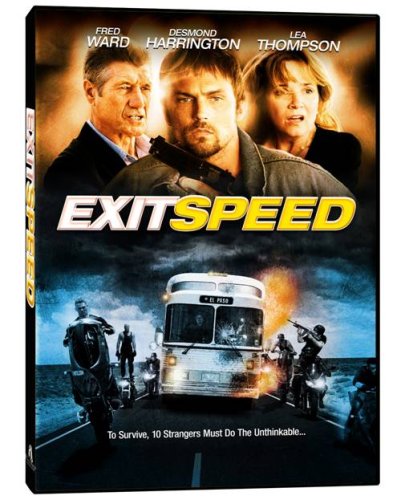
Dateline: Texas. Christmas Eve. Christmas carols are playing on the radio. And even though this is one heck of a hot day, the stores are decked out like the preverbal halls. It’s Christmas time in the city. But this isn’t going to be one of those White Christmas warm and fuzzy eggnog cozying by the fireplace stories. Don’t get me wrong. There’s going to be plenty of roasting by an open fire, but those aren’t chestnuts. Those are people.

An eclectic mix of passengers are boarding a bus in Dallas to travel across the interior of the Lone Star State. They each have their own stories and reasons for taking a six hour bus ride on Christmas Eve. We’re treated to some of them. The most notable is Merideth Cole (Mond). She’s an American soldier who is AWOL during a time of war. That spells desertion, and she has a fed on her tail. Of course, she’s got military training and some mad skills that are going to come in handy before long. The trip has barely begun when a motorcycle gang, known as the Nomads, runs the bus off of the road. The resulting carnage causes the passengers to panic and the Nomads to smell fear…and blood, some of it their own. The gang pursues the bus once again. The bus leaves the highway and ends up at a dead end abandoned wrecking yard. They barricade themselves as best they can while the gang surrounds them and sends for reinforcements. Isolated, the group engages in a state of war with the Nomads. Many of the characters on both sides are simply cannon fodder for the bloodletting. The main characters are straight out of the Hollywood stock character store.

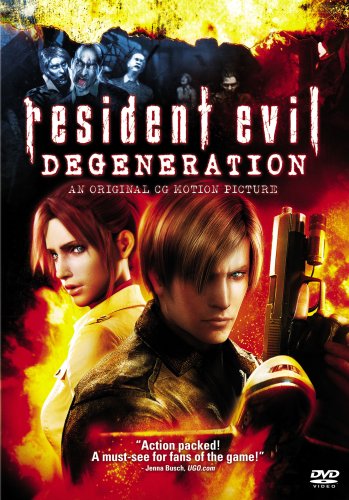
Popular gaming franchise Resident Evil is no stranger to the world of film. With a trilogy already in the bag from writer-producer Paul W.S. Anderson (Death Race), and starring Milla Jovovich, our favourite perfect being from The Fifth Element, audiences are pretty familiar with the RE brand. Well, the ones who go for schlocky zombie-fests, at least.

You can count me in that company. Every once in a while, a junk-food movie like Resident Evil just hits the spot. The question is, does Resident Evil: Degeneration deliver the goods?


“You may only see it once but that will be enough”

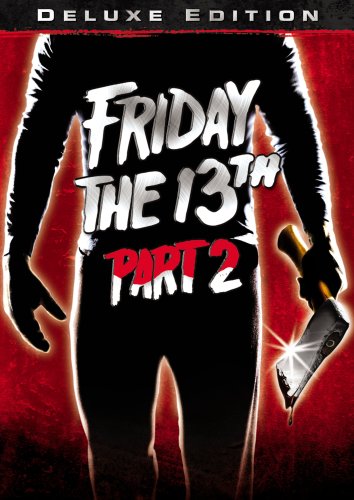
That was the marketing slogan for the first Friday The 13th film in 1980. Apparently they couldn’t have been more wrong, because most of us have seen the film countless times, and no, it was never enough. The franchise would thrive with over 10 sequels or affiliated films, taking us right up to the present remake/reboot of that very first outing at Camp Crystal Lake. No, my friends, once was never going to be enough.

What a great time it was to be a teen in the late 1970’s. No, I’m not referring to disco music. It was a great time to go to the movies. It was the culmination of the perfect date, and Hollywood was riding the beginning of a trend that remains alive and healthy today. I’m talking, of course, about the slasher film. You could argue that Hitchcock started the ball rolling in 1961 with Psycho, but it would be decades before that film would find its true audience and plethora of imitators. Although The Texas Chainsaw Massacre and Halloween came before Friday The 13th, can it be argued that any horror film franchise is as widely known? The truth is that even the man behind the film, Sean Cunningham, never really knew what it was that he had. It was never his intent to follow the film with a barrage of sequels. He also scoffed at the idea that Jason could become the centerpiece for future films. By now Jason has become such an iconic character that there is an entire generation out there that doesn’t know that Jason wasn’t the culprit in the first film. Jason’s stature has reached the heights of the classic monsters of the Universal days. While some of us hesitate to put his name and hockey mask up there with the likes of Frankenstein, The Wolf Man, Dracula, and The Mummy, the recognition and sheer dollars generated make it difficult not to. By the beginning of the 1980’s names like Jason, Freddy, and Michael Myers would be scaring audiences around the world, rendering the classics somewhat silly in the eyes of a more visceral generation of teens.

It’s hard to believe, but in 1980 the slasher formula had yet to be born. And while Halloween laid down the foundation, this was the house that Jason built. By now it’s all old hat. You know exactly how it’s supposed to happen. There have been spoofs like the Scream series where these rules and expectations have been lampooned. It’s a shame, really, if you never got to see Friday The 13th before this style was so bloodily ingrained in your head. A group of teens gather at a lakeside campground in remote New Jersey. The camp was the scene of a horrific accident and subsequent murder rampage some 5 years earlier. Now someone wants to reopen the place the locals refer to as Camp Blood, but which moviegoers would long remember as Camp Crystal Lake. Despite warnings from the townsfolk, the teens gather to whip the place in shape for a summer filled with kids and fun. But on a stormy first night these teens would be eliminated one by one in “Ten Little Indians” fashion at the hands of a brutal killer. Victims would meet their ends under the most bizarre of circumstances. They would find themselves axed, skewered, and slashed. And as you know by now, but didn’t then, one will survive. The film would end with one of the most clever and effective jump scenes in movie history. No one knew then that a short epilogue intended only to deliver one final kick in the spine would give birth to one of the most infamous monsters in screen history.